

The Quiet Majesty of Genre Painting: Defining the Domestic Scene
To step into a domestic scene is to enter a sanctuary of stillness, where the frantic pulse of the outside world fades into the soft hum of lived experience. In the grand lexicon of art history, these works—often categorized as genre paintings—transcend mere documentation of daily life. They are, instead, profound meditations on the sanctity of the private sphere. Unlike the sweeping narratives of historical epics or the divine drama of religious altarpolls, domestic scene artworks find their power in the subtle, the mundane, and the intimate. There is a quiet majesty in the way a single shaft of light illuminates a reading nook or how the arrangement of everyday objects suggests a narrative far deeper than what meets the eye.
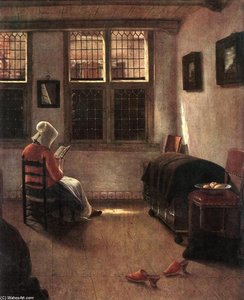
This genre invites the viewer to become an unobserved witness to the rhythms of human existence. It celebrates the beauty found in the unremarkable: the pouring of tea, the tuning of a lute, or the solitary contemplation of a letter. By elevating these quiet moments to the status of high art, painters throughout the centuries have reminded us that the true essence of humanity is not found in grand conquests, but in the tender, unscripted intervals of our private lives. It is an art form that demands patience and a refined eye, rewarding those who seek meaning within the margins of the everyday.
Chiaroscuro and Intimacy: The Psychological Depth of Interior Studies
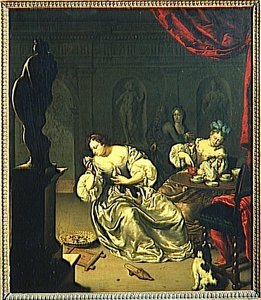
The mastery of the domestic scene often relies upon the sophisticated manipulation of light and shadow, a technique known as chiaroscuro. When an artist employs dramatic contrasts between deep, velvety darkness and brilliant highlights, they do more than create visual depth; they sculpt emotion. Consider the evocative power of an interior study, such as those inspired by the Rembrandt tradition, where shadows seem to breathe with mystery. In these spaces, light does not merely illuminate; it reveals the psychological state of the subject. A face partially obscured by shadow may suggest a hidden grief or a profound secret, while a brightly lit hand might convey the delicate tension of a moment caught in time.
This interplay of light creates an atmosphere of intense intimacy. The darkness acts as a cocoon, isolating the subjects from the external world and drawing the viewer into their immediate emotional orbit. In works like Jonathan Eastman Johnson’s Interior Scene, we see how realism and symbolic depth converge through this technique, creating a sense of mystery that lingers long after one has turned away. The shadows become a canvas for the viewer's own imagination, allowing the domestic space to function as a stage for the complex, often unspoken, dramas of the human psyche.
The Golden Age of the Hearth: Dutch Realism and the Sanctity of Daily Life
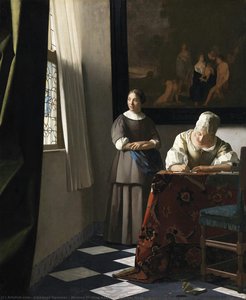
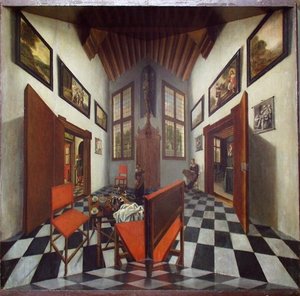
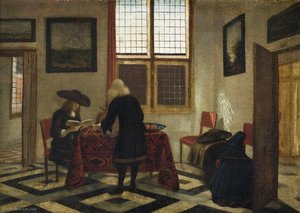
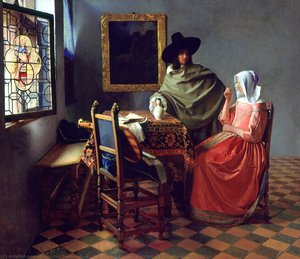
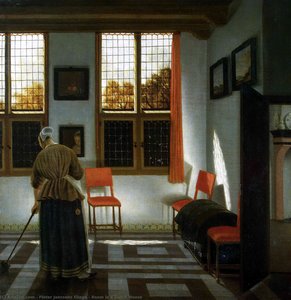
Perhaps no era captured the soul of the home with greater precision than the Dutch Golden Age. During this period, a burgeoning middle class sought art that reflected their own values, virtues, and domestic realities. The resulting masterpieces moved away from the idealized figures of the Renaissance toward a meticulous, almost tactile realism. Artists like Gerard ter Borch perfected the art of the intimate duo, where the subtle textures of silk and the precise rendering of musical instruments—such as the theorbo—conveyed a sense of tranquil prosperity and cultural refinement.
These paintings served as a mirror to a society that found divinity in the domestic. The Dutch interior was treated with a reverence usually reserved for cathedrals; every polished surface, every carefully placed rug, and every window looking out onto a quiet street spoke of order, stability, and the blessings of a well-ordered life. Even when exploring more somber themes, as seen in the Rembrandt-inspired works of Albert Henry Krehbiel, the focus remains on the poignant beauty of daily existence. This era established a visual language of domesticity that continues to resonate with collectors today, offering a timeless connection to the concept of home as a place of both physical comfort and spiritual repose.
From Stillness to Storytelling: Symbolism within the Domestic Sphere
Beneath the surface of a seemingly tranquil room lies a complex web of symbolism. To the trained eye, a domestic scene is rarely just a depiction of furniture and figures; it is a coded narrative. The objects scattered across a tabletop—a peeled lemon, an extinguished candle, or a discarded glove—are often carefully chosen emblems of mortality, purity, or fleeting passion. This layer of meaning transforms the painting from a static image into a living story, inviting a deeper intellectual engagement with the work.
The placement of objects can dictate the emotional temperature of the room. A spilled glass of wine might whisper of lost innocence, while a well-tended hearth symbolizes the enduring warmth of familial bonds. By weaving these symbolic threads into the fabric of the domestic setting, artists create a sense of temporal depth, suggesting that the moment captured is part of a much larger, ongoing human saga. This marriage of realism and metaphor ensures that the domestic scene remains an intellectually stimulating genre, capable of conveying profound truths through the most delicate of visual cues.
Curating the Contemporary Home: Integrating Classical Interiors into Modern Spaces
In the modern era, the integration of classical domestic art into contemporary interiors offers a sophisticated way to anchor a space with history and soul. The challenge for the modern collector lies in balancing the weight of tradition with the clean lines of contemporary design. A large-scale reproduction of a Dutch interior or a moody, chiaroscuro-heavy study can serve as a powerful focal point, providing a sense of permanence and "lived-in" elegance to even the most minimalist room. The key is to treat these works not as relics of the past, but as living elements of the present.
Whether through the use of multi-panel group sets that span a wide wall or through bespoke commissions that adapt historical styles to modern color palettes, art can bridge the gap between centuries. The tactile nature of a handmade oil reproduction—with its visible brushstrokes and rich impasto texture—provides a necessary sensory contrast to the smooth surfaces of modern architecture. By curating pieces that celebrate the intimacy of the home, we do more than decorate; we create an environment that honors the enduring beauty of the human story, ensuring that our contemporary spaces are imbued with the profound grace of the Old Masters.
At ArtsDot.com, we specialize in preserving this legacy of human creativity. From meticulously handcrafted oil reproductions that capture the very soul of a masterpiece to custom commissions that transform your personal memories into historical triumphs, our mission is to make the grandeur of art history accessible to the modern connoisseur. Whether you seek a museum-quality Giclée print or a bespoke painting tailored to your unique interior, our artists and consultants are dedicated to helping you curate a home filled with timeless beauty.