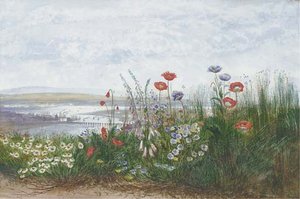
A Visionary of the Irish Landscape: The Life and Legacy of Andrew Nicholl
Andrew Nicholl was far more than a mere chronicler of scenery; he was a poet of light and atmosphere, a man whose brush breathed life into the rugged terrains of his homeland and beyond. Born in Belfast on April 4, 1804, to a family of modest means, Nicholl’s journey from an apprentice printer to a distinguished member of the Royal Hibernian Academy is a testament to the enduring power of artistic passion. While his early years were spent amidst the rhythmic clatter of the letterpress at
The Northern Whig, his heart was always tethered to the natural world. Guided by the encouragement of his brother, the painter William Nicholl, Andrew began to translate the textures of the earth and the nuances of the sky into the delicate, luminous medium of watercolor.
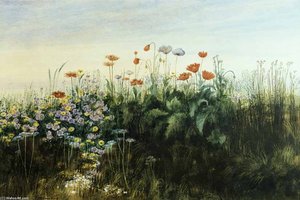
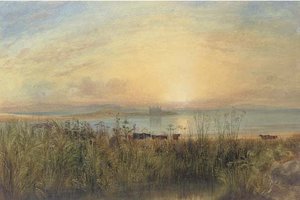
His early professional life was defined by a transition from the mechanical precision of printing to the fluid spontaneity of landscape painting. This evolution allowed him to master the subtle art of layered washes, a technique that enabled him to capture the ephemeral quality of light as it dances across water or settles upon ancient stone. His talent did not go unnoticed; through the generous patronage of figures such as Sir James Emerson Tennent, Nicholl was able to expand his horizons far beyond the shores of Ulster, embarking on transformative journeys that would forever enrich his visual vocabulary.
The Mastery of Light and the Romantic Spirit
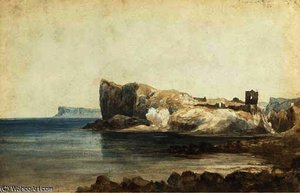
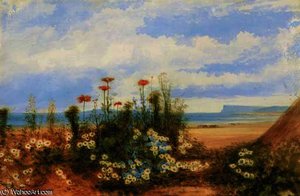
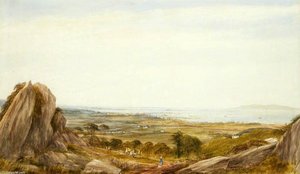
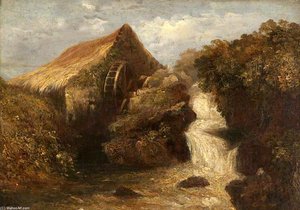
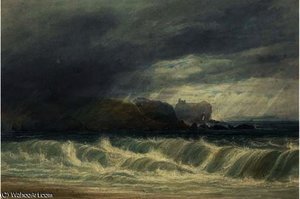
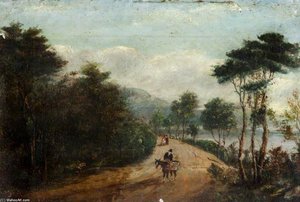
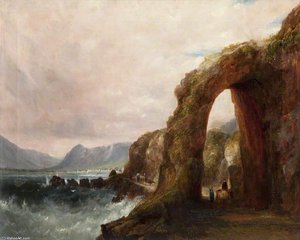
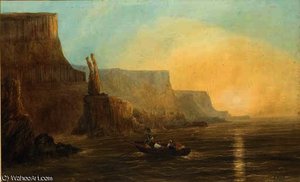
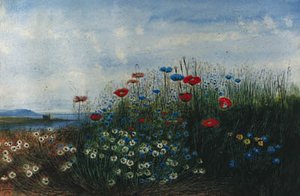
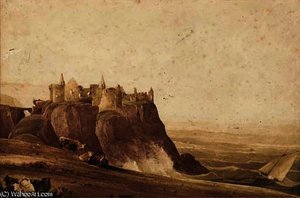
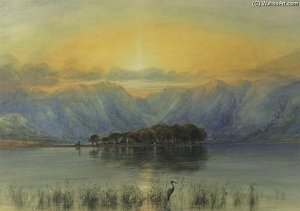
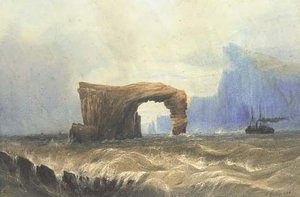
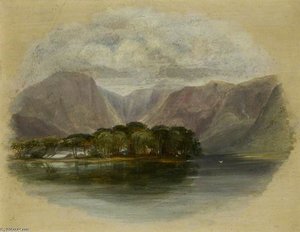
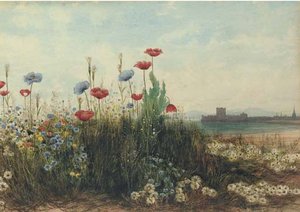
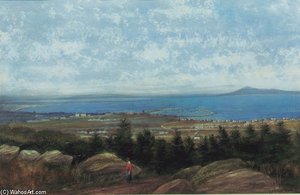
The essence of Nicholl’s work lies in its profound connection to the Romantic movement, a period characterized by an intense fascination with the sublime power of nature. His landscapes are not merely topographical records but emotional experiences. When one gazes upon his depictions of
Gougane Barra or the dramatic
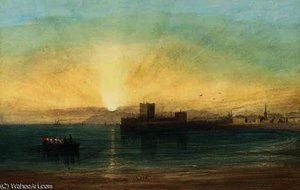
Coast of Antrim, there is a palpable sense of the untamed and the eternal. He possessed a rare ability to utilize tonal variations to create depth, pulling the viewer into the misty recesses of a valley or toward the sun-drenched horizon of a distant sea.
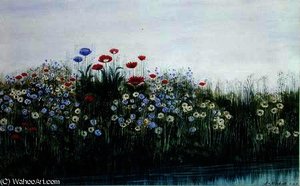
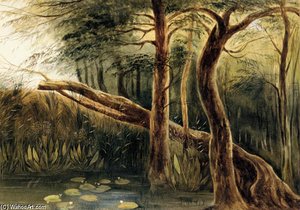
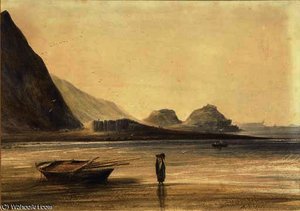
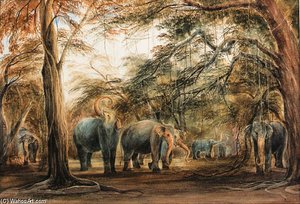
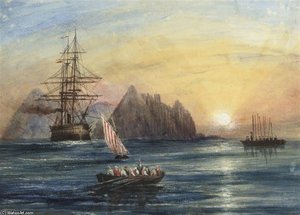
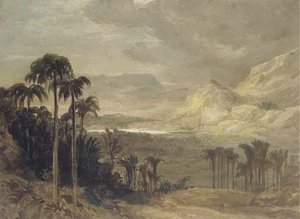
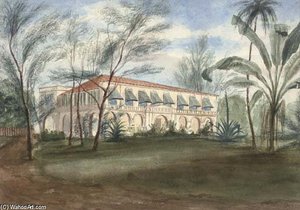
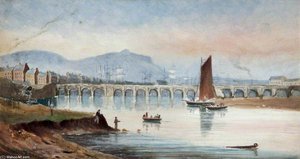
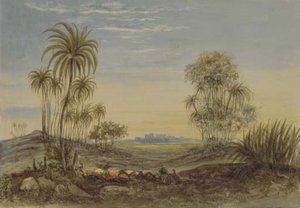
His travels played a pivotal role in his stylistic development. The exotic landscapes of Ceylon offered him a new palette of vibrant colors and tropical light, contrasting beautifully with the more somber, moody greens and grays of the Irish countryside. This duality—the ability to render both the serene inland waterways of Ireland and the lush, humid atmospheres of distant colonies—demonstrates his versatility as a master of watercolor. His work often captures a specific moment in time, where the interplay of shadow and brilliance evokes a sense of quiet contemplation and awe.
A Pillar of the Artistic Community
Beyond his individual achievements, Andrew Nicholl was a foundational figure in the institutional development of art in Northern Ireland. He was a driving force behind the establishment of the
Belfast Association of Artists, an endeavor that provided a vital platform for local talent and fostered a burgeoning culture of creative discourse. His commitment to the advancement of his peers was matched by his personal professional ascent; after serving as an associate member of the Royal Hibernian Academy since 1847, he achieved full membership in 1860, a prestigious recognition of his standing within the British and Irish art worlds.
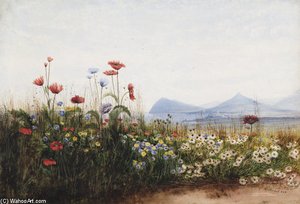
The historical significance of Nicholl’s oeuvre extends to its role as a visual archive of the nineteenth-century landscape. His meticulous attention to detail serves as a window into a world of disappearing vistas and historical landmarks. Through his legacy, we continue to explore:
- The delicate interplay of atmospheric perspective and watercolor luminosity.
- The profound emotional resonance found within the Romantic tradition.
- The cultural importance of the Belfast Association of Artists in fostering regional identity.
- The enduring beauty of the Irish and Ceylonese landscapes as captured through a master's eye.
As we reflect on the life of Andrew Nicholl, we see an artist who successfully bridged the gap between the mechanical and the ethereal, leaving behind a body of work that remains as luminous and evocative today as it was during his lifetime.