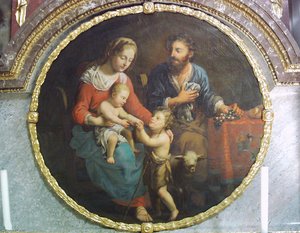
The Baroque Visionary: The Life and Legacy of Johann Heiss
In the grand tapestry of the German Baroque, few threads shimmer with as much dramatic intensity as those woven by Johann Heiss. Born in 1640 in the historic town of Memmingen, Bavaria, Heiss emerged from an artistic lineage that prepared him for a life of profound visual storytelling. His early years were shaped by the rigorous tutelage of the renowned Sichelbein brothers, Hans Conrad and Johann, whose mastery of the Augsburg school provided Heiss with a foundational command over the essential elements of his craft. This formative period was not merely about learning technique; it was an immersion into a world where light and shadow served as the primary narrators of human emotion and divine presence.
As Heiss matured, his journey took him far beyond the borders of his birthplace, leading him to the prestigious court of Eberhard III, Duke of Württemberg, in Stuttgart. This period of service within a ducal patronage system allowed him to refine his ability to capture grandeur and authority, skills that would later define his monumental religious commissions. By 1675, his burgeoning reputation had reached the ears of the influential art historian Joachim von Sandrart, who offered high praise for Heiss's work in the seminal Teutsche Academie. This recognition solidified his standing among the elite painters of the era, marking him as a master capable of navigating both the sacred and the secular with equal virtuosity.
A Mastery of Narrative and Light
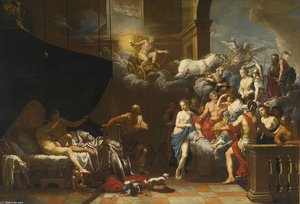
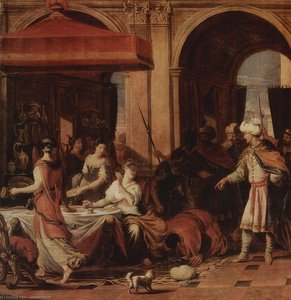
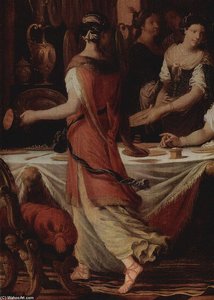
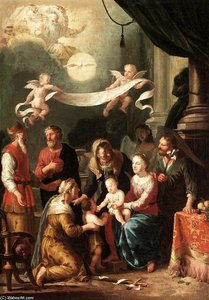
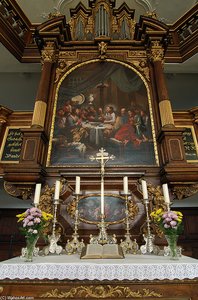
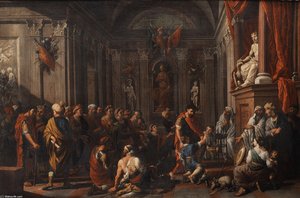
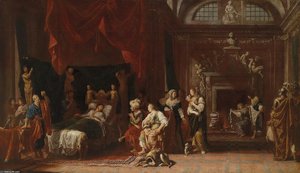
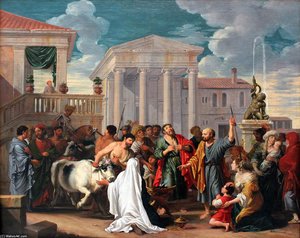
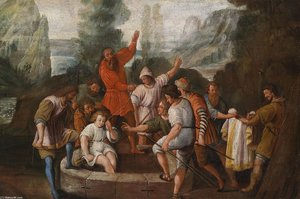
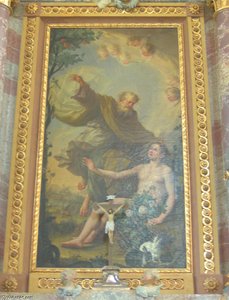
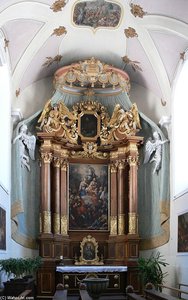
The true essence of Heiss’s artistry lies in his ability to breathe life into biblical narratives and mythological legends. His work is characterized by a sophisticated use of chiaroscuro, where deep, velvety shadows clash with brilliant, piercing highlights to create a sense of theatrical movement. Whether he was depicting the betrayal found in "Gastmahl Der Ester" or the celestial weight of an altarpiece, Heiss utilized color theory and composition to guide the viewer's eye through complex emotional landscapes. His style was a fascinating evolution; while rooted in the structured Baroque traditions of Augsburg, he increasingly embraced the fluid, expressive qualities of Mannerism, allowing for a more dynamic and sometimes unsettling tension within his compositions.
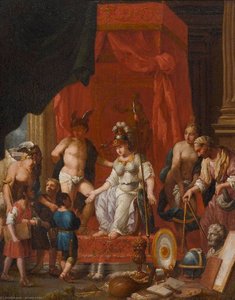
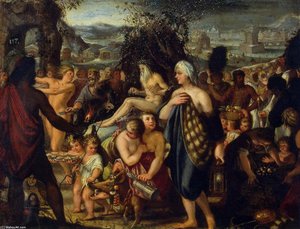
His later years in Augsburg brought him under the influence of Johann Heinrich Schönfeld, further enriching his palette and thematic depth. This period of artistic cross-pollination allowed Heiss to bridge the gap between the heavy solemnity of religious iconography and the graceful elegance of mythological scenes. His ability to adapt to diverse commissions—ranging from the monumental altarpieces at the Pilgrimage Church in Grafrath to intricate allegories like "Abundantia"—demonstrates a versatile genius that could satisfy both the spiritual hunger of the church and the aesthetic desires of the nobility.
Enduring Significance in the European Canon
Though time has obscured certain works, such as the famously lost Manus Dei, the footprint of Johann Heiss remains indelibly pressed into the halls of Europe's greatest institutions. His legacy is not merely found in the canvases that survive, but in the way he helped define the visual language of a transformative era. To study Heiss is to witness the intersection of German craftsmanship and the broader European Baroque movement.
The enduring reach of his talent can be seen in the presence of his works across the continent:
- The Louvre, Paris: Where his mastery of form meets the pinnacle of global art history.
- The Kunsthistorisches Museum, Vienna: A testament to his importance within the imperial artistic tradition.
- The Hermitage, St. Petersburg: Showcasing the international prestige of his Baroque compositions.
- The Milwaukee Art Museum: Proving that his evocative narratives continue to resonate across oceans and centuries.
Ultimately, Johann Heiss stands as a bridge between the structured traditions of the early 17th century and the more expressive, emotive heights of the late Baroque. His life's work remains a profound meditation on the power of art to capture the eternal through the ephemeral play of light and shadow.