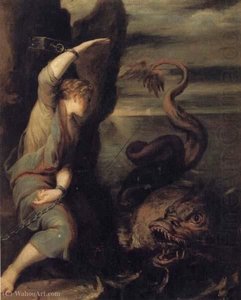
A Brief but Brilliant Flame: The Life of Juan Antonio Frias y Escalante
The history of the Spanish Baroque is often told through the lens of long-lived masters, yet the legacy of Juan Antonio Frias y Escalante serves as a poignant reminder of how profound impact can be achieved even within a tragically short lifetime. Born in the historic city of Córdoba in 1633, Frias y Escalante was destined for the upper echelons of Spanish society, possessing an aristocratic lineage that provided him with early access to the most prestigious artistic circles. His journey took him from the heart of Andalusia to the vibrant, bustling court of Madrid, where he sought to refine his craft under the guidance of Francisco Ricci. This formative period in Madrid was crucial, as it allowed him to integrate the rigorous discipline of disegno—the Italian emphasis on anatomical precision and structural clarity—with the burgeoning theatricality of the Spanish Golden Age.
Tragically, the same vitality that fueled his creative output was cut short by tuberculosis, claiming his life in 1669 at the tender age of thirty-six. Despite this brevity, the period between his training and his untimely death represents a concentrated burst of artistic evolution. His work does not merely reflect the Spanish tradition; rather, it acts as a bridge where the solemnity of Spanish piety meets the luminous, sweeping grandeur of the Venetian school. Through his brush, the heavy shadows of the Baroque were infused with a new, rhythmic light, creating a visual language that felt both deeply local and cosmopolitally sophisticated.
Venetian Echoes and the Mastery of Light
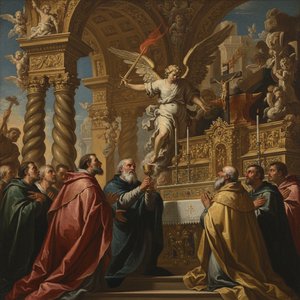
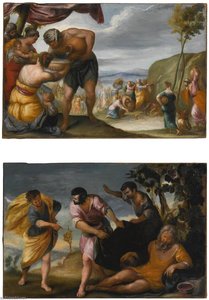
What distinguishes Frias y Escalante from many of his contemporaries was his profound fascination with the masters of Venice. He did not simply observe the works of Tintoretto and Veronese; he internalized their very essence. By studying the monumental compositions of Veronese, particularly the complex orchestration of figures in large-scale narrative scenes, Frias y Escalante learned to manipulate perspective and color to create a sense of immersive depth. His canvases often feature a masterful use of chiaroscuro, where dramatic shifts between light and shadow serve not just as aesthetic tools, but as emotional conductors that guide the viewer's eye through complex biblical narratives.
This Venetian influence allowed him to move beyond static portraiture or simple devotional images toward a more theatrical style of storytelling. In his hands, the canvas became a stage where light acts as a divine protagonist. His ability to blend the meticulous anatomical accuracy learned from Ricci with the atmospheric, painterly textures of the Italian masters resulted in works that possessed a unique, shimmering quality. This synthesis of styles allowed him to capture the monumental scale of religious events while maintaining an intimate, palpable sense of human emotion.
Devotion in Paint: Religious Themes and Lasting Legacy
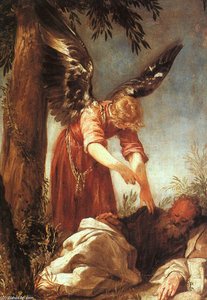
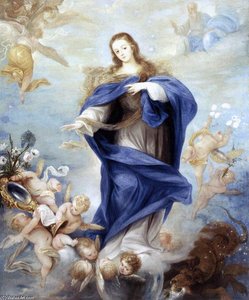
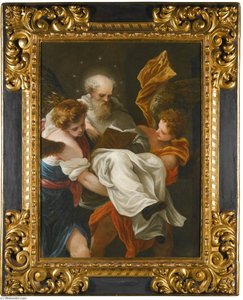
The heart of Frias y Escalante’s oeuvre lies in his unwavering commitment to religious iconography, a reflection of the intense spiritual climate of 17th-century Spain. His paintings were designed to evoke awe, piety, and a direct connection to the divine. This is perhaps most evident in his treatment of Marian themes and the lives of the saints, where he utilized his technical prowess to render the miraculous as something both breathtaking and tangibly real.
Several of his works stand as pillars of his artistic achievement:
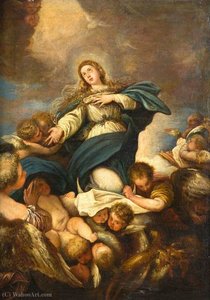
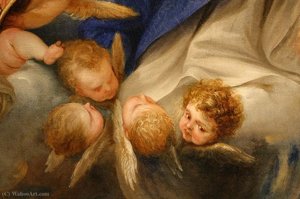
- The Immaculate Conception: A 1663 masterpiece that showcases his ability to weave intricate detail with a sense of celestial grace, embodying the height of Baroque devotional art.
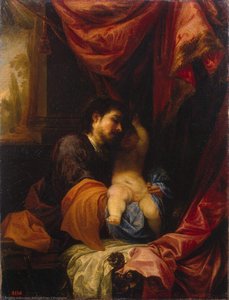
- St. Joseph and the Infant Christ: A work that highlights his capacity for tenderness, stripping away the grandiosity of the era to focus on the quiet, profound intimacy of the Holy Family.
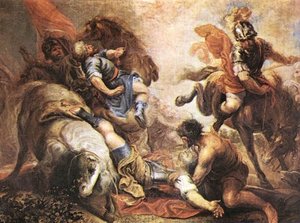
- The Conversion of St. Paul: An exhibition of his dramatic skill, where he employs sweeping movement and intense light to capture one of the most pivotal moments in Christian history.
Though his career was cut short, the historical significance of Juan Antonio Frias y Escalante remains undiminished. He stands as a vital link in the evolution of Spanish painting, proving that the infusion of foreign stylistic elements—specifically the Venetian approach to color and light—could enrich the traditional Spanish focus on spiritual intensity. His work continues to resonate as a testament to a life lived with immense passion, leaving behind a visual record of beauty, drama, and enduring faith.