
A Renaissance Revelation: The Soul of Florence
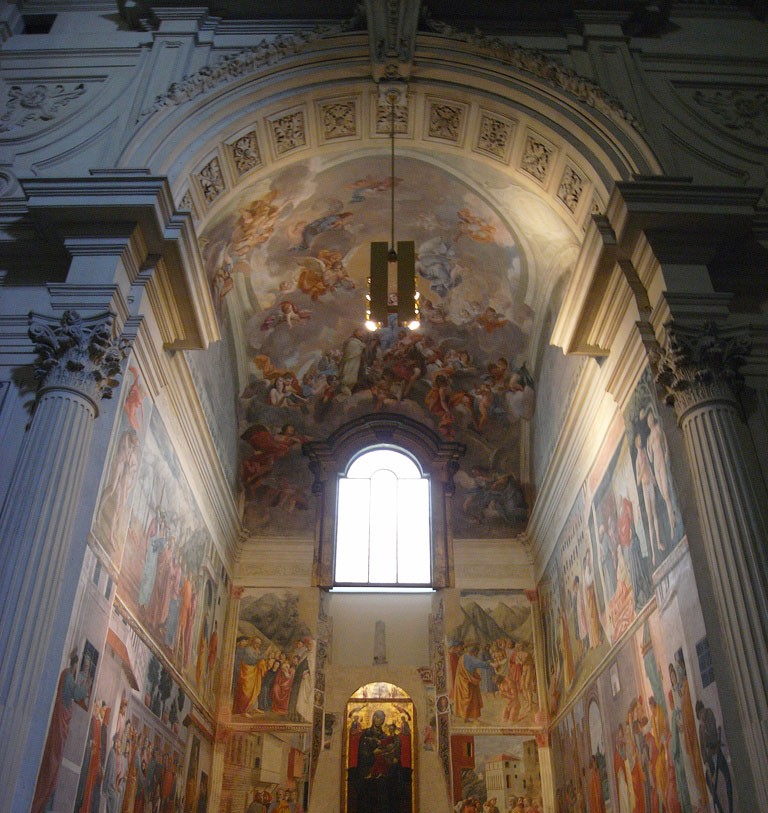
Nestled within the evocative streets of Florence’s Oltrarno district, Santa Maria del Carmine stands as a profound testament to the artistic fervor that ignited the Italian Renaissance. More than a mere sanctuary of worship, this monument serves as an immersive journey into one of history’s most transformative eras, where groundbreaking techniques were birtered to create masterpieces that continue to command awe centuries later. Founded in 1325 by the Carmelite Order, the church began its life as a modest chapel dedicated to Saint Mary of Carmel, yet its destiny was irrevocably altered during the fifteenth century. It was through the addition of the legendary Brancacci Chapel that the site transitioned from a local place of devotion into a global epicenter of artistic innovation, forever cementing its place among Florence’s most precious cultural treasures.
The architectural presence of the church offers a serene dialogue between different eras of Florentine design. The façade, shaped by the hand of Alessandro Gherardesca, embodies a masterful blend of medieval grandeur and neoclassical elegance. This structural harmony provides a contemplative backdrop for the visitor, where the simplicity of the exterior reflects the profound spiritual and intellectual values of the Renaissance period. As one moves through the space, the architecture begins to breathe with the weight of history, guiding the eye toward the true heart of the complex: the revolutionary frescoes that redefined the boundaries of Western painting.
The Brancacci Chapel: A Revolution in Light and Form
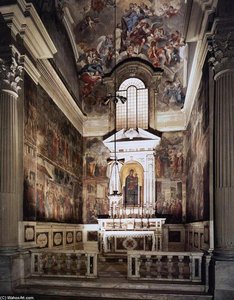
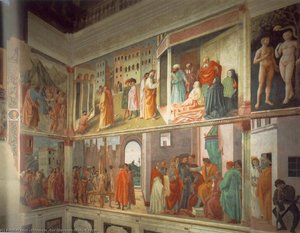
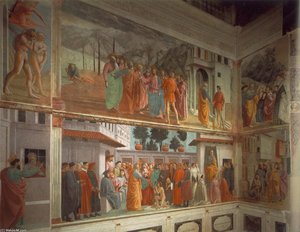
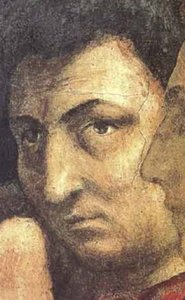
To enter the Brancacci Chapel is to witness the very moment the course of art history shifted. This sacred space houses a cycle of frescoes born from the collaboration of Masaccio and Masolino da Panicale , works that famously challenged the rigid Byzantine conventions of their time. Here, the introduction of linear perspective and the pursuit of anatomical accuracy brought a startling realism to the walls. Masaccio, in particular, emerged as a visionary, utilizing light and shadow—a technique known as chiaroscuro—to sculpt figures out of the two-dimensional plane, granting them a weight and presence that felt almost tangible to the viewer.
The collection within these walls is an extraordinary tapestry of artistic currents. Beyond the pioneering work of Masaccio, the influence of Giotto can be felt in the expressive power and emotional dynamism of the biblical narratives depicted. These frescoes do not merely tell stories; they capture the human condition with an unparalleled intensity that inspired generations of artists across Europe. For the art lover or collector, these works represent the foundational DNA of modern painting, where the manipulation of space and the study of light became the primary tools for storytelling.
A Legacy of Innovation and Enduring Beauty
The significance of Santa Maria del Carmine extends far beyond its physical walls, serving as a poignant reminder of Florence's role as the crucible of intellectual progress. The chapel’s influence acted as a catalyst for artists who sought to emulate its groundbreaking realism, making it a site of pilgrimage for scholars and enthusiasts alike. Recent exhibitions have further enriched this legacy, utilizing modern scientific research to illuminate new facets of the chapel’s heritage, from the chemical composition of ancient pigments to the subtle techniques used by the masters to achieve such lasting brilliance.
Today, the Museo di Santa Maria del Carmine continues to captivate a global audience, offering an unparalleled experience for interior designers and art historians seeking inspiration in the classical. Whether one is drawn to the profound theological narratives or the sheer technical mastery of the Renaissance masters, the museum remains a living monument. It stands as a bridge between the past and the present, inviting every visitor to lose themselves in the beauty of a period that taught the world how to see light, shadow, and humanity through the lens of art.