

 Pregledaj u prostoru
 Pošalji
 Podeli
 Detalji o delu

 Преузми
 Slični predmeti
 Rendgenski snimak
 Slajdovi
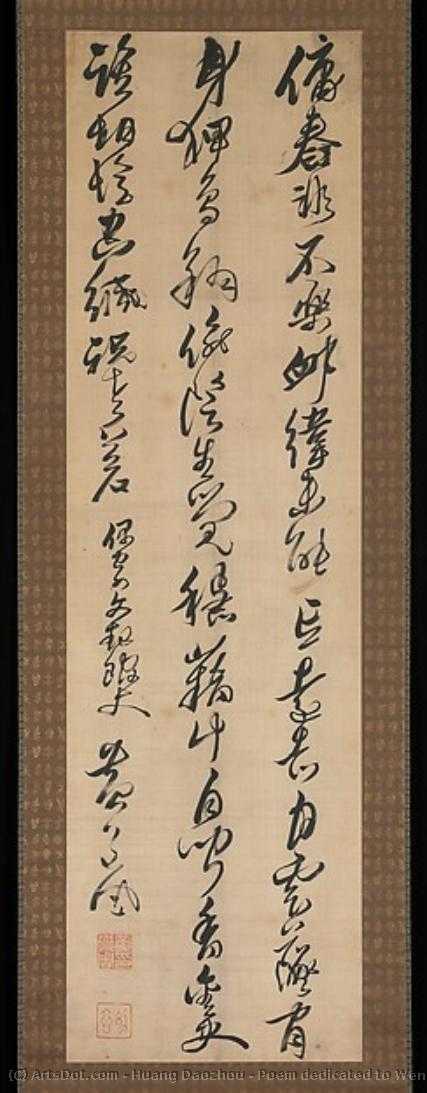
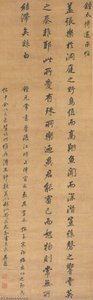
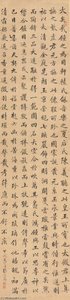
Poem dedicated to Wen Zhenmeng (1574–1636)
 Classical Chinese Painting
 174.0 x 50.0 cm
 Pročitaj više
Ručno rađena uljana reprodukcija
Ručno oslikano uljanim bojama na platnu u dimenzijama i okviru po vašem izboru, izrađeno po porudžbini od strane naših umetnika. ( Kupi print Kupi digitalnu sliku)




































Izaberite jednu od naših unapred definisanih veličina koje odgovaraju originalnim proporcijama umetničkog dela.

Можете унети сопствене димензије како бисте прилагодили дело одређеном оквиру или простору. Ако одабрана величина не одговара пропорцијама оригинала, слика ће бити исечена или проширена додатним елементима који се ручно насликавају. Дигитални prikaz ће вам бити послат на одобрење пре почетка производње.
Имајте на уму да преглед на екрану не одражава стварно исецање или проширење. Само приказ (mockup) ће тачно приказати коначну композицију.
Иако су доступне прилагођене величине, препоручујемо да одаберете димензију из дефинисане листе како бисте сачували оригиналне пропорције.
Nakon narudžbine, tim ArtsDot.com će klijentu putem e-pošte poslati uputstva i dostaviti prikaz predloženog rešenja
Isporuka širom sveta () za 3/4 nedelje umesto uobičajenih 5 nedelja. (27 август). Bez kompromisa po pitanju kvaliteta.

Besplatna ekspresna dostava širom sveta

Visokokvalitetno laneno platno

Kompletno osiguranje transporta

Garancija povraćaja carine i uvoznih dažbina

Garancija vernosti boja

Politika povrata u roku od 60 dana (samo u slučaju nedostataka)

Garancija povrata novca od 100%

Popust pri grupnoj kupovini
 Opcija sa staklom dostupna je samo za dimenzije manje od 110 cm

Poem dedicated to Wen Zhenmeng (1574–1636)
Tehnika reprodukcije
Dimenzije reprodukcije
-


Konačna cena
$ 263
Opis umetničkog dela
Srodna umetnička dela
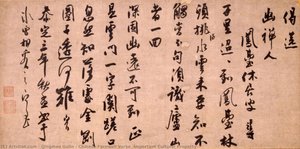
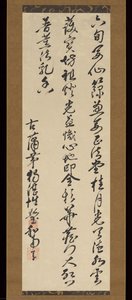

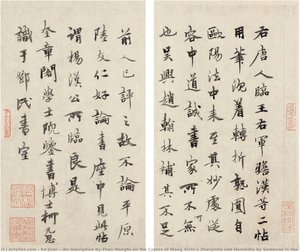
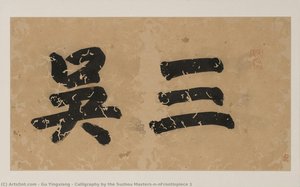
Biografija umetnika
The Scholar’s Unyielding Spirit
Born in the coastal serenity of Dongshan County around 1585, Huang Daozhou was a man whose life was defined by a profound tension between the delicate precision of the scholar's brush and the turbulent, often violent, realities of imperial politics. A figure of immense intellectual weight during the late Ming Dynasty, Huang’s journey was one of rising brilliance and tragic descent. After attaining the prestigious Jinshi degree in 1622, he entered the heart of the Ming bureaucracy, eventually serving in roles as significant as the Minister for Education. Yet, his career was never merely a matter of administrative duty; it was a battlefield of conscience. Known for his unwavering integrity and a refusal to remain silent in the face of corruption, Huang frequently offered candid, often biting, critiques to the Chongzhen Emperor. This very honesty, while earning him the respect of many intellectuals, alienated the powerful factions within the court, leading to a cycle of demotions and imprisonable offenses that would shadow his entire official life.
The Fluidity of the Cursive Script
In the realm of calligraphy, Huang Daozhou achieved a level of mastery that mirrored his internal fortitude—a style that was as energetic as it was disciplined. He became one of the preeminent exponents of caoshu, or cursive script, during the twilight of the Ming era. To observe his work is to witness a brush that races across the silk, rarely pausing to lift between characters, creating cascading textures of ink that seem to move with a life of their own. This technique was not merely an aesthetic choice but an expression of a spirit that refused to be constrained by rigid boundaries. In works such as his Poem dedicated to Wen Zhenmeng, the fluidity of the script captures a sense of continuous motion, much like the historical currents that were sweeping through China at the time. His calligraphy serves as a testament to a moment in history where the elegance of tradition met the frantic energy of a changing world.
Nature as an Allegory of Constancy
Beyond the rhythmic dance of ink, Huang’s artistic vision extended into the landscape, where he utilized natural motifs to communicate deep philosophical truths. He is perhaps most admired for his depictions of pines and rocks—elements that, in Chinese iconography, serve as enduring symbols of perseverance, strength, and moral constancy. In his notable scroll, Pines and Rock, created for his disciple Zhang Ruizhong, Huang employs a landscape that is both rugged and contemplative. The towering pines, standing amidst craggy formations, act as metaphors for the scholar who remains upright despite the storms of political upheaval. His deep understanding of the Book of Changes is woven into these works, often accompanied by inscriptions that reflect his stoic resolve. Through these paintings, Huang transformed the natural world into a mirror for the human soul, illustrating the struggle to maintain one's essence in an era of profound instability.
A Legacy Written in Blood and Ink
The tragedy of Huang Daozhou lies in the fact that his commitment to principle could not be contained within the quietude of a studio or the halls of academia. As the Ming Dynasty crumbled under the weight of the Manchurian invasion, the scholar-official transitioned into the role of a military general. His final chapter was written not with a brush, but with the ultimate sacrifice of a man who refused to surrender his values. Captured during the conflict, he chose death over capitulation, ensuring that his historical legacy would be one of martyrdom as much as artistry. Today, we remember him through:
- His calligraphic mastery, which captured the kinetic energy of the late Ming period.
- His landscape paintings, which provided a visual language for Confucian virtue and resilience.
- His political integrity, which remains a poignant study of the cost of intellectual dissent.
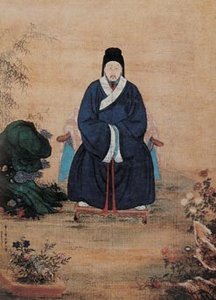
huang daozhou
1585 - 1646 , China
Osnovne informacije
- Artistic Movement Or Style: Sumi-e
- Date Of Birth: Dongshan County, China (1585)
- Date Of Death: 1646
- Full Name: Huang Daozhou
- Nationality: Chinese
- Notable Artworks: ['Pines and Rock']
- Place Of Birth: China
Povezani članci
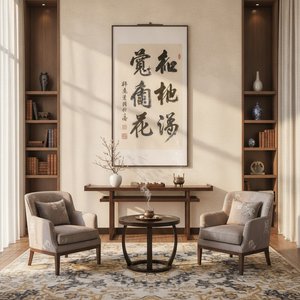
Timeless Elegance: Discovering the Soulful Beauty of Chinese Calligraphy for Sophisticated Home Interiors
Elevate your home with the serene beauty of Chinese calligraphy art. Explore our collection of hand-painted ink wash reproductions and bespoke commissions at ArtsDot.com. Discover museum-quality pieces designed to bring cultural elegance and tranquility to your modern interior.
Ephemeral Expressions: Exploring the Nuances of Ink on Paper Through History & Contemporary Art
Explore the captivating world of ink wash painting – from its ancient origins to contemporary masters. Discover techniques, symbolism & conservation insights with ArtsDot.com.
Xie Zhiliu: A Legacy of Ink Wash Painting & Modern Chinese Literati Tradition
Explore the legacy of Xie Zhiliu, a master of Chinese ink wash painting & prominent figure in modern art. Discover his techniques, influences, and contributions to literati tradition. A guide for discerning collectors.
Ephemeral Lines: Exploring Emotional Resonance in Ink Sketching Traditions
Explore the profound art of ink sketching! Discover techniques to express emotion, master line work, and cultivate artistic sensitivity. Learn from historical masters & unlock your creative potential.
The Beauty of Ink Wash: Discover Serene & Soulful Art for Your Home
Discover the tranquil beauty of ink wash painting. Explore how Sumi-e and monochrome landscapes bring Zen-inspired serenity and soulful elegance to your home decor through expert curation and timeless East Asian aesthetics.

