

 Preview
 Send
Send Share
Share
 Details

 Download
 Similars
 X-Ray
X-Ray Diaporama
 Stats
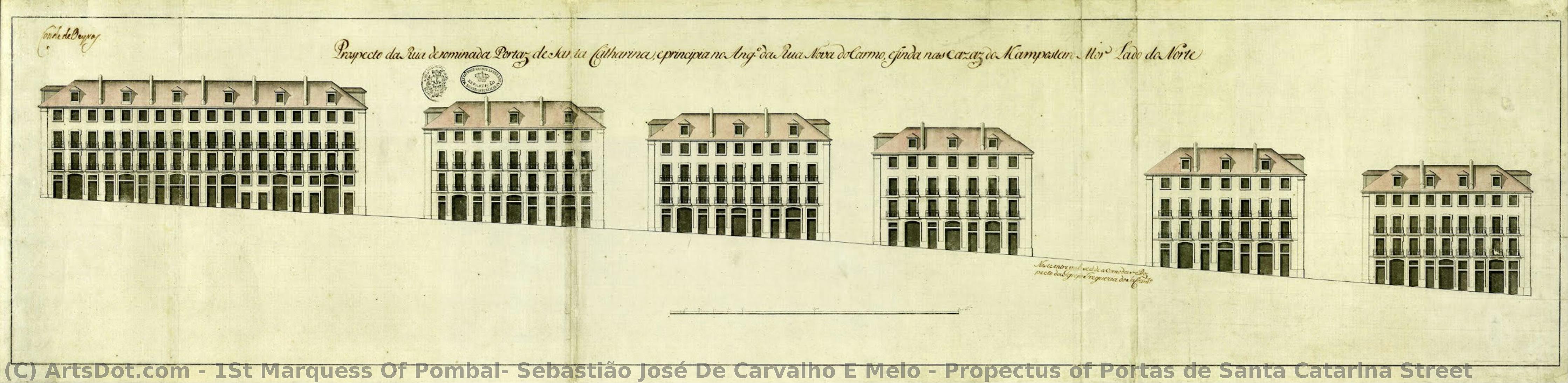
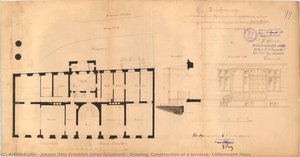
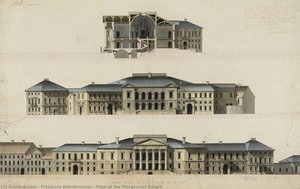
StatsPropectus of Portas de Santa Catarina Street
 Neoclassicism
 1769
1769 40.0 x 34.0 cm
 Lisboa Municipal Archive
 Read More
Hand Made Oil Reproduction
Hand-painted oil on canvas in your size and frame, made to order by our artists. ( Switch to Print Switch to Digital Image)




































Pick from our preset sizes that match the artwork's original proportions.

You may enter your own dimensions to fit a specific frame or space. If your selected size does not match the original image's proportions, we will either crop the artwork or extend the painting with additional hand-painted elements. A digital mockup will be sent for your approval before production begins.
Please note that the on-screen preview does not reflect the actual cropping or extension. Only the mockup will accurately show the final composition.
While custom sizes are available, we recommend selecting a dimension from the predefined list to preserve the original proportions.
After order, ArtsDot.com team will email client for instructions and provide a mockup preview
Worldwide Delivery () in 3/4 weeks instead of standard 5 weeks. (10 September). No compromise on quality.

Free Worldwide Express Shipping

High-Quality Linen Canvas

Full Shipping Insurance

Customs Tax Refund Guarantee

True Color Matching Guarantee

100-Day Return Policy (Defects Only)

100% Money-Back Guarantee

Bulk Discount Offer
 Glass option is only available in size under 110 CM

Propectus of Portas de Santa Catarina Street
Reproduction Medium
Reproduction Size
-


Total Price
$ 263
Related Artworks
Artist Biography
Sebastião José de Carvalho e Melo: The Architect of Modern Lisbon
Sebastião José de Carvalho e Melo, better known as the 1st Marquess of Pombal, was far more than a nobleman; he was a transformative figure in Portuguese history and a surprisingly adept architect whose vision reshaped Lisbon after the devastating earthquake of 1755. Born in Lisbon in 1699, his early life offered little indication of the immense power and influence he would wield. He rose through the ranks of public service, demonstrating exceptional intelligence and administrative skill, eventually becoming Secretary of State under King Joseph I. While renowned as a statesman—a staunch advocate for economic reform and centralized authority—Pombal’s legacy is inextricably linked to the reconstruction of Lisbon, a project that showcased his practical understanding of urban planning and architectural principles.From Ruin to Renaissance: The Reconstruction of Lisbon
The earthquake of November 1, 1755, was catastrophic. It leveled much of Lisbon, plunging Portugal into chaos. King Joseph I entrusted Pombal with the monumental task of rebuilding the city. Unlike previous responses to disaster which often involved haphazard reconstruction, Pombal envisioned a new Lisbon—a rationally planned metropolis designed to withstand future calamities and reflect enlightened ideals. He immediately implemented measures to clear rubble, prevent disease, and provide shelter for survivors. More importantly, he established strict building codes based on earthquake-resistant designs, utilizing innovative techniques like the *cage construction* method – a timber framework encased in masonry. This wasn’t merely about rebuilding; it was about creating a modern city, one that prioritized functionality, safety, and aesthetic harmony. The Baixa district, the heart of Lisbon, became Pombal's most ambitious project. Its grid-like streets, grand squares like Praça do Comércio, and uniform building facades stand as a testament to his vision.A Practical Visionary: Architectural Style and Influences
Pombal wasn’t an architect in the traditional sense; he didn't design buildings with elaborate flourishes or pursue a distinct artistic style. His approach was fundamentally pragmatic, driven by efficiency and necessity. He commissioned architects like Eugénio dos Santos to execute his plans, but it was Pombal who dictated the overall aesthetic—a restrained Neoclassical style characterized by symmetry, order, and simplicity. Influences can be seen in the Palladian architecture prevalent across Europe at the time, emphasizing classical proportions and rational design. However, Pombal’s work also reflects a distinctly Portuguese sensibility, adapting these influences to suit the specific needs and context of Lisbon. His detailed architectural drawing for Rua Santa Catarina street, created in 1769, exemplifies this approach—a meticulous plan prioritizing functionality and urban flow over ostentatious decoration.Beyond Reconstruction: Economic Reforms and Lasting Impact
Pombal’s influence extended far beyond the physical reconstruction of Lisbon. He implemented sweeping economic reforms aimed at revitalizing Portugal's economy, including promoting domestic industries, regulating trade, and establishing a national bank. He also centralized power within the monarchy, reducing the influence of the aristocracy and the Church. These policies, while controversial during his time, laid the foundation for Portugal’s modernization. Though he was eventually disgraced and exiled in 1777, his legacy endured. The Baixa district remains a powerful symbol of Lisbon's resilience and Pombal’s visionary leadership. His emphasis on rational urban planning and earthquake-resistant construction continues to influence architectural practices today. He left an indelible mark not only on the cityscape of Lisbon but also on the course of Portuguese history, solidifying his position as one of Portugal’s most significant figures—a statesman who dared to rebuild a nation from the ruins.
Quick Facts
- Artistic Movement Or Style: Urban design
- Date Of Death: Living
- Full Name: Sebastião José de Carvalho e Melo
- Notable Artworks: ['Propectus of Portas de Santa Catarina Street']
Related Articles
Reflections of an Age: Social Commentary & Artistic Representation in 18th-Century Society
Explore the social commentary & artistic representation of 18th-century society. Discover Rococo masterpieces, portraiture's power, and shifting historical perspectives. Expert insights for art lovers.

Reflecting Nobility & Nuance: 18th-Century Portraiture as a Window into Societal Values
Explore the world of 18th-century portraiture with ArtsDot. Discover symbolism, artistic innovation & societal values reflected in masterpieces by Reynolds, Hogarth & more. Expert insights for collectors.
Illuminating the Enlightenment: Art & Sociopolitical Context of the 18th Century
Explore the art of the Enlightenment! Discover Rococo's elegance, Neoclassicism’s virtue, & David’s revolutionary masterpieces. Uncover the sociopolitical context shaping 18th-century European painting.
Iconic Art of the 18th & 19th Centuries: Masterpieces for Your Home | ArtsDot
Journey through 18th & 19th century art! Explore iconic masterpieces by Monet, Van Gogh & more. Discover the stories behind these timeless paintings and find museum-quality reproductions for your home at ArtsDot.com.
18th Century Masters: 10 Artworks That Define an Era | ArtsDot
Journey through 18th century art! Explore 10 iconic paintings – from Rococo elegance to Neoclassical grandeur. Discover Fragonard, David & more. Find museum-quality reproductions and elevate your home decor on ArtsDot.com.
