 Preview
 Send
Send Share
Share
 Details

 Download
 Similars
 X-Ray
X-Ray Diaporama
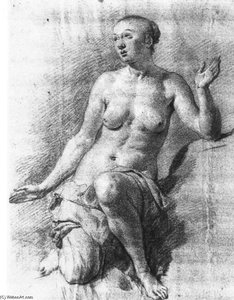
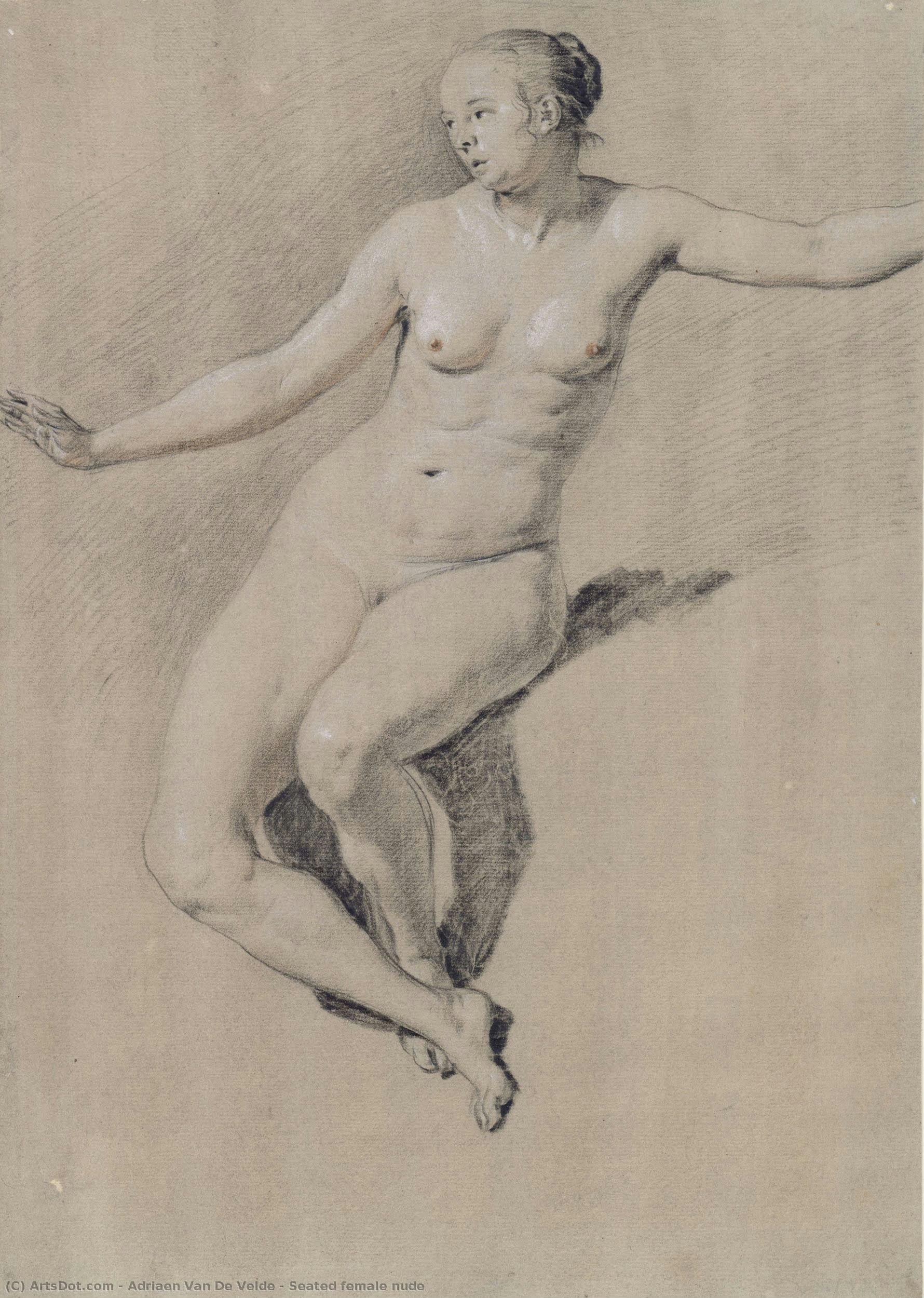
Seated female nude
 Chalk
Chalk- Academic Drawing
 Early Modern
 21.0 x 30.0 cm
 Kupferstichkabinett
 Read More
Hand Made Oil Reproduction
Hand-painted oil on canvas in your size and frame, made to order by our artists. ( Buy Print Buy Image)




P118B $10

P118H $10

P118W $10

P438Z $10

P508JH $12

P508YH $12

P805H $10

P805Z $10

P919BZ $10

P919G $10

P919XJ $10

P959ZH $10

P968JZ $12

W106C $8

W218G $10

W218JH $8

W218Y $10

W307PJ $10

W316G $10

W316PJ $8

W316Y $10

W398PJ $8

W4111J $10

W500HY $15

W500JH $15

W692G $12

W849H $8

W940BG $15

W953PJ $8




Pick from our preset sizes that match the artwork's original proportions.

You may enter your own dimensions to fit a specific frame or space. If your selected size does not match the original image's proportions, we will either crop the artwork or extend the painting with additional hand-painted elements. A digital mockup will be sent for your approval before production begins.
Please note that the on-screen preview does not reflect the actual cropping or extension. Only the mockup will accurately show the final composition.
While custom sizes are available, we recommend selecting a dimension from the predefined list to preserve the original proportions.
After order, ArtsDot.com team will email client for instructions and provide a mockup preview
Worldwide Delivery () in 3/4 weeks instead of standard 5 weeks. (16 August). No compromise on quality.

Free Worldwide Express Shipping

High-Quality Linen Canvas

Full Shipping Insurance

Customs Tax Refund Guarantee

True Color Matching Guarantee

60-Day Return Policy (Defects Only)

100% Money-Back Guarantee

Bulk Discount Offer
 Glass option is only available in size under 110 CM

Seated female nude
Reproduction Medium
Reproduction Size
-


Total Price
$ 263
Artwork Description
The Intimacy of the Sketch: A Study in Light and Form
In the quiet corners of the Dutch Golden Age, away from the grand maritime vistas and sweeping landscapes that defined the era, lies a more intimate form of artistic exploration. Adriaen van de Velde’s Seated Female Nude serves as a profound window into this private creative process. This delicate work, executed in three hues of chalk on grey paper, is far more than a mere preliminary sketch; it is a masterclass in the observation of light and the grace of the human silhouette. While originally conceived as a preparatory figure study for a larger painted composition, the drawing possesses a self-contained beauty that commands attention. The way the reflected light dances across the skin and the subtle shadows cast by the legs suggest a moment frozen in time, capturing the model in a state of relaxed, natural repose.
The technical prowess displayed in this piece is nothing short of mesmerizing. Through the meticulous use of hatching and cross-hatching, Van de Velde breathes life into the two-dimensional surface, creating a sense of volume and anatomical weight that feels almost tactile. The artist’s ability to manipulate graphite and chalk allows for a spectrum of tones, from the softest highlights on the shoulder to the deep, velvety shadows beneath the limbs. This rhythmic application of lines does not merely define the edges of the body but builds a textured landscape of musculature and curve, inviting the viewer to trace the contours of the figure with their eyes. It is this rigorous attention to detail that makes the piece an essential study for anyone captivated by the intersection of realism and classical elegance.
Historical Resonance and Artistic Legacy
To understand this drawing, one must look into the vibrant studio culture of seventeenth-century Holland. Adriaen van de Velde was a master of the tranquil landscape, yet his repertoire of figure studies reveals a deeper, more experimental side of his genius. During this period, figure studies were vital tools in an artist's arsenal, used to refine anatomical accuracy before committing brushstrokes to canvas. There is a poignant historical layer to this work as well; while male family members and colleagues often served as models for such studies, female models in the Dutch Republic frequently occupied complex social positions. In this drawing, however, the social context fades into the background, leaving only the pure, academic pursuit of beauty and form.
For the discerning collector or interior designer, this artwork offers a sophisticated touch of classical refinement. Its monochromatic palette of greys and subtle browns allows it to integrate seamlessly into a variety of high-end decor styles, from contemporary minimalist galleries to traditional, richly textured studies. The piece evokes an atmosphere of intellectual curiosity and timelessness, making it an ideal focal point for a space dedicated to contemplation. Owning a reproduction of such a significant study is not merely about possessing a beautiful image; it is about bringing the disciplined, observant spirit of the Dutch masters into the modern home, celebrating a legacy of anatomical truth and artistic devotion.
Related Artworks
Artist Biography
The Master of Pastoral Serenity
Adriaen van de Velde stands as a pivotal figure in the Dutch Golden Age, a period defined by an unparalleled flourishing of artistic innovation and observational precision. Born in Amsterdam in 1636, he was immersed from birth in a lineage of profound artistic talent. As the son of the celebrated marine painter Willem van de Velde the Elder and the brother of the renowned maritime master Willem van de Velde the Younger, Adriaen was destined for greatness within the vibrant milieu of seventeenth-century Dutch art. However, rather than following his brother’s path toward the turbulent seas and maritime vistas, Adriaen sought a different kind of tranquility. He turned his gaze toward the earth, honing his skills in the studio of Jan Wynants, where he mastered the delicate nuances of landscape composition and learned to capture the subtle, atmospheric effects that breathe life into a canvas.
His artistic evolution was further enriched by a profound connection to the works of Philip Wouwerman. This mentorship instilled in him a deep appreciation for animal painting, a specialty that would become his hallmark. Van de Velde possessed a remarkable ability to blend meticulous observation with a poetic, artistic imagination. He became instrumental in advancing the genre of Italianate landscape painting, introducing figures into landscapes with such grace and naturalism that his techniques were later adopted by luminaries such as Hobbema and Ruysdael. His work often features rolling meadows teeming with life—sheep, cattle, and goats—executed with a silvery coloring and a commitment to realism that transports the viewer to a timeless, idyllic world.
Technique and Artistic Vision
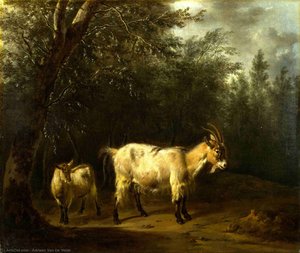
The brilliance of Van de Velde’s oeuvre lies in his ability to evoke emotion through light and texture. His landscapes are not merely depictions of scenery but are atmospheric experiences. Whether he was painting a Mountainous Landscape with Cows or the intimate details of A Goat and a Kid, his brushwork conveyed a sense of peace and permanence. He utilized a palette that could shift from warm, sun-drenched tones to the cool, silvery light characteristic of the Dutch atmosphere, creating depth and a palpable sense of air within his compositions.
Beyond his celebrated pastoral scenes, Van de Velde demonstrated a surprising versatility that showcased his command over different narrative modes. His talent was not limited to the natural world; he also ventured into religious iconography, most notably seen in his creation of The Descent from the Cross for a Roman Catholic hidden church in Amsterdam. This ability to pivot from the secular beauty of a stone bridge or a rural meadow to the profound gravity of sacred subjects speaks to an artist of immense technical range and intellectual depth.
Legacy and Historical Significance
Throughout his career, Van de Velde was a collaborative spirit, working alongside other masters of his era such as Jan van der Heyden and Frederik de Moucheron. His dedication to the refinement of animal depiction helped elevate the status of genre painting within the Dutch hierarchy of subjects. His influence can be traced through the development of the landscape tradition, as he bridged the gap between the rugged realism of early Dutch masters and the more idealized, classical Italianate styles that would follow.
Though his life was tragically short, ending in 1672, the impact of his approximately two hundred surviving works remains profound. He left behind a legacy of:
- Mastery of Light: An unparalleled ability to capture the fleeting, atmospheric qualities of the Dutch sky and landscape.
- Animal Portraiture: Elevating livestock and pastoral animals from mere background elements to central, soulful subjects of art.
- Genre Innovation: Integrating human figures into landscapes in a way that felt organic, narrative, and deeply integrated into the environment.
Today, Adriaen van de Velde is remembered not just as a painter of scenes, but as a poet of the landscape, whose work continues to offer a window into the tranquil, sunlit heart of the Dutch Golden Age.
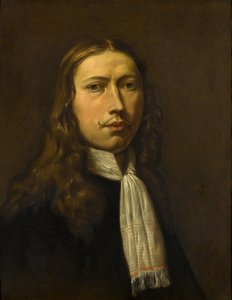
Adriaen van de Velde
1636 - 1672 , Netherlands
Quick Facts
- Artistic Movement Or Style: Italianate landscape
- Artists Or Movements Influenced By This Artist: ['Hudson River School']
- Artists Who Influenced This Artist:
- Jan Wynants
- Philip Wouwerman
- Date Of Birth: Amsterdam, Netherlands (1636)
- Date Of Death: Amsterdam, Netherlands (1672)
- Full Name: Adriaen van de Velde
- Nationality: Dutch
- Notable Artworks:
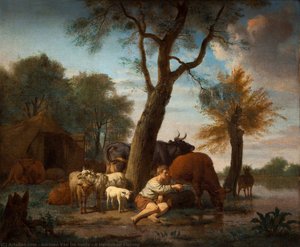
- Cattle and Goats in a Meadow
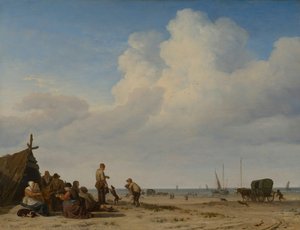
- Beach at Scheveningen
- Place Of Birth: Amsterdam
Related Articles
Willem van de Velde the Elder: Master of Maritime Painting & Chronicler of the Dutch Golden Age
Discover the captivating maritime paintings of Willem van de Velde the Elder, a master chronicler of the Dutch Golden Age. Explore his unparalleled realism and lasting influence on naval art history.
Van Gogh's Masterpieces: Explore 25 Iconic Paintings & Art for Your Home
Journey through Vincent van Gogh's 25 most iconic paintings! Explore 'Starry Night', 'Sunflowers,' and more—discover the stories, techniques & emotions behind these Post-Impressionist masterpieces. Find museum-quality art reproductions for your home at ArtsDot.com.

Dutch Masters: 10 Golden Age Paintings That Still Inspire |
Journey into the Dutch Golden Age! Explore 10 iconic paintings by Rembrandt, Vermeer & Hals. Discover the stories behind these Baroque masterpieces and find museum-quality art reproductions to elevate your home decor on .

Demandes Commerciales
APS ofrece reproducciones de bellas artes y encargos personalizados desde 2004. Confían en nosotros corporaciones, hoteles y coleccionistas selectos para obras de arte de calidad museística, servicio discreto y soluciones artísticas completas. ¡Póngase en contacto con nosotros para obtener un presupuesto personalizado!

Rembrandt's Masterpieces: Explore 25 Iconic Paintings & Prints | ArtsDot
Journey through Rembrandt van Rijn's 25 most iconic paintings & etchings. Explore Dutch Golden Age masterpieces, dramatic chiaroscuro, and timeless portraits. Find museum-quality art reproductions to elevate your home decor on ArtsDot.com.