 Preview
 Send
Send Share
Share
 Details

 Download
 Similars
 X-Ray
X-Ray Diaporama
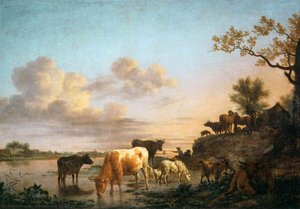
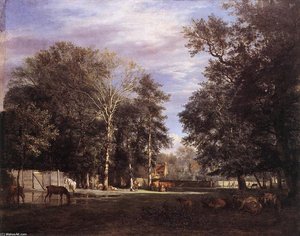
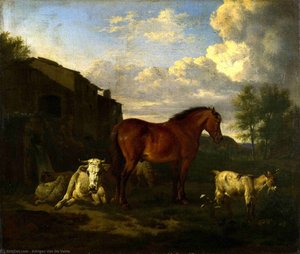
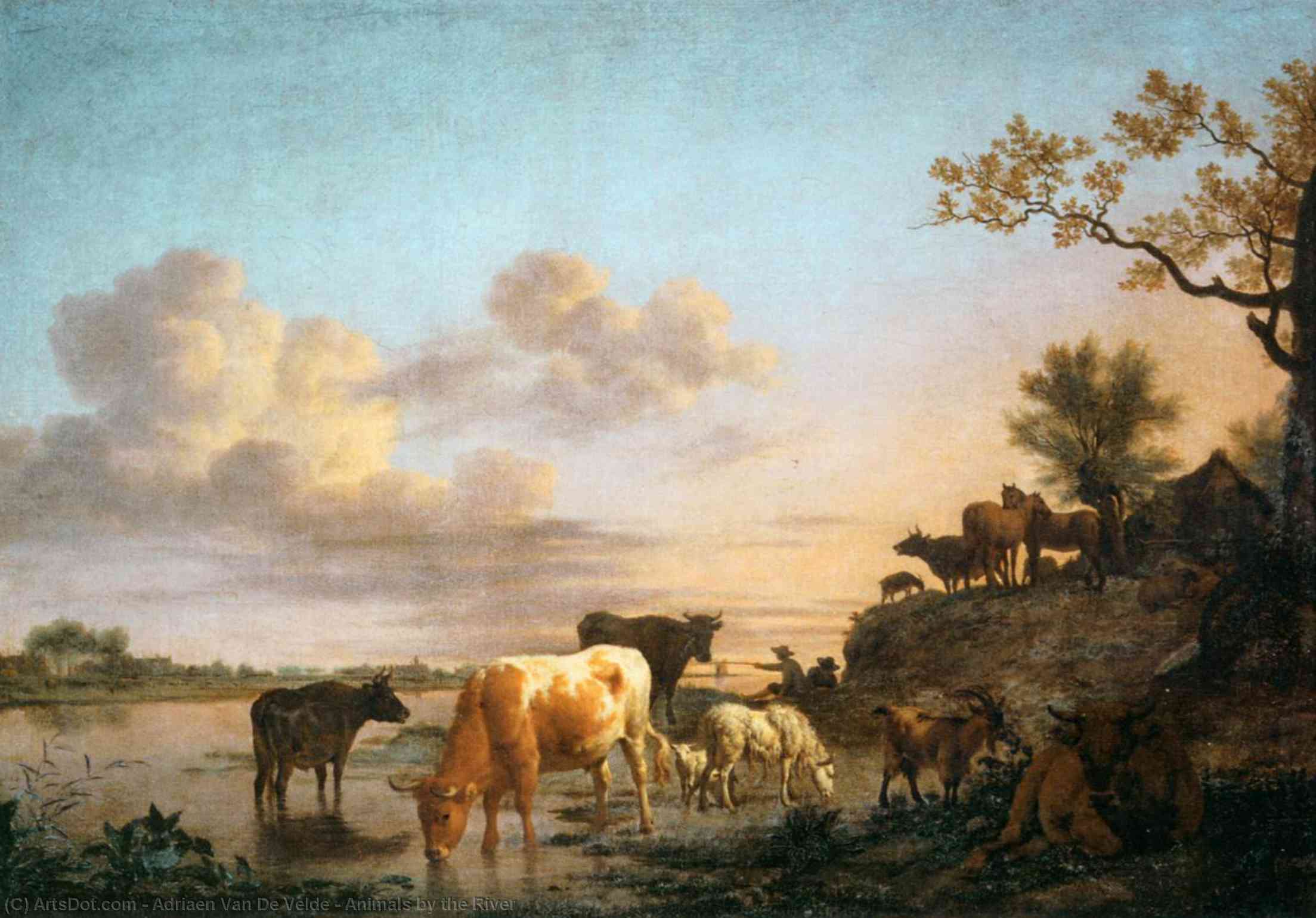
Animals by the River
 Oil On Canvas
- WallArt
- Baroque
 1664
1664 50.0 x 71.0 cm
 The Louvre
 Read More
Hand Made Oil Reproduction
Hand-painted oil on canvas in your size and frame, made to order by our artists. ( Buy Print Buy Image)




P118B $10

P118H $10

P118W $10

P438Z $10

P508JH $12

P508YH $12

P805H $10

P805Z $10

P919BZ $10

P919G $10

P919XJ $10

P959ZH $10

P968JZ $12

W106C $8

W218G $10

W218JH $8

W218Y $10

W307PJ $10

W316G $10

W316PJ $8

W316Y $10

W398PJ $8

W4111J $10

W500HY $15

W500JH $15

W692G $12

W849H $8

W940BG $15

W953PJ $8




Pick from our preset sizes that match the artwork's original proportions.

You may enter your own dimensions to fit a specific frame or space. If your selected size does not match the original image's proportions, we will either crop the artwork or extend the painting with additional hand-painted elements. A digital mockup will be sent for your approval before production begins.
Please note that the on-screen preview does not reflect the actual cropping or extension. Only the mockup will accurately show the final composition.
While custom sizes are available, we recommend selecting a dimension from the predefined list to preserve the original proportions.
After order, ArtsDot.com team will email client for instructions and provide a mockup preview
Worldwide Delivery () in 3/4 weeks instead of standard 5 weeks. (17 August). No compromise on quality.

Free Worldwide Express Shipping

High-Quality Linen Canvas

Full Shipping Insurance

Customs Tax Refund Guarantee

True Color Matching Guarantee

60-Day Return Policy (Defects Only)

100% Money-Back Guarantee

Bulk Discount Offer
 Glass option is only available in size under 110 CM

Animals by the River
Reproduction Medium
Reproduction Size
-


Total Price
$ 263
Artwork Description
A Symphony of Light and Shadow: Adriaen van de Velde’s “Animals by the River”
Adriaen van de Velde's "Animals by the River," painted in 1664, isn’t merely a depiction of livestock; it’s a carefully constructed tableau brimming with quiet observation and an exquisite understanding of light. This remarkable work, now meticulously reproduced on canvas, transports us to a serene corner of the Dutch countryside – a place where the rhythms of rural life unfold with a palpable sense of peace. Van de Velde, a pivotal figure in the Dutch Golden Age, masterfully blended influences from Italianate landscape painting with his native Dutch traditions, creating an atmosphere both familiar and subtly exotic.
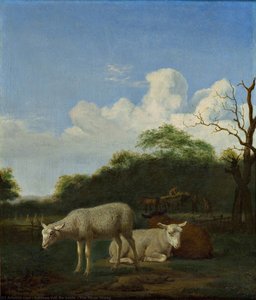
The scene itself is deceptively simple: a gently flowing river bisects a verdant meadow, dotted with grazing cows – their forms rendered with a remarkable sensitivity to musculature and movement. A small herd of horses, one close to the left edge and another towards the right, adds a touch of dynamism to the composition. A solitary dog, positioned near the center-right, seems to observe the proceedings with quiet curiosity. Yet, it’s not the subject matter that commands attention but rather Van de Velde's masterful handling of light and shadow. He employs a technique known as “chiaroscuro,” dramatically contrasting areas of bright illumination with deep, cool shadows, creating an almost theatrical effect. The sunlight, seemingly originating from an unseen source, washes over the scene, highlighting the textures of the grass, the sheen of the animals’ coats, and the reflections shimmering on the water's surface.
The Italianate Influence and Dutch Roots
Van de Velde’s artistic journey is a fascinating blend of influences. Initially apprenticed to his father, Willem van de Velde the Elder, a renowned marine painter, Adriaen quickly recognized that he preferred the quieter beauty of the land. He sought guidance from Jan Wynants in Haarlem, absorbing the principles of landscape composition and mastering the art of capturing atmospheric effects – skills that would prove invaluable as he later collaborated with Philip Wouwerman, a master of animal painting who instilled within him an appreciation for the nuances of portraying living creatures.
Crucially, Van de Velde’s work reflects the burgeoning influence of Italianate landscape painting during this period. Artists like Karel Dujardin and Nicolaes Berchem had popularized scenes of idyllic pastoral landscapes – often featuring shepherds, cattle, and mythological figures – set against a backdrop of rolling hills and bathed in golden light. Van de Velde skillfully adopted these techniques, adapting them to the specific context of the Dutch countryside. This fusion of Italianate elegance with distinctly Dutch agricultural themes created a unique visual language that defined his oeuvre.
Symbolism and the Rhythm of Rural Life
Beyond its technical brilliance, “Animals by the River” is rich in symbolic meaning. The scene evokes a sense of harmony between humanity and nature – a reflection of the prevailing worldview during the Dutch Golden Age, where prosperity was often linked to responsible stewardship of the land. The cows, grazing peacefully, represent abundance and fertility, while the horses symbolize strength and vitality. The river itself acts as a unifying element, connecting the various elements of the composition and suggesting a continuous flow of life.
Furthermore, the painting captures a specific moment in time – a fleeting glimpse into the daily rhythms of rural life. The animals are engaged in their natural behaviors: grazing, drinking, observing. Van de Velde’s meticulous attention to detail allows us to feel as though we are witnessing this scene unfold before our very eyes. It's a testament to his ability to imbue even the most commonplace subject matter with profound beauty and emotional resonance.
A Timeless Masterpiece – Perfect for Your Space
Reproduced with exceptional fidelity, “Animals by the River” offers a stunning addition to any home or office. The rich colors, intricate details, and masterful use of light create a captivating visual experience that will transform any room into a sanctuary of tranquility. Whether you’re an art enthusiast, a collector seeking a piece of Dutch Golden Age history, or simply someone who appreciates the beauty of nature, this reproduction is sure to delight and inspire.
Consider framing this exquisite artwork in a classic wooden frame to further enhance its timeless appeal. Its serene composition and evocative imagery will undoubtedly become a cherished focal point, adding a touch of elegance and sophistication to your interior design.
Related Artworks


Artist Biography
The Master of Pastoral Serenity
Adriaen van de Velde stands as a pivotal figure in the Dutch Golden Age, a period defined by an unparalleled flourishing of artistic innovation and observational precision. Born in Amsterdam in 1636, he was immersed from birth in a lineage of profound artistic talent. As the son of the celebrated marine painter Willem van de Velde the Elder and the brother of the renowned maritime master Willem van de Velde the Younger, Adriaen was destined for greatness within the vibrant milieu of seventeenth-century Dutch art. However, rather than following his brother’s path toward the turbulent seas and maritime vistas, Adriaen sought a different kind of tranquility. He turned his gaze toward the earth, honing his skills in the studio of Jan Wynants, where he mastered the delicate nuances of landscape composition and learned to capture the subtle, atmospheric effects that breathe life into a canvas.
His artistic evolution was further enriched by a profound connection to the works of Philip Wouwerman. This mentorship instilled in him a deep appreciation for animal painting, a specialty that would become his hallmark. Van de Velde possessed a remarkable ability to blend meticulous observation with a poetic, artistic imagination. He became instrumental in advancing the genre of Italianate landscape painting, introducing figures into landscapes with such grace and naturalism that his techniques were later adopted by luminaries such as Hobbema and Ruysdael. His work often features rolling meadows teeming with life—sheep, cattle, and goats—executed with a silvery coloring and a commitment to realism that transports the viewer to a timeless, idyllic world.
Technique and Artistic Vision
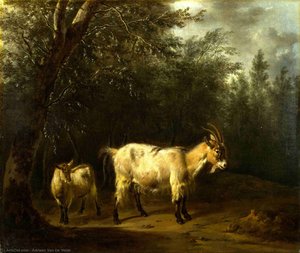
The brilliance of Van de Velde’s oeuvre lies in his ability to evoke emotion through light and texture. His landscapes are not merely depictions of scenery but are atmospheric experiences. Whether he was painting a Mountainous Landscape with Cows or the intimate details of A Goat and a Kid, his brushwork conveyed a sense of peace and permanence. He utilized a palette that could shift from warm, sun-drenched tones to the cool, silvery light characteristic of the Dutch atmosphere, creating depth and a palpable sense of air within his compositions.
Beyond his celebrated pastoral scenes, Van de Velde demonstrated a surprising versatility that showcased his command over different narrative modes. His talent was not limited to the natural world; he also ventured into religious iconography, most notably seen in his creation of The Descent from the Cross for a Roman Catholic hidden church in Amsterdam. This ability to pivot from the secular beauty of a stone bridge or a rural meadow to the profound gravity of sacred subjects speaks to an artist of immense technical range and intellectual depth.
Legacy and Historical Significance
Throughout his career, Van de Velde was a collaborative spirit, working alongside other masters of his era such as Jan van der Heyden and Frederik de Moucheron. His dedication to the refinement of animal depiction helped elevate the status of genre painting within the Dutch hierarchy of subjects. His influence can be traced through the development of the landscape tradition, as he bridged the gap between the rugged realism of early Dutch masters and the more idealized, classical Italianate styles that would follow.
Though his life was tragically short, ending in 1672, the impact of his approximately two hundred surviving works remains profound. He left behind a legacy of:
- Mastery of Light: An unparalleled ability to capture the fleeting, atmospheric qualities of the Dutch sky and landscape.
- Animal Portraiture: Elevating livestock and pastoral animals from mere background elements to central, soulful subjects of art.
- Genre Innovation: Integrating human figures into landscapes in a way that felt organic, narrative, and deeply integrated into the environment.
Today, Adriaen van de Velde is remembered not just as a painter of scenes, but as a poet of the landscape, whose work continues to offer a window into the tranquil, sunlit heart of the Dutch Golden Age.
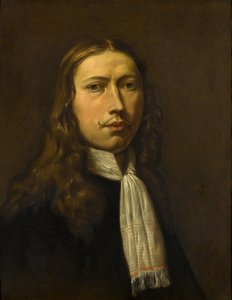
Adriaen van de Velde
1636 - 1672 , Netherlands
Quick Facts
- Artistic Movement Or Style: Italianate landscape
- Artists Or Movements Influenced By This Artist: ['Hudson River School']
- Artists Who Influenced This Artist:
- Jan Wynants
- Philip Wouwerman
- Date Of Birth: Amsterdam, Netherlands (1636)
- Date Of Death: Amsterdam, Netherlands (1672)
- Full Name: Adriaen van de Velde
- Nationality: Dutch
- Notable Artworks:
- Cattle and Goats in a Meadow
- Beach at Scheveningen
- Place Of Birth: Amsterdam
Related Articles
Animalia: Exploring the Enduring Presence of Animals in Art & Interior Design
Explore the rich history of animal symbolism in art, from ancient mythology to modern masterpieces. Discover how animals have inspired artists for centuries and learn how to incorporate these powerful motifs into your home décor.
The Noble Steed on Canvas: A Historical & Artistic Exploration of Horse Painting Across Cultures
Explore the rich history of horse painting! Discover masterpieces from Stubbs to Munnings & learn about symbolism, techniques & artists. Find museum-quality reproductions at ArtsDot.
The Noble Steed: A Historical and Artistic Exploration of Horses in Fine Art
Explore the rich history of horses in fine art! From ancient depictions to Renaissance masterpieces & beyond, discover iconic artworks and artists. Learn about symbolism, techniques, and find museum-quality reproductions at ArtsDot.
Beastly Brushstrokes: A Historical Journey Through Animal Painting & Aesthetic Movements
Explore the rich history of animal painting across cultures & movements. Discover iconic artists, symbolism, collecting trends & expert art consultation at ArtsDot.com.
Charles Leickert: Capturing the Dutch Golden Age Light – A Comprehensive Study of Technique, Context, and Legacy
Explore the captivating winter landscapes of Charles Leickert, a master of Dutch Golden Age light & atmosphere. Discover his techniques, symbolism, and lasting legacy – a comprehensive study for art enthusiasts and collectors.