 Preview
 Send
Send Share
Share
 Details

 Download
 Similars
 X-Ray
X-Ray Diaporama
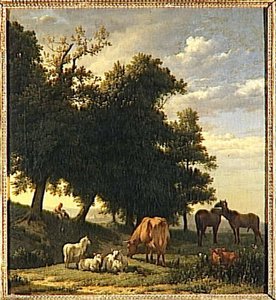
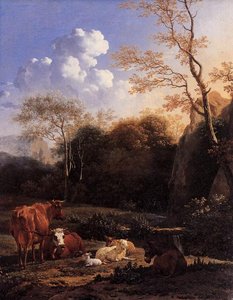
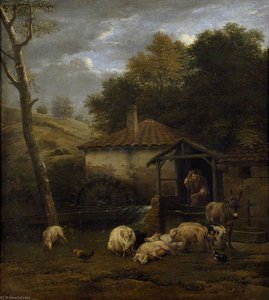
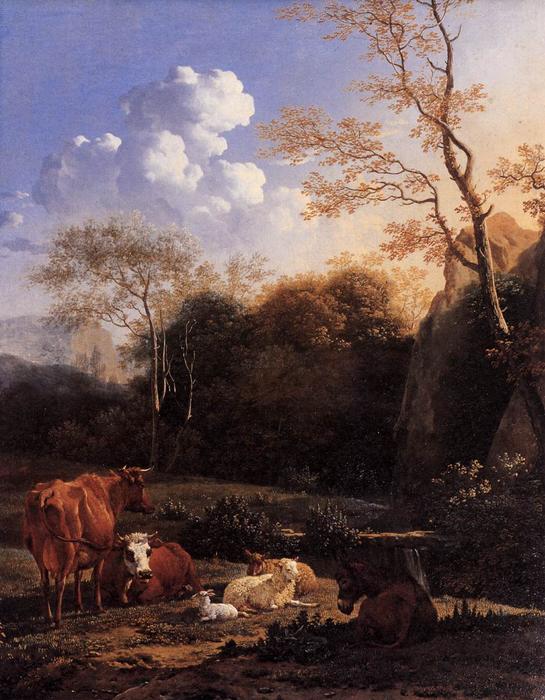
Cows and Sheep at a Stream
 Oil On Canvas
- WallArt
- Dutch Golden Age
 1655
1655 52.0 x 43.0 cm
 The Louvre
 Read More
Hand Made Oil Reproduction
Hand-painted oil on canvas in your size and frame, made to order by our artists. ( Buy Print Buy Image)




P118B $10

P118H $10

P118W $10

P438Z $10

P508JH $12

P508YH $12

P805H $10

P805Z $10

P919BZ $10

P919G $10

P919XJ $10

P959ZH $10

P968JZ $12

W106C $8

W218G $10

W218JH $8

W218Y $10

W307PJ $10

W316G $10

W316PJ $8

W316Y $10

W398PJ $8

W4111J $10

W500HY $15

W500JH $15

W692G $12

W849H $8

W940BG $15

W953PJ $8




Pick from our preset sizes that match the artwork's original proportions.

You may enter your own dimensions to fit a specific frame or space. If your selected size does not match the original image's proportions, we will either crop the artwork or extend the painting with additional hand-painted elements. A digital mockup will be sent for your approval before production begins.
Please note that the on-screen preview does not reflect the actual cropping or extension. Only the mockup will accurately show the final composition.
While custom sizes are available, we recommend selecting a dimension from the predefined list to preserve the original proportions.
After order, ArtsDot.com team will email client for instructions and provide a mockup preview
Worldwide Delivery () in 3/4 weeks instead of standard 5 weeks. (16 August). No compromise on quality.

Free Worldwide Express Shipping

High-Quality Linen Canvas

Full Shipping Insurance

Customs Tax Refund Guarantee

True Color Matching Guarantee

60-Day Return Policy (Defects Only)

100% Money-Back Guarantee

Bulk Discount Offer
 Glass option is only available in size under 110 CM

Cows and Sheep at a Stream
Reproduction Medium
Reproduction Size
-


Total Price
$ 263
Artwork Description
A Pastoral Reverie: Exploring the World of Karel Dujardin
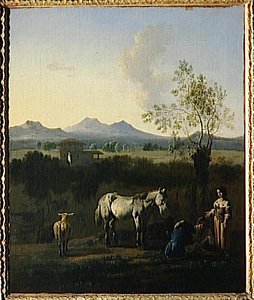
Karel Dujardin’s “Cows and Sheep at a Stream,” painted in 1655, isn't merely a landscape; it’s an immersion into the serene heart of the Dutch Golden Age. This captivating work transports us to a timeless idyll, a carefully constructed vision of rural tranquility that speaks volumes about the era’s fascination with nature and its idealized representation of peasant life. Dujardin, a master of capturing light and atmosphere, elevates the commonplace scene of grazing livestock into an object of profound beauty and contemplative stillness.

The Language of Light and Composition
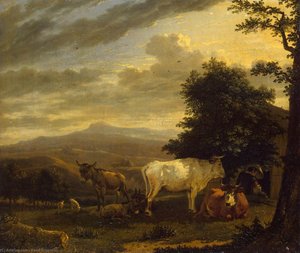
Dujardin’s skill lies not just in depicting the subject matter, but in orchestrating a scene that breathes with life. The painting is dominated by a soft, diffused light – likely simulating the gentle glow of late afternoon or early morning – which washes over the grassy field and illuminates the figures of the cows and sheep. Notice how he employs atmospheric perspective; distant elements recede into a hazy blue, creating an illusion of depth that draws the viewer’s eye into the scene. The pyramidal composition, anchored by the largest cow at its base and culminating in the majestic mountain range, provides a sense of stability and harmony. The horizontal lines of the fields and trees are balanced by the vertical thrust of the distant peaks, contributing to the painting's overall feeling of equilibrium.
A Window into Dutch Golden Age Ideals
“Cows and Sheep at a Stream” is deeply rooted in the artistic conventions of the Dutch Golden Age. It reflects the period’s fascination with naturalism – a desire to accurately represent the world as it was observed, rather than idealized. However, Dujardin doesn't simply replicate reality; he imbues it with an underlying sense of serenity and moral virtue. The scene evokes themes of peace, abundance, and the harmonious relationship between humanity and nature—values highly prized during this era. The painting’s meticulous detail, from the individual blades of grass to the texture of the rocks, speaks to a commitment to realism, while simultaneously conveying a profound appreciation for beauty.
Symbolism and Historical Context
Beyond its aesthetic qualities, “Cows and Sheep at a Stream” offers glimpses into the social and economic realities of 17th-century Holland. The depiction of rural life—the simple pleasures of farming and animal husbandry—reflects the importance of agriculture in Dutch society. The painting also aligns with the broader artistic trend of portraying peasant life as virtuous and dignified, often serving as a visual reminder of the values that underpinned the prosperous Dutch Republic. Karel Dujardin’s work is frequently compared to that of Paulus Potter, another master of animal painting who shared a similar interest in capturing the essence of rural life. The influence of Italianate landscape traditions is also evident, reflecting Dujardin's time spent studying and working in Rome.
Bringing the Pastoral Home
Reproductions of “Cows and Sheep at a Stream” offer a remarkable opportunity to bring this timeless masterpiece into your home or office. The painting’s calming colors and evocative imagery create a sense of tranquility, making it an ideal addition to any space seeking a touch of rustic elegance. Consider how the scene's muted palette and detailed textures would complement various interior design styles – from traditional Dutch interiors to contemporary spaces embracing natural elements. Whether as a statement piece or a subtle accent, Dujardin’s “Cows and Sheep at a Stream” continues to captivate viewers with its beauty, serenity, and enduring appeal.
Related Artworks
Artist Biography
A Life Immersed in Light and Landscape
Karel Dujardin, a name resonating softly within the pantheon of Dutch Golden Age masters, was born in Amsterdam in 1626 – though some records suggest 1622. His life unfolded during a period of unprecedented artistic flourishing in the Netherlands, yet his path wasn’t one of immediate acclaim but rather a gradual unfolding of talent nurtured by careful study and extensive travel. Details surrounding his early years remain somewhat elusive, shrouded in the mists of time, however it is widely accepted that he received foundational training under Nicolaes Berchem, a painter celebrated for his idyllic landscapes populated with animals. This mentorship proved pivotal, instilling in Dujardin a deep appreciation for naturalism and a keen eye for capturing the subtle nuances of light and atmosphere. But Dujardin’s artistic journey wasn't confined to the studios of Amsterdam; he possessed an adventurous spirit that led him to Rome, where he became a member of the *Bentvueghels*, a society of predominantly Dutch and Flemish painters who embraced a bohemian lifestyle and often adopted satirical nicknames. In Rome, he was known as “Barba di Becco” or "Goat-Beard," a moniker likely referencing his distinctive facial hair, and it was here that his artistic voice truly began to mature.The Italianate Influence and Artistic Style
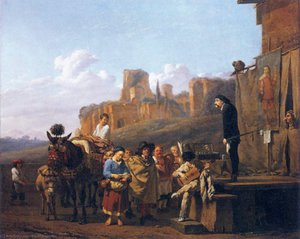
Dujardin’s time in Italy profoundly shaped his artistic style. He wasn't merely replicating the landscapes he encountered; instead, he synthesized them with the Dutch tradition of genre painting, creating a unique blend that captivated audiences on both sides of the Alps. His paintings are characterized by meticulous detail and a remarkable ability to depict scenes of everyday life – rural scenes brimming with animals, peasants engaged in their daily routines, and tranquil pastoral settings. He possessed an exceptional talent for capturing the play of light and shadow, imbuing his canvases with a sense of warmth and realism. While influenced by Italian masters, Dujardin didn’t simply imitate; he filtered these influences through his own Dutch sensibility, resulting in works that are both evocative and grounded in observation. Woman Milking a Red Cow, for example, exemplifies his skill in portraying rural life with remarkable precision, while Farm Animals in the Shade of a Tree showcases his ability to capture tranquil scenes, highlighting the harmonious relationship between humans and nature. His exposure to Italian culture is also evident in works like Rest at an Italian Inn, where he seamlessly blends Dutch genre painting traditions with evocative Italianate settings.Beyond Genre: Portraits and a Glimpse into Self
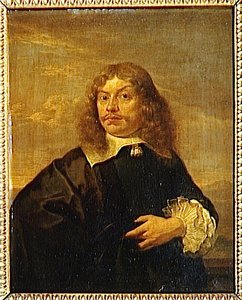
While Dujardin is best known for his landscapes and genre scenes, his artistic repertoire extended beyond these subjects. He also undertook portraiture, demonstrating his versatility as an artist. The Regents of the Spinhuis and Nieuwe Werkhuis, Amsterdam (1669), a notable group portrait, reveals his skill in capturing individual likenesses within a larger composition, showcasing not only technical proficiency but also a sensitivity to character. Perhaps offering the most intimate glimpse into the artist’s own world is his Self-Portrait (1662). This work provides a direct connection to Dujardin himself, allowing viewers to contemplate the man behind the brushstrokes and gain insight into his personality and artistic vision. It's a study in quiet contemplation, revealing an artist deeply engaged with his craft and aware of his place within the artistic landscape of his time.Legacy and Historical Significance
Karel Dujardin’s legacy extends far beyond the confines of the Dutch Golden Age. His works continue to be admired for their technical brilliance, evocative atmosphere, and insightful depictions of everyday life. He wasn't a revolutionary in the same vein as Rembrandt or Vermeer, but his contribution was significant nonetheless – he refined and perfected a particular genre, elevating it through his meticulous observation and masterful technique. His paintings are held in esteemed collections worldwide, including the Mauritshuis Royal Picture Gallery in The Hague and the National Gallery in London, testament to their enduring appeal and artistic merit. Dujardin’s influence can be seen in the works of later artists who sought to capture the beauty of the natural world and the dignity of ordinary people. He stands as a representative figure of an era that celebrated observation, craftsmanship, and the quiet moments of life – a legacy that continues to resonate with audiences today. He exemplifies the Dutch Golden Age’s focus on meticulous detail and the celebration of everyday existence, leaving behind a body of work that offers a captivating window into a bygone world.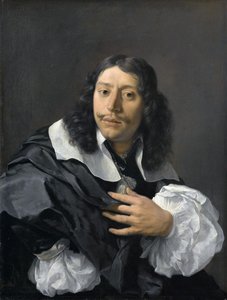
Karel Dujardin
1626 - 1678 , Netherlands
Quick Facts
- Artistic Movement Or Style: Dutch Golden Age painting
- Artists Who Influenced This Artist:
- Nicolaes Berchem
- Rembrandt van Rijn
- Date Of Birth: September 27, 1626
- Date Of Death: 1678
- Full Name: Karel Dujardin
- Nationality: Dutch
- Notable Artworks:
- Woman Milking a Red Cow
- Farm Animals in the Shade...
- Rest at an Italian Inn
- Self-Portrait (1662)
- The Regents of the Spinhuis...
- Place Of Birth: Amsterdam, Netherlands
Related Articles
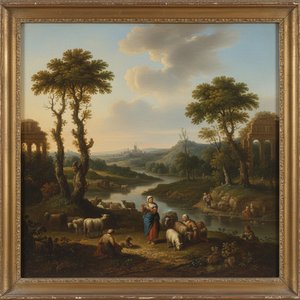
Nicolaes Berchem: Dutch Golden Age Pastoralism & the Evolution of Landscape Painting
Explore the captivating world of Nicolaes Berchem, a leading Dutch Golden Age painter. Discover his idyllic landscapes, masterful technique & lasting influence on art history. Learn more at ArtsDot.

Dutch Masters: 10 Golden Age Paintings That Still Inspire |
Journey into the Dutch Golden Age! Explore 10 iconic paintings by Rembrandt, Vermeer & Hals. Discover the stories behind these Baroque masterpieces and find museum-quality art reproductions to elevate your home decor on .
Golden Light & Dutch Skies: Bringing the Magic of Dutch Golden Age Landscapes into Your Home
Transform your home with the breathtaking light of Dutch Golden Age landscapes. Discover how hand-painted oil reproductions of masterworks like Ruisdael and Vermeer bring timeless elegance, atmosphere, and soulful texture to modern interiors. Elevate your space with museum-quality art.
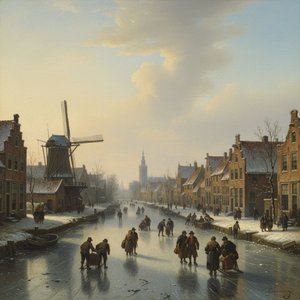
Charles Leickert: Capturing the Dutch Golden Age Light – A Comprehensive Study of Technique, Context, and Legacy
Explore the captivating winter landscapes of Charles Leickert, a master of Dutch Golden Age light & atmosphere. Discover his techniques, symbolism, and lasting legacy – a comprehensive study for art enthusiasts and collectors.

Golden Age Reflections: Dutch Baroque Painting & Cultural Innovation
Explore the Dutch Golden Age of painting! Discover key artists like Vermeer & ter Borch, their innovative techniques, and the rich cultural context behind these Baroque masterpieces. Learn about collecting & appreciating this iconic art period.