 Preview
 Send
Send Share
Share
 Details

 Download
 Similars
 X-Ray
X-Ray Diaporama
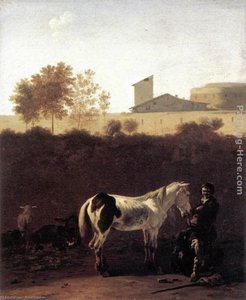
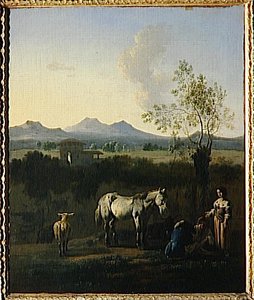
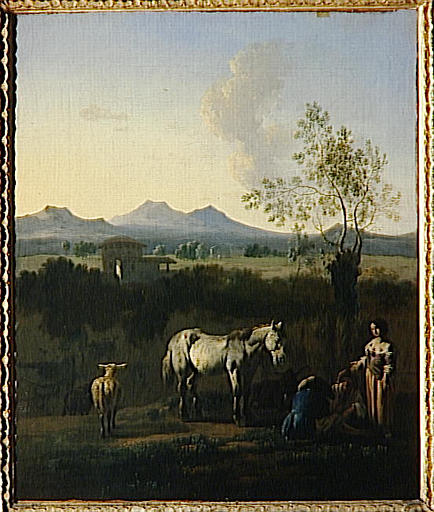
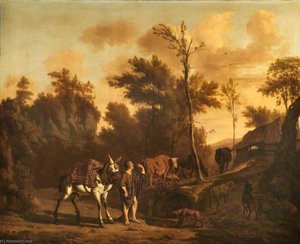
CHEVAL BLANC DANS UN PAYSAGE ITALIEN


 Read More
Hand Made Oil Reproduction
Hand-painted oil on canvas in your size and frame, made to order by our artists. ( Buy Print Buy Image)




P118B $10

P118H $10

P118W $10

P438Z $10

P508JH $12

P508YH $12

P805H $10

P805Z $10

P919BZ $10

P919G $10

P919XJ $10

P959ZH $10

P968JZ $12

W106C $8

W218G $10

W218JH $8

W218Y $10

W307PJ $10

W316G $10

W316PJ $8

W316Y $10

W398PJ $8

W4111J $10

W500HY $15

W500JH $15

W692G $12

W849H $8

W940BG $15

W953PJ $8




Pick from our preset sizes that match the artwork's original proportions.

You may enter your own dimensions to fit a specific frame or space. If your selected size does not match the original image's proportions, we will either crop the artwork or extend the painting with additional hand-painted elements. A digital mockup will be sent for your approval before production begins.
Please note that the on-screen preview does not reflect the actual cropping or extension. Only the mockup will accurately show the final composition.
While custom sizes are available, we recommend selecting a dimension from the predefined list to preserve the original proportions.
After order, ArtsDot.com team will email client for instructions and provide a mockup preview
Worldwide Delivery () in 3/4 weeks instead of standard 5 weeks. (23 August). No compromise on quality.

Free Worldwide Express Shipping

High-Quality Linen Canvas

Full Shipping Insurance

Customs Tax Refund Guarantee

True Color Matching Guarantee

60-Day Return Policy (Defects Only)

100% Money-Back Guarantee

Bulk Discount Offer
 Glass option is only available in size under 110 CM

CHEVAL BLANC DANS UN PAYSAGE ITALIEN
Reproduction Medium
Reproduction Size
-


Total Price
$ 288
Artwork Description
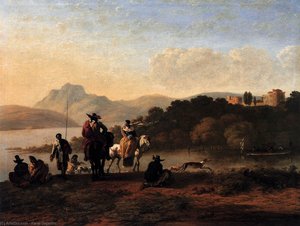
A Pastoral Reverie: Karel Dujardin’s “Cheval Blanc dans un Paysage Italien”
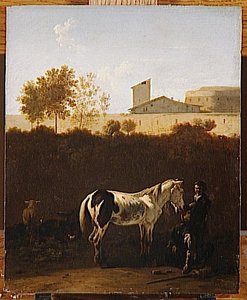
Karel Dujardin's "Cheval Blanc dans un Paysage Italien" is more than just a landscape painting; it’s a carefully constructed invitation to a moment of serene contemplation. Painted in the late 1670s, during his most prolific period, this work exemplifies the Dutch Golden Age’s fascination with idealized nature and its ability to evoke profound emotional responses. The scene unfolds within a meticulously rendered Italianate landscape – a deliberate choice reflecting Dujardin's extensive travels and deep admiration for the artistic traditions of Rome and Florence. The painting immediately draws the viewer in with its harmonious blend of earthy tones, soft lighting, and the undeniable presence of the magnificent white horse that dominates the foreground.
Dujardin’s mastery lies not merely in depicting a picturesque vista but in crafting an atmosphere of tranquility and subtle narrative. The composition is remarkably balanced, utilizing atmospheric perspective to create a convincing sense of depth. A large white horse, positioned slightly off-center, becomes the focal point, its form rendered with a delicate realism that belies the painting’s overall idealized quality. To its left, a solitary sheep adds to the pastoral scene, while on the right, two figures – likely representing a man and woman – appear engaged in quiet observation or perhaps interaction with the animal. Nestled amongst the trees is a small building, hinting at human presence within this idyllic setting, grounding the scene in a recognizable reality.
The Language of Light and Color
The color palette of “Cheval Blanc dans un Paysage Italien” is deliberately restrained yet remarkably effective. Earthy browns, muted greens, and blues form the foundation of the landscape, creating a sense of groundedness and naturalism. Highlights of white are strategically employed – most notably in the horse’s coat and scattered clouds – providing visual interest and drawing the eye to key elements within the composition. Subtle touches of warm yellows and oranges filter through the landscape, suggesting the golden light of either sunrise or sunset, further enhancing the painting's evocative atmosphere. Dujardin skillfully uses these colors not just for aesthetic appeal but also to establish a mood of quiet beauty and peacefulness.
The artist’s technique is characterized by a layered approach, employing delicate brushstrokes that blend seamlessly together. This creates a remarkably smooth surface texture, while still retaining the impression of paint applied with care and precision. The outlines of objects are deliberately soft, suggesting rather than defining, contributing to the painting's overall sense of atmospheric depth. The foliage is rendered with intricate detail, creating a rich tapestry of lines that add visual complexity and tactile interest. This careful attention to texture and brushwork elevates the work beyond a simple depiction of a landscape; it becomes a tangible experience for the viewer.
Symbolism and Emotional Resonance
Beyond its purely aesthetic qualities, “Cheval Blanc dans un Paysage Italien” is rich in symbolic meaning. The white horse itself has long been associated with nobility, strength, and freedom – qualities that resonate deeply within the context of the painting. The presence of a solitary sheep further reinforces this connection to pastoral life and the bounty of nature. The figures observing the animal evoke themes of harmony between humans and animals, suggesting a reverence for the natural world.
Furthermore, the Italianate setting – a deliberate homage to the artistic traditions of Rome and Florence – imbues the painting with a sense of nostalgia or romanticism. It’s easy to imagine this scene as a fleeting moment captured from a grand tour, a reminder of beauty and tranquility amidst the complexities of life. The overall effect is profoundly calming, inviting the viewer to step into the painting's world and experience a brief respite from the everyday.
A Legacy of Dutch Landscape Painting
“Cheval Blanc dans un Paysage Italien” stands as a quintessential example of Karel Dujardin’s distinctive style – a masterful blend of realism, idealized beauty, and atmospheric perspective. Influenced by his training under Nicolaes Berchem, Dujardin developed a unique ability to capture the subtle nuances of light and atmosphere, creating landscapes that are both visually stunning and emotionally resonant. This painting, like many others in his oeuvre, reflects the Dutch Golden Age’s fascination with nature and its power to inspire contemplation and wonder. Reproductions of this captivating artwork offer a beautiful opportunity to bring a touch of pastoral serenity into any space.
Related Artworks

Artist Biography
A Life Immersed in Light and Landscape
Karel Dujardin, a name resonating softly within the pantheon of Dutch Golden Age masters, was born in Amsterdam in 1626 – though some records suggest 1622. His life unfolded during a period of unprecedented artistic flourishing in the Netherlands, yet his path wasn’t one of immediate acclaim but rather a gradual unfolding of talent nurtured by careful study and extensive travel. Details surrounding his early years remain somewhat elusive, shrouded in the mists of time, however it is widely accepted that he received foundational training under Nicolaes Berchem, a painter celebrated for his idyllic landscapes populated with animals. This mentorship proved pivotal, instilling in Dujardin a deep appreciation for naturalism and a keen eye for capturing the subtle nuances of light and atmosphere. But Dujardin’s artistic journey wasn't confined to the studios of Amsterdam; he possessed an adventurous spirit that led him to Rome, where he became a member of the *Bentvueghels*, a society of predominantly Dutch and Flemish painters who embraced a bohemian lifestyle and often adopted satirical nicknames. In Rome, he was known as “Barba di Becco” or "Goat-Beard," a moniker likely referencing his distinctive facial hair, and it was here that his artistic voice truly began to mature.The Italianate Influence and Artistic Style
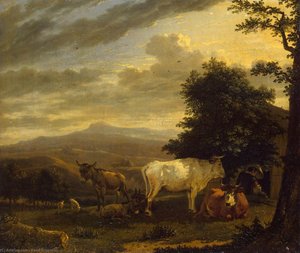
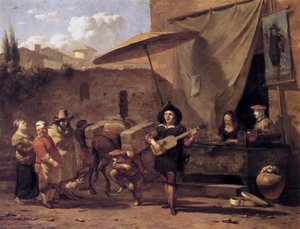
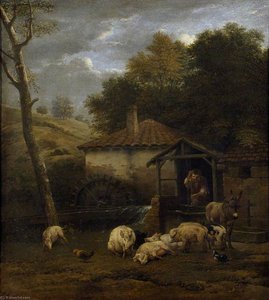
Dujardin’s time in Italy profoundly shaped his artistic style. He wasn't merely replicating the landscapes he encountered; instead, he synthesized them with the Dutch tradition of genre painting, creating a unique blend that captivated audiences on both sides of the Alps. His paintings are characterized by meticulous detail and a remarkable ability to depict scenes of everyday life – rural scenes brimming with animals, peasants engaged in their daily routines, and tranquil pastoral settings. He possessed an exceptional talent for capturing the play of light and shadow, imbuing his canvases with a sense of warmth and realism. While influenced by Italian masters, Dujardin didn’t simply imitate; he filtered these influences through his own Dutch sensibility, resulting in works that are both evocative and grounded in observation. Woman Milking a Red Cow, for example, exemplifies his skill in portraying rural life with remarkable precision, while Farm Animals in the Shade of a Tree showcases his ability to capture tranquil scenes, highlighting the harmonious relationship between humans and nature. His exposure to Italian culture is also evident in works like Rest at an Italian Inn, where he seamlessly blends Dutch genre painting traditions with evocative Italianate settings.Beyond Genre: Portraits and a Glimpse into Self
While Dujardin is best known for his landscapes and genre scenes, his artistic repertoire extended beyond these subjects. He also undertook portraiture, demonstrating his versatility as an artist. The Regents of the Spinhuis and Nieuwe Werkhuis, Amsterdam (1669), a notable group portrait, reveals his skill in capturing individual likenesses within a larger composition, showcasing not only technical proficiency but also a sensitivity to character. Perhaps offering the most intimate glimpse into the artist’s own world is his Self-Portrait (1662). This work provides a direct connection to Dujardin himself, allowing viewers to contemplate the man behind the brushstrokes and gain insight into his personality and artistic vision. It's a study in quiet contemplation, revealing an artist deeply engaged with his craft and aware of his place within the artistic landscape of his time.Legacy and Historical Significance
Karel Dujardin’s legacy extends far beyond the confines of the Dutch Golden Age. His works continue to be admired for their technical brilliance, evocative atmosphere, and insightful depictions of everyday life. He wasn't a revolutionary in the same vein as Rembrandt or Vermeer, but his contribution was significant nonetheless – he refined and perfected a particular genre, elevating it through his meticulous observation and masterful technique. His paintings are held in esteemed collections worldwide, including the Mauritshuis Royal Picture Gallery in The Hague and the National Gallery in London, testament to their enduring appeal and artistic merit. Dujardin’s influence can be seen in the works of later artists who sought to capture the beauty of the natural world and the dignity of ordinary people. He stands as a representative figure of an era that celebrated observation, craftsmanship, and the quiet moments of life – a legacy that continues to resonate with audiences today. He exemplifies the Dutch Golden Age’s focus on meticulous detail and the celebration of everyday existence, leaving behind a body of work that offers a captivating window into a bygone world.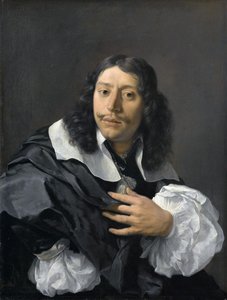
Karel Dujardin
1626 - 1678 , Netherlands
Quick Facts
- Artistic Movement Or Style: Dutch Golden Age painting
- Artists Who Influenced This Artist:
- Nicolaes Berchem
- Rembrandt van Rijn
- Date Of Birth: September 27, 1626
- Date Of Death: 1678
- Full Name: Karel Dujardin
- Nationality: Dutch
- Notable Artworks:
- Woman Milking a Red Cow
- Farm Animals in the Shade...
- Rest at an Italian Inn
- Self-Portrait (1662)
- The Regents of the Spinhuis...
- Place Of Birth: Amsterdam, Netherlands
Related Articles
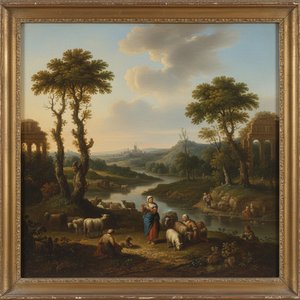
Nicolaes Berchem: Dutch Golden Age Pastoralism & the Evolution of Landscape Painting
Explore the captivating world of Nicolaes Berchem, a leading Dutch Golden Age painter. Discover his idyllic landscapes, masterful technique & lasting influence on art history. Learn more at ArtsDot.

Dutch Masters: 10 Golden Age Paintings That Still Inspire |
Journey into the Dutch Golden Age! Explore 10 iconic paintings by Rembrandt, Vermeer & Hals. Discover the stories behind these Baroque masterpieces and find museum-quality art reproductions to elevate your home decor on .
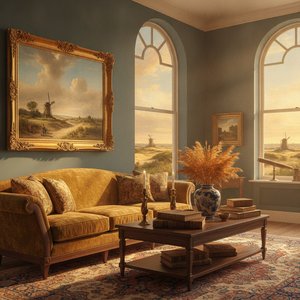
Golden Light & Dutch Skies: Bringing the Magic of Dutch Golden Age Landscapes into Your Home
Transform your home with the breathtaking light of Dutch Golden Age landscapes. Discover how hand-painted oil reproductions of masterworks like Ruisdael and Vermeer bring timeless elegance, atmosphere, and soulful texture to modern interiors. Elevate your space with museum-quality art.
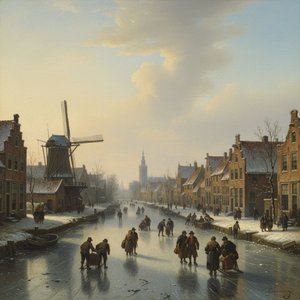
Charles Leickert: Capturing the Dutch Golden Age Light – A Comprehensive Study of Technique, Context, and Legacy
Explore the captivating winter landscapes of Charles Leickert, a master of Dutch Golden Age light & atmosphere. Discover his techniques, symbolism, and lasting legacy – a comprehensive study for art enthusiasts and collectors.

Golden Age Reflections: Dutch Baroque Painting & Cultural Innovation
Explore the Dutch Golden Age of painting! Discover key artists like Vermeer & ter Borch, their innovative techniques, and the rich cultural context behind these Baroque masterpieces. Learn about collecting & appreciating this iconic art period.