 Preview
 Send
Send Share
Share
 Details

 Download
 Similars
 X-Ray
X-Ray Diaporama
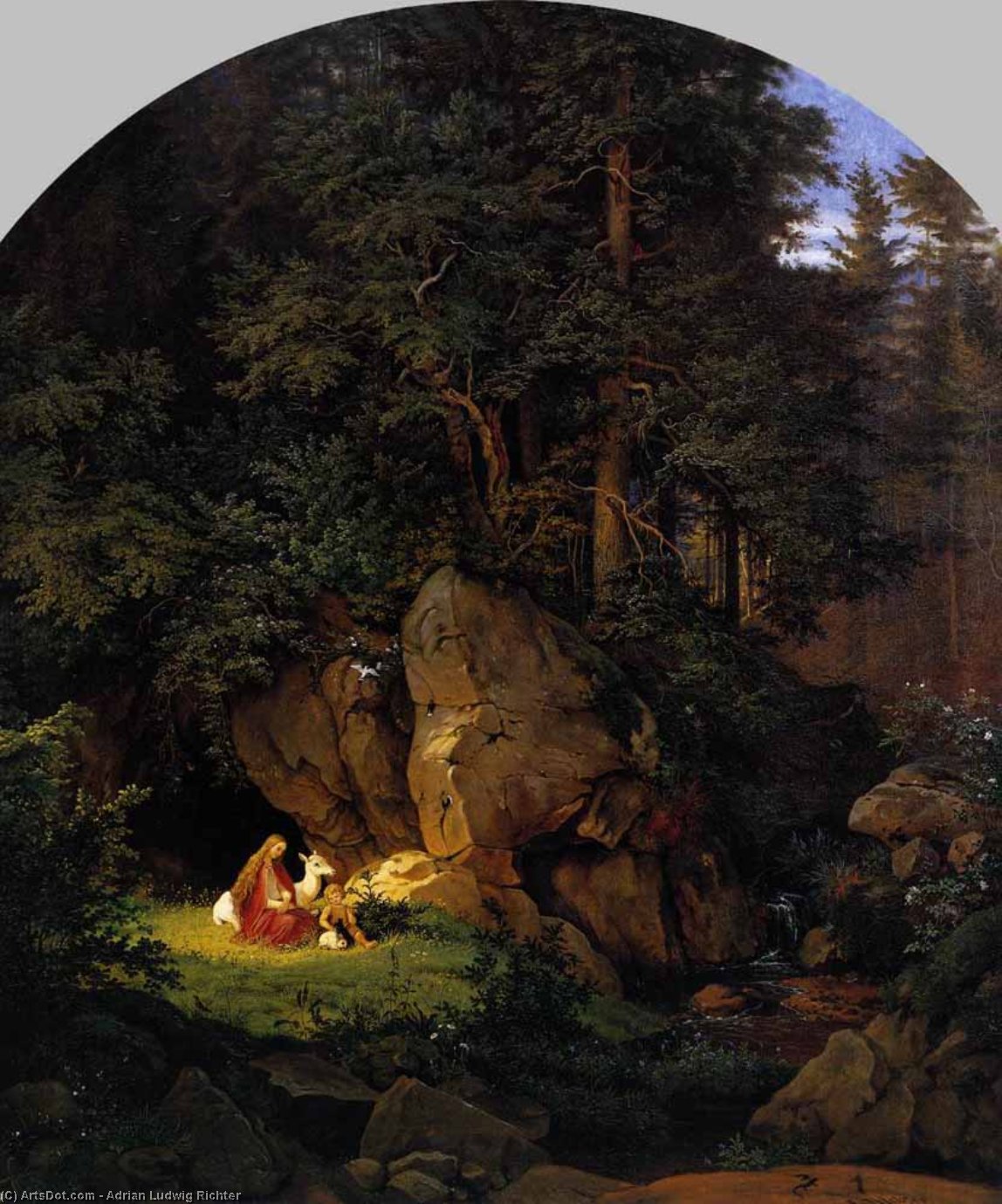
Genoveva in the Forest Seclusion
 Oil On Canvas
- WallArt
- Romanticism
 1841
1841- 19th Century
 117.0 x 101.0 cm
 Hamburger Kunsthalle
 Read More
Hand Made Oil Reproduction
Hand-painted oil on canvas in your size and frame, made to order by our artists. ( Buy Print Buy Image)




P118B $10

P118H $10

P118W $10

P438Z $10

P508JH $12

P508YH $12

P805H $10

P805Z $10

P919BZ $10

P919G $10

P919XJ $10

P959ZH $10

P968JZ $12

W106C $8

W218G $10

W218JH $8

W218Y $10

W307PJ $10

W316G $10

W316PJ $8

W316Y $10

W398PJ $8

W4111J $10

W500HY $15

W500JH $15

W692G $12

W849H $8

W940BG $15

W953PJ $8




Pick from our preset sizes that match the artwork's original proportions.

You may enter your own dimensions to fit a specific frame or space. If your selected size does not match the original image's proportions, we will either crop the artwork or extend the painting with additional hand-painted elements. A digital mockup will be sent for your approval before production begins.
Please note that the on-screen preview does not reflect the actual cropping or extension. Only the mockup will accurately show the final composition.
While custom sizes are available, we recommend selecting a dimension from the predefined list to preserve the original proportions.
After order, ArtsDot.com team will email client for instructions and provide a mockup preview
Worldwide Delivery () in 3/4 weeks instead of standard 5 weeks. (22 August). No compromise on quality.

Free Worldwide Express Shipping

High-Quality Linen Canvas

Full Shipping Insurance

Customs Tax Refund Guarantee

True Color Matching Guarantee

60-Day Return Policy (Defects Only)

100% Money-Back Guarantee

Bulk Discount Offer
 Glass option is only available in size under 110 CM

Genoveva in the Forest Seclusion
Reproduction Medium
Reproduction Size
-


Total Price
$ 263
Artwork Description
A Sanctuary Captured: The Allure of Genoveva in the Forest Seclusion
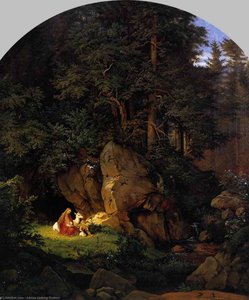
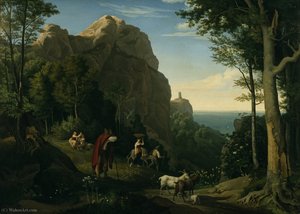
To gaze upon Adrian Ludwig Richter's Genoveva in the Forest Seclusion is to step through a veil and into a moment suspended outside the rush of time. This painting, dating from 1841, is far more than a mere depiction of woodland life; it is an immersion into the Romantic ideal—a profound communion between humanity and the untamed grace of nature. The scene unfolds with breathtaking tranquility, centering on a woman, perhaps Genoveva herself, seated peacefully before a monumental rock formation. Her posture suggests contemplation, her gaze directed toward something just beyond our view, inviting the viewer to share in her quiet mystery.
The Romantic Landscape and Its Symbolism
Richter, a master of German Romantic landscape painting, imbued this forest setting with deep symbolic resonance. The surrounding woods are not merely background; they are characters in the narrative. The interplay of light filtering through the dense canopy, the gentle murmur suggested by the small stream winding through the foreground, and the sheltering embrace of the trees all contribute to an atmosphere of profound serenity. The presence of two accompanying children grounds the scene in familial intimacy, yet their quietude suggests a deeper, almost mythic connection to the natural world. In the Romantic tradition, such secluded groves often symbolized refuge—a place where the soul could reconnect with its purest, most elemental self, far from the artifice of civilization.
Mastery of Light and Atmosphere
Technically, Richter demonstrates a remarkable sensitivity to atmosphere. His handling of light is exquisite; it seems to emanate organically from within the scene itself, catching the folds of clothing and illuminating the textures of bark and leaf litter. While his early training in engraving provided him with an unparalleled eye for detail, here that meticulous observation serves the larger goal: evoking feeling. The composition guides the eye naturally through the foreground elements—the water, the seated figures—before allowing it to wander into the deeper, more mysterious recesses of the woods. This masterful control over visual flow is what makes the reproduction so captivating.
A Timeless Echo for Modern Spaces
For the collector or designer seeking an anchor piece that speaks of enduring beauty and quiet contemplation, this work offers unparalleled depth. Reproducing Genoveva in the Forest Seclusion allows one to bring a curated sense of pastoral poetry into any interior space. Imagine it displayed where natural light can play across its surface; the illusion of woodland mystery will soften the edges of modern life. It speaks not only to an appreciation for German Romanticism but also to a universal yearning—the desire for that perfect, undisturbed moment found deep within nature’s embrace.
Related Artworks


Artist Biography
The Soul of the Saxon Landscape: The Life and Legacy of Adrian Ludwig Richter
Born in the cultural heart of Dresden in 1803, Adrian Ludwig Richter emerged as a defining voice of the German Romantic movement. His journey into the world of fine art was one of inherited passion and rigorous discipline, shaped profoundly by his father, Carl August Richter, a master engraver. This early immersion in the meticulous world of printmaking provided Adrian with a foundational eye for detail and an unparalleled command over tonal subtlety. As he transitioned from the precision of etching to the expansive possibilities of oil on canvas, Richter developed a style that bridged the gap between the technical accuracy of the Biedermeier period and the emotive, sweeping grandeur of Romanticism.
Richter’s artistic evolution was deeply intertwined with the landscapes of his homeland. His training at the Dresden Art Academy allowed him to absorb the influences of contemporaries such as Johann Christian Dahl, fostering a deep reverence for the natural world. He did not merely seek to document scenery; he sought to capture its spirit. Whether rendering the rugged, mist-shrouded peaks of the Riesengebirge mountains or the tranquil, sun-dappled valleys of Saxony, his work possesses a luminous quality that breathes life into the canvas. His brushwork often employed a delicate balance of realism and atmosphere, creating scenes that felt both tangibly present and dreamlike in their perfection.
A Mastery of Atmosphere and Narrative
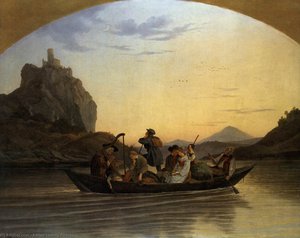
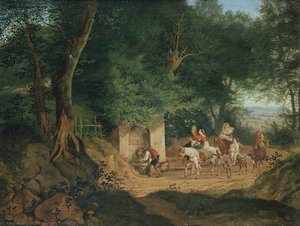
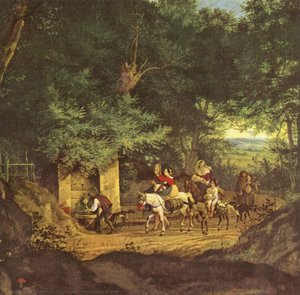
The brilliance of Richter’s oeuvre lies in his ability to weave narrative elements into the very fabric of the landscape. His paintings often serve as windows into a serene, idealized era, where human presence is harmoniously integrated with nature. This is evident in works such as "Crossing the Elbe at Aussig," where the drama of a journey is captured through the evocative interplay of light and water, or in his more tranquil compositions like "The Well in the Wood at Ariccia." In these pieces, the viewer is invited to linger within a moment of profound stillness, experiencing the atmospheric detail and the quiet majesty of the rural landscape.
Beyond the sweeping vistas, Richter was also a master of the intimate and the pastoral. His ability to depict seasonal shifts—as seen in the delicate, balanced beauty of "Spring near Ariccia"—showcases his technical prowess in using muted tones and soft impasto to evoke the warmth of new growth. This talent for capturing the ephemeral qualities of light and season made him a celebrated illustrator of fairy tales and folk legends, as he could imbue even the smallest woodland scene with a sense of enchantment and historical weight.
Historical Significance and Artistic Triumph
The enduring significance of Adrian Ludwig Richter resides in his role as a chronicler of the German spirit during a transformative century. His work stands as a testament to the Biedermeier era's appreciation for domesticity, nature, and order, while simultaneously embracing the Romantic fascination with the sublime. Through his prolific output of drawings, etchings, and paintings, he helped define a visual language for the Saxon landscape that continues to resonate with collectors and art historians today.
His achievements can be summarized through several key artistic contributions:
- Technical Versatility: A seamless transition from the precise, linear discipline of engraving to the expressive, textured freedom of oil painting.
- Landscape Innovation: The ability to elevate regional Saxon scenery into universal symbols of natural beauty and emotional resonance.
- Narrative Depth: Integrating elements of folklore and pastoral life to create landscapes that tell stories of peace, journey, and seasonal change.
- Cultural Legacy: Establishing a lasting aesthetic influence on 19th-century German art through his meticulous observation and romanticized vision of the natural world.
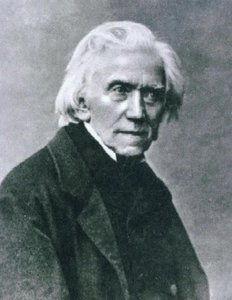
adrian ludwig richter
1803 - 1884 , Germany
Quick Facts
- Artistic Movement Or Style: Romanticism & Biedermeier
- Artists Or Movements Influenced By This Artist: ['Grimm']
- Artists Who Influenced This Artist:
- Erhard
- Chodowiecki
- Date Of Birth: September 28, 1803
- Date Of Death: June 19, 1884
- Full Name: Adrian Ludwig Richter
- Nationality: German
- Notable Artworks:
- Crossing the Elbe at Aussig
- The Well in the Wood at Ariccia
- Spring near Ariccia
- Place Of Birth: Dresden, Germany
Related Articles

Romantic Landscapes: 10 Masterpieces for Your Home | ArtsDot
Journey through 10 Romantic landscape masterpieces by Friedrich, Turner & Cole. Explore emotional art, sublime nature scenes & iconic 19th-century paintings. Find museum-quality reproductions for your home at ArtsDot.com – discover the full collection online!
Evoking Nature's Sublime: A Comprehensive Exploration of 19th-Century Landscape Painting
Explore the captivating world of 19th-century landscape painting! Discover renowned artists like Friedrich & Monet, key movements, and find the perfect artwork to bring nature's serenity into your home. Expert insights at ArtsDot.
Evoking Emotion & Transcendence: Romantic Landscape Painting (18th-19th Century)
Explore the emotional depth of Romantic landscape painting (18th-19th century). Discover key artists like Friedrich & Cole, and the concepts of the sublime. Expert insights for art lovers & collectors.

John Constable's Masterpieces: Explore 25 Iconic Landscapes for Your Home
Journey through John Constable's 25 most celebrated landscapes. Explore Romanticism, Dedham Vale & his masterful use of light in iconic paintings like 'Hay Wain'. Find museum-quality art reproductions and elevate your home decor on ArtsDot.com.
The Sublime and the Picturesque: Exploring Emotion & Nature in Romantic Landscape Painting
Explore the emotional power of Romantic landscape painting! Discover the sublime & picturesque traditions, key artists like Friedrich & Cole, and find your perfect artwork at ArtsDot.