 Preview
 Send
Send Share
Share
 Details

 Download
 Similars
 X-Ray
X-Ray Diaporama
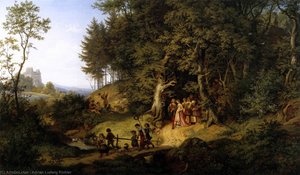
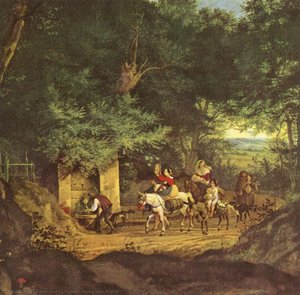
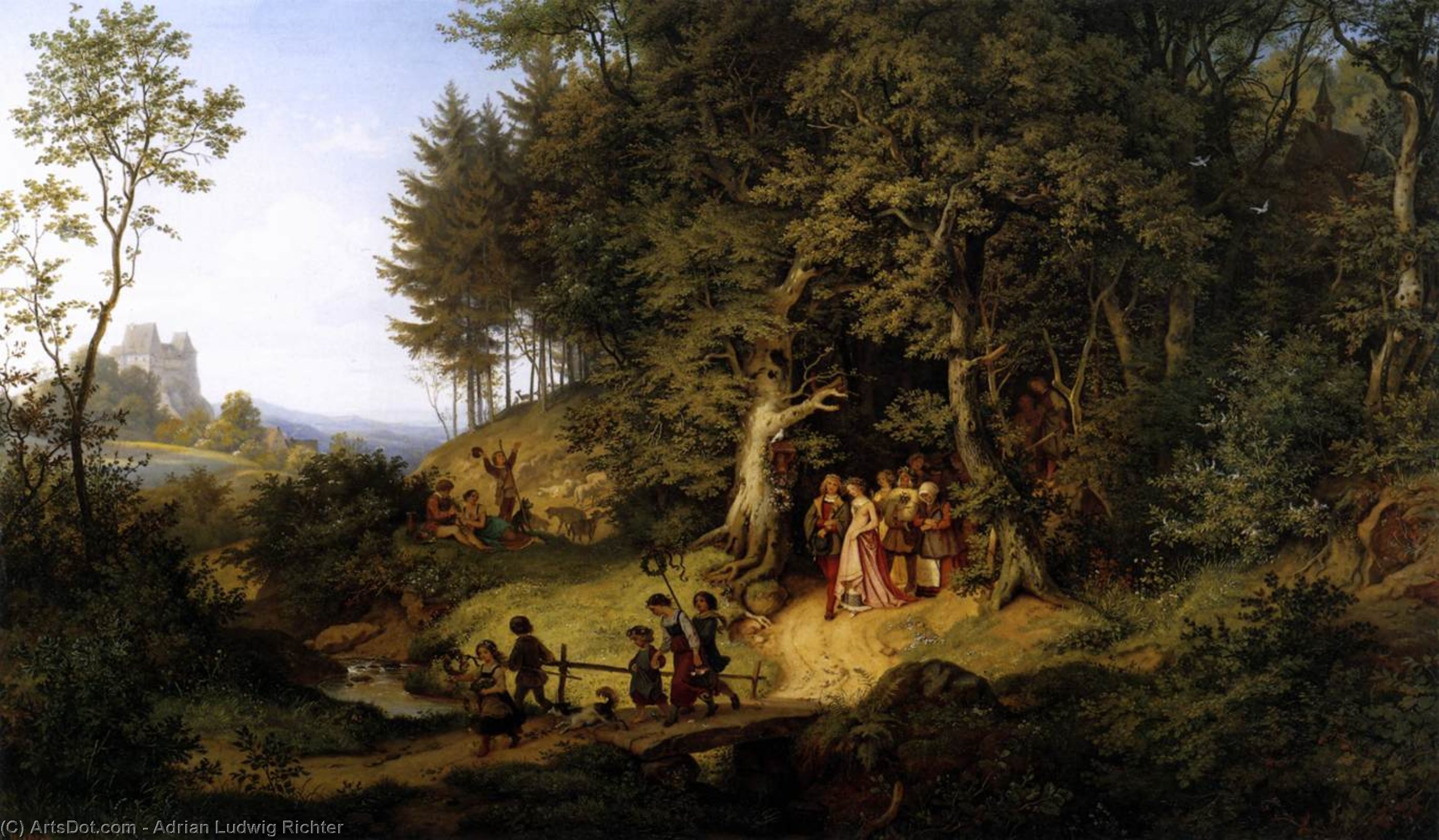
Bridal Procession in a Spring Landscape
 Oil On Canvas
- WallArt
- Romanticism
 1847
1847- 19th Century
 93.0 x 150.0 cm
 Gemäldegalerie
 Read More
Hand Made Oil Reproduction
Hand-painted oil on canvas in your size and frame, made to order by our artists. ( Buy Print Buy Image)




P118B $10

P118H $10

P118W $10

P438Z $10

P508JH $12

P508YH $12

P805H $10

P805Z $10

P919BZ $10

P919G $10

P919XJ $10

P959ZH $10

P968JZ $12

W106C $8

W218G $10

W218JH $8

W218Y $10

W307PJ $10

W316G $10

W316PJ $8

W316Y $10

W398PJ $8

W4111J $10

W500HY $15

W500JH $15

W692G $12

W849H $8

W940BG $15

W953PJ $8




Pick from our preset sizes that match the artwork's original proportions.

You may enter your own dimensions to fit a specific frame or space. If your selected size does not match the original image's proportions, we will either crop the artwork or extend the painting with additional hand-painted elements. A digital mockup will be sent for your approval before production begins.
Please note that the on-screen preview does not reflect the actual cropping or extension. Only the mockup will accurately show the final composition.
While custom sizes are available, we recommend selecting a dimension from the predefined list to preserve the original proportions.
After order, ArtsDot.com team will email client for instructions and provide a mockup preview
Worldwide Delivery () in 3/4 weeks instead of standard 5 weeks. (17 August). No compromise on quality.

Free Worldwide Express Shipping

High-Quality Linen Canvas

Full Shipping Insurance

Customs Tax Refund Guarantee

True Color Matching Guarantee

60-Day Return Policy (Defects Only)

100% Money-Back Guarantee

Bulk Discount Offer
 Glass option is only available in size under 110 CM

Bridal Procession in a Spring Landscape
Reproduction Medium
Reproduction Size
-


Total Price
$ 263
Artwork Description
A Journey Through Springtime Romance
To gaze upon Bridal Procession in a Spring Landscape is to step directly into a moment suspended between pastoral bliss and burgeoning commitment. Adrian Ludwig Richter masterfully captures the ephemeral joy of a wedding day, transforming a simple walk through the woods into an allegory of new beginnings. The scene unfolds with breathtaking naturalism; the lush, vibrant greens of the spring landscape serve not merely as a backdrop, but as an active participant in the celebration itself. One can almost hear the rustle of fine fabrics and the gentle clip-clop of hooves as the bridal party moves forward, guided by the stately presence of the groom on horseback.
The Artistry of Romanticism
Richter’s technique is a quintessential expression of German Romanticism. His ability to imbue landscape with emotional resonance is unparalleled. The composition guides the eye deep into the woods, drawing us along the path of the procession. Notice the careful placement of figures—the bride, radiant amidst her companions; the supporting cast moving in joyful clusters; and even the inclusion of the two watchful dogs, which ground the ethereal scene in tangible life. This is not a stiff portraiture; it is an unfolding narrative painted with visible breath. The handling of light filtering through the canopy suggests the golden hour, bathing the entire gathering in a warm, celebratory glow.
Symbolism and Celebration
Beyond the surface beauty lies a rich tapestry of symbolism. The bridal procession itself speaks to transition—the passage from one life stage to another. Spring, universally recognized as rebirth, amplifies this theme, suggesting that the union celebrated here is blessed by nature’s own cycle of renewal. The woods, while enclosing, also symbolize the journey ahead, promising both shelter and adventure for the newly married couple. Richter elevates the personal milestone into something timeless and mythic, making the viewer feel privy to a sacred, beautiful ritual.
Bringing the Romance Home
For those who wish to capture this exquisite feeling of pastoral joy within their own walls, a reproduction of this piece offers an immediate infusion of light and romance. The scale of 93 x 150 cm allows the full sweep of Richter’s composition—the depth of the woods, the movement of the figures, and the vibrancy of the spring palette—to be appreciated fully. It serves beautifully as a focal point in a grand hall, a sunlit drawing-room, or any space yearning for an atmosphere steeped in nostalgic elegance and enduring love.
Related Artworks
Artist Biography
The Soul of the Saxon Landscape: The Life and Legacy of Adrian Ludwig Richter
Born in the cultural heart of Dresden in 1803, Adrian Ludwig Richter emerged as a defining voice of the German Romantic movement. His journey into the world of fine art was one of inherited passion and rigorous discipline, shaped profoundly by his father, Carl August Richter, a master engraver. This early immersion in the meticulous world of printmaking provided Adrian with a foundational eye for detail and an unparalleled command over tonal subtlety. As he transitioned from the precision of etching to the expansive possibilities of oil on canvas, Richter developed a style that bridged the gap between the technical accuracy of the Biedermeier period and the emotive, sweeping grandeur of Romanticism.
Richter’s artistic evolution was deeply intertwined with the landscapes of his homeland. His training at the Dresden Art Academy allowed him to absorb the influences of contemporaries such as Johann Christian Dahl, fostering a deep reverence for the natural world. He did not merely seek to document scenery; he sought to capture its spirit. Whether rendering the rugged, mist-shrouded peaks of the Riesengebirge mountains or the tranquil, sun-dappled valleys of Saxony, his work possesses a luminous quality that breathes life into the canvas. His brushwork often employed a delicate balance of realism and atmosphere, creating scenes that felt both tangibly present and dreamlike in their perfection.
A Mastery of Atmosphere and Narrative
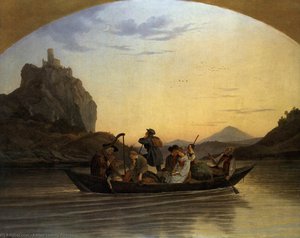
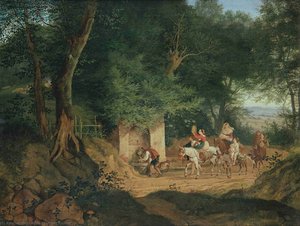
The brilliance of Richter’s oeuvre lies in his ability to weave narrative elements into the very fabric of the landscape. His paintings often serve as windows into a serene, idealized era, where human presence is harmoniously integrated with nature. This is evident in works such as "Crossing the Elbe at Aussig," where the drama of a journey is captured through the evocative interplay of light and water, or in his more tranquil compositions like "The Well in the Wood at Ariccia." In these pieces, the viewer is invited to linger within a moment of profound stillness, experiencing the atmospheric detail and the quiet majesty of the rural landscape.
Beyond the sweeping vistas, Richter was also a master of the intimate and the pastoral. His ability to depict seasonal shifts—as seen in the delicate, balanced beauty of "Spring near Ariccia"—showcases his technical prowess in using muted tones and soft impasto to evoke the warmth of new growth. This talent for capturing the ephemeral qualities of light and season made him a celebrated illustrator of fairy tales and folk legends, as he could imbue even the smallest woodland scene with a sense of enchantment and historical weight.
Historical Significance and Artistic Triumph
The enduring significance of Adrian Ludwig Richter resides in his role as a chronicler of the German spirit during a transformative century. His work stands as a testament to the Biedermeier era's appreciation for domesticity, nature, and order, while simultaneously embracing the Romantic fascination with the sublime. Through his prolific output of drawings, etchings, and paintings, he helped define a visual language for the Saxon landscape that continues to resonate with collectors and art historians today.
His achievements can be summarized through several key artistic contributions:
- Technical Versatility: A seamless transition from the precise, linear discipline of engraving to the expressive, textured freedom of oil painting.
- Landscape Innovation: The ability to elevate regional Saxon scenery into universal symbols of natural beauty and emotional resonance.
- Narrative Depth: Integrating elements of folklore and pastoral life to create landscapes that tell stories of peace, journey, and seasonal change.
- Cultural Legacy: Establishing a lasting aesthetic influence on 19th-century German art through his meticulous observation and romanticized vision of the natural world.
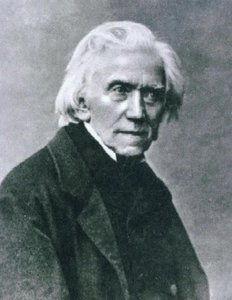
adrian ludwig richter
1803 - 1884 , Germany
Quick Facts
- Artistic Movement Or Style: Romanticism & Biedermeier
- Artists Or Movements Influenced By This Artist: ['Grimm']
- Artists Who Influenced This Artist:
- Erhard
- Chodowiecki
- Date Of Birth: September 28, 1803
- Date Of Death: June 19, 1884
- Full Name: Adrian Ludwig Richter
- Nationality: German
- Notable Artworks:
- Crossing the Elbe at Aussig
- The Well in the Wood at Ariccia
- Spring near Ariccia
- Place Of Birth: Dresden, Germany
Related Articles

Romantic Landscapes: 10 Masterpieces for Your Home | ArtsDot
Journey through 10 Romantic landscape masterpieces by Friedrich, Turner & Cole. Explore emotional art, sublime nature scenes & iconic 19th-century paintings. Find museum-quality reproductions for your home at ArtsDot.com – discover the full collection online!

Beyond the Horizon: 10 Landscape Masterpieces for Your Home Decor
Journey through 10 breathtaking landscape paintings by Monet, Van Gogh & more! Explore iconic artworks, artistic techniques & find inspiration for your home decor. Museum-quality reproductions at ArtsDot.com. Discover all masterpieces on ArtsDot.com

John Constable's Masterpieces: Explore 25 Iconic Landscapes for Your Home
Journey through John Constable's 25 most celebrated landscapes. Explore Romanticism, Dedham Vale & his masterful use of light in iconic paintings like 'Hay Wain'. Find museum-quality art reproductions and elevate your home decor on ArtsDot.com.

The Sublime and the Picturesque: Exploring Emotion & Nature in Romantic Landscape Painting
Explore the emotional power of Romantic landscape painting! Discover the sublime & picturesque traditions, key artists like Friedrich & Cole, and find your perfect artwork at ArtsDot.

Evocations of Place: A Historical Journey Through Landscape Art
Explore the rich history of landscape art with ArtsDot. Discover renowned artists, movements like Impressionism & Romanticism, and expert guidance for collecting timeless pieces. Find your perfect serene escape today!