 Preview
 Send
Send Share
Share
 Details

 Download
 Similars
 X-Ray
X-Ray Diaporama
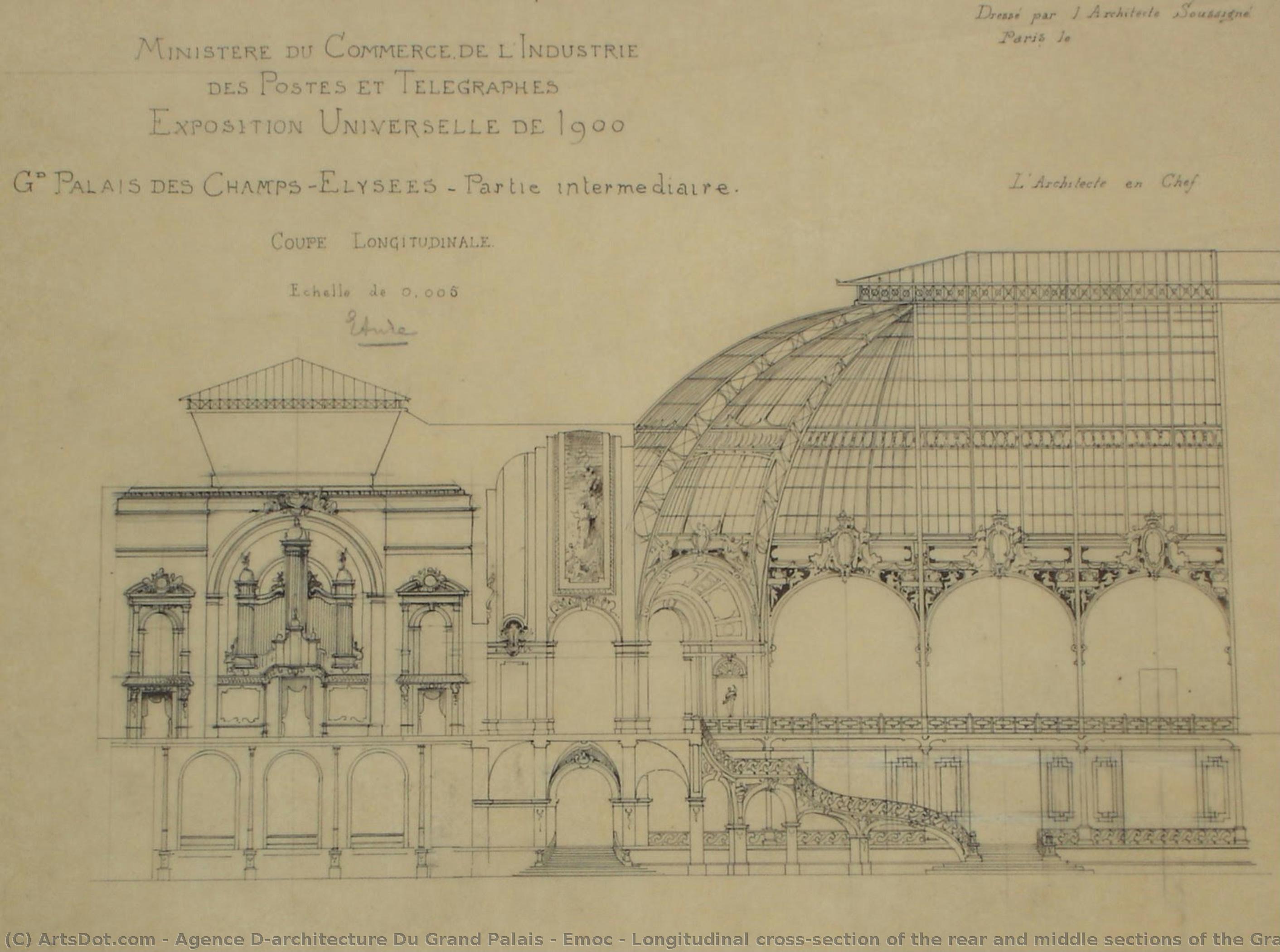
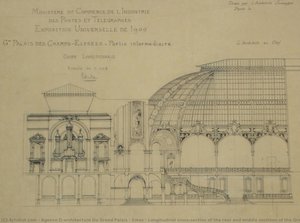
Longitudinal cross-section of the rear and middle sections of the Grand Palais, Paris.


 Read More
Giclée / Art Print
Museum-quality giclée or canvas print with fast production and flexible finish options. ( Buy Hand Made Painting Buy Image)




P118B $10

P118H $10

P118W $10

P438Z $10

P508JH $12

P508YH $12

P805H $10

P805Z $10

P919BZ $10

P919G $10

P919XJ $10

P959ZH $10

P968JZ $12

W106C $8

W218G $10

W218JH $8

W218Y $10

W307PJ $10

W316G $10

W316PJ $8

W316Y $10

W398PJ $8

W4111J $10

W500HY $15

W500JH $15

W692G $12

W849H $8

W940BG $15

W953PJ $8




Pick from our preset sizes that match the artwork's original proportions.

You may enter your own dimensions to fit a specific frame or space. If your selected size does not match the original image's proportions, we will either crop the artwork or extend the image with a mirrored or solid-fill edge. A digital mockup will be sent for your approval before production begins.
Please note that the on-screen preview does not reflect the actual cropping or extension. Only the mockup will accurately show the final composition.
While custom sizes are available, we recommend selecting a dimension from the predefined list to preserve the original proportions.
Worldwide Delivery () in 2 weeks instead of standard 4/5 weeks. (25 August)

Free Worldwide Express Shipping

High-Quality Linen Canvas

Full Shipping Insurance

Customs Tax Refund Guarantee

True Color Matching Guarantee

60-Day Return Policy (Defects Only)

100% Money-Back Guarantee

Bulk Discount Offer
 Glass option is only available in size under 110 CM

Longitudinal cross-section of the rear and middle sections of the Grand Palais, Paris.
Giclée / Art Print
Reproduction Size
-


Total Price
$ 63
Collectible Description
The Blueprint of an Era: A Glimpse into the Grand Palais
To gaze upon this longitudinal cross-section of the Grand Palais is to step back into the feverish, ambitious heart of 1897 Paris. This is not merely a technical drawing; it is a skeletal map of a dream being realized. At the dawn of the twentieth century, France was poised on the precipice of modernity, and this architectural rendering captures the very moment that structural engineering met high art. The drawing serves as a window into the meticulous planning required for the 1900 Exposition Universelle, revealing the intricate dance between iron, glass, and stone that would eventually define the Belle Époque skyline.
The composition is a masterclass in precision, presented as a series of vertical panels that dissect the building’s anatomy. Through the use of fine, black ink linework on paper, the artist—a collective of the Agence D'architecture Du Grand Palais—reveals the hidden majesty of the structure. One can trace the rhythmic progression of arches and the heavy, supporting ribs of the roof, each line weight carefully chosen to suggest depth and structural integrity. There is a profound sense of order here; the linear perspective guides the eye through a labyrinth of walls and supports, creating a layered effect that transforms a flat document into a three-dimensional exploration of space.
The Artistry of Engineering and Technical Mastery
While the primary purpose of this work was informational and functional, its aesthetic value is undeniable for the discerning collector. The technique relies on the subtle interplay of hatching and varying line thicknesses to simulate light and shadow, suggesting a soft illumination descending from the great glass vaults above. The presence of handwritten French annotations adds an intimate, human element to the cold precision of the engineering, reminding us that behind every calculated measurement was a hand guided by vision and necessity.
For the interior designer or art enthusiast, this piece offers a sophisticated way to introduce historical gravity into a contemporary space. The monochromatic palette makes it an incredibly versatile choice for various decor styles, from the minimalist industrial loft to the classic, ornate study. It functions as a conversation piece that celebrates the beauty of logic and the elegance of structural design. Owning a reproduction of such a significant document is akin to possessing a fragment of Paris's architectural soul, bringing a sense of timelessness and intellectual depth to any room.
A Legacy Written in Ink
Beyond its technical brilliance, this drawing carries the emotional weight of an era defined by progress. It represents the collective spirit of the Agence D'architecture Du Grand Palais, a group of minds working in unison to create a monument that would stand as a testament to French industrial prowess. There is no overt symbolism here—no hidden allegories or mythological figures—yet the sheer scale and complexity of the drawing evoke a sense of awe. It captures the tension between the heavy permanence of masonry and the light, airy potential of the new age of iron.
In an age of digital fleetingness, there is something deeply grounding about this hand-drawn architectural study. It invites the viewer to slow down, to trace the paths of weight and support, and to appreciate the monumental effort required to shape the world around us. Whether displayed as a focal point in a gallery or as a subtle accent in a curated collection, this work remains an enduring tribute to the brilliance of human ingenuity and the architectural splendor of Paris.
Related Artworks

Artist Biography
The Architects of a Monument: Agence D'architecture Du Grand Palais / Emoc
The story of the Grand Palais is, in many ways, the story of France at the turn of the 20th century—a nation eager to showcase its industrial prowess and artistic brilliance on the world stage. While often remembered as a stunning example of Belle Époque architecture, the building itself wasn’t born from the vision of a single architect but rather a collaborative effort embodied by Agence D'architecture Du Grand Palais / Emoc. This agency represents not just individuals, but a collective of skilled engineers and architects tasked with realizing an ambitious dream: to create a palace for the Universal Exhibition of 1900. Their work transcends mere construction; it’s a testament to innovation, precision, and a deep understanding of both aesthetic beauty and structural possibility.
A Collective Vision Takes Shape
The origins of the agency lie in the need for specialized expertise to manage the complex undertaking that was the Grand Palais. The project demanded not only architectural design but also advanced engineering solutions to create a vast, light-filled space capable of hosting diverse exhibitions and events. While several figures contributed significantly—including Albert Thomas, whose studies for the rear section façade are particularly noteworthy—the agency functioned as a unified body responsible for translating the overarching vision into reality. The team skillfully blended ironwork with stone masonry, creating a structure that was both monumental in scale and remarkably elegant in its detailing.
Technical Mastery and Artistic Integration
The Grand Palais wasn’t conceived as a purely functional building; it was intended to be a celebration of art itself. The agency's drawings—such as the detailed longitudinal cross-section of the rear and middle sections—reveal a meticulous attention to detail, demonstrating a profound understanding of structural mechanics. The use of iron allowed for expansive interior spaces free from obstructive columns, creating an unprecedented sense of openness. This innovative approach was coupled with elaborate ornamentation, including sculptures, mosaics, and painted ceilings, transforming the building into a veritable art gallery. The agency successfully integrated technical mastery with artistic expression, resulting in a harmonious blend of form and function.
Legacy and Historical Significance
Since its inauguration in 1901, the Grand Palais has served as a dynamic cultural hub, hosting everything from art exhibitions and fashion shows to sporting events and political rallies. It has witnessed pivotal moments in French history and continues to be a symbol of national pride. The agency’s work laid the foundation for modern exhibition spaces, influencing architectural design worldwide. Their ability to create a building that was both structurally innovative and aesthetically captivating remains an enduring legacy. Today, the Grand Palais stands as a powerful reminder of France's artistic heritage and its commitment to pushing the boundaries of architectural possibility.
Continuing Influence
The work of Agence D’architecture Du Grand Palais / Emoc continues to inspire architects and engineers today. Their drawings, preserved in archives and collections around the world, offer valuable insights into the design process and the challenges of large-scale construction. The agency's commitment to integrating art and technology remains a relevant principle for contemporary architectural practice. By studying their achievements, we can gain a deeper appreciation for the power of collaboration, innovation, and the enduring beauty of well-crafted architecture.
Quick Facts
- Artistic Movement Or Style: Technical illustration
- Date Of Death: Living
- Full Name: Agence D'architecture Du Grand Palais / Emoc
- Notable Artworks:
- Longitudinal cross-section...
- Study for the rear section façade...
Related Articles
The Nuances of Graphite: Exploring Emotional Depth & Technical Mastery in Pencil Drawing
Explore the captivating world of graphite drawing! Discover its rich history, master essential techniques like chiaroscuro, and learn how artists evoke emotion through this timeless medium. Expert insights for art enthusiasts.

The Enduring Power of Line: Exploring Themes & Techniques in Drawing Across Art History
Explore the rich history of drawing! Discover key techniques like linear perspective & iconic artists from the Renaissance to modern times. Enhance your art appreciation with ArtsDot.
Frederick Bridgman: Anatomical Mastery & the Evolution of Figure Drawing Instruction
Explore the anatomical mastery of George B. Bridgman & his revolutionary figure drawing techniques. Discover how his methods transformed art instruction and continue to inspire artists today. Learn more at ArtsDot.
Édouard Manet's Masterpieces: Explore 25 Iconic Paintings for Your Home Decor
Explore 25 iconic Édouard Manet paintings, from 'Le Déjeuner sur l'herbe' to 'Olympia'. Discover the stories behind these Impressionist masterpieces & find museum-quality art reproductions for your home. Explore the full collection online at ArtsDot.com!

Georges Seurat's Masterpieces: 25 Paintings That Defined Pointillism | ArtsDot
Explore 25 iconic Georges Seurat paintings & discover the brilliance of Pointillism. From 'La Grande Jatte' to his harbor scenes, delve into art history with ArtsDot.com. Find museum-quality reproductions for your home decor. Explore the full collection online!