 Preview
 Send
Send Share
Share
 Details

 Download
 Similars
 X-Ray
X-Ray Diaporama
Political Map of Phantom Islands


 Read More
Hand Made Oil Reproduction
Hand-painted oil on canvas in your size and frame, made to order by our artists. ( Buy Print Buy Image)




































Pick from our preset sizes that match the artwork's original proportions.

You may enter your own dimensions to fit a specific frame or space. If your selected size does not match the original image's proportions, we will either crop the artwork or extend the painting with additional hand-painted elements. A digital mockup will be sent for your approval before production begins.
Please note that the on-screen preview does not reflect the actual cropping or extension. Only the mockup will accurately show the final composition.
While custom sizes are available, we recommend selecting a dimension from the predefined list to preserve the original proportions.
After order, ArtsDot.com team will email client for instructions and provide a mockup preview
Worldwide Delivery () in 3/4 weeks instead of standard 5 weeks. (24 August). No compromise on quality.

Free Worldwide Express Shipping

High-Quality Linen Canvas

Full Shipping Insurance

Customs Tax Refund Guarantee

True Color Matching Guarantee

60-Day Return Policy (Defects Only)

100% Money-Back Guarantee

Bulk Discount Offer
 Glass option is only available in size under 110 CM

Political Map of Phantom Islands
Reproduction Medium
Reproduction Size
-


Total Price
$ 263
Artwork Description
Related Artworks
Artist Biography
Agnieszka Kurant: Architect of the Invisible
Polish conceptual artist Agnieszka Kurant operates within a fascinating realm where reality and fiction blur, inviting viewers to contemplate the hidden economies that shape our world. Born in Łódź in 1978, her work isn’t simply about creating images; it's an intricate investigation into how systems – economic, social, and cultural – function through layers of abstraction and carefully constructed illusions. Kurant’s practice is deeply rooted in the concept of “the economy of the invisible,” a term she herself coined, referring to the complex networks and forces that operate beyond our immediate perception.
Her early life, marked by her Jewish heritage raised within a Catholic environment, profoundly influenced her artistic perspective. The revelation of her family’s history as Holocaust survivors at a young age sparked a lifelong interest in memory, identity, and the ways in which narratives are constructed and contested. This personal journey informs her broader exploration of collective intelligence – the emergent behavior of groups, whether human or non-human – and the potential for both collaboration and exploitation within these systems.
Education and Early Career
Kurant’s artistic trajectory began with a formal education in Poland, culminating in an MA in Curating from Goldsmiths College in London. This training provided her with a critical lens through which to analyze contemporary art practices and develop the conceptual framework for her own work. Her studies at Goldsmiths were pivotal in solidifying her interest in systems thinking and the intersection of technology, culture, and social dynamics.
Prior to establishing herself as an independent artist, Kurant gained valuable experience working with architecture, collaborating on the Polish Pavilion for the Venice Biennale in 2010 alongside architect Aleksandra Wasilkowska. This project exposed her to the challenges and possibilities of designing immersive environments that engage viewers on multiple levels – intellectually, emotionally, and sensorially. It also honed her skills in creating hybrid forms, a recurring motif in her later work.
The Economy of the Invisible & Phantom Islands
At the heart of Kurant’s artistic practice lies the exploration of “the economy of the invisible.” She doesn't aim to depict concrete realities but rather to expose the underlying structures and processes that govern them. Her projects often involve creating imaginary locations – phantom islands, digital networks, or speculative futures – that serve as metaphors for real-world systems. These fabricated spaces are populated with agents—molecules, animals, artificial intelligence algorithms, or crowds—that interact according to specific rules, generating emergent behaviors and revealing hidden patterns.
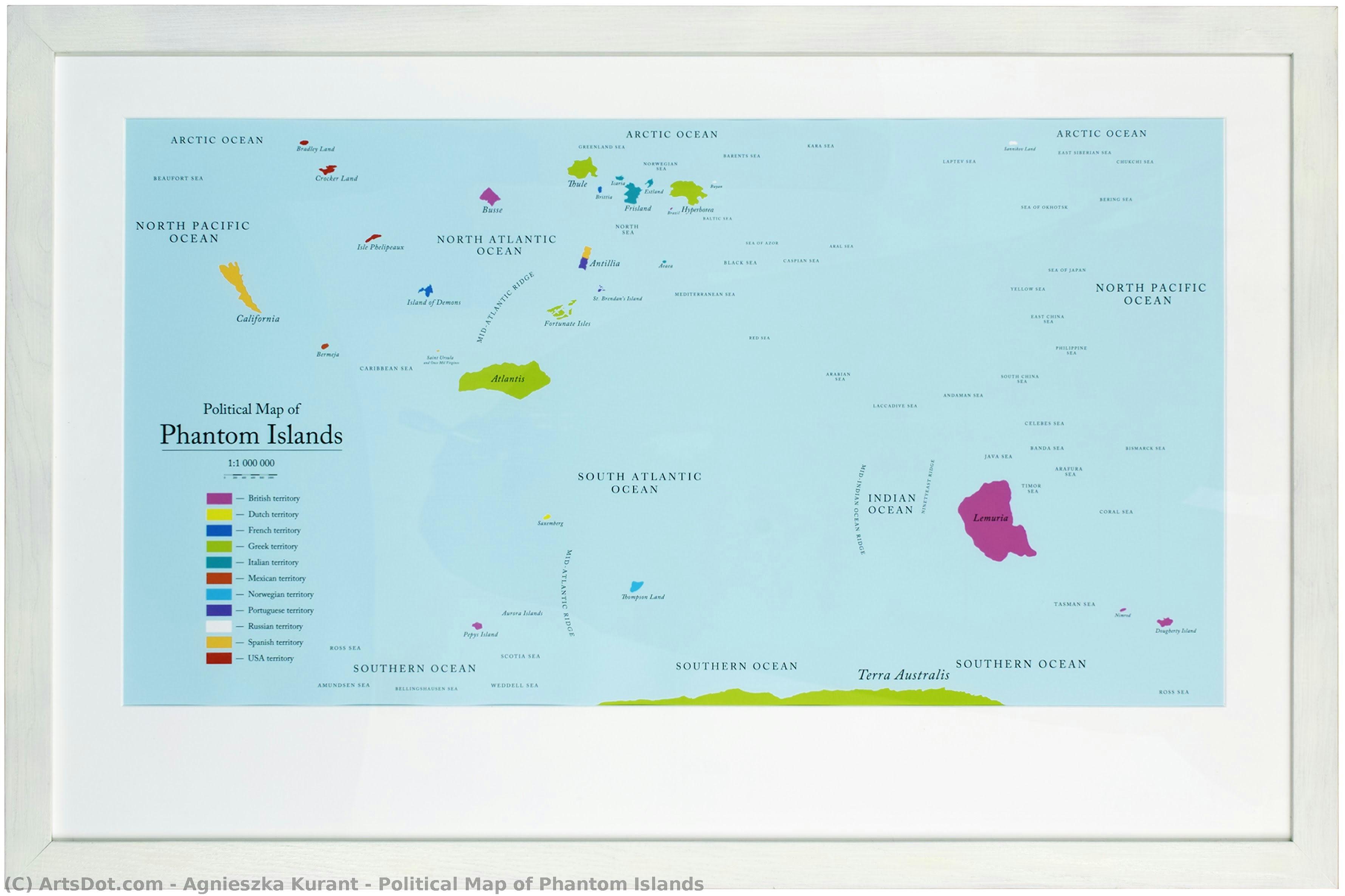
Her 2017 work, *Political Map of Phantom Islands*, exemplifies this approach. This series of intricately detailed maps depicts imagined territories that exist only in the realm of speculation and myth. These phantom islands are not simply whimsical creations; they represent a critique of colonial cartography and the ways in which geographical knowledge has been used to exert power and control. The work invites viewers to question the nature of reality itself, prompting them to consider how our perceptions are shaped by the maps we use to navigate the world.
Major Achievements & Recognition
Agnieszka Kurant’s work has garnered significant recognition within the international art community. She was selected as an artist in residence at MIT CAST (2017-2020), a prestigious program that fosters interdisciplinary research and artistic innovation. Her commission for the façade of the Solomon R. Guggenheim Museum in 2015, *The End of Signature*, remains a landmark achievement, transforming the museum’s exterior into a dynamic, ever-changing artwork.
Kurant's work has been exhibited extensively, including solo shows at institutions such as the Center for Contemporary Art, Tel Aviv; SculptureCenter in New York; and the Guggenheim Museum Bilbao. She is represented by Tanya Bonakdar Gallery in New York, where she continues to develop her practice and engage with a wide range of collaborators. Her work has been reviewed extensively in leading art publications like *Artforum*, *Frieze*, and *The New York Times*, cementing her position as a significant voice in contemporary conceptual art.
Looking Ahead
Agnieszka Kurant’s artistic trajectory is characterized by a relentless curiosity about the complex relationships between humans, technology, and the environment. Her ongoing projects continue to explore themes of collective intelligence, surveillance capitalism, and the future of labor and creativity. With her unique blend of conceptual rigor, technical innovation, and evocative imagery, she invites us to reconsider our understanding of reality and imagine new possibilities for a more equitable and sustainable world.
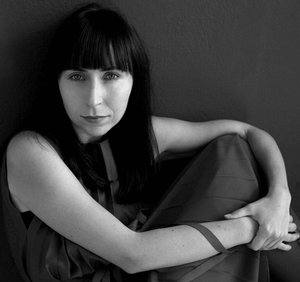
Agnieszka Kurant
1978 - , Poland
Quick Facts
- Artistic Movement Or Style: Conceptual Art
- Artists Or Movements Influenced By This Artist:
- Venice Biennale
- Guggenheim Museum
- Artists Who Influenced This Artist: ['Goldsmiths College Curators']
- Date Of Birth: 1978
- Full Name: Agnieszka Kurant
- Nationality: Polish
- Notable Artworks:
- Political Map Phantom Islands
- Collective Intelligence
- Place Of Birth: Łódź, Poland
Related Articles
Subverting Convention: Banksy's Identity, Art & Socio-Political Impact – A Critical Examination
Explore the complex world of Banksy's art & activism. This critical analysis delves into his identity, impact on the art market, and enduring socio-political relevance for discerning collectors.
The Sharpest Wit: A Historical Exploration of Satire in Visual Culture
Explore the history of satire in art! From ancient masters like Aristophanes to Goya & Grosz, discover how artists use wit and critique to reflect—and challenge—society. Expert insights at ArtsDot.
Reflecting Society's Shadows: Social Commentary in Art Through the Ages
Explore the powerful history of social commentary in art! Discover key artists like Hogarth & Daumier, movements from Realism to American Social Realism, and how art reflects—and challenges—society. Expert insights at ArtsDot.
Ferdinand Delacroix: Romanticism's Revolutionary Brush – A Study of Passion, Politics, and Painterly Innovation
Explore the revolutionary art of Eugène Delacroix, leader of French Romanticism. Discover his masterful use of color, political engagement, and lasting influence on modern painting. Learn about key works & history.
Embodied Ideologies: Conceptual Custom Art & the Power of Personal Narratives
Explore the power of conceptual custom art. Discover how hand-painted oil paintings embody personal & political narratives. Expert guidance for collectors seeking meaningful, impactful artwork.