 Preview
 Send
Send Share
Share
 Details

 Download
 Similars
 X-Ray
X-Ray Diaporama
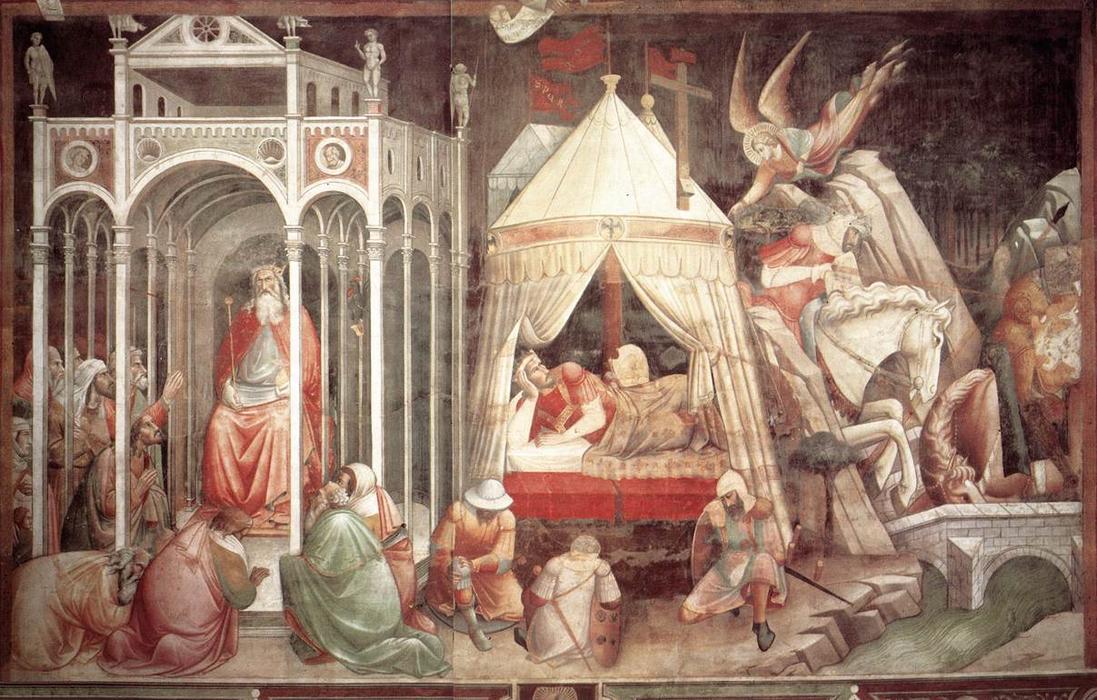
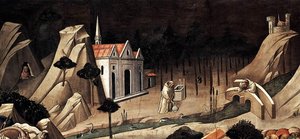
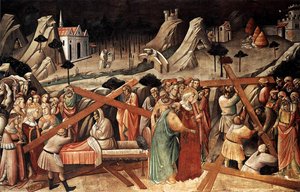
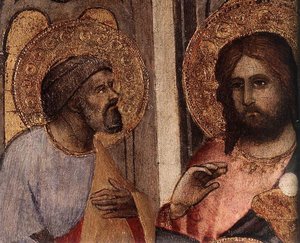
The Triumph of the Cross (detail)


 Read More
Giclée / Art Print
Museum-quality giclée or canvas print with fast production and flexible finish options. ( Buy Hand Made Painting Buy Image)




P118B $10

P118H $10

P118W $10

P438Z $10

P508JH $12

P508YH $12

P805H $10

P805Z $10

P919BZ $10

P919G $10

P919XJ $10

P959ZH $10

P968JZ $12

W106C $8

W218G $10

W218JH $8

W218Y $10

W307PJ $10

W316G $10

W316PJ $8

W316Y $10

W398PJ $8

W4111J $10

W500HY $15

W500JH $15

W692G $12

W849H $8

W940BG $15

W953PJ $8




Pick from our preset sizes that match the artwork's original proportions.

You may enter your own dimensions to fit a specific frame or space. If your selected size does not match the original image's proportions, we will either crop the artwork or extend the image with a mirrored or solid-fill edge. A digital mockup will be sent for your approval before production begins.
Please note that the on-screen preview does not reflect the actual cropping or extension. Only the mockup will accurately show the final composition.
While custom sizes are available, we recommend selecting a dimension from the predefined list to preserve the original proportions.
Worldwide Delivery () in 2 weeks instead of standard 4/5 weeks. (5 September)

Free Worldwide Express Shipping

High-Quality Linen Canvas

Full Shipping Insurance

Customs Tax Refund Guarantee

True Color Matching Guarantee

60-Day Return Policy (Defects Only)

100% Money-Back Guarantee

Bulk Discount Offer
 Glass option is only available in size under 110 CM

The Triumph of the Cross (detail)
Giclée / Art Print
Reproduction Size
-


Total Price
$ 63
The Triumph of the Cross: A Florentine Echo of Faith
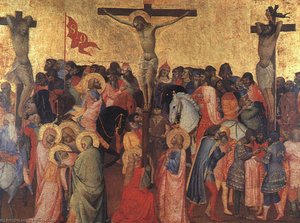
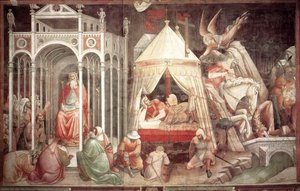
Agnolo Gaddi’s “The Triumph of the Cross,” a breathtaking fresco fragment housed within the Basilica of Santa Croce in Florence, offers a profound glimpse into the artistic and spiritual landscape of late medieval Italy. Dating from around 1380, this work isn't merely a depiction of a pivotal biblical event; it’s a carefully constructed narrative imbued with the stylistic echoes of Giotto di Bondone – Gaddi’s revered master – yet subtly infused with his own burgeoning artistic vision. The fresco, meticulously executed in tempera and gold leaf on panel, captures a moment of intense religious drama: the culmination of the legend surrounding the True Cross, the very wood upon which Christ was crucified.
Gaddi's genius lies not just in his technical skill—evident in the remarkably detailed figures, the vibrant yet restrained palette dominated by reds, blues, and golds – but also in his ability to synthesize disparate influences. The composition is deeply rooted in the established conventions of Byzantine iconography, particularly in its hierarchical arrangement of figures and the use of symbolic gestures. However, Gaddi departs from strict adherence to tradition, introducing a greater sense of naturalism and emotional depth into the portrayal of the grieving onlookers. Notice, for instance, the subtle variations in facial expression—a hint of sorrow, contemplation, or even awe—that elevate these figures beyond mere decorative elements.
A Tapestry of Narrative and Symbolism
The fresco unfolds as a carefully orchestrated visual story. At its heart lies the central scene: a large cross adorned with a draped figure representing Jesus Christ, embodying both sacrifice and resurrection. Surrounding this focal point are numerous figures engaged in various acts of devotion and mourning. To the left, we encounter a group in prayer, their garments—richly embroidered robes and head coverings—suggesting a hierarchy of importance within the Christian community. Their postures convey a sense of solemn reverence, while their expressions hint at profound contemplation. On the right, celestial beings – angels rendered with delicate wings and ethereal features – appear to offer protection and witness the event.
Beyond the immediate narrative, “The Triumph of the Cross” is rich in symbolic meaning. The use of light and shadow—a hallmark of Gaddi’s style—creates a dramatic atmosphere, emphasizing the sacredness of the scene. The architectural backdrop, reminiscent of Florentine Gothic architecture, serves as a grounding element, anchoring the religious drama within a recognizable earthly context. The inclusion of figures like Saint Bernard and Saint Catherine, prominent saints associated with devotion and pilgrimage, further reinforces the fresco’s message of faith and spiritual journey.
Bridging Tradition and Innovation
Agnolo Gaddi's work represents a crucial transitional moment in Florentine art. He inherited Giotto’s revolutionary approach to depicting human form and emotion—a departure from the stylized, flattened figures of earlier Gothic painting—but he also began to explore new possibilities for spatial representation and compositional structure. His frescoes at Santa Croce demonstrate a growing confidence in creating dynamic scenes with a sense of depth and perspective, foreshadowing the innovations of the Early Renaissance masters like Masaccio and Brunelleschi.
Furthermore, Gaddi’s role as a merchant and art dealer—as documented by his biography—influenced his artistic practice. He was deeply involved in the commercial aspects of the art world, which likely shaped his approach to commissions and his understanding of the market for religious imagery. His legacy extends beyond this single fresco; he mentored artists like Cennino Cennini, whose treatise on art provides valuable insights into Gaddi’s techniques and artistic philosophy.
A Timeless Testament to Faith
“The Triumph of the Cross” is more than just a beautiful painting—it's a powerful testament to the enduring power of faith and the human desire for spiritual meaning. Its intricate details, evocative symbolism, and masterful execution continue to captivate viewers centuries after its creation. Whether viewed as a historical artifact or an artistic masterpiece, this fresco offers a profound glimpse into the heart of medieval Florence and the evolving relationship between art, religion, and society.
Related Artworks
Artist Biography
A Florentine Legacy: The Life and Art of Agnolo Gaddi
Agnolo Gaddi, born in Florence around 1350, occupies a fascinating, pivotal position in the history of Italian painting. He wasn’t merely an artist; he was the inheritor of a powerful lineage, the son of Taddeo Gaddi, himself a devoted and gifted pupil of the revolutionary Giotto di Bondone. This familial connection immediately placed Agnolo within the epicenter of artistic innovation that Florence had become in the 14th century. While often described as the last great Florentine painter directly descended from Giotto’s style, to label him simply as an imitator would be a profound disservice. Gaddi wasn't just continuing a tradition; he was subtly transforming it, bridging the gap between the late Gothic sensibilities and the burgeoning promise of the Early Renaissance. His life, though relatively undocumented compared to some of his contemporaries, reveals a man deeply embedded in the artistic and commercial fabric of Florence, a city brimming with creative energy and economic prosperity. He wasn’t solely dedicated to painting; records suggest he engaged in mercantile pursuits as well, particularly later in life, demonstrating a pragmatic side often unseen in the biographies of celebrated artists.From Giotto's Shadow: Artistic Development and Influences
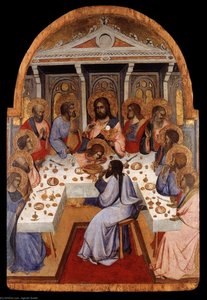
The influence of Giotto is undeniable in Gaddi’s early work. The monumental figures, the emotional resonance, and the narrative clarity that characterized Giotto’s frescoes are all present in Agnolo’s initial paintings. However, Gaddi quickly developed a style distinctly his own. Where Giotto often favored robust simplicity, Gaddi embraced a more refined elegance, incorporating intricate details and a heightened sense of decorative flourish. The Gothic influence is particularly noticeable in his work – a love for dramatic lighting effects, richly textured fabrics, and an overall emphasis on ornate beauty. This isn’t to say he abandoned the naturalism pioneered by Giotto; rather, he layered it with a sophisticated aesthetic sensibility that reflected the evolving tastes of Florentine society. He wasn't afraid to experiment with color, employing vibrant hues and delicate gradations to create visually arresting compositions. The Last Supper, painted in 1395, exemplifies this blend of Giottesque solidity with Gothic refinement – a scene imbued with both solemnity and exquisite detail. His training under his father also instilled in him a mastery of fresco technique, which would become central to many of his most significant commissions.Masterpieces in Stone and Paint: Key Works and Commissions
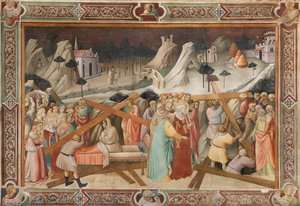
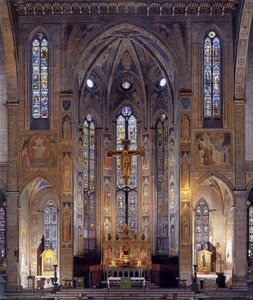
Agnolo Gaddi’s artistic reputation rests largely on his extensive frescoes within the Basilica di Santa Croce in Florence. These monumental works, depicting scenes from *The Legend of the True Cross*, are a testament to his skill as a narrative painter and his ability to manage complex compositions. The cycle unfolds across eight frescoes in the Cappella Baroncelli and the choir, telling the story from the discovery of the tree’s seed to its eventual use in Christ's crucifixion. These aren’t merely illustrations; they are vibrant dramas populated with expressive figures and set within meticulously rendered architectural landscapes. Beyond Santa Croce, Gaddi received commissions for altarpieces and devotional panels that showcase his versatility as an artist. The Coronation of the Virgin, now housed in the National Gallery of Art in Washington D.C., is a prime example – a luminous depiction of celestial glory filled with delicate details and graceful figures. His *Madonna and Child* paintings, often adorned with saints and angels, reveal his sensitivity to portraying maternal tenderness and divine grace. He also designed trefoils for the Loggia dei Lanzi, demonstrating his skill extended beyond painting into decorative arts.A Teacher and a Legacy: Gaddi’s Impact on Italian Art
Agnolo Gaddi wasn't just a painter; he was an educator. Among his pupils was Cennino Cennini, who would go on to become a highly influential art theorist and author of *Il Libro dell'Arte* – a treatise that served as a foundational text for generations of artists. This mentorship underscores Gaddi’s commitment to passing on his knowledge and techniques, ensuring the continuation of artistic traditions in Florence. While he didn’t initiate a new school of painting in the same way Giotto had, his influence was pervasive. He helped to refine and transmit the Giottesque style, preparing the ground for the innovations of the Early Renaissance. Giorgio Vasari, in his seminal *Lives of the Most Excellent Painters, Sculptors, and Architects*, recognized Gaddi’s importance, solidifying his place within the canon of Italian art history. Though sometimes overshadowed by his father and grandfather, Agnolo Gaddi stands as a crucial figure – a master craftsman who skillfully navigated the transition between artistic epochs, leaving behind a legacy of beauty, devotion, and enduring influence.Further Exploration
- Museums & Collections: Explore works by Agnolo Gaddi at the Lindenau-Museum (Germany), the National Gallery of Art (Washington D.C.), and the Galleria degli Uffizi (Florence).
- Online Resources: Delve deeper into his life and art through resources like Wikipedia (https://en.wikipedia.org/wiki/Agnolo_Gaddi) and the National Gallery of Art website (https://www.nga.gov/artists/1327-agnolo-gaddi).
- Contextual Study: To fully appreciate Gaddi’s work, research the art of Giotto and Taddeo Gaddi, as well as the broader context of 14th-century Florentine painting.
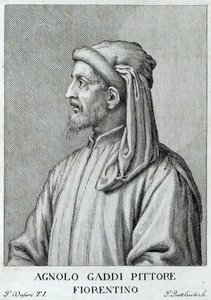
Agnolo Gaddi
1350 - 1396 , Italy
Quick Facts
- Artistic Movement Or Style: Gothic, Early Renaissance
- Artists Or Movements Influenced By This Artist: ['Cennino Cennini']
- Artists Who Influenced This Artist:
- Taddeo Gaddi
- Giotto
- Date Of Birth: 1350
- Date Of Death: 1396
- Full Name: Agnolo Gaddi
- Nationality: Italian
- Notable Artworks:
- The Last Supper
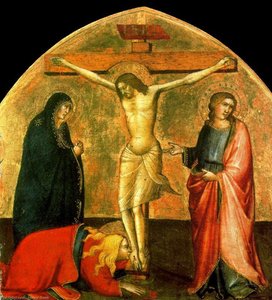
- Crucifixion
- Discovery of True Cross
- Place Of Birth: Florence, Italy
Related Articles

The Fresco as Family Legacy: Preserving Heritage Through Wall Art
Explore the rich history & enduring legacy of fresco painting. Discover how to preserve family heritage through stunning wall art. Expert insights & restoration guidance.

The Enduring Legacy of Fresco Painting: Techniques, History & Contemporary Relevance
Explore the rich history & enduring artistry of fresco painting – from Giotto to Michelangelo! Discover techniques, conservation efforts, & modern applications. Learn how ArtsDot brings this timeless art form to your home.

The Enduring Legacy of Fresco: Technique, History & Artistic Expression Across Cultures
Explore the rich history & enduring legacy of fresco painting! Discover ancient techniques, Giotto's masterpieces, and modern applications. Expert insights for art lovers & professionals.

Art That Lives With You: The Emotional Power of a Custom Interior Fresco
Discover the emotional power & timeless beauty of custom interior frescoes. Explore history, design tips & expert guidance from – creating lasting legacies.
The Enduring Legacy of Fresco: Technique, History & Artistic Expression
Explore the rich history & enduring artistry of fresco painting. Discover techniques from Giotto to Michelangelo, conservation efforts, & modern applications. Learn how ArtsDot brings this timeless art form to your home.
![Madonna and Child with Saints Andrew, Benedict, Bernard, and Catherine of Alexandria with Angels [entire triptych]](/media/artworks/images-thumb/a9/1b/a91b3e80225f997a9d1ffe3065b5a1b1.jpg)
![Madonna and Child Enthroned with Twelve Angels, and with the Blessing Christ [middle panel]](/media/artworks/images-thumb/ce/38/ce3899a16f231bcada46d370d7e0f270.jpg)