 Send
Send Share
Share
 Details

 Download
 Similars
 Diaporama
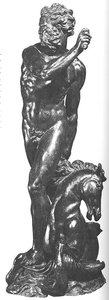
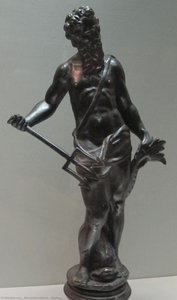
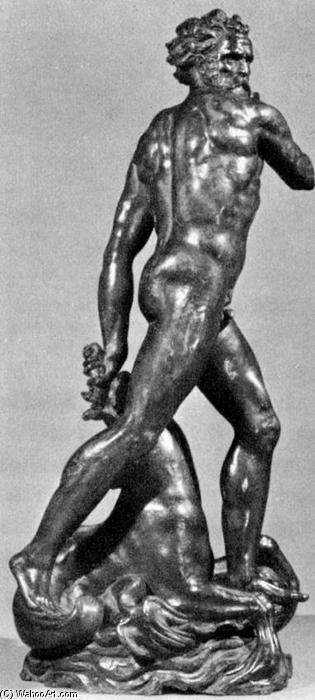
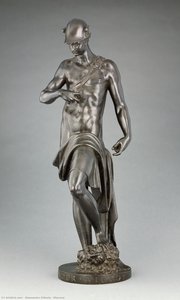
Neptune with Sea-Horse


 Read More
Giclée / Art Print
Museum-quality giclée or canvas print with fast production and flexible finish options. ( Buy Hand Made Painting Buy Image)




































Pick from our preset sizes that match the artwork's original proportions.

You may enter your own dimensions to fit a specific frame or space. If your selected size does not match the original image's proportions, we will either crop the artwork or extend the image with a mirrored or solid-fill edge. A digital mockup will be sent for your approval before production begins.
Please note that the on-screen preview does not reflect the actual cropping or extension. Only the mockup will accurately show the final composition.
While custom sizes are available, we recommend selecting a dimension from the predefined list to preserve the original proportions.
Worldwide Delivery () in 2 weeks instead of standard 4/5 weeks. (17 August)

Free Worldwide Express Shipping

High-Quality Linen Canvas

Full Shipping Insurance

Customs Tax Refund Guarantee

True Color Matching Guarantee

60-Day Return Policy (Defects Only)

100% Money-Back Guarantee

Bulk Discount Offer
 Glass option is only available in size under 110 CM

Neptune with Sea-Horse
Giclée / Art Print
Reproduction Size
-


Total Price
$ 63
Collectible Description
A Symphony in Bronze: The Majesty of Neptune
In the realm of Renaissance sculpture, few figures command the eye with as much raw power and fluid grace as Alessandro Vittoria’s Neptune with Sea-Horse. This breathtaking bronze masterpiece captures a moment of divine motion, frozen in time yet vibrating with an internal energy that seems to ripple through the very metal itself. As the Roman god of the sea, Neptune is depicted not merely as a static deity, but as a force of nature in mid-stride, leaning forward with a muscular intensity that suggests he is carving his path through the cresting waves. The composition is a masterclass in dynamism, where the heavy, grounded weight of the bronze is defied by the sweeping, organic curves of the god and his mythical companion.
The artistry lies in the meticulous attention to anatomical precision and texture. Every sinew of Neptune’s physique is rendered with an idealized realism that speaks to the High Renaissance pursuit of perfection. The surface of the sculpture, characterized by its rugged and tactile quality, catches the light in a way that creates deep, dramatic shadows and brilliant highlights, lending a profound three-dimensionality to the work. This interplay of light and shadow does more than just define form; it breathes life into the scene, simulating the shimmering, unpredictable nature of the ocean's surface. For the discerning collector or interior designer, such a piece offers a focal point of unparalleled grandeur, bringing a sense of classical weight and sophisticated movement to any curated space.
Symbolism and the Renaissance Spirit
Beyond its physical splendor, the sculpture serves as a profound vessel for mythological symbolism. The trident, held firmly in Neptune’s grasp, is far more than a weapon; it is an emblem of absolute authority over the untamed elements of the earth. Paired with the sea-horse, a creature that embodies the wild and unpredictable spirit of the deep, the work explores the relationship between divine will and natural chaos. This tension between control and movement is what gives the piece its enduring emotional resonance, evoking feelings of awe, reverence, and a deep respect for the primordial forces of our world.
To possess or display a reproduction of this work is to invite the spirit of the 16th century into the modern home. It represents an era where art was a bridge between the human and the divine, and where technical mastery was used to celebrate the grandeur of the cosmos. Whether placed in a sunlit library or a stately hall, Neptune with Sea-Horse acts as a timeless conversation piece, offering an infusion of historical depth and sculptural elegance that transcends the passing trends of contemporary decor.
Related Artworks
Artist Biography
Albrecht Dürer: The Architect of the Renaissance
Albrecht Dürer, a name synonymous with German Renaissance art, stands as one of the most influential figures in European painting and printmaking during the 16th century. Born in Nuremberg in 1471, his life was a testament to artistic ambition, intellectual curiosity, and a relentless pursuit of perfection. More than simply a painter, Dürer was a meticulous observer, a mathematical thinker, and a pioneer who bridged the gap between Northern European realism and the burgeoning ideals of Italian High Renaissance art. His legacy extends far beyond his individual masterpieces; he fundamentally shaped the course of artistic technique and theory, leaving an indelible mark on generations of artists to come.
Dürer’s early life was steeped in the vibrant commercial hub of Nuremberg, a city renowned for its thriving trade and burgeoning merchant class. His father, Albrecht Dürer Senior, was a goldsmith and master printer, providing young Albrecht with an invaluable foundation in craftsmanship and artistic production. He received his initial training under Adam Kraft, a local painter, before being apprenticed to the master German printmaker Hans Holbein the Elder in Augsburg around 1493. This formative period exposed him to the sophisticated techniques of engraving and etching, skills he would later master with unparalleled precision. Dürer’s time with Holbein instilled in him a deep appreciation for detail, clarity, and the expressive power of line – qualities that would become hallmarks of his distinctive style.
The Flowering of a Genius: Major Works and Artistic Development
Dürer's artistic output spanned a remarkable range of subjects and media. His early works, such as the *St. Anne* (1498) and the *Adoration of the Three Kings* (1503-1505), demonstrate a masterful command of perspective and color, reflecting the influence of Italian Renaissance masters like Andrea Mantegna. However, it was with his series of woodcuts – particularly the *Apocalypse* (1498) and the *Large Passion* (1507-1508) – that he truly established himself as a major artistic force. These intricate prints showcased his extraordinary technical skill, his ability to convey complex narratives through meticulously rendered figures, and his innovative use of line and shading.
The mid-1500s marked the peak of Dürer’s creative output. This period witnessed the production of some of his most celebrated works: *Melancholia I* (1514), a haunting self-portrait that explores themes of artistic frustration and existential despair; *Knight, Death, and Devil* (1518), a complex allegorical composition that grapples with mortality and human ambition; and the series of engravings known as the *Prayers*, which depict scenes from the life of Christ. Notably, Dürer’s engagement with geometry and proportion during this time is evident in works like *The Four Books on Measurement* (1525), a groundbreaking treatise that combined artistic principles with mathematical theory, demonstrating his belief that art should be grounded in rational understanding.
A Bridge Between Traditions: Influences and Innovations
Dürer’s artistic development was shaped by a complex interplay of influences. He absorbed the stylistic innovations of Italian Renaissance masters like Leonardo da Vinci and Raphael, particularly their emphasis on naturalism, perspective, and human anatomy. Simultaneously, he remained deeply rooted in the traditions of Northern European art, drawing inspiration from German altarpieces and the meticulous detail characteristic of Flemish painting. His work represents a unique synthesis of these diverse influences, creating a style that is both strikingly modern and profoundly classical.
Dürer’s innovations extended beyond his technical skill. He pioneered new techniques in printmaking, particularly the use of cross-hatching to create subtle tonal variations. His meticulous attention to detail, his rigorous approach to composition, and his exploration of complex allegorical themes set a new standard for artistic excellence. Furthermore, Dürer’s theoretical writings – including *Underweysung der Messung mit dem Zirckel und Richtscheyt* – demonstrated his commitment to elevating art beyond mere imitation and towards a more intellectual and rational discipline.
Legacy and Historical Significance
Albrecht Dürer died in Nuremberg in 1528, leaving behind a vast and influential body of work. His paintings, prints, and theoretical writings continue to be studied and admired by artists and scholars alike. He is considered one of the most important figures in the history of Western art, not only for his individual masterpieces but also for his profound impact on artistic technique, theory, and representation. Dürer’s legacy extends far beyond the Renaissance; he helped to establish the foundations for modern printmaking and influenced generations of artists who followed in his footsteps. His relentless pursuit of perfection, his intellectual curiosity, and his unwavering commitment to artistic excellence serve as an enduring inspiration to all who seek to understand the power and potential of art.
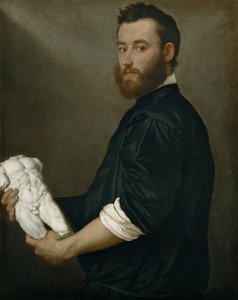
alessandro vittoria
1525 - 1608 , Italy
Quick Facts
- Artistic Movement Or Style: Flemish painting
- Artists Or Movements Influenced By This Artist: ['His sons, Jan & Pieter Bruegel II']
- Artists Who Influenced This Artist: ['Pieter Coecke van Aelst']
- Date Of Birth: 1525
- Date Of Death: 1569
- Full Name: Pieter Bruegel the Elder
- Nationality: Flemish
- Notable Artworks:
- Peasant Wedding
- Hunters in the Snow
- The Goldsmith
- Fall of the Innocents
- Place Of Birth: Breda, Brabant
Related Articles
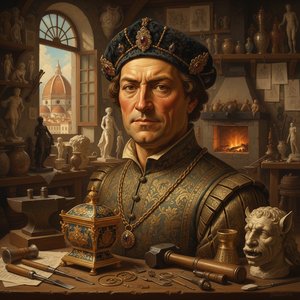
Benvenuto Cellini: Renaissance Goldsmith, Sculptor & Master of Self-Fashioning
Explore the life & art of Benvenuto Cellini, Renaissance goldsmith & sculptor. Discover his iconic 'Perseus,' masterful techniques, and enduring legacy – a collector's essential guide.
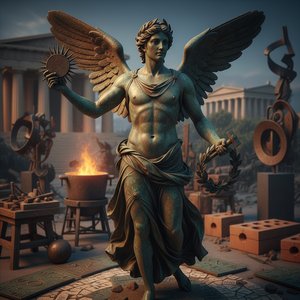
The Enduring Legacy of Bronze Sculpture: Technique, Symbolism & Cultural Impact
Explore the rich history & enduring appeal of bronze sculpture with expert insights for collectors. Learn about casting techniques, iconic artists, collecting tips & contemporary interpretations at ArtsDot.
Sebastiano del Piombo: Bridging Venetian Colorism & Roman Grand Manner Portraiture
Explore the captivating art of Sebastiano del Piombo, a Renaissance master bridging Venetian colorism & Roman grandeur. Discover his iconic portraits and lasting influence on art history. Learn more at ArtsDot.
The Enduring Legacy of Bronze Sculpture: History, Techniques & Contemporary Interpretations
Explore the rich history & enduring appeal of bronze sculpture. Learn about casting techniques, iconic artists, collecting tips, & contemporary interpretations. Expert insights for discerning art collectors.
The Enduring Legacy of Bronze Sculpture: A Collector's Guide to Form & Cultural Significance
Explore the rich history & enduring appeal of bronze sculpture with expert insights for collectors at ArtsDot. Learn about casting techniques, iconic artists, and collecting tips to build a discerning art collection.