 Preview
 Send
Send Share
Share
 Details

 Download
 Similars
 X-Ray
X-Ray Diaporama
 Stats
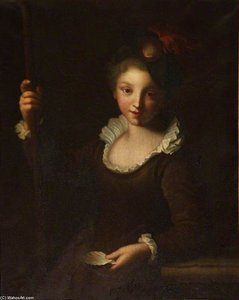
StatsYoung Pilgrim Girl
 Acrylic On Canvas
- WallArt
- French Romanticism
 1725
1725 82.0 x 64.0 cm
 Galleria degli Uffizi
 Read More
Hand Made Oil Reproduction
Hand-painted oil on canvas in your size and frame, made to order by our artists. ( Switch to Print Switch to Digital Image)




P118B $10

P118H $10

P118W $10

P438Z $10

P508JH $12

P508YH $12

P805H $10

P805Z $10

P919BZ $10

P919G $10

P919XJ $10

P959ZH $10

P968JZ $12

W106C $8

W218G $10

W218JH $8

W218Y $10

W307PJ $10

W316G $10

W316PJ $8

W316Y $10

W398PJ $8

W4111J $10

W500HY $15

W500JH $15

W692G $12

W849H $8

W940BG $15

W953PJ $8




Pick from our preset sizes that match the artwork's original proportions.

You may enter your own dimensions to fit a specific frame or space. If your selected size does not match the original image's proportions, we will either crop the artwork or extend the painting with additional hand-painted elements. A digital mockup will be sent for your approval before production begins.
Please note that the on-screen preview does not reflect the actual cropping or extension. Only the mockup will accurately show the final composition.
While custom sizes are available, we recommend selecting a dimension from the predefined list to preserve the original proportions.
After order, ArtsDot.com team will email client for instructions and provide a mockup preview
Worldwide Delivery () in 3/4 weeks instead of standard 5 weeks. (12 September). No compromise on quality.

Free Worldwide Express Shipping

High-Quality Linen Canvas

Full Shipping Insurance

Customs Tax Refund Guarantee

True Color Matching Guarantee

100-Day Return Policy (Defects Only)

100% Money-Back Guarantee

Bulk Discount Offer
 Glass option is only available in size under 110 CM

Young Pilgrim Girl
Reproduction Medium
Reproduction Size
-


Total Price
$ 263
A Moment Frozen in Time: Unveiling the Intimacy of Alexis Grimou’s “Young Pilgrim Girl”
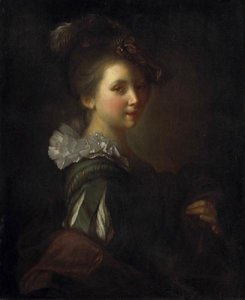
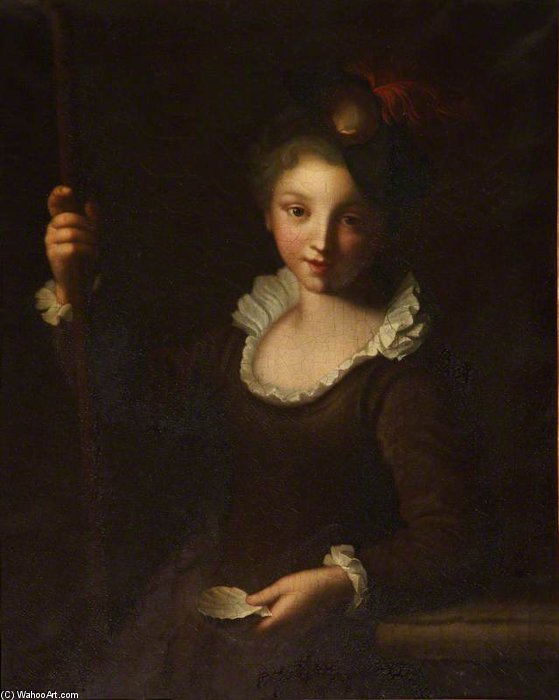
Alexis Grimou's "Young Pilgrim Girl," painted in 1725, is more than a simple portrait; it’s a carefully constructed tableau brimming with quiet observation and subtle emotional resonance. Often referred to as the “French Rembrandt,” Grimou possessed an extraordinary ability to capture not just physical likeness but also the inner life of his subjects – a skill evident immediately in this captivating work. The painting depicts a young woman, likely between twelve and fifteen years old, seated on a simple bench beneath a sheltering umbrella, her gaze directed towards the viewer with a gentle curiosity. Her brown hair is rendered with remarkable detail, suggesting both youthfulness and a nascent maturity, while her dress, though modest, hints at a certain refinement.
The composition itself is deceptively straightforward. The background – a chair and bench – establishes a sense of domestic tranquility, yet it’s the young woman who commands our attention. Grimou masterfully employs chiaroscuro, utilizing dramatic contrasts between light and shadow to sculpt her form and draw focus to her face. Notice how the light catches the curve of her cheekbone or highlights the delicate folds of her garment. This technique wasn't merely decorative; it was integral to Grimou’s signature style, allowing him to imbue his subjects with a palpable sense of volume and presence – a hallmark of Dutch masters like Rembrandt, whom he deeply admired.
Symbolism Woven into the Everyday
Beyond its technical brilliance, “Young Pilgrim Girl” is rich in symbolic detail. The most striking element is undoubtedly the young woman’s pilgrim staff and scallop shell, emblems instantly recognizable as symbols of Santiago de Compostela, the famed shrine in Spain. This inclusion elevates the painting beyond a mere portrait; it suggests a journey – not necessarily a physical one, but perhaps a metaphorical quest for faith, knowledge, or self-discovery. The presence of the umbrella further reinforces this idea, offering protection from the elements and hinting at a desire to remain steadfast on one’s chosen path.
Interestingly, Grimou's choice to depict a young pilgrim girl rather than a fully grown figure adds another layer of complexity. It speaks to the formative years, a time of transition and decision-making. The girl isn’t simply presenting herself; she is embodying an aspiration, a potential for growth and transformation. This duality – the innocence of youth combined with the weighty symbolism of pilgrimage – creates a compelling tension within the painting.
A Window into 18th-Century France
To fully appreciate “Young Pilgrim Girl,” it’s essential to understand its historical context. The early 18th century in France was a period of significant artistic change, marked by a renewed interest in the works of Dutch masters – particularly Rembrandt and his contemporaries. Grimou embraced this influence wholeheartedly, adapting their techniques to create a distinctly French style that prioritized intimacy, psychological depth, and a nuanced understanding of light and shadow. His work reflects the growing emphasis on individual experience and emotional expression during this era.
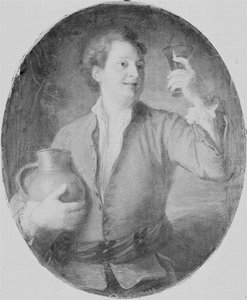
Furthermore, the painting’s popularity – evidenced by Grimou's creation of matching pendants featuring a young pilgrim boy – suggests it resonated deeply with contemporary audiences. It likely appealed to a desire for both spiritual contemplation and a celebration of youthful beauty and potential. Grimou’s ability to capture this complex interplay of themes solidified his reputation as one of the most important portraitists of his time.
Bringing “Young Pilgrim Girl” Home: A Reproduction Worth Cherishing
ArtsDot offers meticulously hand-painted reproductions of Alexis Grimou's "Young Pilgrim Girl," allowing you to bring this captivating artwork into your home or office. Our skilled artisans replicate the painting’s intricate details, vibrant colors, and masterful use of chiaroscuro with unparalleled precision. We offer a range of sizes and mediums – from luxurious canvas prints to elegant framed reproductions – ensuring that you can select the perfect option to suit your individual taste and décor. Investing in a ArtsDot reproduction is not just acquiring an image; it’s owning a piece of art history, imbued with the same emotional depth and artistic brilliance as the original.
Related Artworks

Artist Biography
A Life Illuminated: The World of Alexis Grimou
Alexis Grimou, a name perhaps less instantly recognizable than those of his celebrated contemporaries, nevertheless occupies a vital and fascinating niche in the history of 18th-century French art. Born in Argenteuil in 1678 and passing away in Paris in 1733, Grimou carved out a unique path as a portraitist, earning him the evocative moniker “the French Rembrandt.” This title wasn’t merely bestowed for stylistic imitation; it acknowledged a shared mastery of light and shadow, an ability to penetrate beyond surface appearances and reveal the inner lives of his subjects. Unlike many artists of his era who benefited from formal apprenticeships within established studios, Grimou's artistic journey was largely self-directed, fueled by diligent study and a profound engagement with the works of Dutch masters like Anthony van Dyck and, most significantly, Rembrandt. This independent spirit would come to define not only his technique but also his approach to the art world itself.Forging a Style: Light, Shadow, and Psychological Depth
Grimou’s dedication to the Dutch tradition profoundly shaped his artistic identity. He wasn't simply replicating techniques; he was absorbing a philosophy of painting that prioritized psychological realism and emotional resonance. His canvases are characterized by a warm, rich palette, often employing earth tones and subtle gradations of color. However, it is his masterful use of chiaroscuro – the dramatic interplay of light and shadow – that truly sets him apart. This technique wasn’t merely decorative; it served to sculpt form, heighten drama, and most importantly, illuminate the character of his sitters. He moved beyond mere physical likeness, striving to capture a sense of personality, mood, and even vulnerability in each portrait. His compositions often feel intimate and informal, depicting women engaged in everyday activities – singing, playing musical instruments, or simply lost in thought. These weren’t grand, imposing portraits designed to showcase wealth or status; they were glimpses into private moments, imbued with a sense of genuine human connection. His genre paintings further expanded this exploration of daily life, offering candid observations of ordinary people and their experiences—a departure from the more formal conventions prevalent at the time.Navigating the Artistic Landscape: Academies and Independence
Grimou’s talent was undeniable, leading to his acceptance into the prestigious Royal Academy of Painting and Sculpture in Paris in 1705. However, his tenure there proved short-lived. Disillusioned by what he perceived as a lack of artistic rigor and an abundance of mediocrity among his peers, he resigned from the Academy, demonstrating a fiercely independent streak. This refusal to compromise his artistic vision led him to seek alternative avenues for creative expression, ultimately finding a more congenial environment at the Académie de Saint-Luc in 1709. The Académie de Saint-Luc, known for its more progressive and less restrictive atmosphere, allowed Grimou greater freedom to pursue his own artistic path. This period marked a flourishing of creativity, as he continued to refine his style and explore new thematic possibilities.Lasting Legacy: Influence and Rediscovery
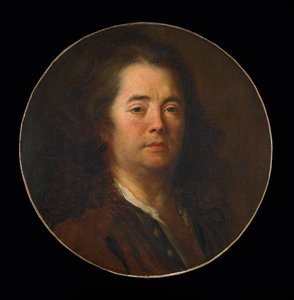
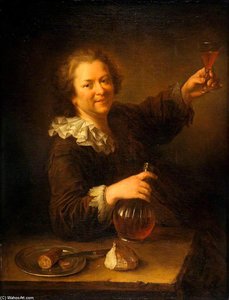
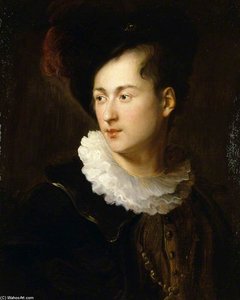
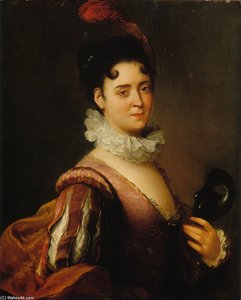
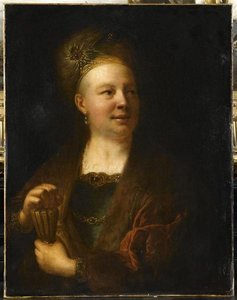
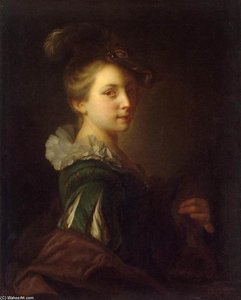
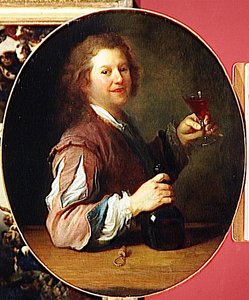
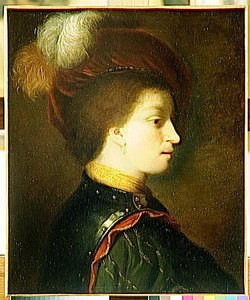
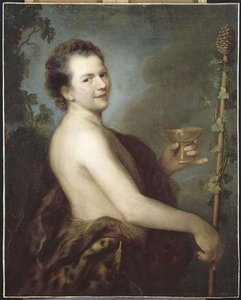
While not achieving the widespread fame of some of his contemporaries during his lifetime, Alexis Grimou’s influence on subsequent generations of French painters is undeniable. Artists like Jean-Honoré Fragonard and Louis-David Greuze were deeply impacted by his emphasis on psychological realism and his ability to imbue portraits with personality and emotion. His work served as a bridge between the formality of Baroque portraiture and the more intimate, emotionally charged style that would come to characterize Rococo painting. Though largely overlooked for many years, Grimou’s art has experienced a resurgence in recent decades, thanks to renewed scholarly interest and a growing appreciation for his unique contribution to French artistic heritage. Paintings such as Young Woman in Theatrical Costume, with its expressive emotion, Young Pilgrim Girl, showcasing delicate handling of light and texture, and the captivating self-portrait Portrait de l'Artiste en Buveur stand as testaments to his skill. Grimou’s legacy lies not only in the beauty of his paintings but also in his unwavering commitment to artistic integrity and his ability to capture the essence of human experience on canvas, solidifying his place as a significant figure in 18th-century French art.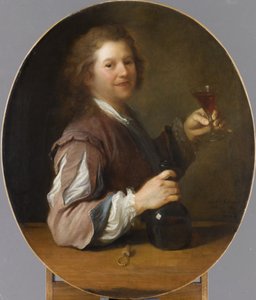
Alexis Grimou
1678 - 1733 , France
Quick Facts
- Artistic Movement Or Style: Baroque, Rococo
- Artists Or Movements Influenced By This Artist:
- Fragonard
- Greuze
- Artists Who Influenced This Artist:
- Rembrandt
- Anthony van Dyck
- Date Of Birth: 1678
- Date Of Death: 1733
- Full Name: Alexis Grimou
- Nationality: French
- Notable Artworks:
- The Flautist
- Self-Portrait as a Drinker
- Young Pilgrim Girl
- A Spanish Minstrel
- Place Of Birth: Argenteuil, France
Related Articles
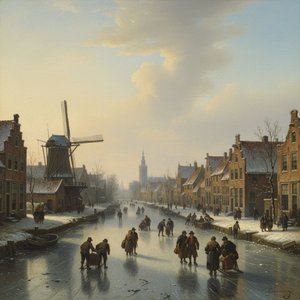
Charles Leickert: Capturing the Dutch Golden Age Light – A Comprehensive Study of Technique, Context, and Legacy
Explore the captivating winter landscapes of Charles Leickert, a master of Dutch Golden Age light & atmosphere. Discover his techniques, symbolism, and lasting legacy – a comprehensive study for art enthusiasts and collectors.

Dutch Masters: 10 Golden Age Paintings That Still Inspire |
Journey into the Dutch Golden Age! Explore 10 iconic paintings by Rembrandt, Vermeer & Hals. Discover the stories behind these Baroque masterpieces and find museum-quality art reproductions to elevate your home decor on .
Illuminating Realism: Exploring the Dutch Golden Age of Painting (1600-1700)
Explore the Dutch Golden Age of painting (1600-1700) with ArtsDot. Discover Rembrandt, Vermeer & other masters. Learn about techniques, history & find museum-quality reproductions.

Golden Age Reflections: Dutch Baroque Painting & Cultural Innovation
Explore the Dutch Golden Age of painting! Discover key artists like Vermeer & ter Borch, their innovative techniques, and the rich cultural context behind these Baroque masterpieces. Learn about collecting & appreciating this iconic art period.

Dutch Baroque Masters: 10 Paintings That Shaped an Era | ArtsDot
Journey through the Golden Age with our guide to the Top 10 Dutch Baroque masterpieces! Explore iconic paintings by Rembrandt, Vermeer & Frans Hals. Find museum-quality art reproductions and elevate your home decor at ArtsDot.com.