 Preview
 Send
Send Share
Share
 Details

 Download
 Similars
 X-Ray
X-Ray Diaporama
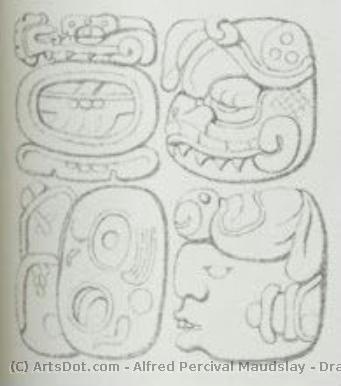
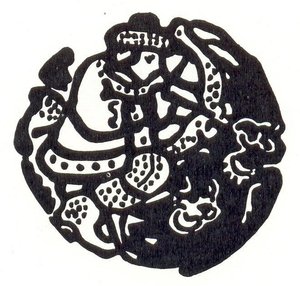
Drawing of an inscription from Palenque


 Read More
Hand Made Oil Reproduction
Hand-painted oil on canvas in your size and frame, made to order by our artists. ( Buy Print Buy Image)




P118B $10

P118H $10

P118W $10

P438Z $10

P508JH $12

P508YH $12

P805H $10

P805Z $10

P919BZ $10

P919G $10

P919XJ $10

P959ZH $10

P968JZ $12

W106C $8

W218G $10

W218JH $8

W218Y $10

W307PJ $10

W316G $10

W316PJ $8

W316Y $10

W398PJ $8

W4111J $10

W500HY $15

W500JH $15

W692G $12

W849H $8

W940BG $15

W953PJ $8




Pick from our preset sizes that match the artwork's original proportions.

You may enter your own dimensions to fit a specific frame or space. If your selected size does not match the original image's proportions, we will either crop the artwork or extend the painting with additional hand-painted elements. A digital mockup will be sent for your approval before production begins.
Please note that the on-screen preview does not reflect the actual cropping or extension. Only the mockup will accurately show the final composition.
While custom sizes are available, we recommend selecting a dimension from the predefined list to preserve the original proportions.
After order, ArtsDot.com team will email client for instructions and provide a mockup preview
Worldwide Delivery () in 3/4 weeks instead of standard 5 weeks. (27 August). No compromise on quality.

Free Worldwide Express Shipping

High-Quality Linen Canvas

Full Shipping Insurance

Customs Tax Refund Guarantee

True Color Matching Guarantee

60-Day Return Policy (Defects Only)

100% Money-Back Guarantee

Bulk Discount Offer
 Glass option is only available in size under 110 CM

Drawing of an inscription from Palenque
Reproduction Medium
Reproduction Size
-


Total Price
$ 263
Artwork Description
A Window Into Ancient Palenque: Maudslay’s Detailed Drawing
Alfred Percival Maudslay's drawing of an inscription from Palenque stands as a testament to Victorian fascination with Mesoamerican archaeology and the meticulous observation required to capture the essence of vanished civilizations. Completed in 1890, this monochrome print transcends mere documentation; it embodies a profound appreciation for artistic skill and cultural heritage. Maudslay’s journey into Central America wasn't simply a quest for scientific discovery—it was fueled by an eagerness to immerse himself in the vibrant tapestry of indigenous traditions, shaping his approach to both fieldwork and artistic representation.- Subject Matter: The drawing focuses on glyphic symbols adorning a stone monument found at Palenque, Chiapas, Mexico – a site renowned for its elaborate royal tombs and complex calendrical system. These inscriptions are believed to convey narratives of dynastic succession, religious beliefs, and astronomical observations crucial to understanding the Maya worldview.
- Style: Maudslay’s style leans heavily into realism, prioritizing accuracy in depicting the intricate details of the stone surface and glyphs. However, it's tempered with a subtle artistic sensibility that elevates the drawing beyond a simple topographical record. The artist skillfully employs hatching and shading to create depth and texture, conveying the materiality of the monument itself.
Technique: Observation and Reproduction
Maudslay’s technique exemplifies the prevailing methods of archaeological illustration during his era. He painstakingly sketched the inscription directly from observation, utilizing charcoal on paper—a common practice for capturing ephemeral details in challenging environments. The resulting drawing is a remarkably detailed reproduction, reflecting Maudslay's dedication to preserving visual records of ancient sites. Unlike photographic reproductions that capture only surface appearances, Maudslay’s drawing strives to convey not just what was seen but also the artist’s interpretation of its significance.- Materials: Charcoal on paper – a durable medium favored for capturing tonal variations and textural nuances.
- Process: Maudslay meticulously transferred the image from the monument onto paper, employing precise lines and shading to recreate the contours of the stone surface and the glyphs with remarkable fidelity.
Historical Context & Symbolism
The drawing’s creation coincided with a burgeoning interest in Mesoamerican archaeology within Britain. Maudslay's expeditions to Guatemala and Mexico contributed significantly to the dissemination of knowledge about Maya culture, bolstering support for scholarly endeavors aimed at deciphering their complex system of writing and cosmology. The glyphs themselves represent more than just symbols; they encapsulate profound ideas about time, ritual, and divine authority—concepts central to Maya religious beliefs. Considerations for Reproduction:A high-quality reproduction of Maudslay’s drawing would allow viewers to appreciate the subtle nuances of tonal shading and textural detail that capture the essence of Palenque's monumental art. Framing it in a neutral tone would best honor the original artwork's aesthetic integrity.
Emotional Impact: A Connection Across Time
More than just an artifact of scientific inquiry, Maudslay’s drawing evokes a sense of wonder and reverence for the achievements of ancient civilizations. It invites contemplation on the passage of time and the enduring power of artistic expression to communicate ideas across cultures and generations. Like gazing upon the original monument itself, examining this print offers a glimpse into the minds of explorers and artists who sought to illuminate the mysteries of Mesoamerica.
Related Artworks

![Xtol: Dance Of The Ancient Mayan People, [plate Vii] — Octavio Medellín, Ethnographic Illustration](/media/artworks/images-thumb/fb/04/fb0417e7a415d960a39d62d4cacf98f9.jpg)
![[relief Carving, Mayan Ruins, Chichen Itza] — Octavio Medellín, Contemporary Realism](/media/artworks/images-thumb/13/6b/136b767db5d730e784923c743e4fd201.jpg)
Artist Biography
**early life and education**
alfred percival maudslay, a british colonial administrator and archaeologist, was born on 18 march 1850 in london into a wealthy family. he studied natural sciences at trinity hall, cambridge, obtaining a ba in 1872.**career and travels**
maudslay's early plans for a medical career were deferred as he travelled with his brother, touring central america, mexico, and parts of the united states. this journey sparked an interest in archaeology, which would later define his legacy. after returning home, maudslay again postponed medical school to travel to iceland in 1873. his chronic bronchitis led him to seek a warmer climate, leading to a series of positions in jamaica, trinidad, and eventually, the south pacific.**archaeological contributions**
maudslay's time in the british pacific colonies laid the groundwork for his future archaeological pursuits. he became interested in collecting ethnographic materials, which would eventually contribute to the formation of the university museum of archaeology and ethnology at cambridge. his friend, ornithologist osbert salvin, encouraged maudslay to explore the maya ruins of quiriguá and copán.**notable achievements**
* maudslay was the first to describe the site of yaxchilán. * he explored chichén in the 1880s, taking extensive photographs. * published the first long-form description of chichen itza in his book, biologia centrali-americana. * made a complete translation with annotations of bernal díaz del castillo's historia, which remains the standard english edition.**artistic legacy**
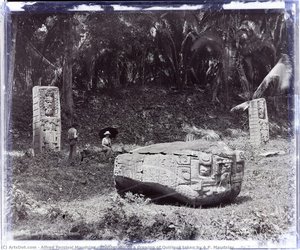
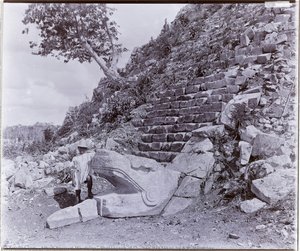
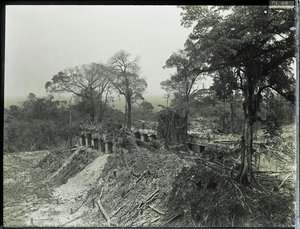
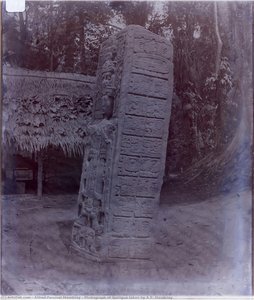
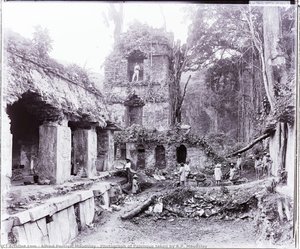
maudslay's photographs and writings have been preserved, offering a unique glimpse into the world of 19th-century archaeology. his work can be found in various museums, including the british museum (london, united kingdom), which houses several of his photographs.- photograph of chichén itzá taken by a.p. maudslay (16 x 21 cm, british museum, photograph)
- photograph of chichén itzá taken by a.p. maudsly (25 x 30 cm, british museum, photograph)
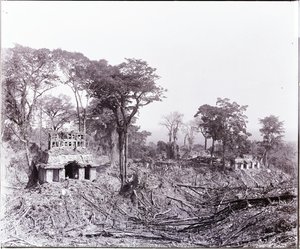
- photograph of copán taken by a.p. maudslay (31 x 25 cm, british museum, photograph)
**conclusion**
alfred percival maudslay's legacy is a testament to the power of curiosity and exploration. from his early days as a colonial administrator to his later years as an archaeologist, maudslay's work continues to inspire and educate.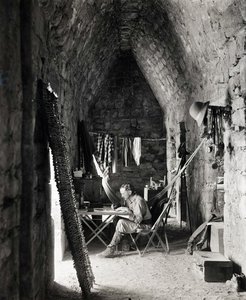
alfred percival maudslay
1850 - 1931 , United Kingdom
Quick Facts
- Artistic Movement Or Style: Archaeology/Photography
- Date Of Birth: 1850
- Date Of Death: 1931
- Full Name: Alfred Percival Maudslay
- Nationality: British
- Notable Artworks: ['Photograph of Chichén Itzá']
- Place Of Birth: London, United Kingdom
Related Articles

Sir Alfred Munnings' Masterpieces: 25 Paintings That Define Equine Art | ArtsDot
Explore 25 iconic Sir Alfred Munnings paintings! Discover the beauty of British Impressionism, equine art & rural England. Find museum-quality reproductions and elevate your home decor with ArtsDot. Explore the full collection online.
British Museum Masterpieces: Explore 25 Iconic Artworks & Decor Inspiration
Journey through 25 iconic artworks at the British Museum, London! Explore masterpieces from Egyptian sculptures to Renaissance paintings & uncover their stories. Find museum-quality art reproductions and curated decor ideas on ArtsDot.com.
Alfred East: Pioneering Plein Air & Evoking Atmospheric Landscapes
Explore the life & work of Alfred East, a pioneer of British plein air painting. Discover his techniques for capturing atmospheric landscapes, Barbizon influences, and lasting legacy. Learn more at ArtsDot.
Philip Wilson Steer: Capturing Modern Life & British Impressionism's Essence
Explore the life & art of Philip Wilson Steer, a leading British Impressionist painter. Discover his coastal scenes, influences, and legacy. Expert analysis & high-quality reproductions at ArtsDot.
Frank Brangwyn: A Life Immersed in Colour, Craft & the Spirit of Modern British Art
Explore the vibrant life & prolific work of Frank Brangwyn, a master of British art. Discover his stunning paintings, designs, and monumental Empire Panels – a celebration of colour, craft, and artistic innovation.