 Preview
 Send
Send Share
Share
 Details

 Download
 Similars
 X-Ray
X-Ray Diaporama
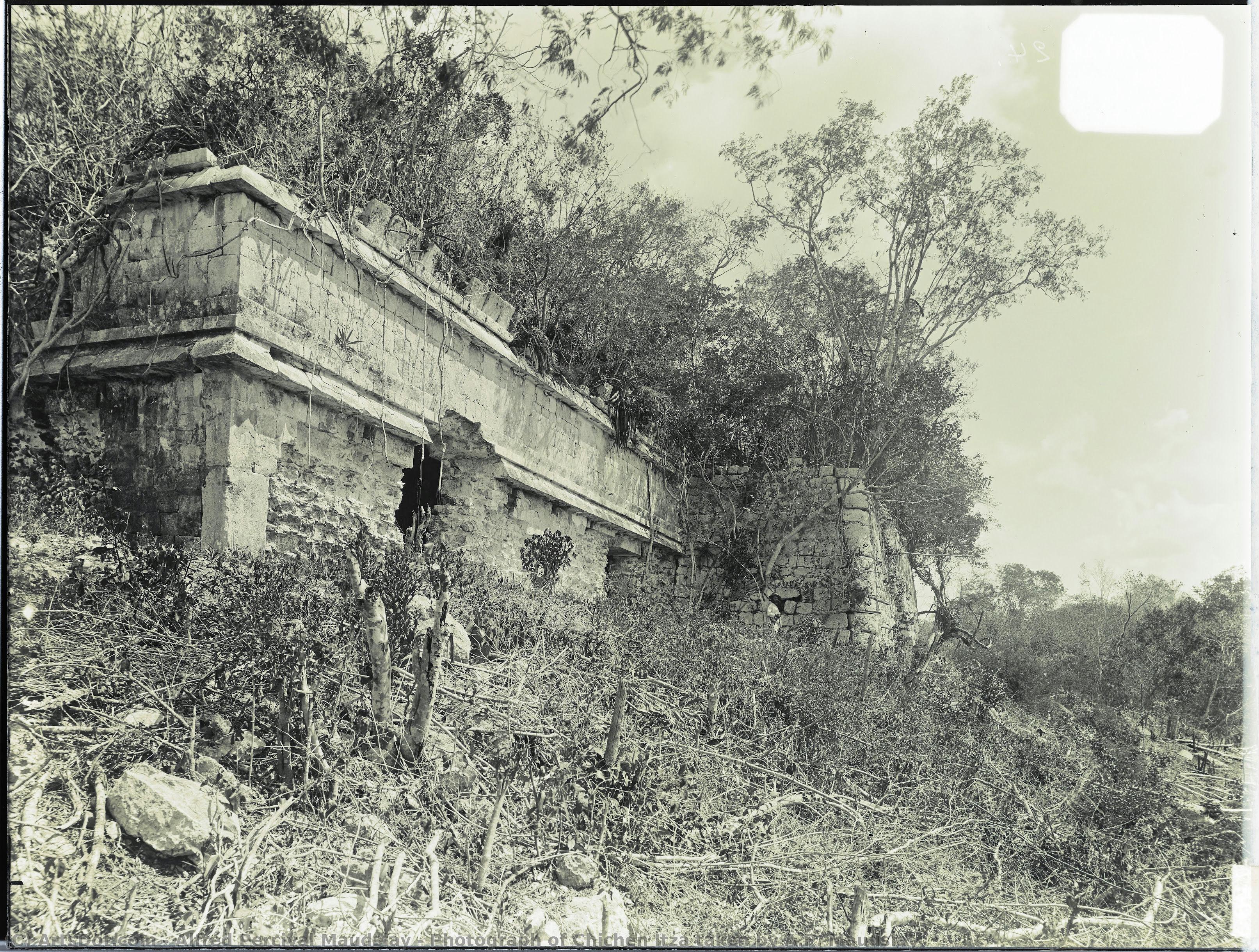
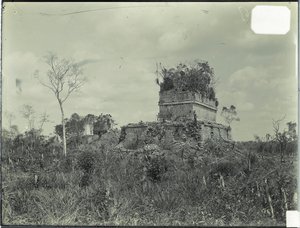
Photograph of Chichén Itzá taken by A.P. Maudslay
 Documentary Photography
 1894
1894 16.0 x 21.0 cm
 British Museum
 Read More
Giclée / Art Print
Museum-quality giclée or canvas print with fast production and flexible finish options. ( Buy Hand Made Painting Buy Image)




P118B $10

P118H $10

P118W $10

P438Z $10

P508JH $12

P508YH $12

P805H $10

P805Z $10

P919BZ $10

P919G $10

P919XJ $10

P959ZH $10

P968JZ $12

W106C $8

W218G $10

W218JH $8

W218Y $10

W307PJ $10

W316G $10

W316PJ $8

W316Y $10

W398PJ $8

W4111J $10

W500HY $15

W500JH $15

W692G $12

W849H $8

W940BG $15

W953PJ $8




Pick from our preset sizes that match the artwork's original proportions.

You may enter your own dimensions to fit a specific frame or space. If your selected size does not match the original image's proportions, we will either crop the artwork or extend the image with a mirrored or solid-fill edge. A digital mockup will be sent for your approval before production begins.
Please note that the on-screen preview does not reflect the actual cropping or extension. Only the mockup will accurately show the final composition.
While custom sizes are available, we recommend selecting a dimension from the predefined list to preserve the original proportions.
Worldwide Delivery () in 2 weeks instead of standard 4/5 weeks. (2 September)

Free Worldwide Express Shipping

High-Quality Linen Canvas

Full Shipping Insurance

Customs Tax Refund Guarantee

True Color Matching Guarantee

60-Day Return Policy (Defects Only)

100% Money-Back Guarantee

Bulk Discount Offer
 Glass option is only available in size under 110 CM

Photograph of Chichén Itzá taken by A.P. Maudslay
Giclée / Art Print
Reproduction Size
-


Total Price
$ 63
A Window into the Ancient World: Alfred Percival Maudslay’s Vision of Chichén Itzá
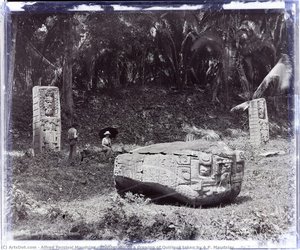
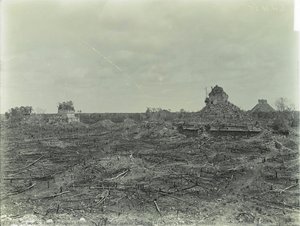
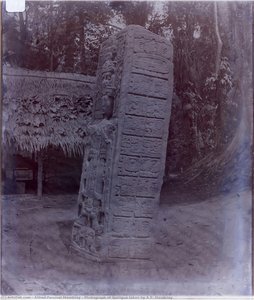
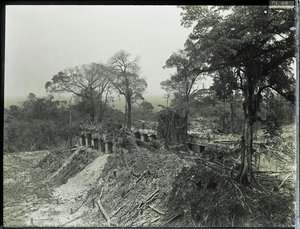
The image before you – “Photograph of Chichén Itzá taken by A.P. Maudslay” – is more than simply a depiction of an ancient Mayan ruin; it's a portal, meticulously crafted in 1894 by the British colonial administrator and archaeologist, Alfred Percival Maudslay. Captured with a wet collodion process, a technique then at the forefront of photographic innovation, this grayscale masterpiece offers a remarkably intimate and evocative glimpse into a civilization that thrived centuries before our own. It’s a testament to early archaeological exploration, a poignant reminder of the thrill of discovery, and a visual echo of a world both grand and profoundly mysterious.
Maudslay's journey to Chichén Itzá wasn’t driven by academic ambition alone, but by a deep fascination with the indigenous cultures of Central America. His travels throughout the British Pacific colonies – from Jamaica and Trinidad to Fiji and Samoa – had instilled in him a profound respect for diverse traditions and a desire to document them before they were irrevocably altered. This experience shaped his approach to archaeology, prioritizing careful observation and detailed recording over grand pronouncements or speculative theories. The photograph reflects this meticulousness; every stone, every shadow, every subtle variation in texture is rendered with painstaking precision.
The Architecture of Time: Deconstructing the Great Ball Court
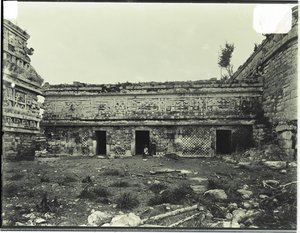
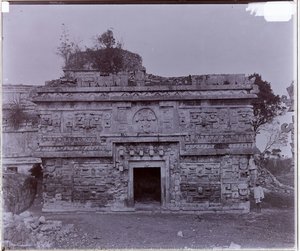
The central focus of the image is undoubtedly the Great Ball Court – a monumental structure that dominates the frame and immediately commands attention. This wasn’t merely a space for athletic competition; it was likely a stage for elaborate rituals, religious ceremonies, and perhaps even political displays. The photograph captures the court in a state of dignified decay, its weathered walls bearing witness to centuries of sun, rain, and the relentless passage of time. Notice the intricate carvings that adorn the stone – geometric patterns interwoven with depictions of mythical creatures and stylized human figures. These symbols offer tantalizing clues about the beliefs and cosmology of the Mayan people.
The composition itself is carefully orchestrated. Maudslay employs a horizontal format, emphasizing the sheer scale and imposing presence of the structure. The central axis draws the eye towards the archway at the heart of the court, while subtle foreground elements – uneven ground and sparse vegetation – create an illusion of depth and guide the viewer’s gaze into the scene. The photograph isn't just a snapshot; it’s a carefully constructed narrative, inviting us to contemplate the history embedded within these ancient stones.
A Pioneer in Photographic Archaeology
Alfred Percival Maudslay wasn’t simply an observer of Mayan ruins; he was a pioneer in documenting them through photography. He embraced new technologies – particularly wet collodion, which allowed for incredibly sharp detail and rich tonal range – and developed innovative techniques to capture the essence of these sites. His meticulous approach extended beyond mere documentation; he employed assistants to create plaster casts of the carvings, preserving their intricate details for posterity. The photograph itself is a product of this collaborative effort, reflecting Maudslay’s commitment to both scientific rigor and artistic sensitivity.
Furthermore, his work was part of a larger movement in archaeological documentation during the late 19th century. As European powers expanded their influence across Central America, there was a growing recognition of the importance of preserving these ancient cultures before they were lost to time. Maudslay’s photographs played a crucial role in raising awareness and fostering a deeper appreciation for Mayan civilization.
A Legacy Preserved: Reproduction and Inspiration
Today, “Photograph of Chichén Itzá taken by A.P. Maudslay” stands as a remarkable artifact – a tangible link to the past and a testament to the enduring power of visual storytelling. ArtsDot offers high-quality reproductions that faithfully capture the image’s original detail and atmosphere. Whether you're an art collector, an interior designer seeking to evoke a sense of ancient mystery, or simply someone captivated by the beauty of Mayan culture, this photograph provides a unique opportunity to connect with history in a profound and meaningful way.
Related Artworks
Artist Biography
**early life and education**
alfred percival maudslay, a british colonial administrator and archaeologist, was born on 18 march 1850 in london into a wealthy family. he studied natural sciences at trinity hall, cambridge, obtaining a ba in 1872.**career and travels**
maudslay's early plans for a medical career were deferred as he travelled with his brother, touring central america, mexico, and parts of the united states. this journey sparked an interest in archaeology, which would later define his legacy. after returning home, maudslay again postponed medical school to travel to iceland in 1873. his chronic bronchitis led him to seek a warmer climate, leading to a series of positions in jamaica, trinidad, and eventually, the south pacific.**archaeological contributions**
maudslay's time in the british pacific colonies laid the groundwork for his future archaeological pursuits. he became interested in collecting ethnographic materials, which would eventually contribute to the formation of the university museum of archaeology and ethnology at cambridge. his friend, ornithologist osbert salvin, encouraged maudslay to explore the maya ruins of quiriguá and copán.**notable achievements**
* maudslay was the first to describe the site of yaxchilán. * he explored chichén in the 1880s, taking extensive photographs. * published the first long-form description of chichen itza in his book, biologia centrali-americana. * made a complete translation with annotations of bernal díaz del castillo's historia, which remains the standard english edition.**artistic legacy**
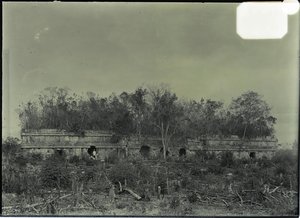
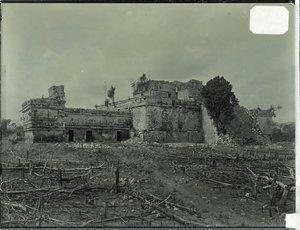
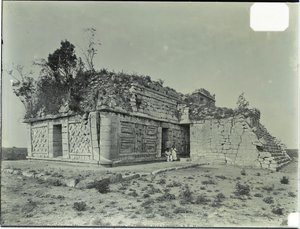
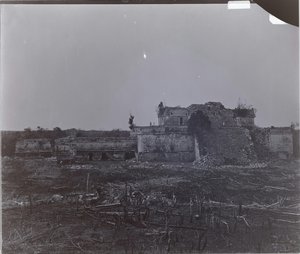
maudslay's photographs and writings have been preserved, offering a unique glimpse into the world of 19th-century archaeology. his work can be found in various museums, including the british museum (london, united kingdom), which houses several of his photographs.- photograph of chichén itzá taken by a.p. maudslay (16 x 21 cm, british museum, photograph)
- photograph of chichén itzá taken by a.p. maudsly (25 x 30 cm, british museum, photograph)
- photograph of copán taken by a.p. maudslay (31 x 25 cm, british museum, photograph)
**conclusion**
alfred percival maudslay's legacy is a testament to the power of curiosity and exploration. from his early days as a colonial administrator to his later years as an archaeologist, maudslay's work continues to inspire and educate.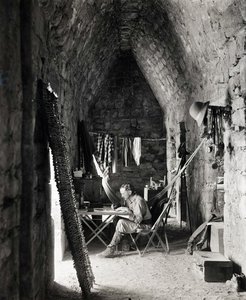
alfred percival maudslay
1850 - 1931 , United Kingdom
Quick Facts
- Artistic Movement Or Style: Archaeology/Photography
- Date Of Birth: 1850
- Date Of Death: 1931
- Full Name: Alfred Percival Maudslay
- Nationality: British
- Notable Artworks: ['Photograph of Chichén Itzá']
- Place Of Birth: London, United Kingdom
Related Articles
Sir Alfred Munnings' Masterpieces: 25 Paintings That Define Equine Art | ArtsDot
Explore 25 iconic Sir Alfred Munnings paintings! Discover the beauty of British Impressionism, equine art & rural England. Find museum-quality reproductions and elevate your home decor with ArtsDot. Explore the full collection online.
Hubert Robert: Picturing Ruins, Preserving Memory – A Study of Romantic Antiquarianism & Artistic Innovation
Explore the captivating world of Hubert Robert, master of Romantic landscape painting & 'capriccio' ruins. Discover his historical context, artistic innovations, and collecting insights with ArtsDot.
Alfred Stevens: Capturing Parisian Elegance & Fin-de-Siècle Intimacy
Discover the captivating world of Alfred Stevens, master of Parisian elegance & intimate portraiture. Explore his techniques, influences, and legacy – a prized collection for discerning art enthusiasts.
Alfred Wallis: Rediscovering the Naïve Visionary of Cornish Life
Discover the captivating world of Alfred Wallis, the self-taught Cornish painter championed by modernists. Explore his unique naive style, maritime scenes & lasting legacy with ArtsDot.
Alfred Henry Maurer: Reassessing the Pioneer of American Modernist Abstraction
Explore the groundbreaking work of Alfred Henry Maurer, a pivotal figure in American Modernism. Discover his Fauvist & Cubist paintings and understand his lasting influence on abstract art. Expert analysis for collectors.