 Send
Send Share
Share
 Details

 Download
 Similars
 Diaporama
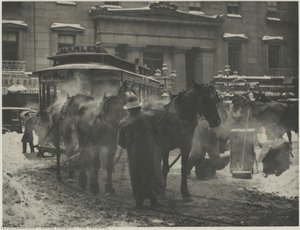
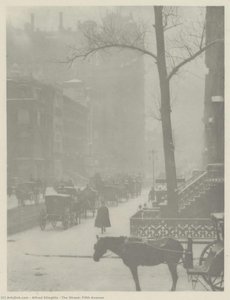
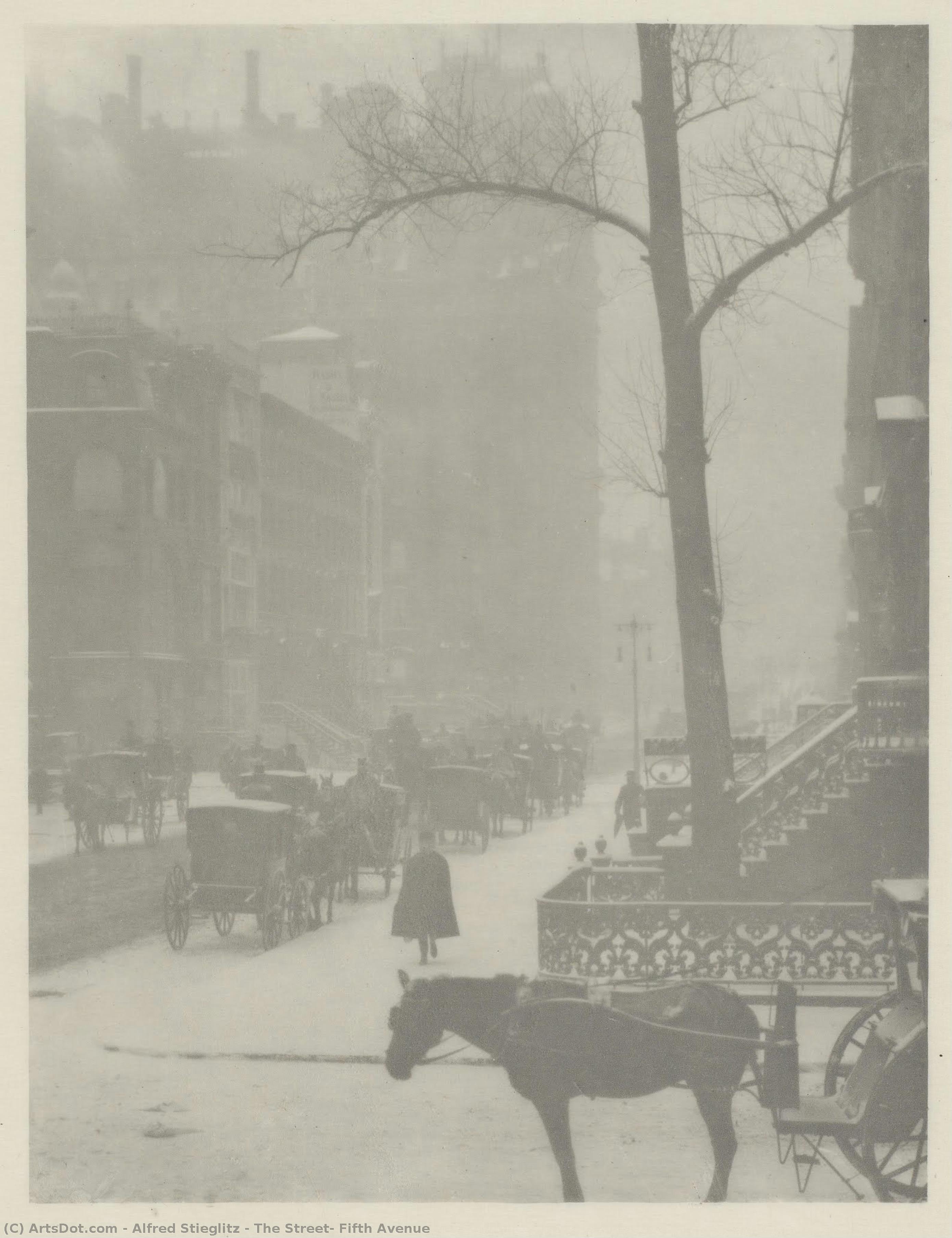
The Street, Fifth Avenue
 Giclée Print
- Digital
- Pictorialist Photography
 1901
1901- 19th Century
 30.0 x 23.0 cm
 Amon Carter Museum of American Art
 Read More
Hand Made Oil Reproduction
Hand-painted oil on canvas in your size and frame, made to order by our artists. ( Buy Print Buy Image)




































Pick from our preset sizes that match the artwork's original proportions.

You may enter your own dimensions to fit a specific frame or space. If your selected size does not match the original image's proportions, we will either crop the artwork or extend the painting with additional hand-painted elements. A digital mockup will be sent for your approval before production begins.
Please note that the on-screen preview does not reflect the actual cropping or extension. Only the mockup will accurately show the final composition.
While custom sizes are available, we recommend selecting a dimension from the predefined list to preserve the original proportions.
After order, ArtsDot.com team will email client for instructions and provide a mockup preview
Worldwide Delivery () in 3/4 weeks instead of standard 5 weeks. (16 August). No compromise on quality.

Free Worldwide Express Shipping

High-Quality Linen Canvas

Full Shipping Insurance

Customs Tax Refund Guarantee

True Color Matching Guarantee

60-Day Return Policy (Defects Only)

100% Money-Back Guarantee

Bulk Discount Offer
 Glass option is only available in size under 110 CM

The Street, Fifth Avenue
Reproduction Medium
Reproduction Size
-


Total Price
$ 263
Artwork Description
A Snapshot of Urban Life: Alfred Stieglitz's "The Street, Fifth Avenue"
This meticulously hand-painted reproduction captures a pivotal moment in New York City’s history – 1901 – as rendered by the visionary photographer Alfred Stieglitz. The image, titled “The Street, Fifth Avenue,” isn’t merely a depiction of a busy street; it's a carefully constructed tableau that speaks volumes about the burgeoning metropolis and the evolving relationship between humanity and technology. Stieglitz, a pivotal figure in the history of photography, recognized its potential as a legitimate art form long before the wider world acknowledged it. His work, exemplified here, demonstrates an acute eye for composition, light, and the subtle narratives embedded within everyday scenes.
- Subject Matter: The scene unfolds on Fifth Avenue, a street synonymous with wealth, commerce, and aspiration in early 20th-century America.
- Composition: Stieglitz masterfully employs leading lines created by the carriages to draw the viewer’s eye through the bustling composition, creating a sense of movement and energy.
- Technical Detail: The photograph's stark black and white palette emphasizes texture and form, highlighting the rough-hewn details of the horses, carriages, and clothing worn by the pedestrians.
The Pictorialist Legacy & Stieglitz’s Vision
Created in 1901, “The Street, Fifth Avenue” firmly places Stieglitz within the context of Pictorialism – a movement that sought to elevate photography beyond simple documentation and imbue it with artistic expression akin to painting. Influenced by artists like Monet and Degas, Stieglitz aimed to capture not just what he saw, but also how he *felt* about it. This is evident in his deliberate use of soft focus and atmospheric effects, techniques borrowed from the Impressionist painters he admired. The photograph’s aesthetic reflects a desire to evoke emotion and create an immersive experience for the viewer – a core tenet of Pictorialism.
Historical Context: The early 1900s were a period of rapid industrialization and urbanization in America. New York City was experiencing explosive growth, transforming from a port city into a global financial center. The prevalence of horse-drawn carriages reflected this era’s reliance on traditional modes of transportation before the rise of automobiles.Symbolism & Emotional Impact
Beyond its technical brilliance, “The Street, Fifth Avenue” carries significant symbolic weight. The horses and carriages represent a bygone era – a time when urban life was slower-paced and more reliant on animal power. The numerous pedestrians symbolize the growing population of New York City and the increasing density of human activity within the city’s core. The photograph evokes a sense of nostalgia, inviting us to contemplate the passage of time and the relentless march of progress. It's a poignant reminder of a world that has vanished but whose echoes still resonate in our modern urban landscapes.
Artistic Reproduction & Collector’s Value
This hand-painted reproduction faithfully recreates Stieglitz’s original vision, capturing every nuance of light and shadow, texture, and composition. Printed on archival quality canvas with fade-resistant inks, this artwork is designed to last for generations. Its dimensions (30 x 23 cm) make it ideal for a variety of interior design settings – from a gallery wall in a contemporary space to a bedside table in a classic room. Owning a reproduction of “The Street, Fifth Avenue” is not just acquiring an image; it’s investing in a piece of art history and celebrating the legacy of one of photography's most influential figures.
Related Artworks
Artist Biography
A Pioneer of Vision: The Life and Legacy of Alfred Stieglitz
Alfred Stieglitz, born in Hoboken, New Jersey, on January 1, 1864, was more than just a photographer; he was a revolutionary force who single-handedly elevated photography from a skilled craft to a recognized fine art. His journey began not with a camera in hand, but with an intellectual upbringing fostered by his German-Jewish immigrant family. Early education at the Charlier Institute and City College of New York provided a foundation, yet it was his studies in Berlin that ignited his artistic passion. There, under the tutelage of Hermann Wilhelm Vogel, Stieglitz discovered the captivating potential hidden within photographic processes – a revelation that would define his life’s work. He purchased his first camera and began to document the European countryside, quickly developing an aesthetic sensibility rooted in what became known as Pictorialism. This movement sought to mimic the expressive qualities of painting and drawing through manipulated printing techniques, soft focus, and evocative compositions. However, Stieglitz would eventually transcend these limitations, forging a path toward a uniquely photographic vision.Championing Modern Art and the American Voice
Upon his return to New York in 1890, Stieglitz embarked on a mission to legitimize photography as an art form. He became a prolific writer, publishing articles that passionately argued for its artistic merit, and founded the Camera Club of New York’s journal, *Camera Notes*. Dissatisfaction with the club's conservative outlook led him to establish the Photo-Secession in 1902, a group dedicated to promoting photographic artistry. This culminated in the opening of “291” – a gallery at 291 Fifth Avenue that became a crucible for modern art in America. It wasn’t merely a showcase for photography; Stieglitz boldly exhibited groundbreaking works by European avant-garde artists like Pablo Picasso, Henri Matisse, and Francis Picabia, introducing American audiences to the radical innovations of Cubism, Fauvism, and other emerging movements. “291” became a salon where ideas clashed, boundaries were pushed, and a distinctly American modern aesthetic began to take shape. Stieglitz’s influence extended beyond exhibition; he fostered dialogue, challenged conventions, and nurtured the careers of countless artists, including Georgia O'Keeffe, whom he would later marry.Evolving Styles: From Pictorialism to Straight Photography
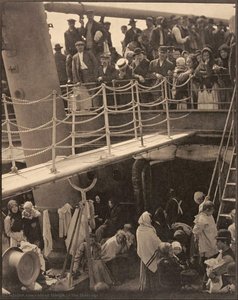
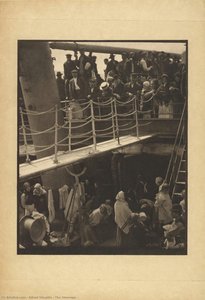
Stieglitz’s own photographic style underwent a significant evolution throughout his career. Initially embracing the soft-focus aesthetic and painterly qualities of Pictorialism – exemplified in works like *Study of Georgia Engelhard with Dolls* (1910) – he gradually moved towards a more direct, unmanipulated approach known as “straight photography.” This shift was influenced by his growing appreciation for modern art’s emphasis on form, clarity, and the inherent qualities of materials. The Steerage (1907), arguably his most iconic image, marks this turning point. Captured during a transatlantic voyage, it depicts passengers traveling in steerage class with a stark realism and compositional boldness that foreshadowed modernist principles. The photograph isn’t sentimental or picturesque; instead, it presents a raw, unvarnished view of social reality, emphasizing geometric shapes and tonal contrasts. Later works, such as his series of cloud studies (*Equivalents*), further demonstrate his commitment to exploring the expressive potential of photography through pure form and light. These images were not intended to represent specific objects but rather to evoke emotional states – a concept that aligned with abstract expressionism.A Lasting Impact on American Art
Alfred Stieglitz’s legacy extends far beyond his photographic achievements. He was an educator, a promoter, and a tireless advocate for the recognition of photography as a legitimate art form. His galleries provided a platform for both established and emerging artists, shaping the landscape of American modernism. He championed the idea that art should reflect the realities of contemporary life, breaking away from traditional academic conventions. Through his writings, exhibitions, and personal relationships, he fostered a vibrant artistic community and inspired generations of photographers to explore the medium’s unique possibilities. His influence can be seen in the work of countless artists who followed, including Paul Strand, Edward Weston, and Ansel Adams.- He established photography as a respected art form.
- He introduced European modernism to American audiences.
- He fostered a vibrant artistic community through his galleries and mentorship.
- His own photographic work evolved from Pictorialism to Straight Photography, influencing subsequent generations.
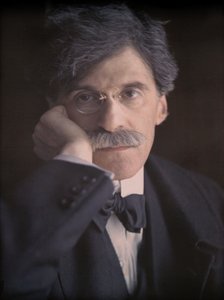
Alfred Stieglitz
1864 - 1946 , United States of America
Quick Facts
- Artistic Movement Or Style: Pictorialism, Modernism
- Artists Or Movements Influenced By This Artist:
- Georgia O'Keeffe
- Arthur Garfield Dove
- Artists Who Influenced This Artist: ['Hermann Wilhelm Vogel']
- Date Of Birth: January 1, 1864
- Date Of Death: July 13, 1946
- Full Name: Alfred Stieglitz
- Nationality: American
- Notable Artworks:
- Study of Georgia Engelhard with Dolls
- The Steerage
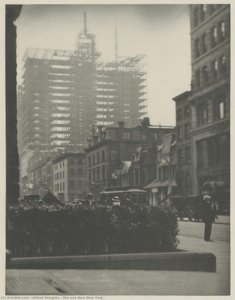
- Old and New New York
- Place Of Birth: Hoboken, USA
Related Articles

Beyond the Lens: Photography's Enduring Influence on Modern & Contemporary Art
Explore photography's pivotal role in shaping modern & contemporary art. Discover key movements, influential artists like Stieglitz, and expert collecting advice from ArtsDot.

Pictorialism: A Search for Artistic Photography's Soul – Aesthetics, Techniques & Legacy
Explore the captivating world of Pictorialism – a pivotal movement that transformed photography into fine art. Discover key artists like Stieglitz & Käsebier, techniques, and collecting tips from experts.

Monochrome Visions: Exploring the Aesthetic & Historical Significance of Black & White Photography
Explore the rich history & artistic power of black and white photography. From early techniques to iconic masters like Ansel Adams, discover why monochrome continues to captivate art lovers today. Expert insights for collectors.
Witnessing History Through Lens & Light: Documentary Photography's Enduring Legacy
Explore the powerful history of documentary photography – from its origins to contemporary masters like Gordon Parks & W. Eugene Smith. Discover how this art form shapes our understanding of society and witness pivotal moments in time.
Documentary Photography's Defining Moments: 10 Masterpieces for Your Home |
Explore 10 defining documentary photography masterpieces – from Dorothea Lange to Robert Capa. Discover powerful stories, iconic images & timeless art for your home. Museum-quality prints at .