 Preview
 Send
Send Share
Share
 Details

 Download
 Similars
 X-Ray
X-Ray Diaporama
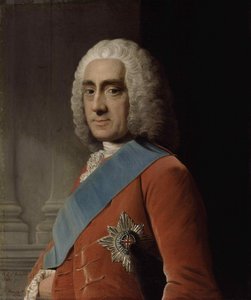
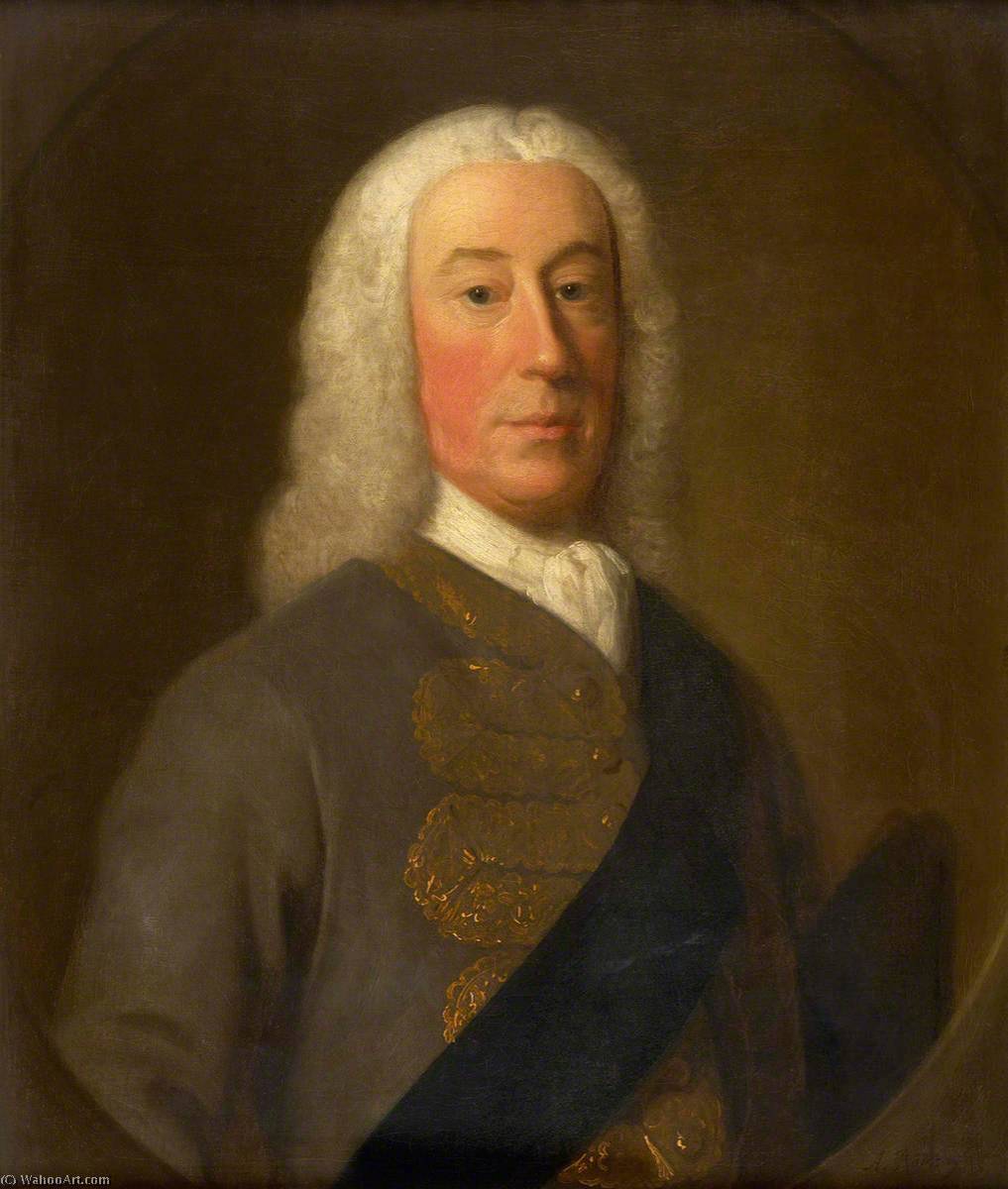
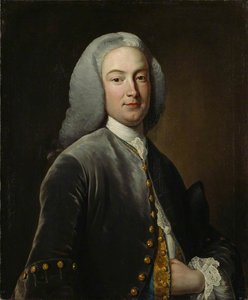
James Murray (1690–1764), 2nd Duke of Atholl
 Oil
Oil- WallArt
- Rococo
 1743
1743- Early Modern
 76.0 x 62.0 cm
 The Merchant's Hall
 Read More
Giclée / Art Print
Museum-quality giclée or canvas print with fast production and flexible finish options. ( Buy Hand Made Painting Buy Image)




P118B $10

P118H $10

P118W $10

P438Z $10

P508JH $12

P508YH $12

P805H $10

P805Z $10

P919BZ $10

P919G $10

P919XJ $10

P959ZH $10

P968JZ $12

W106C $8

W218G $10

W218JH $8

W218Y $10

W307PJ $10

W316G $10

W316PJ $8

W316Y $10

W398PJ $8

W4111J $10

W500HY $15

W500JH $15

W692G $12

W849H $8

W940BG $15

W953PJ $8




Pick from our preset sizes that match the artwork's original proportions.

You may enter your own dimensions to fit a specific frame or space. If your selected size does not match the original image's proportions, we will either crop the artwork or extend the image with a mirrored or solid-fill edge. A digital mockup will be sent for your approval before production begins.
Please note that the on-screen preview does not reflect the actual cropping or extension. Only the mockup will accurately show the final composition.
While custom sizes are available, we recommend selecting a dimension from the predefined list to preserve the original proportions.
Worldwide Delivery () in 2 weeks instead of standard 4/5 weeks. (27 August)

Free Worldwide Express Shipping

High-Quality Linen Canvas

Full Shipping Insurance

Customs Tax Refund Guarantee

True Color Matching Guarantee

60-Day Return Policy (Defects Only)

100% Money-Back Guarantee

Bulk Discount Offer
 Glass option is only available in size under 110 CM

James Murray (1690–1764), 2nd Duke of Atholl
Giclée / Art Print
Reproduction Size
-


Total Price
$ 63
Collectible Description
A Vision of Eighteenth-Century Grandeur
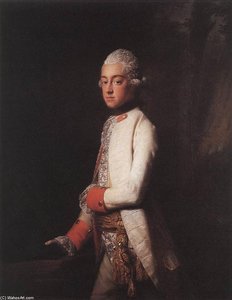
In this commanding portrait from 1743, the esteemed Scottish painter Allan Ramsay captures the very essence of aristocratic prestige through his depiction of James Murray, the 2nd Duke of Atholl. The canvas presents a man of profound stature, draped in the opulent textures that defined the mid-eighteenth century. As the viewer’s eye meets the subject, there is an immediate sense of encounter with history; the Duke gazes outward with a composed, steady presence that speaks to his high station as Lord Privy Seal. Ramsay utilizes a masterful command of light to illuminate the intricate details of the Duke's attire, particularly the shimmering gold tones of his coat, which serve as a brilliant testament to the wealth and influence of the Murray lineage.
The artistry of Ramsay is on full display in the delicate rendering of the subject's features and the voluminous, powdered wig that frames his face. Having refined his technique under the masters of Italy, Ramsay brings a sophisticated Rococo sensibility to this work, blending classical precision with a soft, painterly elegance. The brushwork, though controlled, possesses a rhythmic vitality that breathes life into the heavy fabrics and the subtle contours of the Duke's mustache and expression. This technical prowess ensures that the portrait is not merely a static record of a face, but a living window into an era of refinement and social ceremony.
Symbolism and the Language of Nobility
Every element within this composition serves a deliberate purpose in communicating the Duke's identity and social standing. The choice of a gold-accented suit is far from incidental; it acts as a visual shorthand for power, prosperity, and the divine right of the nobility. The interplay between the deep shadows and the luminous highlights on the fabric creates a sense of three-dimensional weight, grounding the figure within a space of quiet authority. Through this careful manipulation of light and texture, Ramsay transforms a standard portrait into a symbolic narrative of stability and prestige.
For the discerning collector or interior designer, this piece offers more than just historical interest; it provides a profound emotional anchor for any sophisticated space. The painting carries an aura of timelessness, making it an ideal centerpiece for a library, a formal study, or a grand hallway where its commanding presence can inspire awe. A high-quality reproduction of this work allows the splendor of the 1740s to be integrated into modern environments, bridging the gap between the classical past and contemporary luxury. It is an invitation to surround oneself with the dignity and the enduring beauty of the Scottish Enlightenment.
Related Artworks
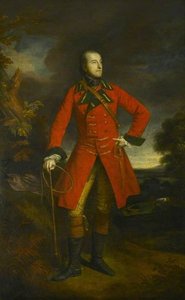
Artist Biography
Allan Ramsay: A Life of Elegance and Artistry
Early Life and Training
Born in Edinburgh, Scotland on October 13, 1713, Allan Ramsay emerged as a prominent Scottish portrait-painter whose work captured the elegance and refinement of his era. His artistic journey began at the age of twenty when he travelled to London for studies under the Swedish painter Hans Hysing, followed by instruction at the St. Martin's Lane Academy. This foundational training provided him with a solid base in technique and composition.
Italian Influences & Artistic Development
Ramsay’s artistic development took a significant turn with his travels to Rome and Naples, where he spent three years (1736-1738) working under the tutelage of Francesco Solimena and Imperiali (Francesco Fernandi). These Italian masters profoundly influenced his style, fostering a greater understanding of classical principles and enhancing his skills in capturing likeness and character. He absorbed the prevailing Rococo aesthetic while also developing an appreciation for Neoclassical ideals.
A Flourishing Career & Notable Works
Upon returning to Britain in 1738, Ramsay quickly established a successful career as a portraitist. His ability to portray his subjects with both accuracy and grace soon garnered him a distinguished clientele. Some of his most notable works include:
- Queen Charlotte (1744-1818) with her two eldest sons (Royal Collection, London): A regal depiction showcasing the Queen’s maternal presence.
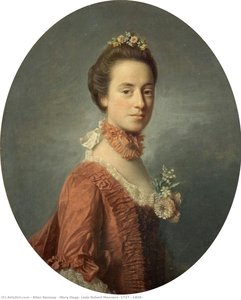
- Mary Degg, Lady Robert Manners (Scottish National Gallery, Edinburgh): An elegant portrait demonstrating Ramsay's skill in capturing aristocratic beauty.
- Head of Duncan Forbes of Culloden: This early work brought him to the attention of the Duke of Argyll and was later featured on Royal Bank of Scotland banknotes.
Royal Appointment & Peak Achievement
A pivotal moment in Ramsay’s career arrived in 1761 with his appointment as Principal Painter in Ordinary to George III. This prestigious position cemented his status among the art elite and ensured a steady stream of commissions from the royal family and high society. He became *the* portraitist of the Georgian era.
Later Life & Legacy
Ramsay’s later life saw a shift towards literary pursuits, reflecting his broad intellectual interests. However, personal tragedies – an accidental dislocation of his right arm and the passing of his second wife in 1782 – impacted his health and productivity. He died in 1784.
Despite these challenges, Ramsay left behind a lasting legacy as one of Scotland’s most celebrated portrait painters. As Samuel Johnson noted, “I love Ramsay. You will not find a man in whose conversation there is more instruction, more information, and more elegance, than in Ramsay's.” His works continue to be admired for their technical skill, refined aesthetic, and insightful portrayals of 18th-century society.
Historical Significance
Allan Ramsay’s contribution extends beyond his artistic talent. He played a crucial role in shaping the visual culture of Scotland during a period of significant social and political change. His portraits provide valuable insights into the lives, fashions, and values of the Scottish nobility and gentry. His works can be found at locations such as Ayr Town Hall, and the Scottish National Portrait Gallery.
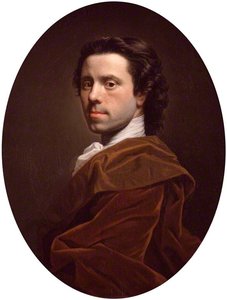
allen ramsay
1713 - 1784 , United Kingdom
Quick Facts
- Birth Date: 1713-10-13
- Birth Place: Edinburgh, United Kingdom
- Death Date: 1784
- Influenced By:
- Hans Hysing
- Francesco Solimena
- Imperiali (Francesco Fernandi)
- Movement:
- Rococo
- Neoclassical
- Name: Allan Ramsay
- Nationality: Scottish
- Notable Works:
- Queen Charlotte with her two eldest sons
- Mary Degg, Lady Robert Manners
- Head of Duncan Forbes of Culloden
Related Articles
Whistler's Masterpieces: Explore 25 Iconic Paintings & Aesthetic Art for Your Home
Journey through 25 iconic James Abbott McNeill Whistler paintings! Explore his masterpieces of Aestheticism, from 'Nocturne in Black and Gold' to captivating portraits. Find museum-quality art reproductions & elevate your home decor with ArtsDot.com. Discover the full collection online.
Sir Alfred Munnings' Masterpieces: 25 Paintings That Define Equine Art | ArtsDot
Explore 25 iconic Sir Alfred Munnings paintings! Discover the beauty of British Impressionism, equine art & rural England. Find museum-quality reproductions and elevate your home decor with ArtsDot. Explore the full collection online.
Golden Glow: How to Use Metallic Gold Artworks to Elevate Your Home Decor with Timeless Luxury
Discover how to elevate your home with the timeless elegance of metallic gold artworks. From sculptural metal pieces to gilded oil paintings, learn expert interior design tips for integrating luxurious gold accents into your space with sophistication and grace.
The Allure of Gold in Art History: Symbolism, Technique & Cultural Significance
Explore the rich history of gold in art! Discover symbolism, techniques & cultural significance from ancient civilizations to Klimt's masterpieces. Expert insights for collectors at ArtsDot.
Golden Masterpieces: 10 Paintings That Define Art History | ArtsDot
Explore 10 breathtaking paintings where gold leaf shines! From Klimt to Byzantine icons, discover art history’s most gilded masterpieces. Find museum-quality reproductions & elevate your home decor with ArtsDot. Explore the full collection online.