 Preview
 Send
Send Share
Share
 Details

 Download
 Similars
 X-Ray
X-Ray Diaporama
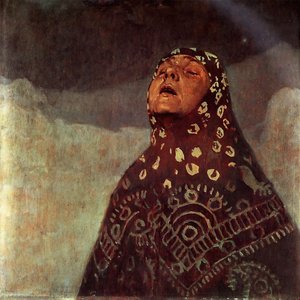
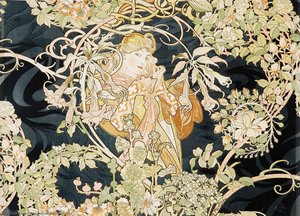
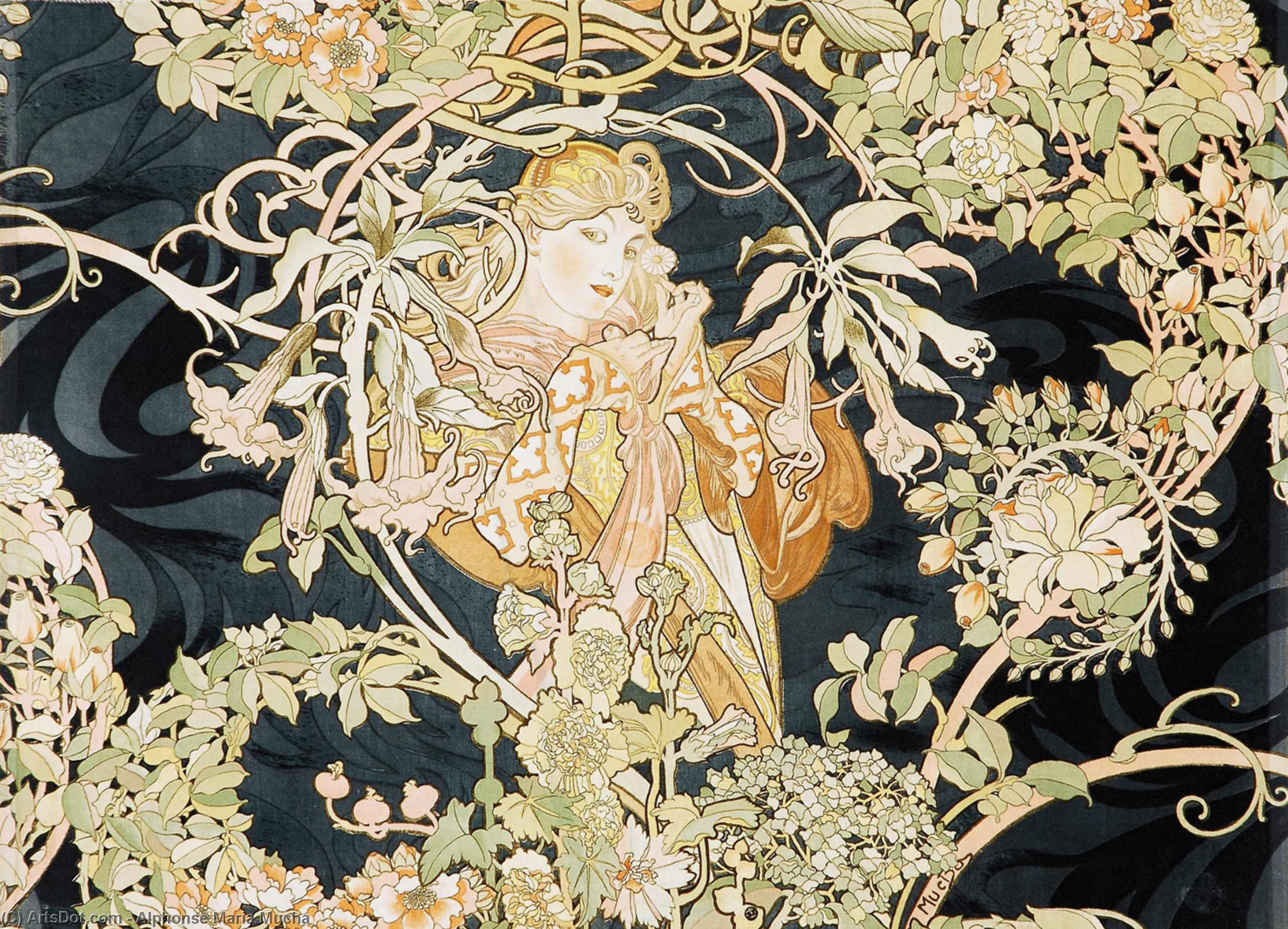
Woman with Daisies

 Read More
Hand Made Oil Reproduction
Hand-painted oil on canvas in your size and frame, made to order by our artists. ( Buy Print Buy Image)




P118B $10

P118H $10

P118W $10

P438Z $10

P508JH $12

P508YH $12

P805H $10

P805Z $10

P919BZ $10

P919G $10

P919XJ $10

P959ZH $10

P968JZ $12

W106C $8

W218G $10

W218JH $8

W218Y $10

W307PJ $10

W316G $10

W316PJ $8

W316Y $10

W398PJ $8

W4111J $10

W500HY $15

W500JH $15

W692G $12

W849H $8

W940BG $15

W953PJ $8




Pick from our preset sizes that match the artwork's original proportions.

You may enter your own dimensions to fit a specific frame or space. If your selected size does not match the original image's proportions, we will either crop the artwork or extend the painting with additional hand-painted elements. A digital mockup will be sent for your approval before production begins.
Please note that the on-screen preview does not reflect the actual cropping or extension. Only the mockup will accurately show the final composition.
While custom sizes are available, we recommend selecting a dimension from the predefined list to preserve the original proportions.
After order, ArtsDot.com team will email client for instructions and provide a mockup preview
Worldwide Delivery () in 3/4 weeks instead of standard 5 weeks. (17 August). No compromise on quality.

Free Worldwide Express Shipping

High-Quality Linen Canvas

Full Shipping Insurance

Customs Tax Refund Guarantee

True Color Matching Guarantee

60-Day Return Policy (Defects Only)

100% Money-Back Guarantee

Bulk Discount Offer
 Glass option is only available in size under 110 CM

Woman with Daisies
Reproduction Medium
Reproduction Size
-


Total Price
$ 263
Artwork Description
Alphonse Mucha: The Enchanting Vision of Art Nouveau
Alphonse Maria Mucha stands as one of the most recognizable figures of Art Nouveau, an artistic movement that flourished between 1890 and 1910 across Europe. Born in Brno, Czech Republic, in 1860, Mucha rejected the academic conventions of his time, forging a path toward a uniquely expressive style rooted in Celtic mythology and inspired by Japanese prints.
Much’s artistic journey began with studies at Prague Academy of Fine Arts, where he quickly recognized the limitations of traditional painting. Seeking greater freedom and innovation, he moved to Paris in 1887, immersing himself in the vibrant cultural landscape of Belle Époque France. It was here that he honed his distinctive technique – a meticulous process involving hand-coloring lithographs with painstaking detail—a method perfected by collaborators like Eugène Tschumi.
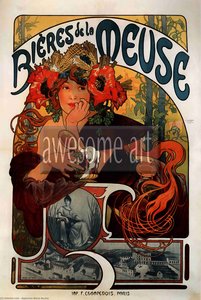
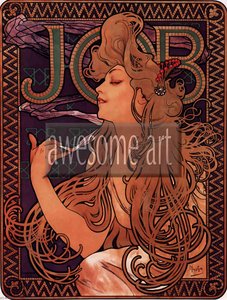
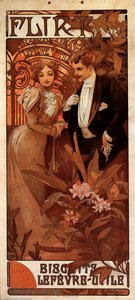
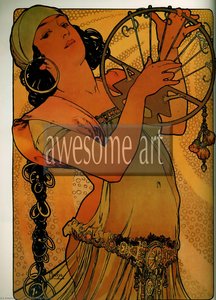
His signature style is instantly identifiable: flowing lines intertwine to create organic forms, reminiscent of vines and blossoms. Mucha’s compositions prioritize elegance and grace, often featuring idealized women adorned in shimmering robes and surrounded by fantastical flora and fauna. These figures embody feminine beauty and virtue, reflecting the movement's fascination with mythology and folklore.
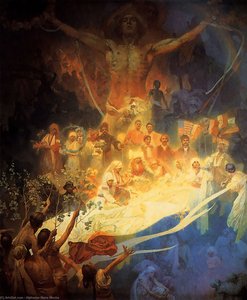
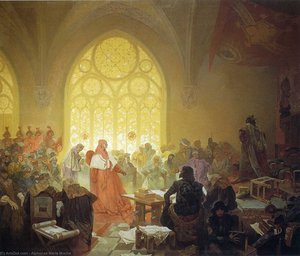
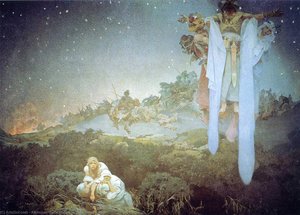
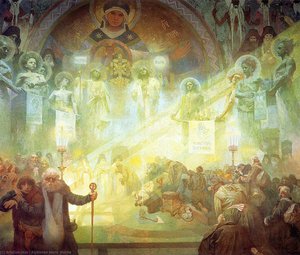
Consider “The Slavonic Uprising,” Mucha’s monumental mural commissioned for Prague’s National Theatre. This ambitious project brilliantly blends Czech national identity with Art Nouveau aesthetics. The stylized depiction of Slavic warriors—their armor rendered in bold geometric patterns—contrasts sharply with the delicate floral motifs adorning the upper portion of the wall, symbolizing resilience and artistic aspiration.
Beyond mere decoration, Mucha’s art communicates profound symbolism. Recurring motifs like spirals and circles represent eternity and interconnectedness, mirroring the movement's belief in harmony between nature and humanity. The use of vibrant colors—particularly golds and blues—evokes a sense of grandeur and spiritual contemplation.
Ultimately, Mucha’s legacy resides not only in his stunning visual creations but also in his unwavering commitment to artistic experimentation. He challenged established norms, elevating decorative arts to the level of serious intellectual inquiry. His influence continues to inspire artists today, ensuring that the enchanting vision of Art Nouveau—and Mucha's singular contribution to it—remains a beacon of beauty and innovation.
Related Artworks
Artist Biography
Early Life and Education
- Born: July 15, 1860, in Ivanačice, Moravia (now part of the Czech Republic)
- Showed artistic talent from a young age.
- Studied at the Academy of Fine Arts in Prague but became disillusioned with traditional approaches.
- Moved to Paris in 1887 to pursue his own style.
Artistic Style and Notable Works
- Known for distinctive Art Nouveau style characterized by flowing lines, organic forms, and a sense of movement.
- Influenced by artists like Pierre-Auguste Renoir and Gustave Moreau.
- Notable Works:
- The Slavonic Uprising - Showcases blending traditional Czech motifs with modern Art Nouveau elements.
- Salon des Cent
- Paintings inspired by works like The Daughters of Tespio by Gustave Moreau, and La Ribambelle des Gobelins by Piero Dorazio.
- Illustrations based on Young Farmers Breaking Flax by Sir Hubert von Herkomer.
- Frequently featured idealized women in flowing robes surrounded by lush flowers.
Career Highlights and Major Commissions
- Sarah Bernhardt Collaboration: Created posters and designs for the actress Sarah Bernhardt, starting with the poster for Gismonda (1894), which launched his career.
- Universal Exhibition in Paris (1900): His Art Nouveau style gained international recognition at this exhibition. He decorated the Bosnia and Herzegovina Pavilion and collaborated on the Austrian Pavilion.
- Charles Richard Crane Patronage: Received support from Charles Richard Crane, which enabled him to create the monumental series The Slav Epic (1912-30).
- Post-Independence Czechoslovakia: Designed postage stamps, banknotes, and government documents for newly independent Czechoslovakia.
Influences and Legacy
- Influenced by Czech artistic traditions and modern European art movements.
- His unique style paved the way for future generations of artists in Art Nouveau and Secessionism.
- Inspired other artists like Eva Prokopcová.
- Legacy extends beyond his artwork to influence design and aesthetics.
Later Life and Death
- Married Maruska (Marie/Maria) Chytilová in 1906.
- Visited the United States from 1906-1910, where their daughter Jaroslava was born.
- Died on July 14, 1939, in Prague, Czechoslovakia.
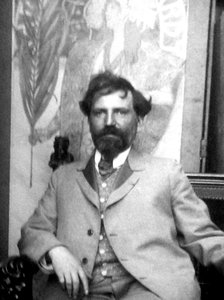
Alphonse Mucha
1860 - 1939 , Czech Republic
Quick Facts
- Artistic Movement Or Style: Art Nouveau
- Artists Or Movements Influenced By This Artist: ['Eva Prokopcová']
- Artists Who Influenced This Artist:
- Pierre-Auguste Renoir
- Gustave Moreau
- Dante Gabriel Rossetti
- Date Of Birth: July 15, 1860
- Date Of Death: 1939
- Full Name: Alphonse Maria Mucha
- Nationality: Czech
- Notable Artworks:
- Slavic Uprising
- Salon des Cent
- The Daughters of Tespio
- La Ribambelle des Gobelins
- Young Farmers Breaking Flax
- Place Of Birth: Brno, Czech Republic
Related Articles
Alphonse Mucha: A Comprehensive Exploration of Art Nouveau's Master of Decorative Symbolism
Explore the life & art of Alphonse Mucha, master of Art Nouveau! Discover his iconic posters, stunning illustrations, and the monumental Slav Epic. A comprehensive guide for collectors & enthusiasts.
Art Nouveau's Golden Age: 10 Masterpieces for Your Home |
Journey into Art Nouveau's golden age! Explore 10 masterpieces by Klimt, Mucha & more. Discover captivating stories behind iconic paintings, floral motifs & flowing lines. Find museum-quality art reproductions for your home at .
The Flowing Line & Flourishing Form: Exploring Art Nouveau's Aesthetic Legacy
Explore the captivating world of Art Nouveau! Discover its origins, key artists like Horta & Mucha, regional styles, innovative techniques, and lasting influence on architecture & design. A comprehensive guide for art enthusiasts.
Blossoming Symbolism: A Historical Journey Through Flowers in Western Painting
Explore the rich history of flower symbolism in Western painting! Discover how artists from the Renaissance to Modernism used blossoms to convey meaning, emotion & beauty. Learn about iconic artworks and movements.
Blossoms of Time: A Historical Journey Through Flower Painting
Explore the captivating history of flower painting! Discover Dutch masters, symbolic meanings, & botanical art. Expert insights & high-quality reproductions at ArtsDot.