 Preview
 Send
Send Share
Share
 Details

 Download
 Similars
 X-Ray
X-Ray Diaporama
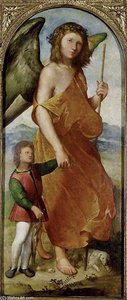
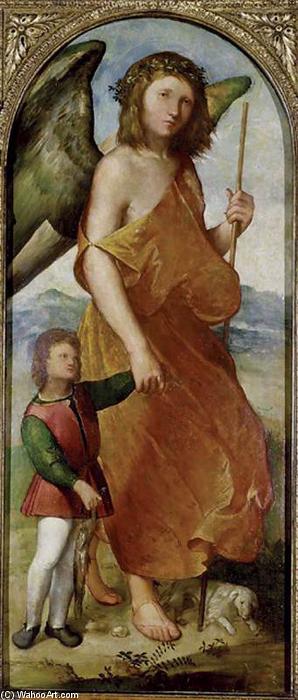
Tobias and the Angel
 Oil On Panel
- Italian Renaissance
 1521
1521- Renaissance
 112.0 x 48.0 cm
 Ashmolean Museum
 Read More
Hand Made Oil Reproduction
Hand-painted oil on canvas in your size and frame, made to order by our artists. ( Buy Print Buy Image)




P118B $10

P118H $10

P118W $10

P438Z $10

P508JH $12

P508YH $12

P805H $10

P805Z $10

P919BZ $10

P919G $10

P919XJ $10

P959ZH $10

P968JZ $12

W106C $8

W218G $10

W218JH $8

W218Y $10

W307PJ $10

W316G $10

W316PJ $8

W316Y $10

W398PJ $8

W4111J $10

W500HY $15

W500JH $15

W692G $12

W849H $8

W940BG $15

W953PJ $8




Pick from our preset sizes that match the artwork's original proportions.

You may enter your own dimensions to fit a specific frame or space. If your selected size does not match the original image's proportions, we will either crop the artwork or extend the painting with additional hand-painted elements. A digital mockup will be sent for your approval before production begins.
Please note that the on-screen preview does not reflect the actual cropping or extension. Only the mockup will accurately show the final composition.
While custom sizes are available, we recommend selecting a dimension from the predefined list to preserve the original proportions.
After order, ArtsDot.com team will email client for instructions and provide a mockup preview
Worldwide Delivery () in 3/4 weeks instead of standard 5 weeks. (16 August). No compromise on quality.

Free Worldwide Express Shipping

High-Quality Linen Canvas

Full Shipping Insurance

Customs Tax Refund Guarantee

True Color Matching Guarantee

60-Day Return Policy (Defects Only)

100% Money-Back Guarantee

Bulk Discount Offer
 Glass option is only available in size under 110 CM

Tobias and the Angel
Reproduction Medium
Reproduction Size
-


Total Price
$ 288
Artwork Description
Altobello Melone’s ‘Tobias and the Angel’: A Renaissance Vision of Faith and Guidance
Altobello Melone's “Tobias and the Angel,” painted in 1521, is a captivating testament to the flourishing artistic spirit of the Italian Renaissance. This exquisite oil-on-panel painting, now residing within the Ashmolean Museum’s collection in Oxford, offers a profound meditation on faith, protection, and innocence through its meticulously rendered figures and evocative use of color and light. Measuring 112 x 48 cm, the artwork immediately draws the viewer into a scene brimming with serene beauty and spiritual significance – a hallmark of Melone's distinctive style.
- Subject Matter: The painting depicts the biblical narrative of Tobias and the Angel Raphael, where the young man is guided by an angel to heal his father’s blindness. This story, rich in symbolism, speaks to themes of divine intervention, healing, and the transformative power of faith.
- Style & Composition: Melone masterfully employs a balanced composition, placing the angel centrally as a figure of authority and guidance while Tobias stands attentively beside him. The landscape backdrop, rendered with subtle atmospheric perspective, adds depth and reinforces the sense of journey and revelation.
Technique and Materials: A Masterclass in Renaissance Oil Painting
Melone’s skill is immediately apparent in his masterful application of oil paint on panel. The smooth texture achieved through meticulous brushwork speaks to a dedication to detail, characteristic of Lombard artistic traditions. The use of warm tones – oranges, reds, and golds – dominates the palette, creating an atmosphere of warmth and reverence, contrasted by cooler greens that highlight the angel’s wings and the surrounding foliage. Noticeable details such as the shepherd's staff and the boy’s shoes demonstrate a careful attention to texture and form, elevating the work beyond mere representation.
- Oil on Panel: The choice of oil paint allowed for rich color saturation, subtle gradations in tone, and a luminous quality that was revolutionary for its time.
- Meticulous Detail: Melone’s dedication to detail is evident in the rendering of the figures' drapery folds, facial expressions, and the landscape’s contours – hallmarks of his artistic approach.
Symbolism and Historical Context
“Tobias and the Angel” resides within a pivotal moment in Renaissance art, bridging the stylistic influences of Lombard painting with emerging Mannerist tendencies. The angel itself is a potent symbol of divine guidance and protection, while Tobias embodies innocence and vulnerability. The shepherd’s staff further reinforces this theme, representing care and guardianship. Painted in 1521, during a period of intense artistic innovation and patronage – particularly under the influence of figures like Girolamo Romanino – Melone's work reflects the era’s fascination with classical ideals of beauty and proportion, alongside a renewed interest in religious narratives.
Historical Context: The painting was created during a time when humanist thought was flourishing, influencing artistic representation and emphasizing human emotion and experience. Melone’s ability to capture this spirit is evident in the work's emotional resonance.Emotional Impact and Artistic Legacy
“Tobias and the Angel” evokes a profound sense of serenity, hope, and spiritual connection. The angel’s benevolent expression and Tobias’ trusting stance create an image of quiet faith and unwavering belief. Altobello Melone’s legacy extends beyond this single masterpiece; his prolific output demonstrates a consistent commitment to harmonious composition, balanced color palettes, and meticulous detail – qualities that continue to resonate with art lovers today. This painting stands as a beautiful example of Italian Renaissance art, offering a timeless meditation on faith and the enduring power of human connection.
Related Artworks
![Virgin And Child With Saint Joseph And Donor [centre Panel Of The Withypool Triptych] — Antonio Solario (lo Zingaro), High Renaissance](/media/artworks/images/thumbnails/27/fb/27fb91bb373a4b548d046019bf697de5.jpg)
Artist Biography
The Renaissance Visionary of Cremona
In the heart of the Italian Renaissance, amidst the vibrant cultural resurgence of Cremona, the name Altobello Melone emerges as a profound bridge between the harmonious traditions of Lombardy and the burgeoning complexity of Mannerism. Born around 1491, Melone’s early life was shaped by the intellectual currents of his era, particularly the humanist ideals flowing from Ferrara under the influence of Cesare Borgia. This exposure to classical aesthetics provided the foundational bedrock upon which he would build a career defined by both meticulous detail and an expressive, almost restless, grandeur. His artistic journey was not merely a solitary pursuit but a deep immersion into the stylistic evolution of Northern Italy, where the grace of the High Renaissance began to yield to the more dramatic and elongated forms of the later sixteenth century.
The development of Melone’s unique hand is inextricably linked to the mentorship of Girolamo Romanino. It was through this connection that Melone absorbed a sense of monumental scale and an ability to imbue frescoes with a palpable, living energy. While his early training focused on the precision and balanced compositions characteristic of the Lombard school, he gradually moved toward a more sophisticated use of light and shadow. This transition is nowhere more evident than in his mastery of chiaroscuro, a technique that allowed him to sculpt figures out of darkness, lending his religious narratives a sense of profound psychological depth and physical presence.
Masterworks and Monumental Commissions
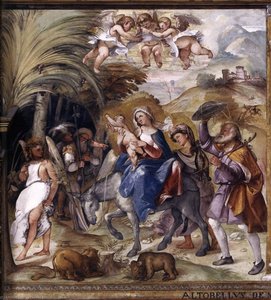
The true measure of Melone’s legacy lies in the monumental scale of his public works, most notably his ambitious contributions to the Cremona Cathedral. Beginning in December 1516, Melone undertook a massive fresco cycle that sought to surpass the established greatness of Boccaccio Bicentino. This endeavor was more than a mere commission; it was a bold artistic statement that solidified his reputation as a master of large-scale narrative painting. Within these sacred walls, works such as Flight to Egypt (1517) showcase his ability to weave complex symbolism with the tender, humanized depictions of Mary and Joseph, creating scenes that are as much about divine grace as they are about earthly journeying.
Beyond the cathedral, Melone’s oeuvre is scattered across the Lombardy region, leaving behind a trail of masterpieces that continue to captivate the modern eye. His ability to navigate different artistic modes allowed him to produce works of varying emotional intensities:
- The Lamentation: Housed in the prestigious Brera Art Gallery, this work exemplifies his capacity for profound sorrow and dramatic composition.
- Christ Carrying the Cross: A striking example of his 1515 period, where the use of light creates a hauntingly dramatic atmosphere.
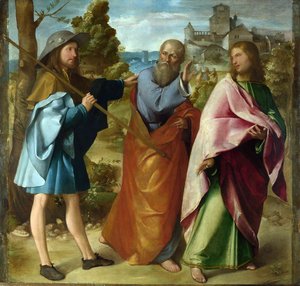
- The Road to Emmaus: A vibrant display of his Mannerist tendencies, capturing movement and interaction through a more fluid, expressive lens.
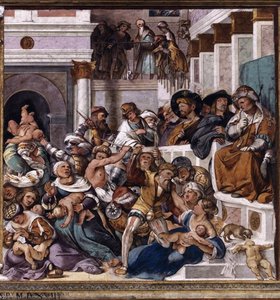
- The Seven Scenes: Adorning the chapel of Saint Lorenzo in Brescia, these frescoes demonstrate his skill in large-scale storytelling and architectural integration.
Legacy and Historical Significance
Altobello Melone did not exist in a vacuum; he was a central node in a dynamic creative network that shaped the Cremonese art scene. Through collaborations with artists like Giovanni Francesco Bembo and Paolo da Drizzona, he helped foster an environment where stylistic innovation could flourish. His influence extended to the next generation of painters, most notably Francesco Prata, who absorbed Melone’s vision of expressive gestures and classical themes. This lineage ensured that the specific nuances of the Cremonese style—a blend of Lombard precision and Mannerist drama—would persist through the sixteenth century.
Today, Melone is remembered not just as a painter of religious devotion, but as a pivotal figure who navigated the transition between two great eras of Italian art. His work remains a testament to a period of intense experimentation, where the stability of the Renaissance was beginning to fracture into the beautiful, distorted, and emotionally charged world of Mannerism. To study Melone is to witness the very moment when the classical ideal met the human impulse for drama, leaving an indelible mark on the history of European painting.
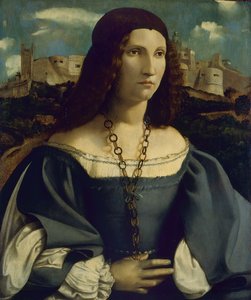
Altobello Melone
1491 - 1543 , Italy
Quick Facts
- Artistic Movement Or Style: Lombard & Mannerist
- Artists Or Movements Influenced By This Artist: ['Marcantonio Michiel']
- Artists Who Influenced This Artist:
- Girolamo Romanino
- Francesco Prata
- Date Of Birth: Cremona, Italy (1491)
- Date Of Death: Before 3 May 1543
- Full Name: Altobello Melone
- Nationality: Italian
- Notable Artworks:
- The Lamentation
- Tobias and the Angel
- Flight to Egypt
- Place Of Birth: Cremona
Related Articles
Celestial Messengers: Angels in Painting – A Historical & Artistic Exploration
Explore the captivating history of angels in painting! Discover symbolism, iconic Renaissance & Byzantine masterpieces, and renowned artists. Expert insights for art lovers & collectors at ArtsDot.
Celestial Messengers: A Comprehensive Exploration of Angelic Representation in Art History
Explore the captivating history of angels in art! Discover symbolism, iconic Renaissance masterpieces & renowned artists. Expert insights for art lovers & collectors at ArtsDot.
Mario Sironi: A Poetic of Modern Italian Identity Through Symbolism & Social Commentary
Explore the profound works of Mario Sironi, a key figure in Italian Modernism. Discover his evolution from Futurism to Metaphysical painting and his powerful social commentary. Learn about his legacy at ArtsDot.
Giovanni Fattori: Realism, Identity & the Tuscan Landscape – A Macchiaioli Master
Explore the life & art of Giovanni Fattori, a leading figure of the Macchiaioli movement. Discover his revolutionary realism, captivating Tuscan landscapes, and lasting impact on Italian painting. Learn more at ArtsDot.
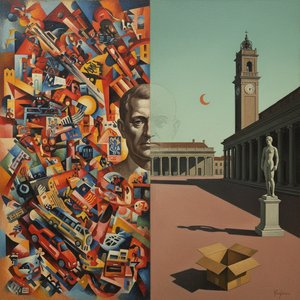
Carlo Carrà: Futurist Visions & Metaphysical Transformations in Early 20th-Century Italian Painting
Explore the artistic journey of Carlo Carrà, a pivotal figure in Italian Futurism & Metaphysical painting. Discover his dynamic compositions, collaborations with de Chirico, and lasting influence on modern art history.