 Preview
 Send
Send Share
Share
 Details

 Download
 Similars
 X-Ray
X-Ray Diaporama
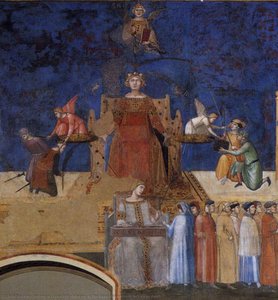
Allegory of the Good Government


 Read More
Hand Made Oil Reproduction
Hand-painted oil on canvas in your size and frame, made to order by our artists. ( Buy Print Buy Image)




P118B $10

P118H $10

P118W $10

P438Z $10

P508JH $12

P508YH $12

P805H $10

P805Z $10

P919BZ $10

P919G $10

P919XJ $10

P959ZH $10

P968JZ $12

W106C $8

W218G $10

W218JH $8

W218Y $10

W307PJ $10

W316G $10

W316PJ $8

W316Y $10

W398PJ $8

W4111J $10

W500HY $15

W500JH $15

W692G $12

W849H $8

W940BG $15

W953PJ $8




Pick from our preset sizes that match the artwork's original proportions.

You may enter your own dimensions to fit a specific frame or space. If your selected size does not match the original image's proportions, we will either crop the artwork or extend the painting with additional hand-painted elements. A digital mockup will be sent for your approval before production begins.
Please note that the on-screen preview does not reflect the actual cropping or extension. Only the mockup will accurately show the final composition.
While custom sizes are available, we recommend selecting a dimension from the predefined list to preserve the original proportions.
After order, ArtsDot.com team will email client for instructions and provide a mockup preview
Worldwide Delivery () in 3/4 weeks instead of standard 5 weeks. (24 August). No compromise on quality.

Free Worldwide Express Shipping

High-Quality Linen Canvas

Full Shipping Insurance

Customs Tax Refund Guarantee

True Color Matching Guarantee

60-Day Return Policy (Defects Only)

100% Money-Back Guarantee

Bulk Discount Offer
 Glass option is only available in size under 110 CM

Allegory of the Good Government
Reproduction Medium
Reproduction Size
-


Total Price
$ 263
Artwork Description
A Window into Siena’s Soul: Ambrogio Lorenzetti's ‘Allegory of Good Government’
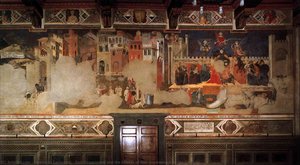
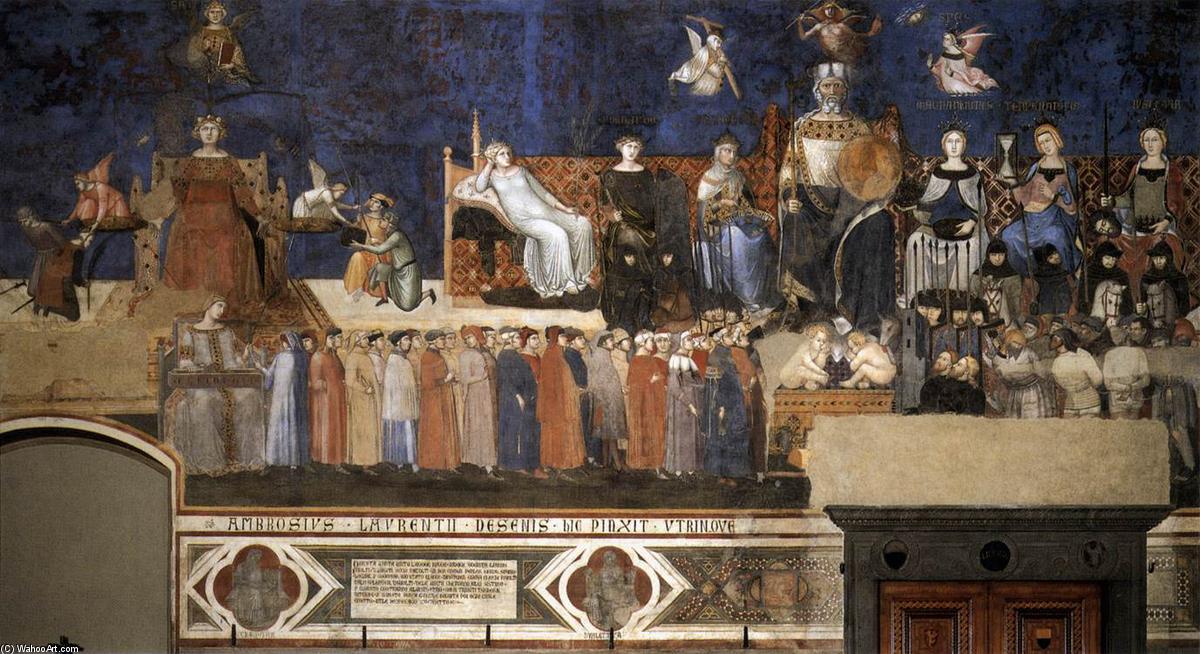
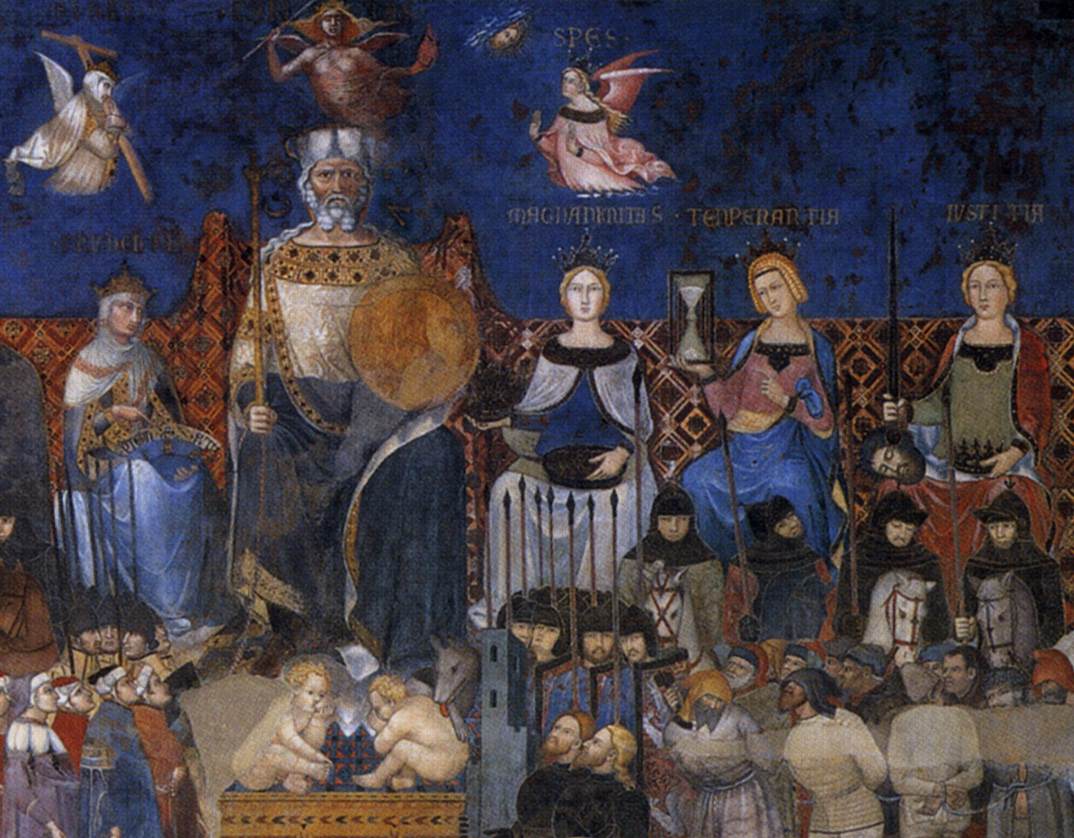
Within the Palazzo Pubblico in Siena, Italy, resides a monumental fresco – the “Allegory of Good and Bad Government” by Ambrogio Lorenzetti. Painted between 1338 and 1339, this isn’t merely a decorative mural; it's a profound civic statement, a visual treatise on governance designed to guide the nine magistrates who ruled the Republic of Siena. More than just a historical record, it’s a vibrant tableau brimming with symbolism, offering a rare glimpse into the values and aspirations of a thriving medieval city-state. The fresco, originally spanning three walls of the Sala dei Nove (Salon of Nine), speaks volumes about Siena's commitment to republican ideals and its understanding of the delicate balance required for a just and prosperous society.
A Symphony of Figures: Style and Technique
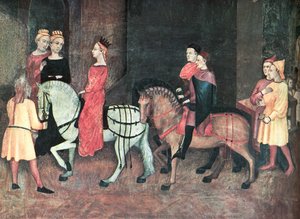
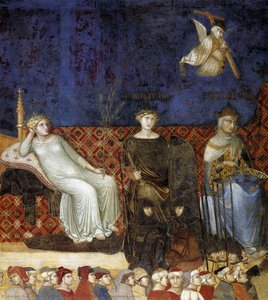
Lorenzetti’s style is a captivating blend of influences – the solemn grandeur of Byzantine art, the classical ideals of antiquity, and the burgeoning naturalism that would define the Renaissance. The fresco's composition unfolds in three distinct horizontal bands. The foreground depicts a bustling scene of Siena’s citizens, interwoven with symbolic figures representing the virtues essential for good governance. Above them, on a stage-like structure, reside allegorical representations of these virtues – Justice, Fortitude, Prudence, Magnanimity, Temperance, and Wisdom – each rendered in exquisite detail and adorned with crowns, signifying their elevated status. The use of color is remarkably sophisticated; deep blues and greens dominate the background, creating a sense of depth and stability, while the figures are depicted in rich reds, golds, and browns, adding to the overall visual impact. Notably, Lorenzetti employed a technique that anticipates linear perspective, subtly guiding the viewer’s eye through the complex arrangement of figures and architectural elements – a revolutionary approach for his time.
The fresco's execution is remarkable considering its age. The meticulous detail in each figure, from the folds of their garments to the expressions on their faces, speaks to Lorenzetti’s exceptional skill as a painter. He masterfully integrated architectural elements into the composition, creating a cohesive and immersive experience for the viewer. The overall effect is one of dynamic movement and harmonious balance – a testament to Lorenzetti's artistic vision.
Decoding the Symbols: A Language of Governance
The “Allegory of Good Government” isn’t simply a beautiful painting; it’s a complex visual lexicon. The central figures, a seated authority representing power and another holding a scroll symbolizing knowledge or law, are surrounded by a multitude of allegorical representations – angels at the corners perhaps signifying divine guidance, a castle and cityscape suggesting stability and prosperity, and various figures embodying virtues like wisdom, strength, and prudence. The inclusion of children within the composition is particularly significant, potentially representing the future generations who will inherit the benefits of good governance. The text woven into the lower border further elucidates the principles of virtuous leadership – emphasizing unity, justice, and the importance of prioritizing the common good.
A Legacy Enduring: Historical Context and Significance
Created during a turbulent period in Siena’s history—a time marked by political instability and civic strife—the fresco served as a potent reminder to the city's ruling council of their responsibilities and the importance of upholding republican values. Lorenzetti’s work reflects the broader Renaissance interest in classical ideals of governance, while simultaneously grounding these concepts within the specific context of Siena’s civic identity. The “Allegory of Good Government” stands as a remarkable achievement – not only for its artistic merit but also for its enduring significance as a visual representation of political philosophy and civic responsibility. It remains a powerful testament to the belief that art can be used to shape public discourse and inspire virtuous leadership, a message that resonates even today.
Related Artworks
Artist Biography
A Sienese Visionary: The Life and Art of Ambrogio Lorenzetti
Ambrogio Lorenzetti, born around 1290 in the heart of Siena, Italy, emerged as a pivotal figure in the transition from the medieval artistic traditions to the burgeoning Renaissance. Though overshadowed for periods by contemporaries like Duccio and Simone Martini, and often discussed alongside his brother, the painter Pietro Lorenzetti, Ambrogio carved out a unique path, one marked by an innovative spirit and a profound engagement with the world around him. Details of his early life remain scarce; artistic training in Siena likely provided the foundation upon which he would build a style that blended Byzantine elegance with a growing naturalism—a hallmark of his evolving vision. The Sienese school, renowned for its refined aesthetic, offered a fertile ground for Ambrogio’s talents to blossom, yet he wasn't content merely to replicate established conventions. He possessed an inquisitive mind, drawn to both the spiritual depths of Italo-Byzantine art and the classical ideals that were beginning to resurface in Italian thought.Breaking with Tradition: Style and Innovation
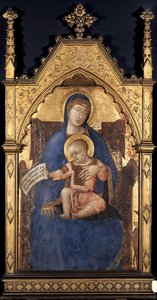
Ambrogio’s artistic journey was one of continual experimentation. Early works, such as the *Madonna and Child* from 1319, reveal a clear debt to the Byzantine tradition—the iconic frontality, the use of gold backgrounds, and the stylized rendering of figures all speak to this influence. However, even in these early pieces, hints of a new direction emerge: a subtle softening of forms, a nascent interest in depicting volume, and an attempt to imbue his subjects with a more human quality. This trajectory accelerated as Ambrogio matured, fueled by a fascination with classical antiquity and a desire to represent the world with greater accuracy. He studied perspective—though not always achieving perfect results—and demonstrated a keen eye for physiognomy, seeking to capture the individual characteristics of those he portrayed. The influence of Simone Martini, another leading Sienese painter, is evident in Ambrogio’s elegant compositions and refined color palettes, while some scholars suggest a connection to Giotto's more naturalistic approach, particularly in his depiction of human emotion. But it was Ambrogio who synthesized these influences into something distinctly his own—a style that balanced decorative grace with an unprecedented level of realism.The Palazzo Pubblico: A Monumental Achievement
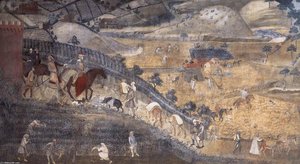
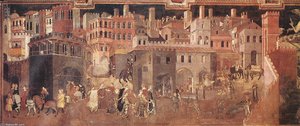
Ambrogio Lorenzetti’s most enduring legacy lies within the walls of Siena's Palazzo Pubblico, specifically in the Sala dei Nove – the Council Room. Here, between 1337 and 1339, he embarked on a monumental cycle of frescoes depicting *The Allegory of Good and Bad Government*. This work is not merely a collection of beautiful images; it’s a profound meditation on civic virtue, social order, and the consequences of political choices. *Effects of Good Government on Town and Country* is an unparalleled pictorial encyclopedia of medieval life—a vibrant panorama teeming with activity: merchants trading, laborers working the land, dancers celebrating in the piazza. It's a vision of harmony and prosperity, where every element contributes to the well-being of the community. The contrasting *Allegory of Bad Government and its Effects on Town and Country* presents a starkly different scene—a landscape ravaged by tyranny, corruption, and discord. Within this cycle, Ambrogio achieved several groundbreaking feats: he pioneered the use of realistic landscapes as backdrops for his figures, experimented with perspective to create a sense of depth, and imbued his characters with a range of emotions that were remarkably expressive for the time. Notably, *Effects of Good Government* contains what is believed to be the first documented depiction of an hourglass—a symbol of time’s relentless passage and the importance of responsible governance.A Lasting Influence: Legacy and Historical Significance
Ambrogio Lorenzetti's untimely death in 1348, likely a victim of the Black Death that swept across Europe, cut short a career brimming with potential. Yet, his innovations left an indelible mark on the course of Italian art. He was a precursor to the Renaissance, anticipating many of the artistic concerns that would define the era—a renewed interest in naturalism, a mastery of perspective, and a focus on human emotion. His frescoes in the Palazzo Pubblico stand as masterpieces of early Renaissance secular painting, reflecting a growing emphasis on civic life and the responsibilities of leadership. Beyond their aesthetic beauty, these works offer invaluable insights into medieval society, providing a detailed glimpse into the daily lives, customs, and values of 14th-century Siena. Ambrogio’s influence extended to subsequent generations of Sienese and Italian painters, inspiring them to push the boundaries of artistic expression and explore new ways of representing the world around them. He remains a testament to the power of art to not only reflect society but also to shape it—a visionary whose work continues to resonate with audiences centuries later.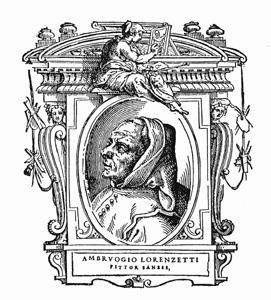
Ambrogio Lorenzetti
1290 - 1348 , Italy
Quick Facts
- Artistic Movement Or Style: Sienese School
- Artists Or Movements Influenced By This Artist: ['Renaissance artists']
- Artists Who Influenced This Artist:
- Simone Martini
- Giotto
- Date Of Birth: c. 1290
- Date Of Death: June 9, 1348
- Full Name: Ambrogio Lorenzetti
- Nationality: Italian
- Notable Artworks:
- Madonna and Child (1319)
- Good & Bad Government
- Investiture of Saint Louis
- Maestà (c. 1335)
- Place Of Birth: Siena, Italy
Related Articles
Unveiling Hidden Meanings: Allegory in Western Art History
Explore the rich history of allegory in Western art! Discover hidden meanings in masterpieces from Giotto to Bosch & beyond. Expert insights for collectors and enthusiasts at ArtsDot.
The Weight of Virtue and Vice: Exploring Moral Themes in Art History
Explore the captivating world of moral allegory in art history! Discover how Renaissance masters like Bosch, Botticelli & Lotto depicted virtue & vice. Expert analysis and stunning reproductions at ArtsDot.
Hans Baldung Grien: A Renaissance Master of Allegory, Innovation & the Grotesque
Explore the captivating world of Hans Baldung Grien, a Renaissance master renowned for his allegorical paintings, striking woodcuts & unique depictions of mythology and the grotesque. Discover his life, works & legacy with ArtsDot.
Jan Brueghel the Elder: A Master of Flemish Landscape & Allegory – Exploring Innovation & Influence
Explore the captivating world of Jan Brueghel the Elder, a Flemish Baroque master renowned for his stunning landscapes & allegorical paintings. Discover his collaborations with Rubens and lasting artistic legacy.
The Canvas of Virtue: Exploring Moral Lessons & Narrative Power in Art History
Explore the rich history of moral lessons & symbolism in art! Discover how Renaissance masters like Bosch used allegory to convey virtue & vice. Expert analysis for collectors and enthusiasts.