 Preview
 Send
Send Share
Share
 Details

 Download
 Similars
 X-Ray
X-Ray Diaporama
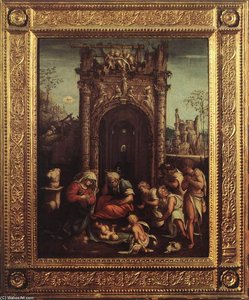
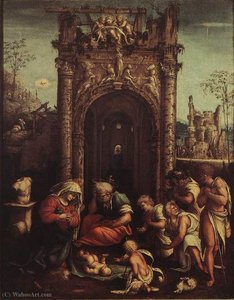
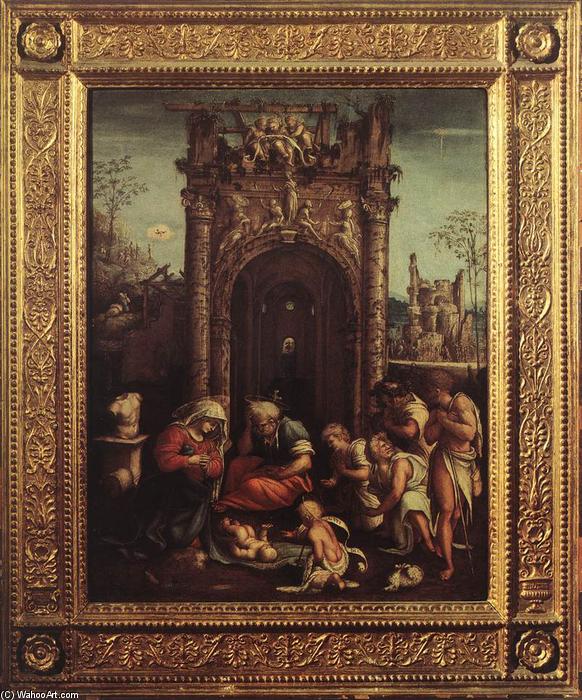
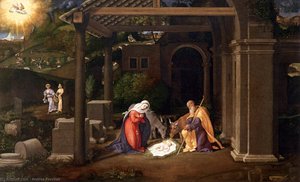
Adoration of the Shepherds
 Oil On Canvas
- WallArt
- Renaissance
 1515
1515 44.0 x 34.0 cm
 Galleria degli Uffizi
 Read More
Hand Made Oil Reproduction
Hand-painted oil on canvas in your size and frame, made to order by our artists. ( Buy Print Buy Image)




P118B $10

P118H $10

P118W $10

P438Z $10

P508JH $12

P508YH $12

P805H $10

P805Z $10

P919BZ $10

P919G $10

P919XJ $10

P959ZH $10

P968JZ $12

W106C $8

W218G $10

W218JH $8

W218Y $10

W307PJ $10

W316G $10

W316PJ $8

W316Y $10

W398PJ $8

W4111J $10

W500HY $15

W500JH $15

W692G $12

W849H $8

W940BG $15

W953PJ $8




Pick from our preset sizes that match the artwork's original proportions.

You may enter your own dimensions to fit a specific frame or space. If your selected size does not match the original image's proportions, we will either crop the artwork or extend the painting with additional hand-painted elements. A digital mockup will be sent for your approval before production begins.
Please note that the on-screen preview does not reflect the actual cropping or extension. Only the mockup will accurately show the final composition.
While custom sizes are available, we recommend selecting a dimension from the predefined list to preserve the original proportions.
After order, ArtsDot.com team will email client for instructions and provide a mockup preview
Worldwide Delivery () in 3/4 weeks instead of standard 5 weeks. (16 August). No compromise on quality.

Free Worldwide Express Shipping

High-Quality Linen Canvas

Full Shipping Insurance

Customs Tax Refund Guarantee

True Color Matching Guarantee

60-Day Return Policy (Defects Only)

100% Money-Back Guarantee

Bulk Discount Offer
 Glass option is only available in size under 110 CM

Adoration of the Shepherds
Reproduction Medium
Reproduction Size
-


Total Price
$ 463
Artwork Description
The Adoration of the Shepherds: A Renaissance Echo in Bolognese Color
Amico Aspertini’s “Adoration of the Shepherds,” painted in 1515, isn't merely a depiction of a biblical scene; it’s a vibrant, emotionally charged window into the heart of early Mannerism – a period poised between the High Renaissance and the radical innovations to come. This oil on wood panel, now residing within the Uffizi Gallery in Florence, immediately captivates with its dramatic use of light and shadow, a hallmark of Aspertini’s distinctive style. The painting transports us to a humble stable, bathed in an almost theatrical illumination that seems to emanate not from any single source but rather from the divine presence itself. It's a scene brimming with quiet reverence, yet pulsating with an underlying intensity—a testament to Aspertini’s ability to imbue even a familiar narrative with profound psychological depth.
The composition is masterfully orchestrated, drawing the eye towards Mary and Joseph at the center, their faces etched with wonder and protectiveness as they gaze upon the newborn Jesus. Surrounding them are the shepherds, rendered not as idealized figures of classical art but as ordinary men – weathered, earthy, and deeply moved by this miraculous event. Notice how Aspertini avoids a symmetrical arrangement; instead, he employs a dynamic diagonal thrust that guides our gaze through the scene, creating a sense of movement and immediacy. The architectural backdrop—a grand archway hinting at a gateway to heaven—is rendered with a subtle, almost dreamlike quality, further emphasizing the otherworldly nature of the event.
A Painter’s Palette: Technique and Materials
Aspertini's technique is characterized by layers of meticulously applied oil paint, creating textures that range from smooth, luminous surfaces to areas of subtly rough impasto. This layering process—a hallmark of Renaissance painting—allowed him to build up color gradually, achieving a remarkable depth and richness. The use of *sfumato*, a subtle blurring of edges, softens the forms and contributes to the overall atmospheric effect. The palette itself is remarkably restrained – dominated by earthy browns, deep reds, and muted blues – yet these colors are combined with astonishing skill to create a sense of warmth and intimacy. The gold leaf applied to the frame, though not part of the original painting, further enhances the work’s opulent and devotional character.
Crucially, Aspertini departs from the strict realism favored by his contemporaries like Leonardo da Vinci and Raphael. While he meticulously renders the details of the figures – the folds of their garments, the texture of their faces – he does so with a deliberate ambiguity. The shepherds are not depicted as heroic or idealized; they are simply men overwhelmed by emotion. This choice reflects Aspertini’s embrace of Mannerism's emphasis on psychological expression and emotional intensity over strict adherence to classical proportions and perspective.
Symbolism and Spiritual Resonance
Beyond the immediate narrative, “Adoration of the Shepherds” is rich in symbolic meaning. The archway represents a portal—a gateway to divine grace and salvation. The gifts presented by the shepherds – lambs, symbolizing innocence and sacrifice – underscore the humility and reverence of this humble encounter. The presence of angels, rendered with an almost ethereal quality, reinforces the sacredness of the event. Even the simple details, such as the loaf of bread in the foreground, a symbol of poverty and sustenance, contribute to the painting’s profound spiritual message.
Furthermore, Aspertini's choice to depict this scene within a relatively dark setting—suggesting a candlelit stable—adds to its dramatic impact. It evokes a sense of mystery and intimacy, drawing the viewer into the heart of the moment. The painting isn’t simply illustrating a biblical story; it’s inviting us to contemplate the profound mysteries of faith, humility, and divine grace.
A Legacy in Color: Reproduction and Interpretation
Reproductions of “Adoration of the Shepherds” capture only a fraction of the original's power. The subtle nuances of color, texture, and light are difficult to replicate fully, yet high-quality reproductions can still convey the painting’s emotional intensity and spiritual depth. When considering a reproduction for your home or office, seek one that accurately represents Aspertini’s masterful use of *sfumato* and his distinctive palette. This artwork serves as a beautiful reminder of the enduring power of faith, humility, and the transformative potential of art.
Related Artworks
Artist Biography
Amico Aspertini: A Pioneer of Mannerist Eclecticism
Amico Aspertini, born in Bologna around 1474 and passing away in 1552, stands as a fascinating figure within the Italian Renaissance—a painter who simultaneously anticipated and defied prevailing artistic trends. Often described as eccentric and possessing an almost unsettling intensity, Aspertini’s legacy lies not just in individual works but in his unique synthesis of styles, making him a pivotal precursor to Mannerism and a compelling example of Bolognese painting's evolving identity. His life was deeply intertwined with the artistic milieu of Bologna, a city renowned for its vibrant workshop culture and its connection to both Florentine innovation and Venetian sensuality. He began his training within this environment, absorbing influences from masters like Francia and Costa, yet quickly forged his own distinctive path, one characterized by an almost feverish energy and a willingness to embrace seemingly contradictory elements.Early Life and Artistic Training
Aspertini’s family history was steeped in art; his father, Giovanni Antonio Aspertini, was himself a recognized painter. This familial connection provided him with an early immersion into the world of pigments, brushes, and artistic techniques. His formative years were spent in Bologna, where he honed his skills under the tutelage of established masters like Francia and Costa. These encounters exposed him to the classical ideals championed by the High Renaissance but also introduced him to a more nuanced approach—one that valued emotional intensity and expressive distortion over strict adherence to proportion and perspective. Crucially, Aspertini’s travels with his father to Rome in 1496 provided an opportunity to witness firsthand the burgeoning artistic scene of the papal court, further broadening his stylistic horizons. This period also saw him briefly documented in Roman records, suggesting a period of experimentation and exploration before returning to the relative stability of Bologna.A Style Defined by Eclecticism and Innovation
Aspertini’s style is notoriously difficult to categorize, reflecting a deliberate rejection of rigid artistic boundaries. He was a master of eclecticism, drawing inspiration from a diverse range of sources—from the classical ideals of antiquity to the emotional intensity of late Gothic art, and even incorporating elements of the burgeoning Renaissance styles of Florence and Venice. His paintings are characterized by intricate compositions, elongated figures that seem to stretch and distort in unsettling ways, and a vibrant palette often dominated by intense reds, blues, and yellows. A key element of his technique was his remarkable speed—he is said to have worked with both hands simultaneously, one applying the *chiaro* (light) and the other the *scuro* (dark), creating a dynamic interplay of light and shadow that heightened the sense of movement and drama within his scenes. This unusual method, as described by Vasari, contributed significantly to the frenetic energy often observed in his work.Notable Works and Artistic Achievements
Several of Aspertini’s paintings stand out as particularly compelling examples of his unique style. “Trionfo Militare all” (Military Triumph), a monumental fresco depicting a military victory, showcases his ability to synthesize classical imagery with dramatic theatricality. "Erocle e il cinghiale di erimanto" (Hercules and the Wild Boar of Erymanthus) is another striking example, demonstrating his mastery of composition and his willingness to distort perspective for expressive effect. “Incredulità di san tommaso” (The Incredulity of Saint Thomas), a particularly arresting work, captures the saint’s moment of doubt with an almost palpable sense of psychological tension. These works, along with frescoes in the Oratory of Santa Cecilia and his contributions to the Lucca Basilica, reveal a painter who was constantly pushing the boundaries of artistic convention. His decoration of the triumphal arch for Pope Clement VII's entry into Bologna in 1529 further cemented his reputation as a leading artist of his time.Legacy and Influence
Amico Aspertini’s influence on subsequent generations of Italian painters is considerable, though often understated. He is widely considered a key figure in the development of Mannerism—a style characterized by elongated figures, distorted perspective, and an emphasis on emotional expression. His work anticipated many of the stylistic innovations that would define Mannerism, paving the way for artists like El Greco. While Vasari’s account of Aspertini as an “eccentric” and “half-insane” master initially cast a negative light on his oeuvre, modern art historians have increasingly recognized his importance as a pioneering artist who challenged conventional notions of beauty and realism. His paintings can be found in prestigious collections such as the Uffizi Gallery in Florence, testament to their enduring artistic value. Aspertini’s legacy continues to fascinate and inspire, reminding us that true innovation often lies in embracing complexity and defying expectations.
Amico Aspertini
1475 - 1552 , Italy
Quick Facts
- Artistic Movement Or Style: Mannerism
- Artists Or Movements Influenced By This Artist: ['El Greco']
- Artists Who Influenced This Artist:
- Francia
- Costa
- Date Of Birth: 1475, Bologna
- Date Of Death: 1552, Bologna
- Full Name: Amico Aspertini
- Nationality: Italian
- Notable Artworks:
- Trionfo Militare All
- Erocle e il cinghiale di erimanto
- Incredulità di San Tommaso
- Place Of Birth: Bologna, Italy
Related Articles

The Enduring Legacy of Oil on Canvas: Technique, History & Aesthetic Impact
Explore the rich history & techniques of oil painting – from Renaissance masters to Impressionism. Discover pigments, layering methods, and why this timeless medium endures. Expert insights for artists & art enthusiasts.

Oil on Canvas: A Historical & Technical Exploration of a Timeless Artistic Medium
Explore the rich history & enduring techniques of oil painting on canvas. Discover the science behind its longevity, conservation practices, and contemporary relevance. Expert insights for art enthusiasts.

The Enduring Legacy of Oil on Canvas: Technique, History & Contemporary Practice
Explore the rich history & enduring techniques of oil painting on canvas. Discover the science behind its longevity, conservation practices, and contemporary relevance. Expert insights for art enthusiasts.

Oil on Canvas Masters: 10 Paintings That Redefined Art History |
Journey through art history with our guide to 10 legendary oil on canvas masterpieces! Explore iconic works by Van Gogh, Monet & Rembrandt. Find museum-quality reproductions and elevate your home decor at . Discover all masterpieces online.

The Enduring Power of Painting: A Historical & Contemporary Exploration of Form and Emotion
Explore the rich history & enduring techniques of oil painting with ArtsDot. Discover masterpieces, learn about art collecting, and find authentic handmade reproductions crafted by skilled artists.