 Preview
 Send
Send Share
Share
 Details

 Download
 Similars
 X-Ray
X-Ray Diaporama
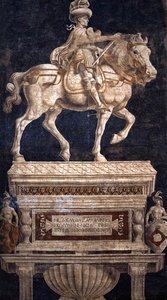
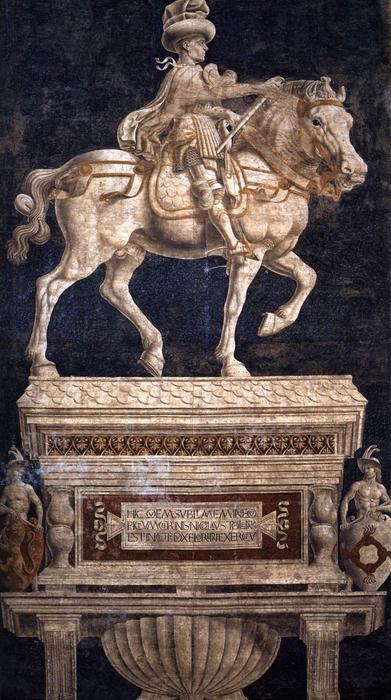
Monument to Niccolò da Tolentino


 Read More
Giclée / Art Print
Museum-quality giclée or canvas print with fast production and flexible finish options. ( Buy Hand Made Painting Buy Image)




P118B $10

P118H $10

P118W $10

P438Z $10

P508JH $12

P508YH $12

P805H $10

P805Z $10

P919BZ $10

P919G $10

P919XJ $10

P959ZH $10

P968JZ $12

W106C $8

W218G $10

W218JH $8

W218Y $10

W307PJ $10

W316G $10

W316PJ $8

W316Y $10

W398PJ $8

W4111J $10

W500HY $15

W500JH $15

W692G $12

W849H $8

W940BG $15

W953PJ $8




Pick from our preset sizes that match the artwork's original proportions.

You may enter your own dimensions to fit a specific frame or space. If your selected size does not match the original image's proportions, we will either crop the artwork or extend the image with a mirrored or solid-fill edge. A digital mockup will be sent for your approval before production begins.
Please note that the on-screen preview does not reflect the actual cropping or extension. Only the mockup will accurately show the final composition.
While custom sizes are available, we recommend selecting a dimension from the predefined list to preserve the original proportions.
Worldwide Delivery () in 2 weeks instead of standard 4/5 weeks. (23 August)

Free Worldwide Express Shipping

High-Quality Linen Canvas

Full Shipping Insurance

Customs Tax Refund Guarantee

True Color Matching Guarantee

60-Day Return Policy (Defects Only)

100% Money-Back Guarantee

Bulk Discount Offer
 Glass option is only available in size under 110 CM

Monument to Niccolò da Tolentino
Giclée / Art Print
Reproduction Size
-


Total Price
$ 63
Collectible Description
A Monumental Vision of Florentine Patronage
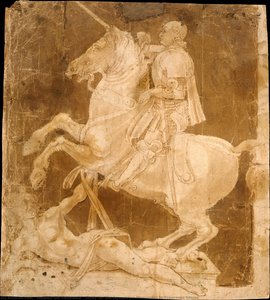
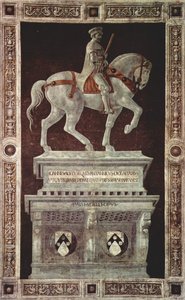
The fresco “Monument to Niccolò da Tolentino,” executed by Andrea del Castagno in 1456, stands as a remarkable testament to the fervor and ambition of Renaissance Florence. Located within the Duomo’s magnificent façade – a project spearheaded by Bernardo de' Medici – this artwork transcends mere decoration; it embodies the spirit of its time and offers profound insights into humanist ideals and artistic innovation. The commission itself was fraught with political significance, reflecting the turbulent relationship between Florence and Milan during Lorenzo il Magnifico’s reign.The Scene Unfolds: Detail and Dramatic Realism
At first glance, the fresco captivates viewers with its masterful depiction of Niccolò da Tolentino, a Florentine nobleman celebrated for his military prowess. Castagno skillfully portrays him astride a horse – a recurring motif in Renaissance art symbolizing nobility, courage, and victory – clad in gleaming armor and helmet. The artist’s meticulous attention to anatomical detail is evident in the musculature of the horse and rider alike, demonstrating a commitment to portraying the human form with unprecedented accuracy. This realism wasn't simply about replicating appearances; it aimed to convey emotion and psychological depth—a hallmark of Castagno’s distinctive style.Technique and Artistic Innovation
Castagno employed tempera paint on plaster, a technique favored during the Renaissance for its luminosity and durability. However, what truly distinguishes this fresco is his innovative approach to perspective and chiaroscuro – the dramatic interplay of light and shadow—techniques that would become foundational principles of Western painting. The dark background serves as a canvas for highlighting Niccolò’s figure and the monumental tombstone beneath him, creating an illusionistic depth that draws the viewer into the scene. This masterful manipulation of light enhances the emotional impact of the artwork, conveying both grandeur and solemn contemplation.Symbolism: Glory and Remembrance
Beyond its technical brilliance, “Monument to Niccolò da Tolentino” is laden with symbolic meaning. The horse represents nobility and martial virtue, mirroring Niccolò’s accomplishments as a warrior leader. The tombstone symbolizes remembrance and honor—a deliberate gesture intended to commemorate the deceased nobleman's legacy. Furthermore, the angels adorning the monument speak to themes of divine grace and spiritual aspiration, reflecting the humanist preoccupation with moral philosophy prevalent during the Renaissance.Emotional Resonance: A Window into Florentine Values
Ultimately, “Monument to Niccolò da Tolentino” resonates deeply with viewers because it captures the essence of Florentine values—patriotism, ambition, and reverence for history. Castagno’s artwork serves as a powerful reminder that art is not merely aesthetically pleasing but also capable of conveying profound ideas about human experience and moral responsibility. Reproductions of this masterpiece offer an opportunity to appreciate the artistic genius of Andrea del Castagno and immerse oneself in the vibrant intellectual atmosphere of Renaissance Florence.Related Artworks
Artist Biography
A Florentine Renaissance Master: The Life and Art of Andrea del Castagno
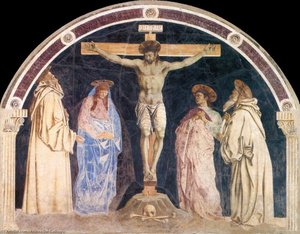
Andrea del Castagno, a pivotal figure in the Early Renaissance, emerged from the Tuscan countryside near Florence around 1419 to leave an indelible mark on the artistic landscape. His life, though shrouded in some mystery, was one of innovation, dramatic realism, and a departure from the more stylized conventions that preceded him. Born in Castagnoli, not far from Monte Falterona, young Andrea’s early years were touched by conflict; his family resided in Corella during periods of war between Florence and Milan before returning home. It was under the patronage of Bernardo de' Medici in 1440 that he truly entered the Florentine art world, an entry marked by a rather grim commission – painting portraits of citizens executed after the Battle of Anghiari on the facade of the Palazzo del Podestà. This act earned him the chilling nickname "Andrea degli Impiccati" (Andrea of the Hanged), a testament to the political turbulence and stark realities of the era, and a shadow that followed him throughout his career. While details regarding his formal training remain scarce, it is widely believed he studied under both Fra Filippo Lippi and Paolo Uccello, absorbing their techniques while forging his own distinct path. His early works, such as the fresco of the Crucifixion and Saints in the Ospedale di Santa Maria Nuova (1440-1441), already demonstrate a keen interest in perspective and figures that bear the clear influence of Masaccio’s groundbreaking naturalism.Evolution of Style and Major Works
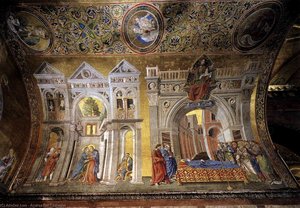
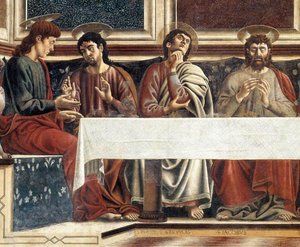
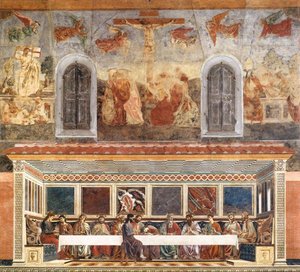
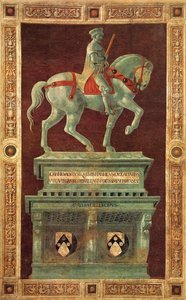
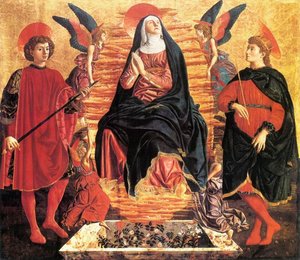
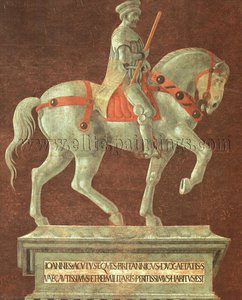
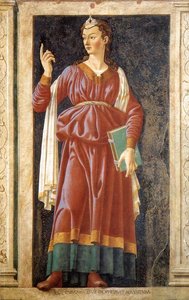
Castagno's artistic journey was one of continuous development, moving away from decorative approaches towards a more profound realism and psychological depth. His frescoes in San Tarasio Chapel, Venice (1442), represent an early expression of this evolving style, while his work within St Mark’s Basilica (1442-1443), including the poignant “Death of the Virgin,” showcased a growing mastery of dramatic composition. However, it was the Last Supper fresco at Sant’Apollonia in Florence, completed around 1447, that cemented his reputation as a master. This work is considered not merely a painting but a pivotal moment in Renaissance art; its exceptional detail, naturalistic portrayal of the apostles' reactions, and innovative use of perspective captivated contemporaries and profoundly influenced later artists – most notably Leonardo da Vinci, who is believed to have studied it intently before embarking on his own iconic rendition of the scene. The Assumption with Saints Julian and Miniato (c. 1449-1450), now housed in Berlin, further exemplifies his evolving style, while the frescoes at Villa Carducci (c. 1449-1450) – a series of portraits including luminaries like Pippo Spano, Farinata degli Uberti, Dante, and Petrarch – demonstrate his skill in capturing individual character and intellectual presence. Perhaps one of his most ambitious undertakings was the equestrian statue of Niccolò da Tolentino (1456), a fresco within Florence Cathedral that mirrors Paolo Uccello’s depiction of John Hawkwood, showcasing Castagno's ability to handle large-scale compositions with dynamic energy.Influences and Artistic Legacy
Andrea del Castagno did not work in isolation; his art was deeply informed by the giants who came before him. The pioneering use of perspective and naturalism championed by Masaccio served as a cornerstone of his artistic philosophy, while the expressive figures of Giotto di Bondone provided an early source of inspiration. He synthesized these influences into something uniquely his own – a style characterized by stark contrasts in light and shadow that heightened dramatic effect, and a commitment to portraying human emotion with unflinching honesty. This emphasis on realism and detailed observation wasn’t confined to Florence; it resonated throughout Italy, significantly impacting subsequent generations of artists, particularly those associated with the Ferrarese school. Cosme Tura, Francesco del Cossa, and Ercole de’ Roberti all demonstrate a clear debt to Castagno's innovations, carrying forward his legacy of naturalistic representation and psychological depth. He brought to painting what Banco and Donatello brought to sculpture, as one contemporary observer noted, solidifying his place among the most important artists of his time.Controversies and Historical Significance
Despite his artistic achievements, Andrea del Castagno’s life was not without its shadows. The renowned artist and biographer Giorgio Vasari alleged that Castagno murdered Domenico Veneziano, a claim fueled by professional rivalry and speculation. However, this accusation is now widely considered inaccurate due to discrepancies in the timelines of their deaths. Regardless of this unfounded rumor, Andrea del Castagno remains a crucial figure in Florentine Renaissance art. He represents a turning point – a move away from the decorative tendencies of earlier styles towards a more grounded, emotionally resonant form of expression. His work paved the way for later developments in painting, influencing not only his immediate successors but also shaping the course of Italian Renaissance art as a whole.Exploring Castagno’s World Today
While many of Castagno's frescoes remain in situ in Florence and Venice, offering a direct connection to his artistic vision, reproductions allow art enthusiasts worldwide to experience the power and beauty of his work. From the dramatic intensity of the Last Supper to the dignified portraits at Villa Carducci, these recreations provide an opportunity to appreciate the technical skill and emotional depth that define Castagno’s legacy. Discover the captivating world of Andrea del Castagno through high-quality reproductions available online. Explore his masterpieces, including the Crucifixion, Resurrection, and the iconic Last Supper. Delve into the historical context of Renaissance Florence and understand Castagno’s place within this vibrant artistic movement. His influence continues to inspire, reminding us of the enduring power of art to capture the human spirit and reflect the complexities of our world.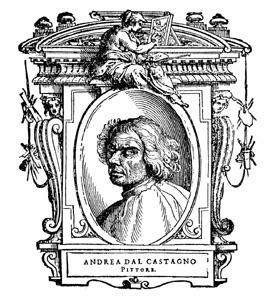
Andrea del Castagno
1419 - 1457 , Italy
Quick Facts
- Artistic Movement Or Style: Early Renaissance
- Artists Or Movements Influenced By This Artist:
- Ferrarese school
- Cosme Tura
- Francesco del Cossa
- Artists Who Influenced This Artist:
- Masaccio
- Giotto
- Fra Filippo Lippi
- Paolo Uccello
- Date Of Birth: c. 1419
- Date Of Death: 1457
- Full Name: Andrea del Castagno
- Nationality: Italian
- Notable Artworks:
- Last Supper
- Crucifixion
- Resurrection
- Assumption
- Place Of Birth: Castagnoli, Italy
Related Articles

The Fresco as Family Legacy: Preserving Heritage Through Wall Art
Explore the rich history & enduring legacy of fresco painting. Discover how to preserve family heritage through stunning wall art. Expert insights & restoration guidance.

The Enduring Legacy of Fresco Painting: Techniques, History & Contemporary Relevance
Explore the rich history & enduring artistry of fresco painting – from Giotto to Michelangelo! Discover techniques, conservation efforts, & modern applications. Learn how ArtsDot brings this timeless art form to your home.
Andrea del Sarto: Florentine Grace, Technical Mastery & Artistic Ambition
Explore the life & art of Andrea del Sarto, a Florentine Renaissance master renowned for harmonious compositions & technical brilliance. Discover his frescoes, portraits, and lasting influence on art history.

The Enduring Legacy of Fresco: Technique, History & Artistic Expression Across Cultures
Explore the rich history & enduring legacy of fresco painting! Discover ancient techniques, Giotto's masterpieces, and modern applications. Expert insights for art lovers & professionals.

Art That Lives With You: The Emotional Power of a Custom Interior Fresco
Discover the emotional power & timeless beauty of custom interior frescoes. Explore history, design tips & expert guidance from – creating lasting legacies.