 Preview
 Send
Send Share
Share
 Details

 Download
 Similars
 X-Ray
X-Ray Diaporama
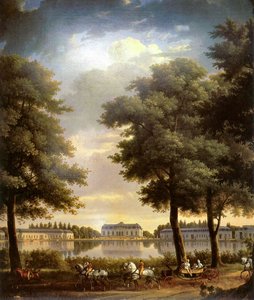
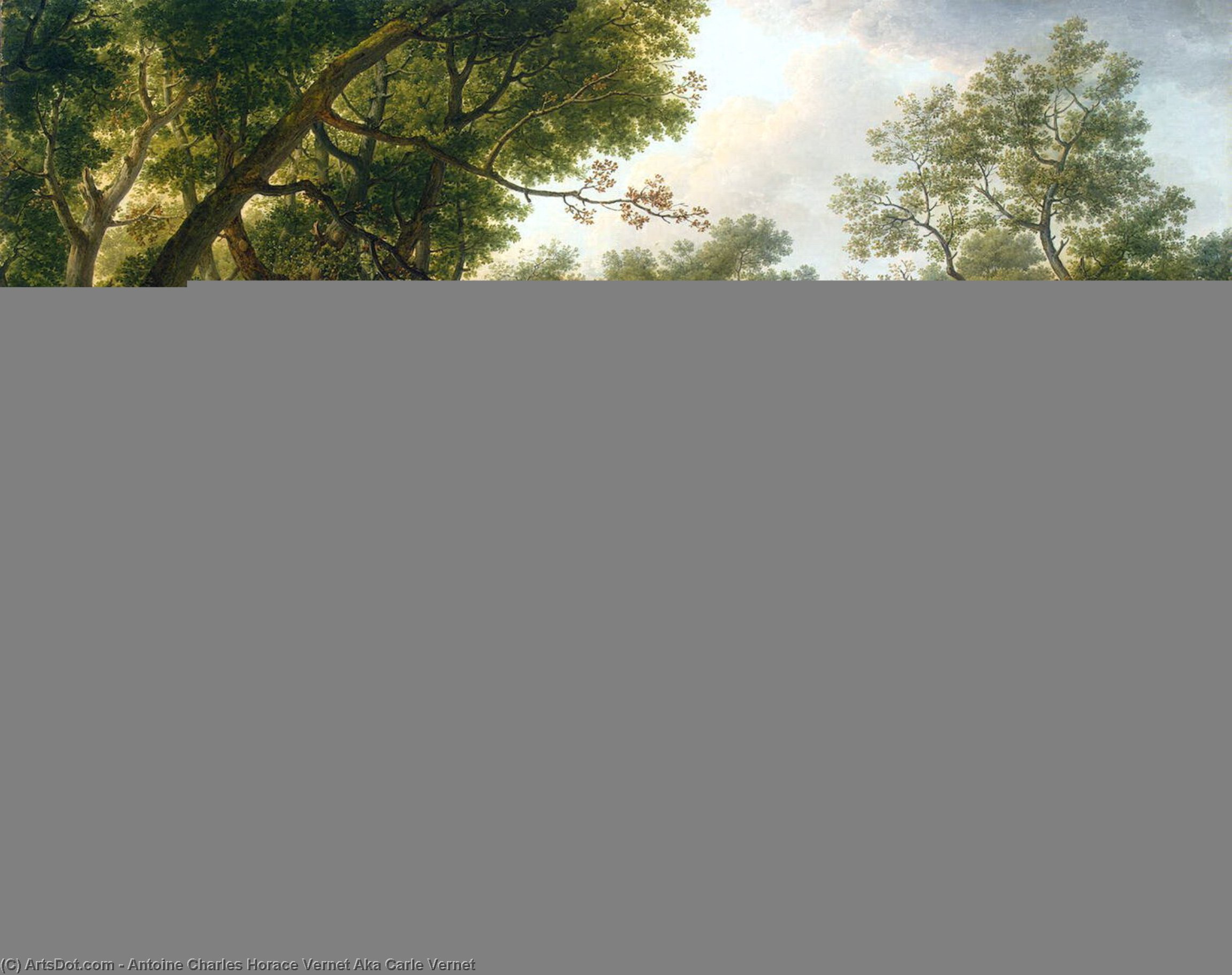
Napoleon on a Hunt in the Forest of Compiègne
 Acrylic On Canvas
- WallArt
- Romanticism
 1811
1811 131.0 x 163.0 cm
 Hermitage Museum
 Read More
Hand Made Oil Reproduction
Hand-painted oil on canvas in your size and frame, made to order by our artists. ( Buy Print Buy Image)




P118B $10

P118H $10

P118W $10

P438Z $10

P508JH $12

P508YH $12

P805H $10

P805Z $10

P919BZ $10

P919G $10

P919XJ $10

P959ZH $10

P968JZ $12

W106C $8

W218G $10

W218JH $8

W218Y $10

W307PJ $10

W316G $10

W316PJ $8

W316Y $10

W398PJ $8

W4111J $10

W500HY $15

W500JH $15

W692G $12

W849H $8

W940BG $15

W953PJ $8




Pick from our preset sizes that match the artwork's original proportions.

You may enter your own dimensions to fit a specific frame or space. If your selected size does not match the original image's proportions, we will either crop the artwork or extend the painting with additional hand-painted elements. A digital mockup will be sent for your approval before production begins.
Please note that the on-screen preview does not reflect the actual cropping or extension. Only the mockup will accurately show the final composition.
While custom sizes are available, we recommend selecting a dimension from the predefined list to preserve the original proportions.
After order, ArtsDot.com team will email client for instructions and provide a mockup preview
Worldwide Delivery () in 3/4 weeks instead of standard 5 weeks. (5 September). No compromise on quality.

Free Worldwide Express Shipping

High-Quality Linen Canvas

Full Shipping Insurance

Customs Tax Refund Guarantee

True Color Matching Guarantee

60-Day Return Policy (Defects Only)

100% Money-Back Guarantee

Bulk Discount Offer
 Glass option is only available in size under 110 CM

Napoleon on a Hunt in the Forest of Compiègne
Reproduction Medium
Reproduction Size
-


Total Price
$ 263
Napoleon on a Hunt in the Forest of Compiègne
The painting by Antoine Charles Horace Vernet, “Napoleon on a Hunt in the Forest of Compiègne,” transcends mere depiction; it embodies an era—the twilight years of Napoleon III’s reign and the lingering echoes of imperial grandeur. Completed in 1811, this monumental oil on canvas captures not just a hunting expedition but a carefully orchestrated tableau designed to project power and prestige onto the French monarchy. Vernet, renowned for his dramatic landscapes infused with equestrian subjects, skillfully blends realism with idealized vision, cementing his place as one of the foremost artists of his time.- Subject Matter: The scene unfolds within the Forest of Compiègne, a location steeped in history – notably the site of the Armistice negotiations that ended World War I. Vernet’s depiction portrays Napoleon III accompanied by a sizable entourage engaged in pursuits of game animals, primarily deer and hounds. This wasn't simply a pastime; it was a deliberate assertion of royal authority and dominion over nature itself.
- Style: Vernet’s style is firmly rooted in Romanticism, prioritizing emotional intensity and dramatic composition over precise anatomical detail. The artist employs chiaroscuro—the interplay of light and shadow—to heighten the visual impact, creating a palpable sense of atmosphere and conveying the grandeur of the royal presence.
- Technique: Vernet’s masterful brushwork contributes to the painting's dynamism. Thick impasto – applying paint thickly onto the canvas – lends texture and physicality to the trees and figures alike, emphasizing their solidity and reinforcing the impression of a powerful spectacle. The artist meticulously renders the forest foliage with remarkable accuracy, capturing the dappled sunlight filtering through the branches.
Historical Context: Imperial Symbolism
The painting’s significance extends beyond its aesthetic qualities; it serves as a potent symbol of Napoleon III's ambition to revive the glory days of the Bourbon monarchy. The forest itself represents France—a vast expanse under royal stewardship—while Napoleon III’s posture and attire communicate regal dignity and confidence. Furthermore, the inclusion of hounds symbolizes vigilance and preparedness – attributes deemed essential for maintaining order and safeguarding the realm during a period marked by political instability.- Symbolism: Vernet deliberately utilizes visual cues to convey messages of power and stability. Napoleon III’s commanding gaze directs attention upwards, reinforcing his position as ruler. The deer hunted represent nobility and grace—values upheld by the monarchy during this era. The overall composition underscores the importance of tradition and heritage.
- Composition: Vernet arranges the figures within the forest with meticulous care, creating a balanced yet energetic scene. The central group of Napoleon III and his companions dominates the canvas, while surrounding individuals contribute to the sense of movement and activity. This deliberate structuring enhances the painting’s dramatic impact.
Emotional Impact: Capturing Grandeur
“Napoleon on a Hunt in the Forest of Compiègne” succeeds in evoking a profound emotional response from the viewer. The artist captures not only the visual splendor of the forest but also the palpable excitement and anticipation associated with royal hunts—events that served as crucial expressions of imperial prestige. The painting’s luminous palette and masterful brushwork convey a sense of grandeur and majesty, transporting the audience back to a bygone era of aristocratic splendor.- Atmosphere: Vernet expertly renders the forest atmosphere—the cool shade of the trees contrasted with the warm glow of sunlight—creating an immersive experience for the observer. The painting’s mood is one of stately solemnity mingled with spirited enthusiasm.
- Legacy: Today, “Napoleon on a Hunt in the Forest of Compiègne” stands as a testament to Vernet's artistic genius and his ability to encapsulate the spirit of an epoch. Its enduring appeal lies in its masterful execution and its evocative portrayal of royal life—a captivating glimpse into the grandeur of Napoleon III’s reign.
Related Artworks
![The Procession To Calvary [detail] — Pieter Bruegel The Elder, Northern Mannerism](/media/artworks/images-thumb/cd/6e/cd6ed1a8a9ff3f207ad25305adfeb0f7.jpg)
Artist Biography
Antoine Charles Horace Vernet: The Horseman of Napoleonic Glory
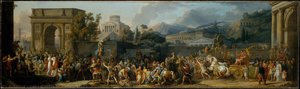
Carle Vernet, as he’s often known, was a pivotal figure in 19th-century French art – a painter who seamlessly blended the dynamism of battle scenes with the captivating elegance of equestrian subjects. Born in Bordeaux in 1758, into an artistic lineage stretching back to his father, Claude Joseph Vernet, Carle’s early life foreshadowed his future career. From the age of five, he displayed an extraordinary aptitude for drawing horses, a passion nurtured through rigorous academic training alongside Nicolas-Bernard Lépicié, yet ultimately leading him away from the traditional path laid out for him. A surprising turn occurred when he won the prestigious Prix de Rome in 1782 – an achievement that initially seemed to propel him towards a conventional artistic career, but which was swiftly curtailed by his father’s intervention, preventing him from entering a monastery, a fate seemingly ordained by his success. This early experience shaped Carle's approach; he deliberately broke with established conventions, drawing inspiration directly from the stables and riding schools where he observed horses in their natural environment – a radical departure from the idealized representations prevalent at the time. His most celebrated works, such as *Triumph of Aemilius Paulus*, showcased this innovative technique, capturing the raw power and movement of equine subjects with unprecedented realism. The revolution profoundly impacted his life; his sister’s execution cast a long shadow, leading him to abandon art for a period before returning to the profession under the French Directory. This later phase saw a dramatic shift in his style, fueled by his service to Napoleon Bonaparte.The Napoleonic Years: Painting Victory and Glory
Carle Vernet’s artistic trajectory took an extraordinary turn during the Napoleonic era. Recognizing the power of visual propaganda, Napoleon commissioned him to document his military campaigns with a series of meticulously detailed drawings. These weren't mere illustrations; they were strategic tools designed to glorify the Emperor and bolster morale. Works like *The Battle of Marengo* (1804), now housed at Versailles, stand as testaments to this period – vast canvases teeming with soldiers, cavalry charges, and the chaos of battle rendered with remarkable precision and dramatic intensity. He captured not just the events themselves but also the atmosphere of victory, imbuing his scenes with a palpable sense of heroism and triumph. The acclaim he received for these works, including the Legion of Honour bestowed by Napoleon himself, cemented his position as a court painter and a key propagandist for the regime.Beyond the Battlefield: A Master of Equestrian Art
While his early work was dominated by military subjects, Carle Vernet’s artistic interests broadened significantly in the decades following the fall of Napoleon. He developed an unparalleled expertise in depicting horses – not just as instruments of war but as symbols of grace, power, and elegance. His hunting scenes, races, and depictions of various breeds showcased a deep understanding of equine anatomy, movement, and temperament. He wasn’t simply painting horses; he was capturing their essence, conveying their spirit through subtle gestures and nuanced expressions. Critics at the time noted his unique approach, describing how he drew inspiration from the stables and riding schools rather than relying on traditional academic formulas – a testament to his observational skills and dedication to realism. His meticulous studies of horse breeds became highly sought after by wealthy patrons and breeders alike.Lithography and Fashion: A Dual Talent
Carle Vernet’s artistic versatility extended beyond painting. He was an early adopter of lithography, a technique that allowed him to reproduce his drawings on paper with remarkable clarity and detail. This medium proved particularly well-suited for capturing the fashionable trends of Parisian society. He produced a series of striking costume studies – *Incroyables et merveilleuses* (1797) – depicting elegantly dressed Parisians engaged in various social activities, offering a fascinating glimpse into the culture of the late 18th and early 19th centuries. These prints were immensely popular, establishing his reputation as both an artist and a keen observer of contemporary manners. His work reflected not only artistic skill but also a shrewd understanding of public taste.Legacy and Influence
Carle Vernet’s impact on the art world is undeniable. His innovative approach to depicting horses, particularly his focus on naturalism and movement, influenced generations of artists. His meticulous attention to detail and dramatic compositions set a new standard for battle scenes and sporting subjects. Even more significantly, he bridged the gap between classical artistic traditions and the burgeoning Romantic era, demonstrating a willingness to break with convention in pursuit of greater realism and emotional impact. His pupil, Théodore Géricault, famously trained in Vernet’s studio, inheriting and further developing many of the techniques that defined the artist's distinctive style. Carle Vernet died in Paris in 1836, leaving behind a rich legacy of paintings, drawings, and prints – a testament to his extraordinary talent and enduring influence on French art history.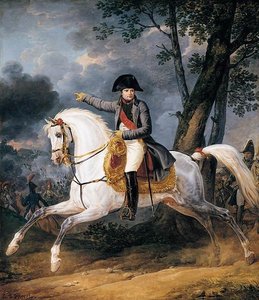
antoine charles horace vernet aka carle vernet
1758 - 1836 , France
Quick Facts
- Artistic Movement Or Style: Neoclassical, Battle scenes
- Artists Or Movements Influenced By This Artist: ['Horace Vernet']
- Artists Who Influenced This Artist: ['Claude Joseph Vernet']
- Date Of Birth: August 14, 1758
- Date Of Death: November 27, 1836
- Full Name: Antoine Charles Horace Vernet
- Nationality: French
- Notable Artworks:
- Triumph of Aemilius Paulus
- Battle of Marengo
- Return from the Hunt
- Place Of Birth: Bordeaux, France
Related Articles
John Frederick Herring Sr.: Equestrian Mastery & the Rise of Sporting Art in Victorian England
Explore the life & work of John Frederick Herring Sr., a leading Victorian equestrian artist. Discover his masterpieces, patronage, techniques & investment potential. Expert insights for collectors.
The Refined Aesthetic of Victorian Illustration: A Study in Narrative & Technique
Explore the captivating world of Victorian illustration! Discover Pre-Raphaelite influences, key artists like Rossetti & Stephens, and the era's rich narrative detail. A deep dive for art enthusiasts.
Antoine Blanchard (Marcel Masson): Parisian Abstraction & the Legacy of Automatism
Explore the captivating world of Antoine Blanchard (Marcel Masson) and his nostalgic Parisian scenes. Discover his artistic influences, unique style, and the challenges of authentication. Expert insights & art appraisal information.
Jean-Georges Béraud: Capturing Parisian Life in the Belle Époque
Explore the captivating world of Jean-Georges Béraud, master painter of Belle Époque Paris. Discover his iconic scenes, artistic evolution, and social commentary. A deep dive into 19th-century French art.
Charles Le Brun: Master of French Baroque Classicism & His Enduring Legacy
Explore the life & art of Charles Le Brun, master of French Baroque Classicism. Discover his royal commissions, influence on Versailles, and enduring legacy through detailed analysis & stunning artworks.