 Preview
 Send
Send Share
Share
 Details

 Download
 Similars
 X-Ray
X-Ray Diaporama
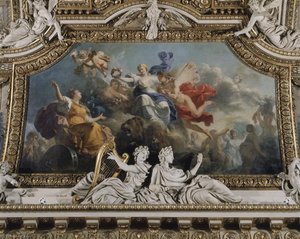
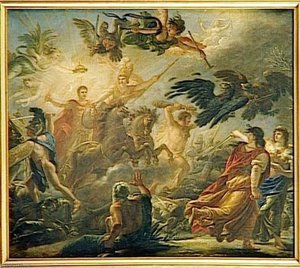
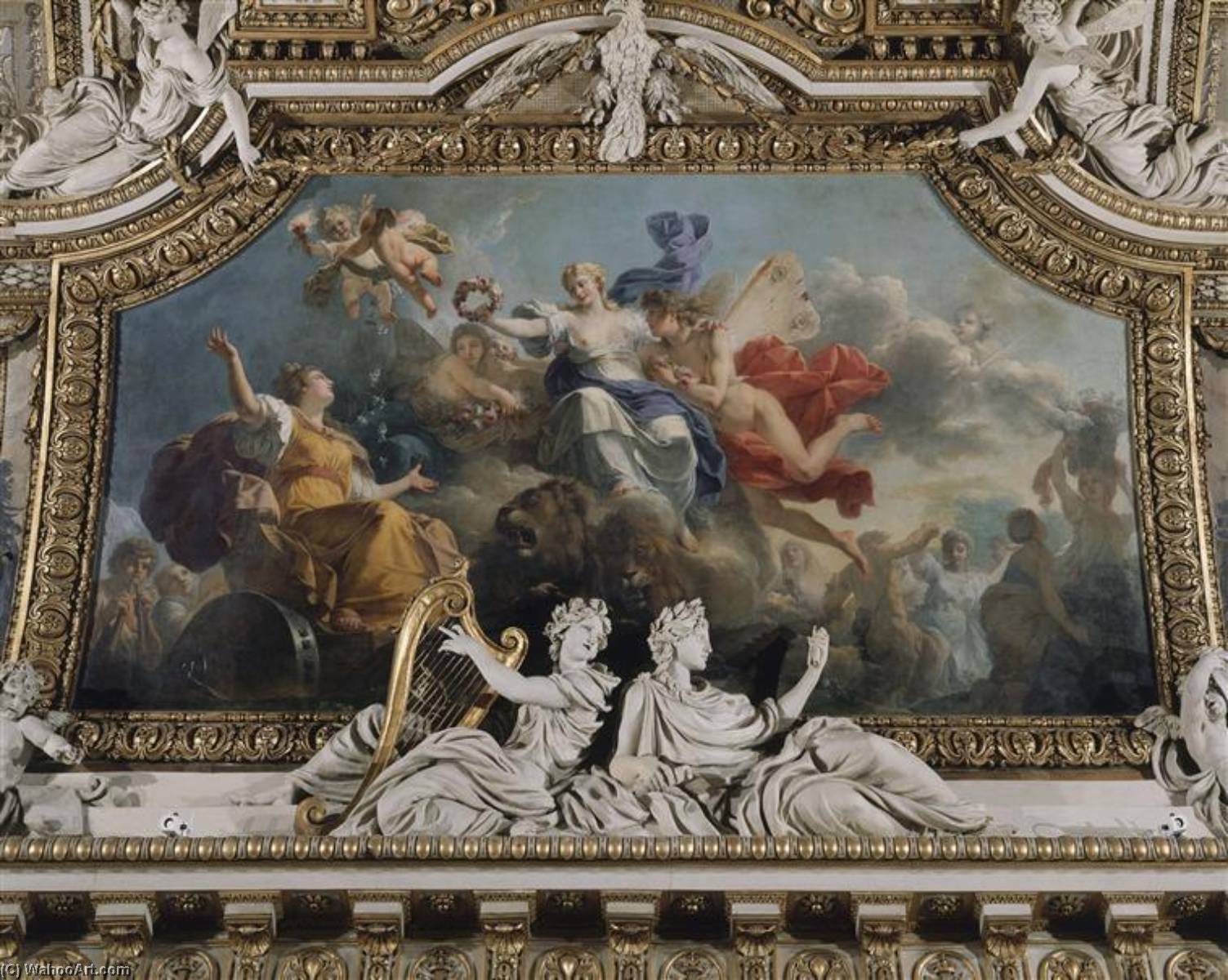
Le printemps ou Zéphyr et Flore couronnant de fleurs Cybèle


 Read More
Giclée / Art Print
Museum-quality giclée or canvas print with fast production and flexible finish options. ( Buy Hand Made Painting Buy Image)




P118B $10

P118H $10

P118W $10

P438Z $10

P508JH $12

P508YH $12

P805H $10

P805Z $10

P919BZ $10

P919G $10

P919XJ $10

P959ZH $10

P968JZ $12

W106C $8

W218G $10

W218JH $8

W218Y $10

W307PJ $10

W316G $10

W316PJ $8

W316Y $10

W398PJ $8

W4111J $10

W500HY $15

W500JH $15

W692G $12

W849H $8

W940BG $15

W953PJ $8




Pick from our preset sizes that match the artwork's original proportions.

You may enter your own dimensions to fit a specific frame or space. If your selected size does not match the original image's proportions, we will either crop the artwork or extend the image with a mirrored or solid-fill edge. A digital mockup will be sent for your approval before production begins.
Please note that the on-screen preview does not reflect the actual cropping or extension. Only the mockup will accurately show the final composition.
While custom sizes are available, we recommend selecting a dimension from the predefined list to preserve the original proportions.
Worldwide Delivery () in 2 weeks instead of standard 4/5 weeks. (30 August)

Free Worldwide Express Shipping

High-Quality Linen Canvas

Full Shipping Insurance

Customs Tax Refund Guarantee

True Color Matching Guarantee

60-Day Return Policy (Defects Only)

100% Money-Back Guarantee

Bulk Discount Offer
 Glass option is only available in size under 110 CM

Le printemps ou Zéphyr et Flore couronnant de fleurs Cybèle
Giclée / Art Print
Reproduction Size
-


Total Price
$ 63
A Symphony in Gold and Azure: Antoine Callet’s “Le Printemps”
Antoine François Callet's "Le Printemps ou Zéphire et Flore couronnant de fleurs Cybèle," painted around 1780-81, is more than just a decorative ceiling fresco; it’s a vibrant embodiment of the Rococo and Neoclassical ideals that defined late 18th-century French art. Housed within the grand Galerie d'Apollon at the Louvre Museum, this monumental work immediately commands attention with its sheer scale and opulent detail, transporting the viewer to a realm where mythology intertwines with the celebration of spring’s renewal. The painting isn’t merely a depiction of a mythological scene; it’s an orchestrated drama of light, color, and movement, meticulously crafted to evoke a sense of joyous abundance and divine grace.
A Mythological Tableau: Zephyr, Flore, and the Goddess Cybele
At the heart of Callet's composition lies a captivating narrative drawn from classical mythology. Zephyr, the west wind, and Flore, goddess of flowers, are depicted crowning Cybèle, the mother goddess of nature – a potent symbol of fertility, rebirth, and the cyclical rhythms of the seasons. The figures aren’t static; they swirl upwards in a dynamic vortex, suggesting an eternal dance of creation and growth. Surrounding this central group are numerous other allegorical figures: nymphs frolicking amidst blossoming trees, musicians playing instruments, and attendants bearing offerings – all contributing to the painting's rich tapestry of symbolism. The inclusion of musical instruments, particularly the lyre, subtly references Apollo, god of music and light, further enriching the work’s thematic complexity.
Technique and Style: Rococo Flourishes in a Neoclassical Frame
Callet masterfully employs the techniques characteristic of both Rococo and Neoclassical styles. The painting is executed in oil on canvas, utilizing broad brushstrokes to create a sense of movement and dynamism. The drapery of the figures is rendered with exquisite detail, showcasing Callet’s skill in capturing the fluidity and weight of fabric. However, beneath this seemingly effortless grace lies a carefully constructed composition—a hallmark of Neoclassical design. The architectural framework, gilded with elaborate ornamentation, provides a strong geometric structure that anchors the swirling figures and directs the viewer's eye across the scene. The use of color is particularly noteworthy: rich blues and golds dominate the palette, creating a sense of luxury and grandeur, while subtle flesh tones add warmth and humanity to the figures.
Symbolism and Emotional Resonance
"Le Printemps" is replete with symbolic meaning. The central act of crowning Cybèle represents the triumph of nature over winter’s dormancy—a potent metaphor for hope, prosperity, and the promise of new beginnings. Zephyr and Flore embody the vital forces of spring, while the surrounding figures represent various aspects of human experience – music, dance, offering, and celebration. Beyond its mythological subject matter, the painting evokes a powerful emotional response. The sheer scale of the work, combined with its vibrant colors and dynamic composition, creates a sense of awe and wonder. It’s an invitation to lose oneself in a world of beauty, abundance, and eternal renewal—a testament to Callet's ability to capture not just a scene, but also the very essence of springtime itself.
The painting’s legacy extends beyond its initial commission; it exemplifies the artistic ambitions of the era and remains a stunning example of French Rococo-Neoclassical art. Reproductions offer a chance to appreciate this masterpiece's intricate details and vibrant spirit, bringing a touch of timeless beauty into any space.
Related Artworks
Artist Biography
The Painter of Allegory and Imperial Splendor
Antoine François Callet, often known simply as Antoine Callet, remains a luminous figure in the grand tapestry of late 18th-century French art. His life and career unfolded against a backdrop of profound historical transformation, spanning the twilight of the Ancien Régime under Louis XVI and the rising sun of the Napoleonic era. Born in Paris in 1741, Callet emerged as a master of both the intimate portrait and the monumental allegory, a painter capable of capturing the delicate psychological nuances of a monarch while simultaneously orchestrating vast, celestial narratives across the ceilings of France's most prestigious palaces.
Callet’s journey toward artistic mastery was paved with the prestigious accolades of the French academic system. His talent was formally recognized when he won the grand prix de Rome in 1764 with his evocative work, Cléobis et Biton conduisent le char de leur mère au temple de Junon. This triumph granted him the invaluable opportunity to study in Italy, where the shadows of masters like Caravaggio and the dramatic architectural energy of Bernini left an indelible mark on his technique. It was during these formative years in Rome that Callet refined his use of chiaroscuro and learned to infuse classical themes with a sense of theatrical movement, a skill that would later define his most celebrated compositions.
A Master of Royal Portraiture and Grandeur
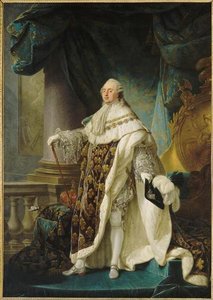
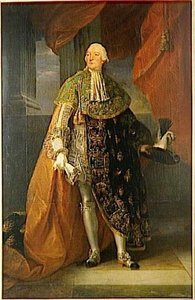
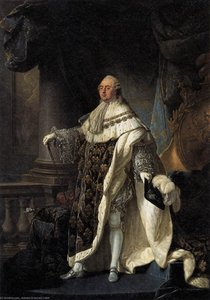
Upon his return to France, Callet ascended to the highest echelons of the art world, securing a position within the Académie Royale de peinture et de sculpture. His ability to blend the elegance of the Rococo style with the emerging discipline of Neoclassicism made him the preferred choice for the French nobility and royalty. Perhaps his most enduring legacy lies in his role as the official portraitist to Louis XVI. In works such as his 1779 portrait of the King, Callet did more than merely record a likeness; he constructed an icon of sovereignty. Through the meticulous rendering of ermine-lined robes and the strategic placement of the Fleur-de-lis, he utilized the language of symbolism to project stability and divine right during a period of mounting political tension.
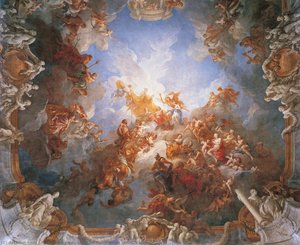
Beyond the individual portrait, Callet’s genius flourished in the realm of large-scale decorative painting. He possessed a rare ability to transform architectural spaces into immersive, mythological realms. His contributions to the Galerie d'Apollon at the Louvre, specifically his breathtaking ceiling fresco Le Printemps ou Zéphire et Flore couronnant de fleurs Cybèle, demonstrate his command over color and illusionistic perspective. In these works, the boundaries between the physical room and the painted heavens dissolve, inviting the viewer into a symphony of gold, azure, and eternal spring.
Legacy of an Era in Transition
The significance of Callet’s oeuvre extends far beyond mere decoration; his work serves as a visual chronicle of a world in flux. As France moved from the decadent splendor of the monarchy through the upheaval of the Revolution and into the imperial ambitions of Napoleon, Callet’s brush captured the shifting aesthetic values of the age. His ability to navigate between the Rococo's ornamental grace and the Neoclassical's structured nobility allowed him to remain relevant across decades of intense social change.
To study the works of Antoine François Callet is to witness the heartbeat of French history through paint and pigment. His achievements include:
- Academic Excellence: Winning the prestigious Prix de Rome, which established his foundation in classical antiquity.
- Royal Patronage: Serving as a primary visual architect for the identity of Louis XVI.
- Architectural Transformation: Creating monumental ceiling paintings that redefined the interior grandeur of French palaces like the Palais du Luxembourg.
- Stylistic Synthesis: Successfully bridging the gap between the emotive, flowing lines of the Rococo and the disciplined, heroic themes of Neoclassicism.
Today, Callet’s paintings stand as windows into a lost epoch of elegance, reminding us of a time when art was used to weave together the threads of myth, power, and human emotion into a single, magnificent tapestry.
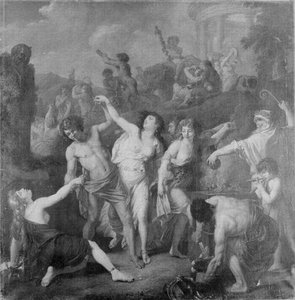
antoine françois callet
1741 - 1823 , France
Quick Facts
- Artistic Movement Or Style: Rococo Style
- Artists Or Movements Influenced By This Artist: ['Louis XVI']
- Artists Who Influenced This Artist: ['Jean-Baptiste Rousseau']
- Date Of Birth: Paris, France (1741)
- Date Of Death: 1823
- Full Name: Antoine François Callet
- Nationality: French
- Notable Artworks:
- L'aurore
- Allegorie du dix-huit brumaire
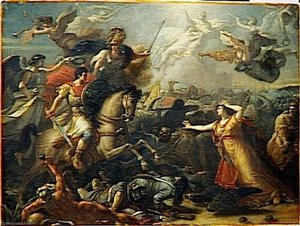
- Allegorie de la bataille d'Austerlitz
- Place Of Birth: Paris
Related Articles

Rococo's Radiant Legacy: 10 Masterpieces for Your Home |
Indulge in the elegance of Rococo! Explore 10 masterpieces by Fragonard, Boucher & Watteau. Discover the stories behind these iconic paintings and bring timeless art to your home with museum-quality reproductions from .

The Rococo Aesthetic: Opulence, Rebellion & the Pursuit of Pleasure in 18th-Century Art
Explore the opulent world of Rococo art! Discover its origins, key artists like Watteau & Boucher, and lasting influence on design. Expert insights for collectors & enthusiasts.
The Rococo Style: Aristocratic Leisure & the Pursuit of Delight in 18th-Century Art
Explore the opulent world of Rococo art! Discover Watteau, Boucher & Nattier's masterpieces. Expert insights for collectors seeking museum-quality reproductions and custom portraits at ArtsDot.

Echoes of Olympus: Mythological Narratives in Western Art Through the Ages
Explore the captivating history of mythological narratives in Western art! From ancient Greece to modern masterpieces, discover iconic artworks & symbolism. Expert analysis and high-quality reproductions at ArtsDot.
François Boucher: Rococo Master of Myth, Sensuality, and the French Court
Explore the captivating world of François Boucher, master of Rococo painting! Discover his iconic works, aristocratic patronage, and lasting influence on French art history. Learn more at ArtsDot.