 Preview
 Send
Send Share
Share
 Details

 Download
 Similars
 X-Ray
X-Ray Diaporama
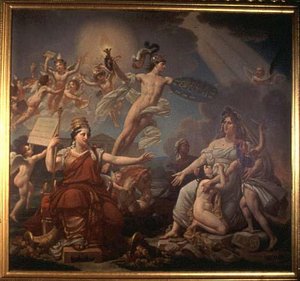
La véritable gloire s'appuie sur la vertu


 Read More
Giclée / Art Print
Museum-quality giclée or canvas print with fast production and flexible finish options. ( Buy Hand Made Painting Buy Image)




P118B $10

P118H $10

P118W $10

P438Z $10

P508JH $12

P508YH $12

P805H $10

P805Z $10

P919BZ $10

P919G $10

P919XJ $10

P959ZH $10

P968JZ $12

W106C $8

W218G $10

W218JH $8

W218Y $10

W307PJ $10

W316G $10

W316PJ $8

W316Y $10

W398PJ $8

W4111J $10

W500HY $15

W500JH $15

W692G $12

W849H $8

W940BG $15

W953PJ $8




Pick from our preset sizes that match the artwork's original proportions.

You may enter your own dimensions to fit a specific frame or space. If your selected size does not match the original image's proportions, we will either crop the artwork or extend the image with a mirrored or solid-fill edge. A digital mockup will be sent for your approval before production begins.
Please note that the on-screen preview does not reflect the actual cropping or extension. Only the mockup will accurately show the final composition.
While custom sizes are available, we recommend selecting a dimension from the predefined list to preserve the original proportions.
Worldwide Delivery () in 2 weeks instead of standard 4/5 weeks. (4 September)

Free Worldwide Express Shipping

High-Quality Linen Canvas

Full Shipping Insurance

Customs Tax Refund Guarantee

True Color Matching Guarantee

60-Day Return Policy (Defects Only)

100% Money-Back Guarantee

Bulk Discount Offer
 Glass option is only available in size under 110 CM

La véritable gloire s'appuie sur la vertu
Giclée / Art Print
Reproduction Size
-


Total Price
$ 63
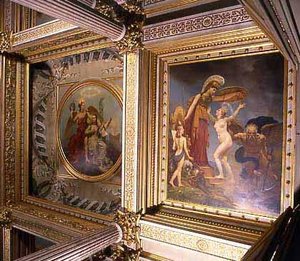
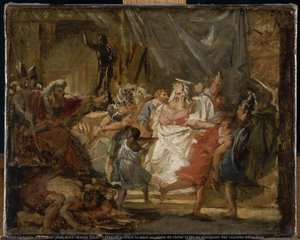
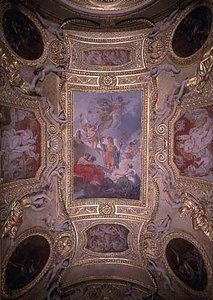
La véritable Gloire s'appuie sur la Vertu: Un Monument Néoclassique au Cœur du Louvre
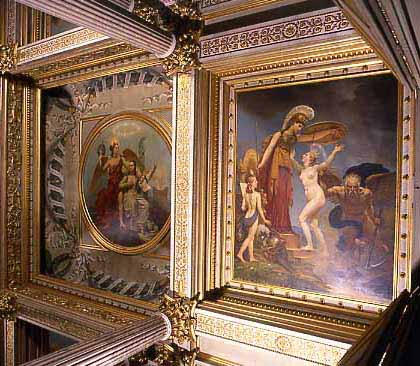
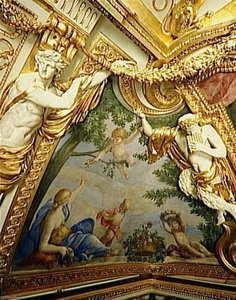
Antoine-Jean Gros’s “La véritable Gloire s’appuie sur la Vertu” stands as a cornerstone of Neoclassical painting and embodies the ideals of virtue and strength championed during Napoleon Bonaparte’s reign. Executed in 1827 for the Musée Charles X, this monumental ceiling fresco—one of six commissioned by Louis XVIII—immediately captivated audiences with its grandeur and dramatic narrative. Gros skillfully blended historical accuracy with allegorical symbolism to convey a powerful message about France's moral compass amidst turbulent political upheaval.- Historical Context: The painting emerged from the aftermath of the Napoleonic Wars, marking a return to conservative values following the revolutionary fervor of the preceding decades. Louis XVIII sought to restore stability and honor French heritage, commissioning Gros to commemorate Napoleon’s victory at Aboukir—a pivotal moment in securing Bonaparte's grip on power.
- Composition & Style: Gros employed a complex pyramidal composition, mirroring classical architectural principles. The central panel depicts Napoleon surveying the battlefield, flanked by figures representing Virtue and Glory—symbols of moral fortitude and triumphant achievement. The overall style is characterized by meticulous detail work, polished surfaces, and a restrained palette dominated by golds, reds, and browns, reflecting the aesthetic sensibilities of the era.
Technique & Materials: A Masterpiece of Fresco Painting
Gros’s masterful execution demonstrates the pinnacle of fresco technique—a method involving applying pigment directly onto wet plaster. This painstaking process demanded exceptional skill and patience from artisans working under Gros's direction, resulting in a surface finish that retains remarkable luminosity and textural richness over time. The use of gold leaf—applied to embellish the drapery and architectural elements—further enhances the fresco’s opulent appearance and underscores its symbolic significance as representing divine grace and imperial splendor.
- Color Palette: Gros utilized a carefully calibrated color scheme, prioritizing warm hues to evoke feelings of heroism and majesty. The dominant golds symbolize Napoleon's authority and the radiant glory of victory, while reds convey passion and courage—essential qualities for upholding moral virtue.
- Surface Texture: The fresco’s surface texture is remarkably smooth, achieved through meticulous polishing by skilled craftsmen. This technique ensures that the colors retain their vibrancy and brilliance across generations, preserving Gros's artistic vision for posterity.
Symbolism & Narrative Depth
Beyond its formal grandeur, “La véritable Gloire s’appuie sur la Vertu” is laden with symbolic references rooted in classical mythology and Christian morality. Virtue—represented by a winged figure ascending towards the throne—symbolizes moral excellence and unwavering devotion to duty—values championed by Louis XVIII's government. Glory—embodied by a warrior overseeing the battlefield—represents martial prowess and triumph over adversity, mirroring Napoleon’s military achievements. The painting serves as a potent reminder of France’s enduring commitment to noble ideals amidst political turmoil.
- Allegorical Figures: The winged figure symbolizes Virtue, while the warrior embodies Glory.
- Architectural Setting: The architectural setting reflects classical grandeur and reinforces the fresco's thematic concerns.
Emotional Impact & Legacy “La véritable Gloire s’appuie sur la Vertu” continues to inspire admiration for its artistic brilliance and profound moral message. Its monumental scale, meticulous detail work, and luminous color palette evoke feelings of awe and reverence—capturing the spirit of Neoclassical idealism. Gros's masterpiece stands as a testament to the enduring power of art to communicate complex ideas and elevate the human spirit—a legacy that resonates powerfully within the Louvre’s halls today.
Related Artworks
![[reproduction Of Napoleon On The Battlefield Of Eylau By Antoine-jean Gros] — Antoine-jean Gros, Romanticism](/media/artworks/images-thumb/71/d6/71d675b2075901060e862865eec8e2f4.jpg)
Artist Biography
The Dramatic Visions of Antoine-Jean Gros: Chronicler of an Empire
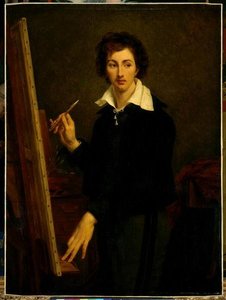
Antoine-Jean Gros, later Baron Gros, emerged as a defining voice in the transition from Neoclassical formality to the passionate fervor of Romanticism. Born in Paris in 1771, his artistic journey was inextricably linked with the tumultuous era he inhabited – the French Revolution and the rise and fall of Napoleon Bonaparte. Unlike many artists who sought refuge in idealized pasts, Gros found inspiration in the immediacy of contemporary events, becoming a master of historical painting that resonated with both political power and human drama. His early life offered little indication of the fame that awaited him; his father was a silk merchant, and while he received some initial artistic training, it wasn’t until he entered the studio of Jacques-Louis David in 1789 that his true potential began to unfold. This mentorship proved pivotal, instilling in Gros a rigorous academic foundation but also exposing him to the revolutionary spirit sweeping France.From Revolutionary Zeal to Napoleonic Glory
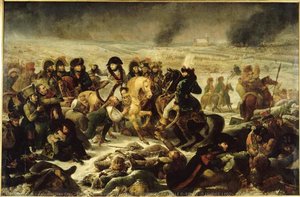
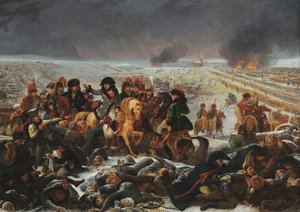
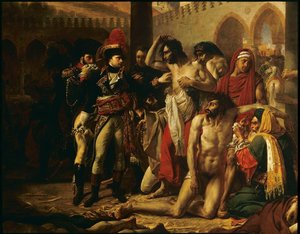
The early years of Gros’s career were marked by paintings reflecting the fervor of the Revolution. However, his trajectory shifted dramatically with Napoleon's ascent. Recognizing Gros’s talent for capturing spectacle and emotion, Napoleon became a crucial patron, commissioning works that served as powerful propaganda tools. “Napoleon Visiting the Plague-Stricken in Jaffa” (1804), perhaps his most iconic painting, exemplifies this period. It wasn't merely a depiction of an event; it was a carefully constructed image designed to portray Napoleon as a compassionate leader, fearlessly tending to his troops despite the horrors of war. The scene is imbued with a theatrical intensity – the dramatic lighting, the expressive gestures of both Napoleon and the suffering soldiers, and the overall sense of pathos all contribute to its emotional impact. This work broke from Neoclassical conventions by prioritizing feeling over idealized form, foreshadowing the Romantic movement’s emphasis on subjective experience. He continued this trend with monumental canvases like “Battle of Eylau” (1808), a stark and unflinching portrayal of the brutal realities of warfare, yet still framed within Napoleon's heroic narrative. These paintings weren’t simply historical records; they were carefully curated myths that solidified Napoleon’s image as a military genius and benevolent ruler.A Bridge Between Styles: Neoclassical Roots & Romantic Flourishes
Gros’s artistic style represents a fascinating synthesis of opposing forces. He inherited the meticulous draftsmanship, clarity of composition, and emphasis on anatomical accuracy from his teacher, David – hallmarks of Neoclassicism. However, he infused these qualities with a newfound dynamism, emotional intensity, and a willingness to embrace dramatic color palettes that distinguished him from his predecessor. His compositions often featured complex arrangements of figures, creating a sense of movement and chaos reminiscent of Baroque painting. Unlike the cool detachment favored by Neoclassical artists, Gros’s works are charged with emotion – grief, fear, courage, and despair are palpable in his depictions of battle scenes and portraits. He masterfully employed chiaroscuro to heighten dramatic effect, drawing attention to key figures and creating a sense of depth and atmosphere. This blending of styles allowed him to create paintings that were both visually compelling and emotionally resonant, appealing to a broad audience while simultaneously pushing the boundaries of artistic convention.Later Years & Lasting Legacy
Following Napoleon’s downfall, Gros struggled to adapt to the changing political landscape. The restored Bourbon monarchy offered less patronage, and his attempts to return to more traditional historical subjects met with limited success. He became a professor at the École des Beaux-Arts in 1809, but found teaching frustrating. A growing disillusionment with the glorification of war and a personal tragedy – the loss of his wife in 1832 – contributed to a period of depression. In 1835, Gros tragically drowned while painting a portrait on the banks of the Seine River. Despite this somber end, his legacy remains secure. He paved the way for Romantic painters like Eugène Delacroix and Théodore Géricault, inspiring them to embrace emotional intensity and contemporary subject matter.- His influence can be seen in their shared interest in dramatic compositions, expressive brushwork, and a willingness to challenge academic conventions.
- Gros’s paintings continue to captivate audiences with their powerful depictions of historical events and human emotion.
- He stands as a pivotal figure in the transition from Neoclassicism to Romanticism, bridging the gap between two distinct artistic movements.
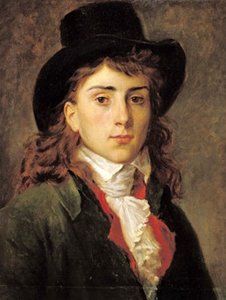
antoine-jean gros (baron gros)
1771 - 1835
Quick Facts
- Artistic Movement Or Style: Romanticism
- Artists Who Influenced This Artist: ['Jacques-Louis David']
- Date Of Birth: 1771
- Date Of Death: 1835
- Full Name: Antoine-Jean Gros
- Nationality: French
- Notable Artworks: ['Napoleon Visiting the Plague-Stricken in Jaffa']
- Place Of Birth: Paris, France
Related Articles

Baroque Drama: Bringing Opulence & Emotion into Contemporary Interiors
Explore the opulent world of Baroque interior design! Discover key elements, modern applications & how to bring dramatic elegance into your home with 's authentic reproductions.

The Dramatic Flourish: Exploring the Baroque Movement's Enduring Legacy in Art History
Explore the dramatic world of Baroque art! Discover iconic artists like Caravaggio & Rubens, defining techniques, and its lasting impact on art history. Expert insights for collectors & enthusiasts at ArtsDot.

Baroque Masterpieces: 10 Paintings That Defined an Era |
Journey through the drama & grandeur of Baroque art! Explore 10 masterpieces by Caravaggio, Rembrandt, Rubens & more. Discover stunning oil paintings, rich colors & timeless stories. Find museum-quality reproductions at .

The Visceral Stage: Exploring Dramatic Narratives & Emotional Intensity in Baroque Art
Explore the dramatic world of Baroque art! Discover iconic masters like Caravaggio & Rembrandt, their techniques, and the movement's lasting impact. Expert insights for collectors & enthusiasts at ArtsDot.
Decoding Baroque Grandeur: A Guide to the Drama and Emotion of 17th-Century Art
Explore the breathtaking drama of 17th-century Baroque art. Our expert guide decodes the use of chiaroscuro, emotional intensity, and historical grandeur to help you appreciate and curate timeless masterpieces for your collection.