 Preview
 Send
Send Share
Share
 Details

 Download
 Similars
 X-Ray
X-Ray Diaporama
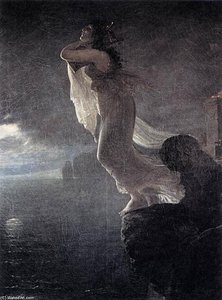
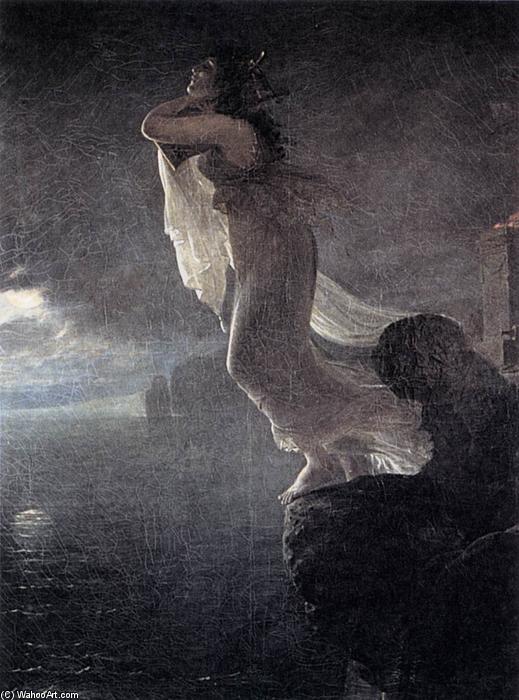
Sappho at Leucate
 Acrylic On Canvas
- WallArt
- Romanticism
 1801
1801 122.0 x 100.0 cm
 Musée Baron Gérard
 Read More
Hand Made Oil Reproduction
Hand-painted oil on canvas in your size and frame, made to order by our artists. ( Buy Print Buy Image)




P118B $10

P118H $10

P118W $10

P438Z $10

P508JH $12

P508YH $12

P805H $10

P805Z $10

P919BZ $10

P919G $10

P919XJ $10

P959ZH $10

P968JZ $12

W106C $8

W218G $10

W218JH $8

W218Y $10

W307PJ $10

W316G $10

W316PJ $8

W316Y $10

W398PJ $8

W4111J $10

W500HY $15

W500JH $15

W692G $12

W849H $8

W940BG $15

W953PJ $8




Pick from our preset sizes that match the artwork's original proportions.

You may enter your own dimensions to fit a specific frame or space. If your selected size does not match the original image's proportions, we will either crop the artwork or extend the painting with additional hand-painted elements. A digital mockup will be sent for your approval before production begins.
Please note that the on-screen preview does not reflect the actual cropping or extension. Only the mockup will accurately show the final composition.
While custom sizes are available, we recommend selecting a dimension from the predefined list to preserve the original proportions.
After order, ArtsDot.com team will email client for instructions and provide a mockup preview
Worldwide Delivery () in 3/4 weeks instead of standard 5 weeks. (17 August). No compromise on quality.

Free Worldwide Express Shipping

High-Quality Linen Canvas

Full Shipping Insurance

Customs Tax Refund Guarantee

True Color Matching Guarantee

60-Day Return Policy (Defects Only)

100% Money-Back Guarantee

Bulk Discount Offer
 Glass option is only available in size under 110 CM

Sappho at Leucate
Reproduction Medium
Reproduction Size
-


Total Price
$ 263
Artwork Description
Sappho at Leucate – A Romantic Echo of Tragedy
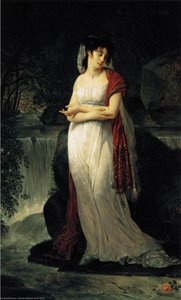
Antoine-Jean Gros’s “Sappho at Leucate” (1801) stands as a pivotal work bridging the gap between Neoclassicism and Romanticism, capturing not merely a historical event but also the profound emotional landscape of its time. More than just a depiction of Sappho's suicide – though that narrative is undeniably central – it’s an exploration of despair, isolation, and the sublime beauty born from suffering, rendered with masterful technique and imbued with symbolic resonance.Composition and Dramatic Lighting
The painting’s vertical orientation immediately establishes a sense of solemn grandeur. Gros centers his gaze on Sappho herself, positioned in profile against a turbulent sea under a moonlit sky. This deliberate framing emphasizes her solitude—a woman facing away from the viewer—creating an atmosphere of mystery and introspection that is characteristic of Romantic sensibilities. The rocky outcrop serves as both a physical barrier and a visual anchor, grounding Sappho’s figure within the vastness of nature. Crucially, Gros employs dramatic chiaroscuro lighting; rays of moonlight illuminate Sappho's form while plunging the surrounding landscape into deep shadow. This technique amplifies the emotional intensity of the scene, mirroring Sappho’s internal turmoil and conveying a palpable sense of drama—a hallmark of Romantic artistic expression.Technique and Artistic Influences
Gros’s brushwork is notable for its blending and layering, reflecting his training under Jacques-Louis David – the undisputed champion of Neoclassicism. However, Gros departs from David's rigid formalism by prioritizing emotional impact over precise representation. The artist meticulously renders textures—the roughness of the rocks, the fluidity of the sea spray, the delicate folds of Sappho’s drapery—creating a richly detailed surface that invites contemplation. Gros skillfully utilizes atmospheric perspective to convey depth and heighten the sense of drama, subtly diminishing colors in the distance to emphasize the foreground's immediacy.Mythological Narrative and Symbolic Significance
The painting draws upon Greek mythology, referencing Sappho’s legendary suicide attempt following rejection by Phaon—a tale exploring themes of unattainable desire and devastating loss. Sappho herself holds a translucent veil, symbolizing vulnerability and fragility against the overwhelming force of nature. The altar behind her represents piety and remembrance, hinting at the poet's contemplation of mortality. Gros’s deliberate choice to portray Sappho in ecstasy – illuminated by moonlight – underscores the Romantic preoccupation with heightened emotion and spiritual experience.Legacy and Reproduction
“Sappho at Leucate” achieved considerable renown upon its debut at the Salon of 1801, largely thanks to reproductions disseminated through prints—particularly engravings by Jean-Nicolas Laugier and a lithograph by Mme. Renaudin. These prints ensured that Gros’s masterpiece reached a wider audience, solidifying its place in art history. Furthermore, Honoré Daumier adopted Gros's composition for his lithograph “La mort de Sappho,” subtly altering the scene with a playful Cupid figure—a testament to the painting’s enduring influence and its ability to inspire artistic reinterpretations across generations. A high-quality reproduction of this evocative artwork offers an opportunity to experience Gros’s masterful technique and delve into the profound emotional depths of Romantic art.Related Artworks
Artist Biography
A Brush with Empire: The Life and Art of Antoine-Jean Gros
Antoine-Jean Gros, a name resonating with the grandeur and turbulence of Napoleonic France, occupies a fascinating space in art history—poised between the cool rationality of Neoclassicism and the burgeoning emotional intensity of Romanticism. Born in Paris in 1771, his artistic destiny seemed preordained. Both parents were practitioners of the visual arts; his mother, Pierrette-Madeleine-Cécile Durand, a skilled pastel artist, and his father, Jean-Antoine Gros, a meticulous miniature painter and avid collector. This familial immersion instilled within young Antoine an early appreciation for form, color, and the power of artistic expression. He began drawing at the tender age of six, demonstrating a natural aptitude that would soon lead him to the studio of Jacques-Louis David in 1785—a pivotal moment shaping his future trajectory. David, the leading Neoclassical painter of the era, instilled discipline and a reverence for classical ideals, yet Gros possessed an inherent temperament that yearned for something beyond rigid adherence to established norms.From Revolutionary Turmoil to Napoleonic Glory
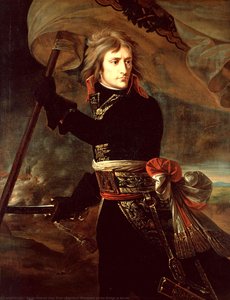
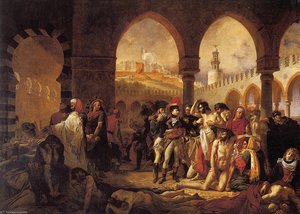
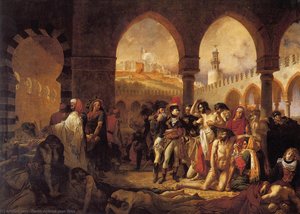
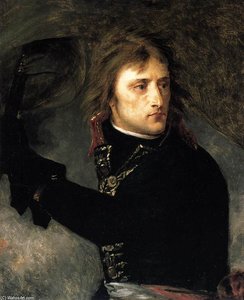
The French Revolution cast a long shadow over Gros’s formative years, disrupting his early artistic pursuits. He briefly left France in 1793, seeking refuge and opportunity in Italy, where he honed his skills through portraiture. However, it was a chance encounter with the rising star of Napoleon Bonaparte that irrevocably altered his career path. In 1796, Gros secured a commission to paint Napoleon at the Battle of Arcole—a work that catapulted him to fame and earned the coveted patronage of the ambitious general. This marked the beginning of an extraordinarily fruitful relationship; Gros became Napoleon’s preferred painter, tasked with immortalizing his triumphs on canvas. He accompanied Bonaparte on campaigns, capturing scenes of military prowess and strategic brilliance. Works like *Bonaparte Visiting the Plague Victims of Jaffa* (1804) – though controversial for its romanticized depiction of a grim reality – showcased Gros's ability to blend historical accuracy with dramatic flair. These paintings weren’t merely records of events; they were carefully constructed narratives designed to enhance Napoleon’s image and solidify his power, establishing Gros as a master of propaganda through art. He was appointed painter to Napoleon in 1806 and later granted the title of Baron in 1824, solidifying his position within the imperial hierarchy.Bridging Styles: Neoclassicism Infused with Romantic Fire
Gros’s artistic style is often described as a bridge between Neoclassicism and Romanticism. While he initially adhered to David's emphasis on precise draftsmanship, clarity of form, and classical subject matter—evident in early works like *The Combat of Nazareth* (an esquisse that won the Prix de Rome)—he gradually infused his paintings with a heightened sense of drama, emotion, and color. He moved away from the cool detachment of Neoclassicism towards a more passionate and expressive approach. This is particularly noticeable in his battle scenes, where he depicted not just the glory of victory but also the suffering and chaos of war. The influence of Venetian masters like Titian and Veronese, with their rich color palettes and dynamic compositions, became increasingly apparent. His portraits, such as *Equestrian Portrait of Prince Boris Yusupov*, demonstrate a remarkable ability to capture both physical likeness and psychological depth. He wasn’t simply painting faces; he was revealing character. This stylistic evolution would profoundly influence subsequent generations of French painters, including Eugène Delacroix and Théodore Géricault, who embraced the emotional intensity and dramatic flair that Gros pioneered.Later Years and Enduring Legacy
Following Napoleon’s downfall, Gros faced a period of artistic uncertainty. The shift in political climate demanded a change in subject matter, and he struggled to adapt. He attempted a return to more traditional historical painting and classical themes, but his heart seemed no longer fully engaged. His atelier became a hub for artistic innovation, attracting aspiring painters eager to learn from his experience. However, plagued by self-doubt and depression, Gros found it increasingly difficult to recapture the acclaim he had enjoyed during the Napoleonic era. He felt caught between the fading ideals of Neoclassicism and the rising tide of Romanticism, unable to fully embrace either movement. In a tragic turn, Antoine-Jean Gros took his own life in 1835, leaving behind a legacy that continues to captivate and inspire. His paintings remain powerful testaments to an era of upheaval and transformation, offering a unique glimpse into the complexities of human ambition, glory, and loss. He left an indelible mark on French art, paving the way for the Romantic movement and influencing countless artists who followed in his footsteps. His work serves as a reminder that even within the constraints of historical commission and political patronage, true artistic vision can flourish and leave an enduring impact on the world.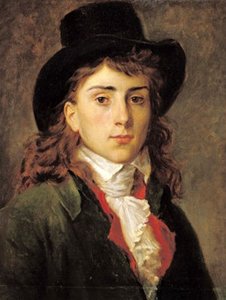
Antoine-Jean Gros
1771 - 1835 , France
Quick Facts
- Artistic Movement Or Style: Neoclassicism & Romanticism
- Artists Or Movements Influenced By This Artist:
- Delacroix
- Géricault
- Artists Who Influenced This Artist: ['Jacques-Louis David']
- Date Of Birth: 1771
- Date Of Death: 1835
- Full Name: Antoine-Jean Gros
- Nationality: French
- Notable Artworks:
- Battle of Arcole
- Sappho à Leucate
- Equestrian Portrait
- Entrevue d'Austerlitz
- Place Of Birth: Paris, France
Related Articles
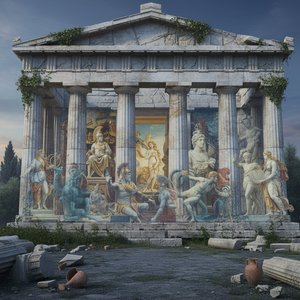
Echoes of Olympus: Mythological Narratives in Western Art Through the Ages
Explore the captivating history of mythological narratives in Western art! From ancient Greece to modern masterpieces, discover iconic artworks & symbolism. Expert analysis and high-quality reproductions at ArtsDot.
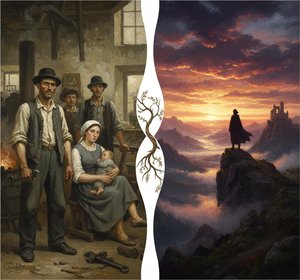
Romantic Realism's Finest: 10 Masterpieces for Your Home | ArtsDot
Explore 10 defining masterpieces of Romantic Realism! Discover Courbet, Millet & Daumier's powerful paintings—capturing emotion and social realities. Find museum-quality reproductions for your home at ArtsDot.com.

Romantic Landscapes: 10 Masterpieces for Your Home | ArtsDot
Journey through 10 Romantic landscape masterpieces by Friedrich, Turner & Cole. Explore emotional art, sublime nature scenes & iconic 19th-century paintings. Find museum-quality reproductions for your home at ArtsDot.com – discover the full collection online!
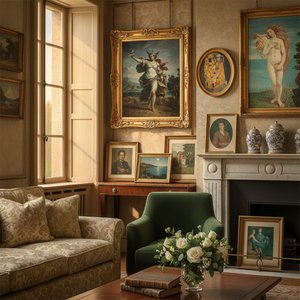
Romantic Masterpieces: 10 Artworks for a Timeless Home Decor Aesthetic
Fall in love with art! Explore 10 iconic romantic paintings – from Monet & Bouguereau to Fragonard. Discover the stories behind these masterpieces and find museum-quality reproductions for your home decor at .
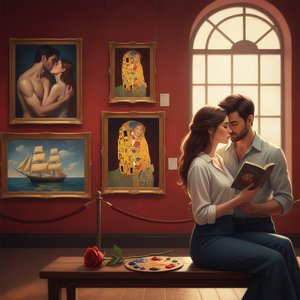
Romantic Masterpieces: 10 Artworks to Stir Your Soul |
Fall in love with art! Explore 10 iconic romantic paintings – from Renaissance classics to Impressionist masterpieces. Discover the stories behind artists like Monet & Klimt, and find museum-quality reproductions for your home at .
![[Reproduction of Napoleon on the Battlefield of Eylau by Antoine-Jean Gros]](/media/artworks/images/thumbnails/21/5f/215f5a2e7799405c843b06696f167189.jpg)