 Preview
 Send
Send Share
Share
 Details

 Download
 Similars
 X-Ray
X-Ray Diaporama
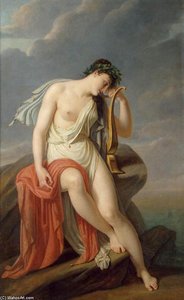
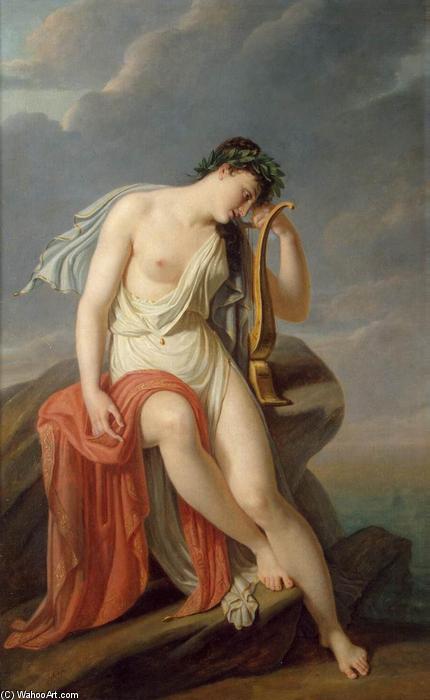
Sappho on the Leucadian Cliff
 Oil On Canvas
- WallArt
- Neoclassical Revival
 1800
1800- 19th Century
 188.0 x 114.0 cm
 Hermitage Museum
 Read More
Hand Made Oil Reproduction
Hand-painted oil on canvas in your size and frame, made to order by our artists. ( Buy Print Buy Image)




P118B $10

P118H $10

P118W $10

P438Z $10

P508JH $12

P508YH $12

P805H $10

P805Z $10

P919BZ $10

P919G $10

P919XJ $10

P959ZH $10

P968JZ $12

W106C $8

W218G $10

W218JH $8

W218Y $10

W307PJ $10

W316G $10

W316PJ $8

W316Y $10

W398PJ $8

W4111J $10

W500HY $15

W500JH $15

W692G $12

W849H $8

W940BG $15

W953PJ $8




Pick from our preset sizes that match the artwork's original proportions.

You may enter your own dimensions to fit a specific frame or space. If your selected size does not match the original image's proportions, we will either crop the artwork or extend the painting with additional hand-painted elements. A digital mockup will be sent for your approval before production begins.
Please note that the on-screen preview does not reflect the actual cropping or extension. Only the mockup will accurately show the final composition.
While custom sizes are available, we recommend selecting a dimension from the predefined list to preserve the original proportions.
After order, ArtsDot.com team will email client for instructions and provide a mockup preview
Worldwide Delivery () in 3/4 weeks instead of standard 5 weeks. (16 August). No compromise on quality.

Free Worldwide Express Shipping

High-Quality Linen Canvas

Full Shipping Insurance

Customs Tax Refund Guarantee

True Color Matching Guarantee

60-Day Return Policy (Defects Only)

100% Money-Back Guarantee

Bulk Discount Offer
 Glass option is only available in size under 110 CM

Sappho on the Leucadian Cliff
Reproduction Medium
Reproduction Size
-


Total Price
$ 263
Artwork Description
Sappho on the Leucadian Cliff: A Neoclassical Echo of Mythological Despair
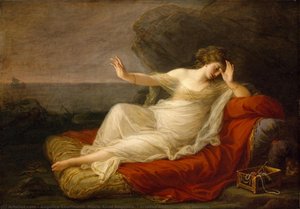
The painting Sappho on the Leucadian Cliff by Pierre Narcisse Guérin stands as a testament to the enduring fascination with classical mythology and the stylistic prowess of the neoclassical movement. Created in 1800, this monumental oil on canvas – measuring 188 x 114 cm – resides within the prestigious Hermitage Museum in St. Petersburg, Russia, offering visitors an unparalleled glimpse into artistic excellence of its time. Guérin’s oeuvre exemplifies a harmonious blend of Romantic fervor and classical restraint, securing his place amongst the foremost painters of the era.The Artist and His Influences: Jean-Baptiste Regnault's Legacy
Pierre Narcisse Guérin’s artistic journey began under the tutelage of Jean-Baptiste Regnault, arguably the most celebrated painter of his generation. Regnault’s influence profoundly shaped Guérin’s stylistic sensibilities, fostering a dedication to idealized forms and dramatic compositions—characteristics that would define Guérin's distinctive oeuvre. Furthermore, Guérin served as a guide for influential artists like Eugène Delacroix and Théodore Géricault, cementing his role as a pivotal figure in disseminating classical ideals within the burgeoning Romantic landscape.A Mythological Narrative Captured in Paint
The painting depicts Sappho, the legendary Greek poetess famed for her lyrical verses celebrating female love and desire. According to myth, Sappho tragically leaped from the Leucadian cliff – overlooking the Aegean Sea – following rejection by Apollo or a mortal lover. Guérin skillfully portrays this pivotal moment of despair, capturing not merely an event but also the profound emotional turmoil experienced by the subject. The artist’s meticulous attention to detail—particularly in rendering the rocky outcrop and turbulent sky—creates a palpable sense of drama and immediacy.Neoclassical Technique: Harmony and Depth Through Light
Guérin's masterful technique embodies the core principles of neoclassical art. He employs chiaroscuro – dramatic contrasts between light and shadow – to sculpt volumes, emphasizing the physicality of Sappho’s form and conveying the emotional intensity of her predicament. The artist utilizes a muted palette dominated by earthy tones—ochre, umber, and Sienna—harmoniously blending with cooler shades of blue and grey to depict the sea and sky. These subtle color choices contribute significantly to the painting's overall atmosphere, fostering a feeling of contemplative solemnity.Symbolism Beyond Representation: The Leucadian Cliff as Metaphor
The Leucadian cliff itself serves as more than just a scenic backdrop; it functions as a potent symbol representing Sappho’s precipice – both literal and metaphorical – before her fateful act. The cliff embodies vulnerability, isolation, and the inescapable confrontation with mortality—themes central to classical mythology and resonating powerfully within the painting's narrative. Guérin’s deliberate positioning of Sappho against this dramatic landscape underscores the universality of human experience: confronting despair and accepting inevitable loss are experiences that transcend time and culture.Conclusion: A Masterpiece of Neoclassical Elegance
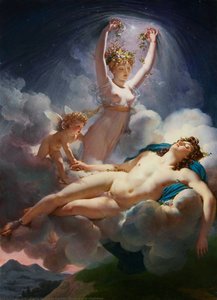
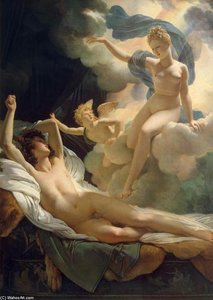
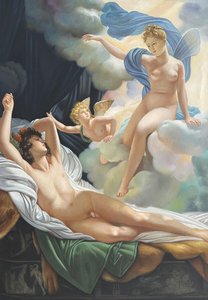
Sappho on the Leucadian Cliff by Pierre Narcisse Guérin remains an enduring symbol of neoclassical artistic achievement. Its meticulous execution, evocative composition, and profound exploration of mythological themes solidify its place as a cornerstone of European art history. For those seeking to appreciate this iconic artwork in detail, we invite you to explore ArtsDot.com and delve deeper into the artist’s life and legacy—and don't forget to visit Wikipedia for further scholarly insights! To discover more paintings by Guérin, including Morpheus and Iris and The artist's daughter, explore the Hermitage Museum’s collection on ArtsDot.com.Related Artworks
Artist Biography
The Bridge Between Eras: The Life and Legacy of Pierre Narcisse Guérin
In the grand tapestry of French art history, few figures embody the delicate transition from the disciplined rigor of Neoclassicism to the turbulent passion of Romanticism as gracefully as Pierre Narcisse Guérin. Born in Paris in 1774, Guérin emerged during a period of profound societal transformation, where the echoes of the French Revolution still reverberated through the halls of the Academy. A student of the esteemed Jean-Baptiste Regnault, Guérin’s early career was marked by immediate distinction; in 1796, he secured one of the prestigious grands prix, a victory that signaled his arrival as a formidable talent capable of reviving the competitive spirit of the French art world after years of revolutionary hiatus.
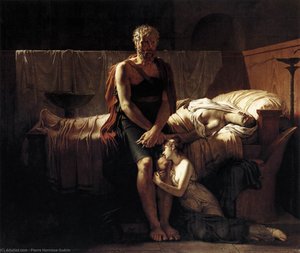
Guérin’s ascent to fame was not merely a matter of technical proficiency but of emotional resonance. When he unveiled The Return of Marcus Sextus at the Salon of 1799, the impact was nothing short of electric. The painting, which depicted a Roman veteran returning to a home devastated by death and political upheaval, served as a poignant allegory for the contemporary French experience. Through this work, Guérin demonstrated an uncanny ability to weave historical narrative with the raw, personal grief of his subjects, effectively using the classical past to mirror the chaotic present. This mastery of drama would become his hallmark, earning him public acclaim and leading to further studies in Rome under Joseph-Benoît Suvée.
A Journey Through Light and Myth
The trajectory of Guérin’s life was shaped by both artistic ambition and physical frailty. His time in Rome, while intellectually enriching, was cut short by ill health, prompting a relocation to Naples. It was here that his palette began to expand, embracing the atmospheric grandeur of landscapes as seen in his commemorative work for the tomb of Amyntas. This period of wandering allowed him to infuse his Neoclassical foundations with a new sense of light and shadow, a precursor to the more expressive styles that would soon dominate Europe.
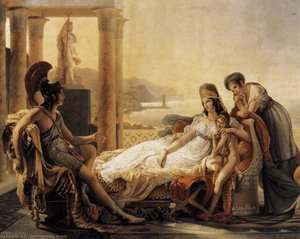
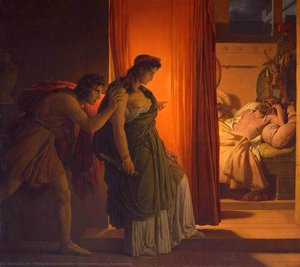
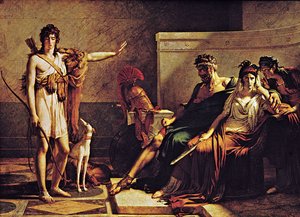
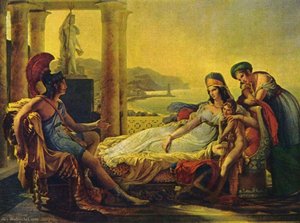
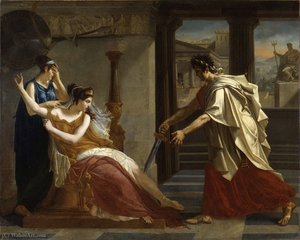
As he returned to Paris, Guérin’s repertoire grew to include some of the most captivating mythological and historical scenes of the early 19th century. His works often featured a luminous chiaroscuro that breathed life into divine figures, such as in the ethereal Morpheus and Iris. Whether depicting the tragic fate of Dido and Aeneas or the intense, heroic energy of Andromache and Pyrrhus, Guérin possessed a unique gift for imbuing mythological subjects with human vulnerability. His ability to balance the idealized beauty of the classical tradition with an emerging sense of psychological depth made him a favorite of the imperial court during the Napoleonic era.
The Master’s Influence and Artistic Significance
Beyond his individual canvases, Guérin’s historical significance lies in his role as a pivotal mentor and stylistic bridge. He stood at the crossroads of generations, providing a foundation upon which the giants of Romanticism could build. His influence can be traced through the works of legendary painters such as:
- Eugène Delacroix, who drew upon Guérin’s dramatic compositions and emotional intensity to pioneer the Romantic movement.
- Théodore Géricault, whose powerful depictions of human struggle echoed the narrative weight found in Guérin’s history paintings.
- Henry Scheffer, a talented pupil who carried forward the refined Neoclassical elegance taught by his master.
Ultimately, Pierre Narcisse Guérin was more than just a painter of beautiful scenes; he was an artist who understood the pulse of his era. Through his portraits, mythological allegories, and historical epics, he captured the tension between order and chaos, stability and change. His legacy remains etched in the halls of institutions like the Louvre and the Hermitage, serving as a testament to a man who could command the discipline of the old world while whispering the secrets of the new.
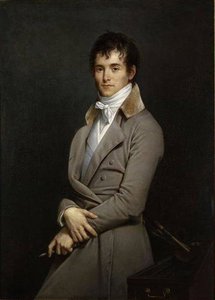
pierre narcisse guérin
1774 - 1833 , France
Quick Facts
- Artistic Movement Or Style: Neoclassical
- Artists Or Movements Influenced By This Artist:
- Delacroix
- Géricault
- Artists Who Influenced This Artist: ['Jean-Baptiste Regnault']
- Date Of Birth: Paris, France (1774)
- Date Of Death: 1833
- Full Name: Pierre Narcisse Guérin
- Nationality: French
- Notable Artworks:
- The Return of Marcus Sextus
- Morpheus and Iris
- Aurora and Cephalus
- Place Of Birth: Paris
Related Articles

Giclée Prints: Archival Quality & Aesthetic Nuances for the Discerning Collector
Explore the world of giclée prints with ArtsDot. Learn about archival quality, aesthetic nuances & investment potential. Expert guidance for discerning art collectors seeking museum-quality reproductions and lasting value.

Echoes of Time: Exploring the Enduring Appeal & Historical Context of Vintage Art Prints
Explore the captivating world of vintage art prints! Discover their history, collecting tips & enduring appeal. Expert insights on chromolithography and building a legacy collection with ArtsDot.

The Enduring Legacy of Fine Art Prints: Technique, History & Aesthetic Impact
Explore the rich history & techniques of fine art prints. Discover investment potential, assess authenticity, and learn how to preserve your collection with expert guidance. Trusted insights for discerning collectors.

The Enduring Legacy of Printmaking: Techniques, Themes & Artistic Innovation Across Centuries
Explore the rich history of printmaking with ArtsDot. Discover techniques from intaglio to lithography, learn about collecting valuable prints & find museum-quality reproductions. Expert insights for art enthusiasts and collectors.
Echoes of Olympus: Mythological Narratives in Western Art Through the Ages
Explore the captivating history of mythological narratives in Western art! From ancient Greece to modern masterpieces, discover iconic artworks & symbolism. Expert analysis and high-quality reproductions at ArtsDot.