 Preview
 Send
Send Share
Share
 Details

 Download
 Similars
 X-Ray
X-Ray Diaporama
Inverness
 Watercolor
- WallArt
- Modernism
 1937
1937- Modern
 28.0 x 39.0 cm
 National Museum of Contemporary Art - Museu do Chiado
 Read More
Hand Made Oil Reproduction
Hand-painted oil on canvas in your size and frame, made to order by our artists. ( Buy Print Buy Image)




P118B $10

P118H $10

P118W $10

P438Z $10

P508JH $12

P508YH $12

P805H $10

P805Z $10

P919BZ $10

P919G $10

P919XJ $10

P959ZH $10

P968JZ $12

W106C $8

W218G $10

W218JH $8

W218Y $10

W307PJ $10

W316G $10

W316PJ $8

W316Y $10

W398PJ $8

W4111J $10

W500HY $15

W500JH $15

W692G $12

W849H $8

W940BG $15

W953PJ $8




Pick from our preset sizes that match the artwork's original proportions.

You may enter your own dimensions to fit a specific frame or space. If your selected size does not match the original image's proportions, we will either crop the artwork or extend the painting with additional hand-painted elements. A digital mockup will be sent for your approval before production begins.
Please note that the on-screen preview does not reflect the actual cropping or extension. Only the mockup will accurately show the final composition.
While custom sizes are available, we recommend selecting a dimension from the predefined list to preserve the original proportions.
After order, ArtsDot.com team will email client for instructions and provide a mockup preview
Worldwide Delivery () in 3/4 weeks instead of standard 5 weeks. (16 August). No compromise on quality.

Free Worldwide Express Shipping

High-Quality Linen Canvas

Full Shipping Insurance

Customs Tax Refund Guarantee

True Color Matching Guarantee

60-Day Return Policy (Defects Only)

100% Money-Back Guarantee

Bulk Discount Offer
 Glass option is only available in size under 110 CM

Inverness
Reproduction Medium
Reproduction Size
-


Total Price
$ 263
Artwork Description
A Vision of Mist and Memory
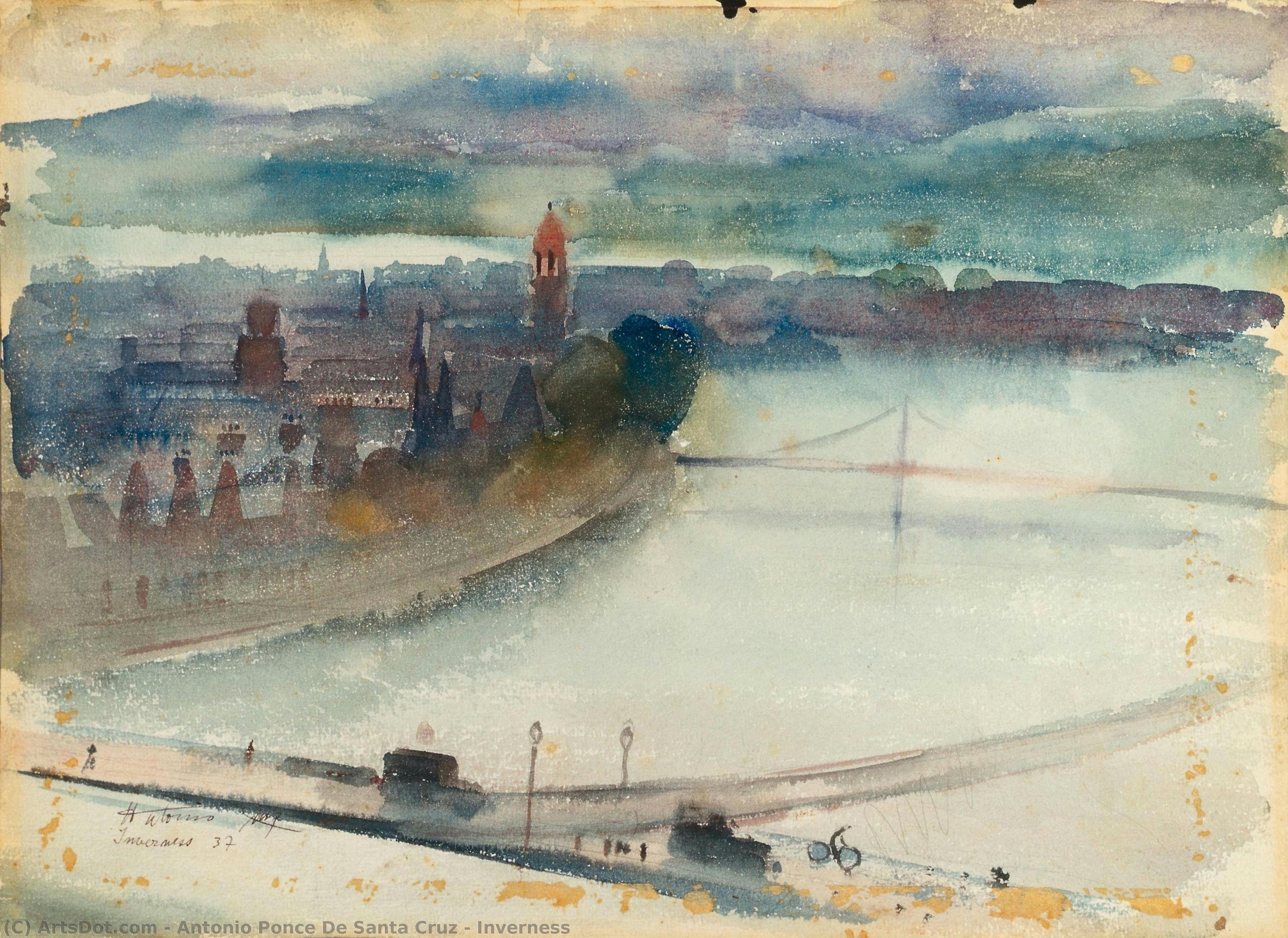
In the delicate, translucent layers of Inverness, we encounter more than just a landscape; we enter a fleeting moment captured in time. This exquisite watercolor by António Cruz serves as a profound meditation on the relationship between light, water, and the urban silhouette. The scene unfolds across a wide expanse of water, where the surface acts as a mirror for a soft, hazy sky, creating a sense of infinite depth. A prominent bridge stretches across the composition, acting as a structural anchor that guides the viewer’s eye toward the distant skyline. Within this cityscape, the subtle suggestion of a church steeple and various architectural forms emerge from the mist, offering a sense of place that feels both specific to the Scottish Highlands and universally nostalgic. It is an artwork that does not demand attention through bold confrontation but rather invites it through a quiet, rhythmic grace.
The technique employed by Cruz is a masterclass in the watercolor medium, specifically utilizing wet-on-wet applications to achieve a breathtakingly atmospheric effect. Drawing inspiration from the English tradition and the influential Euston Road School, the artist demonstrates an exceptional ability to manipulate light through varying densities of pigment. One can observe a sophisticated interplay between darker, more concentrated zones of color and areas where the white of the paper erupts through the washes, simulating the shimmering reflection of light upon moving water. The edges of the buildings and the distant figures are intentionally blurred, a stylistic choice that dissolves the boundaries of the physical world and pushes the work toward an abstracting, modernist sensibility. This soft-focus approach creates a texture that feels organic and breathing, as if the landscape itself is exhaling a fine morning fog.
Beyond its technical brilliance, Inverness carries a deep emotional resonance that makes it a captivating piece for any curated collection. There is an inherent tranquility in the muted color palette—a symphony of soft blues, greys, and earthy tones that evokes a feeling of peaceful observation. The vaguely outlined figures wandering in the foreground add a layer of human dimension, yet they remain secondary to the overwhelming presence of the atmosphere; they are mere witnesses to the grandeur of the natural and built environment. For the discerning collector or interior designer, this piece offers a sophisticated focal point that brings a sense of calm and contemplative depth to a space. It is an evocative window into a world where the boundaries between reality and impression blur, making it an enduringly beautiful choice for those who appreciate art that speaks to the soul through subtlety and light.
Related Artworks
Artist Biography
Antonio Ponce de Santa Cruz (1561–1632): The Painter Behind the Physician
Antonio Ponce de Santa Cruz, born in Valladolid around 1561, was a fascinating figure whose life intersected seamlessly between medicine and art – a rare duality that profoundly shaped his artistic output. While primarily recognized as Philip III’s court physician, he nonetheless cultivated a remarkable talent for still-life painting, producing works that stand apart for their meticulous observation of nature and masterful execution. His legacy resides not only in alleviating suffering but also in capturing the delicate beauty of the natural world with unparalleled sensitivity.Early Life and Education
Little is known about Ponce de Santa Cruz’s formative years beyond his birthplace and education at Valladolid University, where he earned a doctorate in medicine. This academic grounding undoubtedly instilled within him a disciplined approach to observation and detail – qualities that would later translate into the precision characteristic of his paintings. Although biographical information remains sparse, scholarly research suggests connections to humanist circles prevalent during the Renaissance, fostering an appreciation for classical ideals and artistic innovation.The Physician's Patronage and Artistic Pursuits
Ponce de Santa Cruz’s medical career brought him considerable prestige within the Habsburg court, securing him positions of influence and responsibility. However, he never abandoned his passion for painting, dedicating significant time to honing his craft alongside his professional duties. This dual commitment allowed him to absorb diverse perspectives – scientific understanding informing artistic interpretation—resulting in paintings that transcend mere decorative appeal. His patrons included prominent figures like Philip III and Philip IV, who recognized the value of both intellectual prowess and aesthetic sensibility.Style and Technique: Baroque Still Life Elevated
Ponce de Santa Cruz’s style aligns squarely with the Baroque period, yet he distinguishes himself through a distinctive sensitivity to light and color that elevates his work beyond conventional representations. Influenced by artists like Rubens and Rembrandt, he embraced dramatic chiaroscuro—the interplay of light and shadow—to create compositions brimming with atmosphere and emotion. His meticulous rendering of textures – velvety petals, glistening fruit skins – demonstrates an extraordinary command of technique. He favored watercolor as medium for landscapes and oil paints for still lifes, achieving remarkable realism and conveying a profound connection to the natural world.Notable Works: Capturing Fleeting Beauty
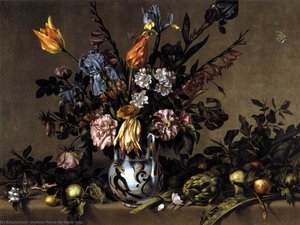
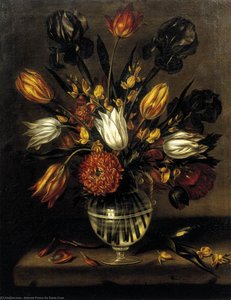
Among Ponce de Santa Cruz’s celebrated paintings are “Inverness” (1650), a breathtaking watercolor landscape showcasing atmospheric perspective and subtle tonal gradations; "Vase of Flowers" (circa 1650), an opulent Baroque still life brimming with meticulously arranged blossoms—a testament to his mastery of floral composition; and several other exquisite depictions of fruit arrangements. These pieces exemplify the artist’s ability to distill complex visual information into harmonious forms, capturing not just what is seen but also conveying a sense of contemplative wonder. His works are housed in museums across Europe, continuing to inspire admiration for their beauty and artistic innovation.Historical Significance: Bridging Science and Art
Antonio Ponce de Santa Cruz represents an exceptional case study in the intersection of science and art during the Baroque era. He exemplifies how intellectual curiosity could fuel creative expression—demonstrating that observation, meticulous detail, and a deep understanding of natural phenomena could converge to produce artworks of extraordinary power and beauty. His legacy extends beyond his artistic achievements; he serves as a reminder that true genius resides in embracing diverse disciplines and pursuing excellence across multiple spheres of endeavor.
antonio ponce de santa cruz
1561 - 1632
Quick Facts
- Artistic Movement Or Style: Baroque Still Life
- Artists Or Movements Influenced By This Artist: ['Euston Road School']
- Artists Who Influenced This Artist: ['Juan Sánchez Cotán']
- Date Of Birth: 1561
- Date Of Death: 1632
- Full Name: Antonio Ponce de Santa Cruz
- Nationality: Spanish
- Notable Artworks:
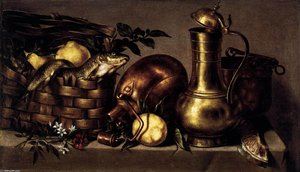
- Still-Life in the Kitchen
- Inverness
- Vase of Flowers
- Place Of Birth: Valladolid, Spain
Related Articles

Watercolor Wonders: 10 Masterpieces That Redefined Art History | ArtsDot
Journey through 10 legendary watercolor masterpieces by Sargent, Turner & Homer! Explore iconic landscapes, portraits & floral art that redefined history. Find museum-quality reproductions and curated decor ideas at ArtsDot.com.

Ephemeral Visions: Exploring the Artistic Legacy & Contemporary Practice of Watercolor Painting
Explore the captivating world of watercolor painting! Discover its rich history, essential techniques, influential artists & collecting tips. A comprehensive guide for art enthusiasts from ArtsDot.

Ephemeral Visions: Exploring the History & Emotional Resonance of Watercolor Painting
Explore the captivating history of watercolor painting, from ancient techniques to modern masters like Kandinsky & Blake. Discover essential artists, collecting tips & the emotional power of this luminous medium. Expert insights for art enthusiasts.

Ephemeral Visions: Exploring the Artistic Legacy & Nuances of Watercolor Painting
Explore the captivating world of watercolor painting! Discover its rich history, essential techniques, influential artists & collecting tips from art experts. A comprehensive guide for enthusiasts.

Beyond the Horizon: 10 Landscape Masterpieces for Your Home Decor
Journey through 10 breathtaking landscape paintings by Monet, Van Gogh & more! Explore iconic artworks, artistic techniques & find inspiration for your home decor. Museum-quality reproductions at ArtsDot.com. Discover all masterpieces on ArtsDot.com