 Preview
 Send
Send Share
Share
 Details

 Download
 Similars
 X-Ray
X-Ray Diaporama
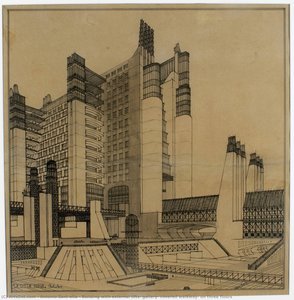
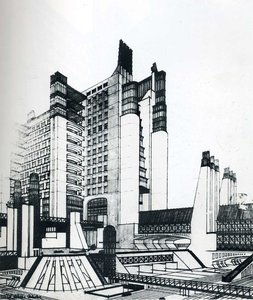
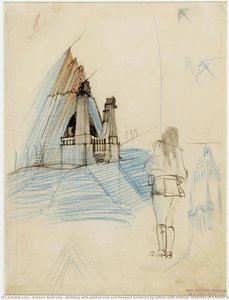
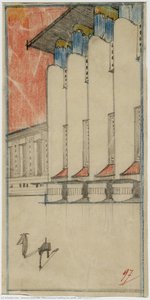
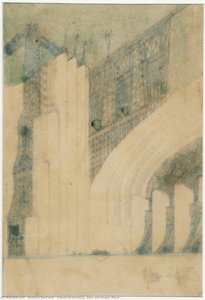
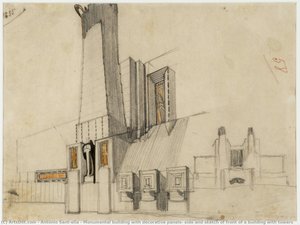
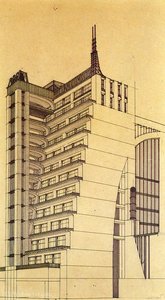
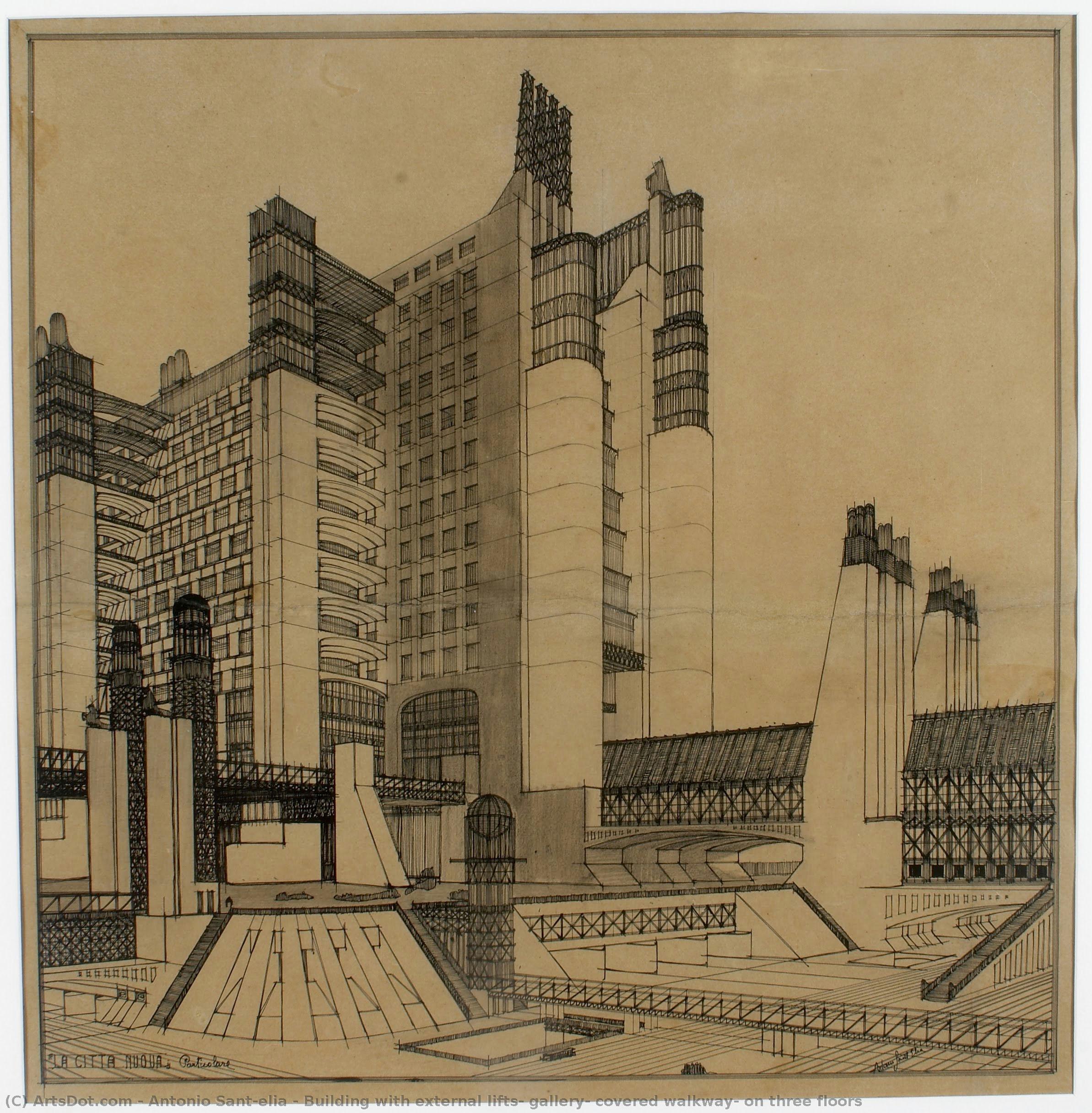
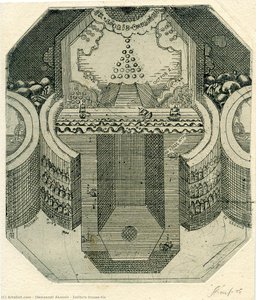
Building with external lifts, gallery, covered walkway, on three floors


 Read More
Hand Made Oil Reproduction
Hand-painted oil on canvas in your size and frame, made to order by our artists. ( Buy Print Buy Image)




P118B $10

P118H $10

P118W $10

P438Z $10

P508JH $12

P508YH $12

P805H $10

P805Z $10

P919BZ $10

P919G $10

P919XJ $10

P959ZH $10

P968JZ $12

W106C $8

W218G $10

W218JH $8

W218Y $10

W307PJ $10

W316G $10

W316PJ $8

W316Y $10

W398PJ $8

W4111J $10

W500HY $15

W500JH $15

W692G $12

W849H $8

W940BG $15

W953PJ $8




Pick from our preset sizes that match the artwork's original proportions.

You may enter your own dimensions to fit a specific frame or space. If your selected size does not match the original image's proportions, we will either crop the artwork or extend the painting with additional hand-painted elements. A digital mockup will be sent for your approval before production begins.
Please note that the on-screen preview does not reflect the actual cropping or extension. Only the mockup will accurately show the final composition.
While custom sizes are available, we recommend selecting a dimension from the predefined list to preserve the original proportions.
After order, ArtsDot.com team will email client for instructions and provide a mockup preview
Worldwide Delivery () in 3/4 weeks instead of standard 5 weeks. (17 August). No compromise on quality.

Free Worldwide Express Shipping

High-Quality Linen Canvas

Full Shipping Insurance

Customs Tax Refund Guarantee

True Color Matching Guarantee

60-Day Return Policy (Defects Only)

100% Money-Back Guarantee

Bulk Discount Offer
 Glass option is only available in size under 110 CM

Building with external lifts, gallery, covered walkway, on three floors
Reproduction Medium
Reproduction Size
-


Total Price
$ 263
Artwork Description
A Visionary Blueprint of Tomorrow
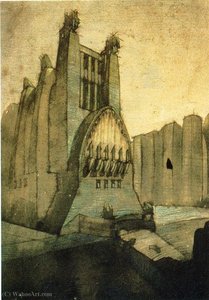
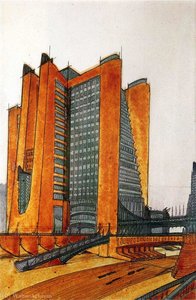
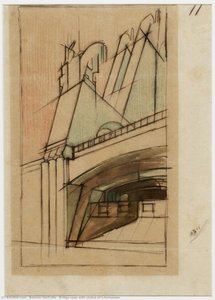
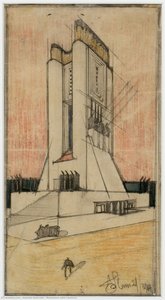
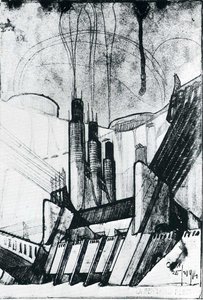
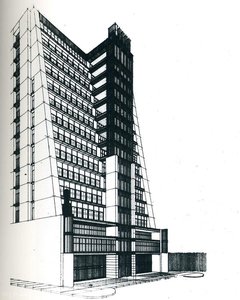
In the hauntingly beautiful lines of Antonio Sant’Elia’s "Building with external lifts, gallery, covered walkway, on three floors," we encounter not merely an architectural sketch, but a prophetic window into a lost future. Created in 1914, at the precipice of a world about to be irrevocably changed by the Great War, this black and white drawing serves as a cornerstone of the Futurist movement. The composition presents a monumental structure that defies the static traditions of the 19th century, replacing heavy ornamentation with the raw, kinetic energy of industrial progress. Through his masterful use of stark contrasts and precise linework, Sant’Elia invites us to step into a cityscape defined by motion, where the boundaries between architecture and machinery begin to dissolve.
The drawing captures an intricate dance of geometric forms, showcasing a building that feels alive with technological vitality. The presence of external lifts and covered walkways suggests a structure designed for constant flux—a place where human movement is integrated into the very skeleton of the edifice. As the eye wanders across the multiple levels and soaring towers, one notices the rhythmic placement of windows and the structural honesty of the design. There is a profound sense of verticality here; the building does not simply sit upon the earth but seems to reach upward, driven by an unyielding ambition to conquer space through the use of modern materials like iron and glass.
The Soul of Futurist Dynamism
To understand this work is to understand the heartbeat of Italian Futurism. Sant’Elia, a figure whose life was tragically brief, sought to strip architecture of its historical baggage, favoring instead a vitalistic activism that celebrated the speed, noise, and power of the modern age. This piece embodies his "Città Nuova" (New City) concept—a vision of an urban labyrinth interconnected by bridges, flyovers, and train tracks. The technique employed here is deceptively simple yet emotionally heavy; the monochromatic palette strips away the distraction of color to focus our attention on the structural rhythm and the interplay of light and shadow. It is a study in strength, symmetry, and the beauty of functionalist design.
For the discerning collector or interior designer, this artwork offers a sophisticated intellectual depth that transcends mere decoration. It serves as a powerful focal point for spaces that celebrate modernism, industrial chic, or avant-garde aesthetics. The piece evokes a sense of nostalgia for a future that never quite arrived, making it an evocative conversation starter in any curated collection. Whether displayed in a minimalist gallery setting or integrated into a contemporary living space, Sant’Elia’s vision brings a timeless, structural elegance and a profound sense of historical importance to its surroundings.
Related Artworks
Artist Biography
Antonio Sant'Elia: Architect of a Fractured Future
Born in Como, Italy, on April 30th, 1888, Antonio Sant’Elia was not merely an architect; he was a visionary, a prophet of a future irrevocably shaped by the tumultuous currents of early 20th-century Europe. His life, tragically cut short at the young age of twenty-eight during the brutal fighting on the Isonzo front in 1916, nonetheless left an indelible mark on architectural thought and artistic expression. Sant’Elia's legacy resides not in completed buildings—he rarely saw his radical designs realized—but in a breathtaking body of sketches, drawings, and theoretical writings that unveiled a profoundly original and unsettling vision of urban life.
Sant’Elia’s formative years were steeped in the industrial dynamism of Como, a region rapidly transforming through textile production and burgeoning tourism. This environment, coupled with his father's profession as a builder, instilled within him an acute awareness of both the potential and the limitations of construction. He pursued formal training at the Brera Academy in Milan, absorbing the principles of traditional architecture while simultaneously encountering the revolutionary ideas circulating amongst a group of avant-garde artists and intellectuals—a milieu that would profoundly shape his artistic trajectory.
The Seeds of Futurist Architecture
It was through his association with Filippo Tommaso Marinetti and the burgeoning Futurist movement that Sant’Elia truly found his voice. The Futurists, vehemently rejecting the past and embracing speed, technology, and violence, sought to dismantle established artistic conventions and forge a new aesthetic language. Sant'Elia quickly became a key figure in their architectural explorations, contributing significantly to the *Manifesto of Futurist Architecture* (1914). This manifesto articulated a radical departure from traditional notions of building design, advocating for structures that were dynamic, multi-layered, and integrated with the surrounding environment—a concept he termed “Città Nuova,” or ‘New City.’
Unlike the static, monumental forms of classical architecture, Sant’Elia envisioned a city as a pulsating organism, a complex network of interconnected spaces designed to accommodate the relentless pace of modern life. He drew inspiration from diverse sources—the efficiency of industrial production, the dynamism of American urban landscapes (particularly New York City), and the geometric precision of early 20th-century architecture like that of Otto Wagner in Vienna. His sketches reveal a fascination with stepped housing arrangements, towering power stations, and intricate transportation systems – all elements designed to create a seamless and efficient urban experience.
A Sketchbook of Utopias and Dystopias
Sant’Elia's most enduring contribution lies in his extensive sketchbook collection. These drawings—rendered in meticulous detail with graphite and ink—offer an unparalleled glimpse into the workings of his imagination. They depict not just idealized cityscapes, but also unsettling visions of a mechanized future, where human life is subsumed by industrial processes. The *Città Nuova* sketches are particularly striking, showcasing a complex, tiered urban structure that seems to defy gravity and logic. He explored themes of verticality, interconnectedness, and the blurring of boundaries between nature and technology.
Beyond the grand scale of the *Città Nuova*, Sant’Elia produced numerous smaller studies—architectural details, industrial designs, and even fantastical renderings of machines and vehicles. These works demonstrate a remarkable versatility and an unwavering commitment to pushing the boundaries of architectural expression. His drawings are not merely technical exercises; they are imbued with a palpable sense of urgency and a profound awareness of the potential consequences of unchecked technological advancement.
The Shadow of War and Lasting Influence
Tragically, Sant’Elia's life was cut short during World War I. He enlisted in the Italian army and perished on the Isonzo front in 1916. Despite his untimely death, his ideas continued to resonate within the Futurist movement and beyond. His sketches were exhibited posthumously, cementing his reputation as a visionary architect and a key figure in the development of modernism.
While few of Sant’Elia's designs were ever realized during his lifetime, his influence can be seen in the work of subsequent architects—particularly those associated with the Bauhaus movement and the International Style. His emphasis on functional design, industrial materials, and innovative spatial arrangements laid the groundwork for a new generation of architects who sought to create buildings that were both aesthetically compelling and technologically advanced. Today, Antonio Sant'Elia is remembered not just as an architect, but as a prophet—a man who dared to imagine a radically different future and whose sketches continue to inspire awe and provoke reflection on the relationship between humanity and technology.
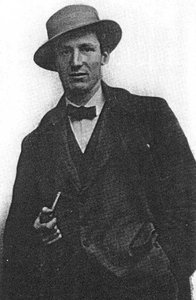
antonio sant'elia
1888 - 1916
Quick Facts
- Artistic Movement Or Style: Futurist architecture
- Artists Who Influenced This Artist: ['Otto Wagner, Adolf Loos, Renzo Picasso],\n "Artists or movements influenced by this artist": ["Futurism"]\n}']
- Date Of Birth: 30 April 1888
- Date Of Death: 10 October 1916
- Full Name: Antonio Sant'Elia
- Nationality: Italian
- Notable Artworks:
- Monumental building
- La Città Nuova
- Untitled (966)
- Place Of Birth: Como, Lombardy
Related Articles

White on Canvas: 10 Masterpieces & Timeless Elegance for Your Home Decor
Explore 10 iconic white paintings by Monet, Whistler & Rothko! Discover the stories behind these serene masterpieces and their impact on art history. Find museum-quality reproductions for your home decor at .

Dark Masterpieces: 10 Iconic Paintings Dominated by Black Tones |
Explore 10 iconic paintings dominated by black tones, from Rembrandt’s chiaroscuro to Goya's dark expressions. Discover the stories behind these masterpieces & find museum-quality art reproductions for your home at .
Industrial Revolution on Canvas: 10 Artworks That Define a Modern Aesthetic
Explore 10 iconic artworks capturing the Industrial Revolution’s grit & beauty. From Monet to Manet, discover realism, impressionism & powerful scenes of urban life. Find museum-quality reproductions for your home at ArtsDot.com.

Monochrome Visions: Exploring the Aesthetic & Historical Significance of Black & White Photography
Explore the rich history & artistic power of black and white photography. From early techniques to iconic masters like Ansel Adams, discover why monochrome continues to captivate art lovers today. Expert insights for collectors.
The Eloquent Line: Exploring the Artistic Significance of Sketches Across Movements and Media
Explore the profound artistic significance of sketches throughout history. From Renaissance masters to modern innovators like Van Gogh & Guston, discover how these foundational works reveal technique, emotion, and vision. Learn more at ArtsDot.