 Preview
 Send
Send Share
Share
 Details

 Download
 Similars
 X-Ray
X-Ray Diaporama
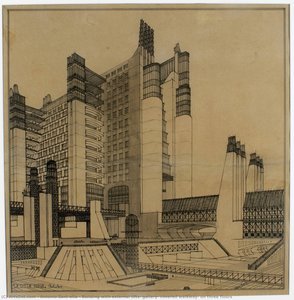
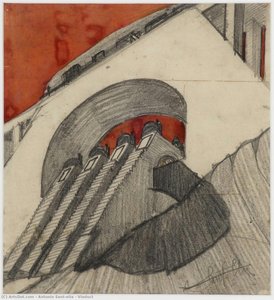
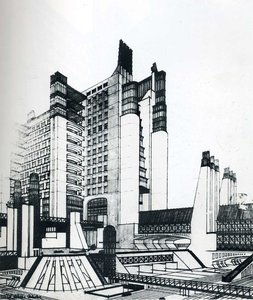
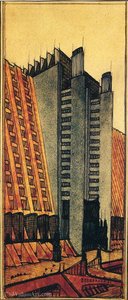
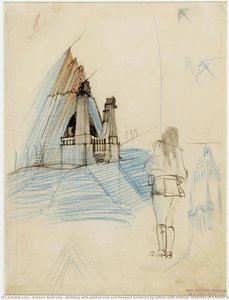
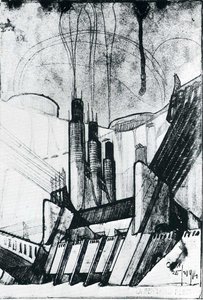
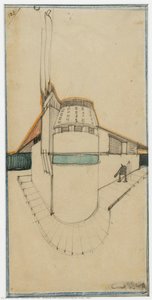
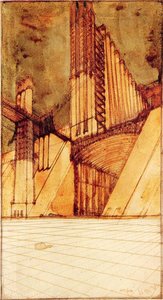
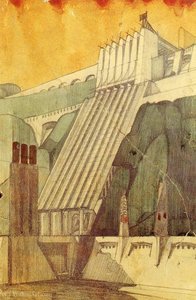
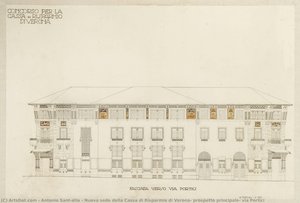
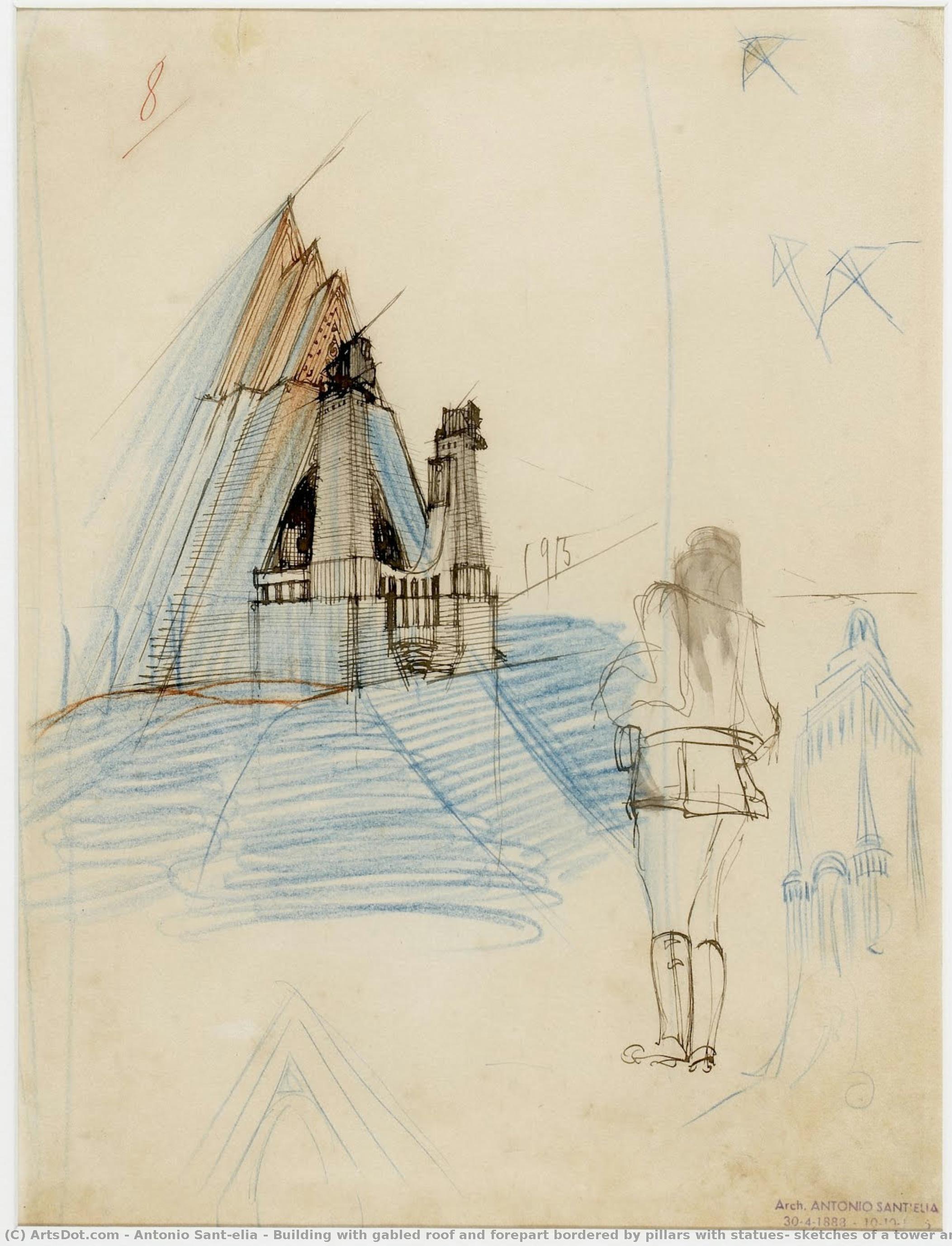
Building with gabled roof and forepart bordered by pillars with statues, sketches of a tower and a male figure


 Read More
Hand Made Oil Reproduction
Hand-painted oil on canvas in your size and frame, made to order by our artists. ( Buy Print Buy Image)




P118B $10

P118H $10

P118W $10

P438Z $10

P508JH $12

P508YH $12

P805H $10

P805Z $10

P919BZ $10

P919G $10

P919XJ $10

P959ZH $10

P968JZ $12

W106C $8

W218G $10

W218JH $8

W218Y $10

W307PJ $10

W316G $10

W316PJ $8

W316Y $10

W398PJ $8

W4111J $10

W500HY $15

W500JH $15

W692G $12

W849H $8

W940BG $15

W953PJ $8




Pick from our preset sizes that match the artwork's original proportions.

You may enter your own dimensions to fit a specific frame or space. If your selected size does not match the original image's proportions, we will either crop the artwork or extend the painting with additional hand-painted elements. A digital mockup will be sent for your approval before production begins.
Please note that the on-screen preview does not reflect the actual cropping or extension. Only the mockup will accurately show the final composition.
While custom sizes are available, we recommend selecting a dimension from the predefined list to preserve the original proportions.
After order, ArtsDot.com team will email client for instructions and provide a mockup preview
Worldwide Delivery () in 3/4 weeks instead of standard 5 weeks. (17 August). No compromise on quality.

Free Worldwide Express Shipping

High-Quality Linen Canvas

Full Shipping Insurance

Customs Tax Refund Guarantee

True Color Matching Guarantee

60-Day Return Policy (Defects Only)

100% Money-Back Guarantee

Bulk Discount Offer
 Glass option is only available in size under 110 CM

Building with gabled roof and forepart bordered by pillars with statues, sketches of a tower and a male figure
Reproduction Medium
Reproduction Size
-


Total Price
$ 263
Artwork Description
A Visionary Fragment of a Lost Future
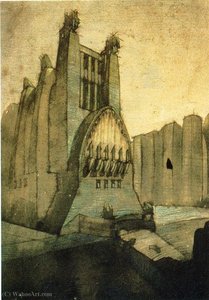
In the delicate, ethereal strokes of Antonio Sant'Elia, we encounter not just a drawing, but a window into a dreamscape that never was. This evocative work, titled Building with gabled roof and forepart bordered by pillars with statues, sketches of a tower and a male figure, serves as a hauntingly beautiful testament to the imagination of one of the twentieth century's most profound architectural visionaries. Created around 1915, during the height of the Futurist movement, the piece captures a moment where classical architectural motifs—the stability of gabled roofs and the dignity of statuesque pillars—begin to dissolve into the experimental sketches of a burgeoning modern era. The soft, pastel-like palette lends an almost melancholic tenderness to the scene, masking the radical, industrial intensity that often defined Sant'Elia’s more famous urban fever dreams.
The composition invites the viewer to wander through a space caught between memory and prophecy. At first glance, the structure suggests the solemnity of a cathedral or a civic monument, anchored by pillars adorned with silent, watchful statues. Yet, as the eye moves across the page, the precision of classical architecture gives way to the spontaneous energy of architectural sketching. The presence of human figures—one standing in quiet contemplation near the building's edge and another drifting into the background—provides a vital sense of scale and soul. These figures are not merely spectators; they are inhabitants of a world in transition, grounding the monumental architecture in a palpable, human reality that resonates deeply with anyone moved by the intersection of man and monument.
The Artistry of Architectural Poetics
Technically, the work is a masterclass in the use of light and atmospheric perspective. The artist employs a soft, almost nebulous application of color that blurs the boundaries between the built environment and the sky itself. This technique creates a sense of depth and mystery, making the tower sketches and the gabled roof appear as if they are emerging from a morning mist. For the discerning collector or interior designer, this piece offers a unique aesthetic versatility. Its muted tones and delicate textures allow it to serve as a sophisticated focal point in a contemporary setting, providing a layer of intellectual depth and historical gravity to a room without overwhelming its modern elegance.
To possess a reproduction of such a work is to hold a fragment of the Futurist spirit. Sant'Elia’s life was tragically brief, ended by the violence of war, yet his ability to capture the tension between the old world and the new remains undiminished. This drawing does not merely depict a building; it evokes an emotion—a longing for a future that is both grand and intimate. It is an ideal acquisition for those who appreciate art that tells a story of transformation, making it a timeless addition to any curated collection of architectural or historical fine art.
Related Artworks
Artist Biography
Antonio Sant'Elia: Architect of a Fractured Future
Born in Como, Italy, on April 30th, 1888, Antonio Sant’Elia was not merely an architect; he was a visionary, a prophet of a future irrevocably shaped by the tumultuous currents of early 20th-century Europe. His life, tragically cut short at the young age of twenty-eight during the brutal fighting on the Isonzo front in 1916, nonetheless left an indelible mark on architectural thought and artistic expression. Sant’Elia's legacy resides not in completed buildings—he rarely saw his radical designs realized—but in a breathtaking body of sketches, drawings, and theoretical writings that unveiled a profoundly original and unsettling vision of urban life.
Sant’Elia’s formative years were steeped in the industrial dynamism of Como, a region rapidly transforming through textile production and burgeoning tourism. This environment, coupled with his father's profession as a builder, instilled within him an acute awareness of both the potential and the limitations of construction. He pursued formal training at the Brera Academy in Milan, absorbing the principles of traditional architecture while simultaneously encountering the revolutionary ideas circulating amongst a group of avant-garde artists and intellectuals—a milieu that would profoundly shape his artistic trajectory.
The Seeds of Futurist Architecture
It was through his association with Filippo Tommaso Marinetti and the burgeoning Futurist movement that Sant’Elia truly found his voice. The Futurists, vehemently rejecting the past and embracing speed, technology, and violence, sought to dismantle established artistic conventions and forge a new aesthetic language. Sant'Elia quickly became a key figure in their architectural explorations, contributing significantly to the *Manifesto of Futurist Architecture* (1914). This manifesto articulated a radical departure from traditional notions of building design, advocating for structures that were dynamic, multi-layered, and integrated with the surrounding environment—a concept he termed “Città Nuova,” or ‘New City.’
Unlike the static, monumental forms of classical architecture, Sant’Elia envisioned a city as a pulsating organism, a complex network of interconnected spaces designed to accommodate the relentless pace of modern life. He drew inspiration from diverse sources—the efficiency of industrial production, the dynamism of American urban landscapes (particularly New York City), and the geometric precision of early 20th-century architecture like that of Otto Wagner in Vienna. His sketches reveal a fascination with stepped housing arrangements, towering power stations, and intricate transportation systems – all elements designed to create a seamless and efficient urban experience.
A Sketchbook of Utopias and Dystopias
Sant’Elia's most enduring contribution lies in his extensive sketchbook collection. These drawings—rendered in meticulous detail with graphite and ink—offer an unparalleled glimpse into the workings of his imagination. They depict not just idealized cityscapes, but also unsettling visions of a mechanized future, where human life is subsumed by industrial processes. The *Città Nuova* sketches are particularly striking, showcasing a complex, tiered urban structure that seems to defy gravity and logic. He explored themes of verticality, interconnectedness, and the blurring of boundaries between nature and technology.
Beyond the grand scale of the *Città Nuova*, Sant’Elia produced numerous smaller studies—architectural details, industrial designs, and even fantastical renderings of machines and vehicles. These works demonstrate a remarkable versatility and an unwavering commitment to pushing the boundaries of architectural expression. His drawings are not merely technical exercises; they are imbued with a palpable sense of urgency and a profound awareness of the potential consequences of unchecked technological advancement.
The Shadow of War and Lasting Influence
Tragically, Sant’Elia's life was cut short during World War I. He enlisted in the Italian army and perished on the Isonzo front in 1916. Despite his untimely death, his ideas continued to resonate within the Futurist movement and beyond. His sketches were exhibited posthumously, cementing his reputation as a visionary architect and a key figure in the development of modernism.
While few of Sant’Elia's designs were ever realized during his lifetime, his influence can be seen in the work of subsequent architects—particularly those associated with the Bauhaus movement and the International Style. His emphasis on functional design, industrial materials, and innovative spatial arrangements laid the groundwork for a new generation of architects who sought to create buildings that were both aesthetically compelling and technologically advanced. Today, Antonio Sant'Elia is remembered not just as an architect, but as a prophet—a man who dared to imagine a radically different future and whose sketches continue to inspire awe and provoke reflection on the relationship between humanity and technology.
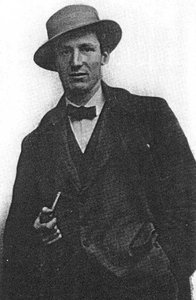
antonio sant'elia
1888 - 1916
Quick Facts
- Artistic Movement Or Style: Futurist architecture
- Artists Who Influenced This Artist: ['Otto Wagner, Adolf Loos, Renzo Picasso],\n "Artists or movements influenced by this artist": ["Futurism"]\n}']
- Date Of Birth: 30 April 1888
- Date Of Death: 10 October 1916
- Full Name: Antonio Sant'Elia
- Nationality: Italian
- Notable Artworks:
- Monumental building
- La Città Nuova
- Untitled (966)
- Place Of Birth: Como, Lombardy
Related Articles
The Eloquent Line: Exploring the Artistic Significance of Sketches Across Movements and Media
Explore the profound artistic significance of sketches throughout history. From Renaissance masters to modern innovators like Van Gogh & Guston, discover how these foundational works reveal technique, emotion, and vision. Learn more at ArtsDot.

The Subtleties of Pastel: A Comprehensive Exploration of Technique, History & Emotional Resonance
Explore the captivating world of pastel art! Discover its rich history, Impressionistic masters like Degas, emotional power & unique techniques. Find museum-quality reproductions at ArtsDot.

The Subdued Radiance of Pastel: Exploring Nuance & Emotion in Art
Explore the nuanced world of pastel art! Discover its history, techniques & emotional power with expert insights from ArtsDot.com. Find museum-quality reproductions and learn about collecting this delicate medium.
The Nuances of Graphite: Exploring Emotional Depth & Technical Mastery in Pencil Drawing
Explore the captivating world of graphite drawing! Discover its rich history, master essential techniques like chiaroscuro, and learn how artists evoke emotion through this timeless medium. Expert insights for art enthusiasts.
The Subdued Radiance of Pastel Palettes: Exploring Emotional Resonance in Art History
Explore the emotional power of pastel palettes in art history! Discover Impressionism, Post-Impressionism & color psychology insights. Find museum-quality reproductions at ArtsDot.