 Preview
 Send
Send Share
Share
 Details

 Download
 Similars
 X-Ray
X-Ray Diaporama
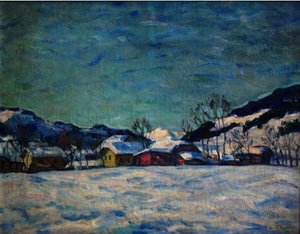
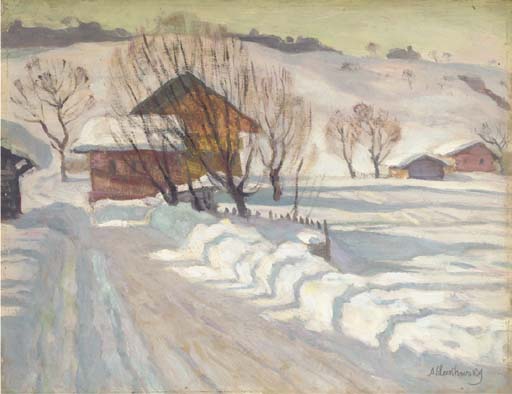
A Farm Under The Snow

 Read More
Hand Made Oil Reproduction
Hand-painted oil on canvas in your size and frame, made to order by our artists. ( Buy Print Buy Image)




































Pick from our preset sizes that match the artwork's original proportions.

You may enter your own dimensions to fit a specific frame or space. If your selected size does not match the original image's proportions, we will either crop the artwork or extend the painting with additional hand-painted elements. A digital mockup will be sent for your approval before production begins.
Please note that the on-screen preview does not reflect the actual cropping or extension. Only the mockup will accurately show the final composition.
While custom sizes are available, we recommend selecting a dimension from the predefined list to preserve the original proportions.
After order, ArtsDot.com team will email client for instructions and provide a mockup preview
Worldwide Delivery () in 3/4 weeks instead of standard 5 weeks. (17 August). No compromise on quality.

Free Worldwide Express Shipping

High-Quality Linen Canvas

Full Shipping Insurance

Customs Tax Refund Guarantee

True Color Matching Guarantee

60-Day Return Policy (Defects Only)

100% Money-Back Guarantee

Bulk Discount Offer
 Glass option is only available in size under 110 CM

A Farm Under The Snow
Reproduction Medium
Reproduction Size
-


Total Price
$ 263
Artwork Description
A Glimpse into Rural Winter: "A Farm Under The Snow"
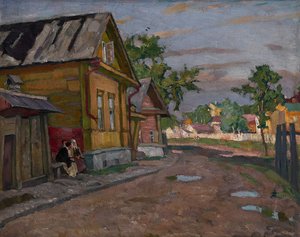
This evocative oil painting, “A Farm Under The Snow,” by Arnold Borisovich Lakhovsky offers a serene and contemplative glimpse into rural life during the harsh embrace of winter. The artwork transports viewers to a small village nestled within a snowy hillside, capturing a moment of quiet solitude and resilience against a stark landscape. Lakhovsky’s skillful use of color and texture creates an atmosphere that is both calming and subtly melancholic, inviting introspection and appreciation for the beauty found in simplicity.Style & Technique: Echoes of Impressionism and Post-Impressionism
Lakhovsky's style demonstrates a clear connection to late 19th and early 20th century artistic movements. While firmly rooted in realism, the painting exhibits characteristics of both Impressionism and Post-Impressionism. Noticeable visible brushstrokes – a hallmark of Impressionism – contribute to the overall sense of movement and atmosphere. The artist doesn't strive for photographic accuracy; instead, he prioritizes capturing the *impression* of the scene—the feeling of cold air, the stillness of the snow, and the quietude of the village. The flattened perspective, a technique often employed by Post-Impressionists, lends a slightly two-dimensional quality to the work, emphasizing its decorative appeal while maintaining depth through layered application of paint and subtle tonal shifts. The impasto – thick layers of paint—used in areas like the snowdrifts and building facades adds tactile texture and visual interest, contrasting with smoother applications elsewhere.Symbolism & Historical Context
Created during a period of significant social and political change in Russia (likely the early 20th century), “A Farm Under The Snow” can be interpreted as a reflection of rural life untouched by the rapid industrialization occurring in urban centers. The isolated farm represents a connection to traditional values, self-sufficiency, and a simpler way of living. Symbolically, the snow itself embodies both hardship and purity—a challenging environment that also offers a sense of peace and renewal. The muted color palette reinforces this duality, conveying a feeling of quiet endurance in the face of adversity. Lakhovsky's work provides a valuable window into the visual culture of his time, showcasing the enduring appeal of landscapes depicting everyday life.Emotional Impact & Decorative Appeal
The painting evokes a profound sense of tranquility and solitude. The horizontal lines dominating the composition—the road, rooftops, and snowdrifts—create a feeling of stability and stillness. The diffused lighting suggests an overcast day or early morning, further enhancing the atmosphere of quiet contemplation. “A Farm Under The Snow” is not merely a depiction of a winter landscape; it's an invitation to pause, reflect, and appreciate the beauty found in simplicity and resilience. As a decorative piece, this reproduction would be particularly well-suited for spaces seeking a touch of understated elegance and calming atmosphere—ideal for living rooms, studies, or bedrooms where a sense of peace is desired.Related Artworks
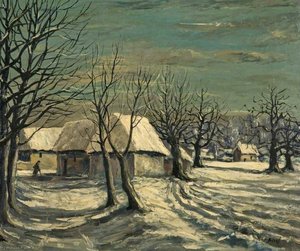
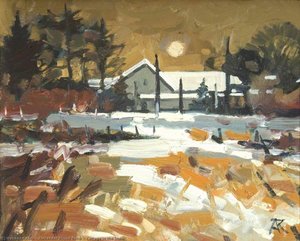
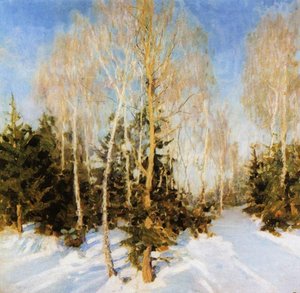
Artist Biography
The Echoes of Chernobyl: Unveiling the Art of Arnold Lakhovsky
Born in 1880 amidst the haunting landscape of Chernobyl, Ukraine – a place inextricably linked to both tragedy and resilience – Arnold Borisovich Lakhovsky’s life and art are profoundly shaped by its stark beauty and lingering shadows. Initially known as Aaron Berkovich, his journey from the Russian Empire to Paris and ultimately to New York City represents not just an artistic migration but a testament to the enduring spirit of a displaced artist seeking recognition and expression. His work, often characterized by luminous landscapes and poignant portraits, offers a glimpse into a world grappling with upheaval and searching for beauty amidst uncertainty.
Lakhovsky’s early artistic education laid the foundation for his distinctive style. He began his training at Odessa Art School, absorbing influences from masters like Kostandi and Ladyzhensky. A pivotal period followed in Munich, where he studied under Maro, exposing him to the vibrant colors and expressive techniques of German Impressionism. This exposure proved crucial, shaping his approach to capturing light and atmosphere – a hallmark of his later work. Returning to St. Petersburg, he honed his skills within the workshops of Repin, Tchistyakov, Kiselyov, and Doubovskoy, absorbing diverse artistic philosophies and refining his technical abilities. His time in Palestine, teaching at Bezalel Academy, further broadened his perspective, introducing him to a rich tapestry of cultures and artistic traditions.
A Palette Born of Resilience: Style and Technique
Lakhovsky’s artistic style is immediately recognizable – a captivating blend of Impressionism, Realism, and elements of Ukrainian folk art. He possessed an exceptional ability to capture the fleeting effects of light, particularly in his landscapes, imbuing them with a sense of atmosphere and emotion. His use of color is often vibrant yet nuanced, employing complementary hues to create depth and luminosity. He frequently utilized thick impasto techniques, adding texture and physicality to his canvases, reflecting a deliberate engagement with the surface of the paint itself.
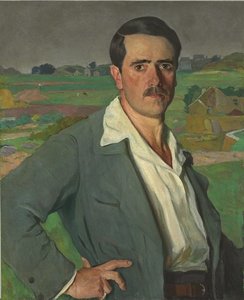
His portraits, equally compelling, are characterized by a remarkable sensitivity to human expression. He wasn’t merely rendering likenesses; he was striving to capture the essence of his subjects – their personalities, emotions, and inner lives. The ‘Self-Portrait,’ a particularly striking example, reveals a confident gaze and an understated elegance, hinting at the artist's own complex character.
From Odessa to Paris: A Journey Through Artistic Circles
Following the Russian Revolution, Lakhovsky’s artistic career took him through various European centers. He spent time in Palestine, teaching art, before relocating to Paris in 1925. Here, he became a member of influential artist groups like the Kouindgi Society and The Wanderers, engaging with a vibrant community of creatives and exhibiting his work at prestigious venues. His relocation to New York City in 1933 marked another significant chapter, where he found employment as a portrait painter and taught at Boston’s School of the Museum of Fine Arts. This period saw him balancing commercial commissions with continued artistic exploration.
Notable Works: Echoes of Place and Emotion
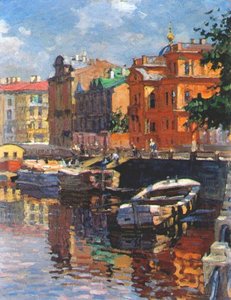
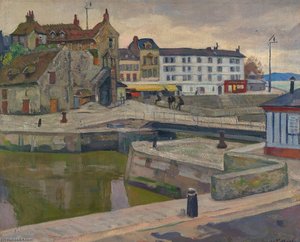
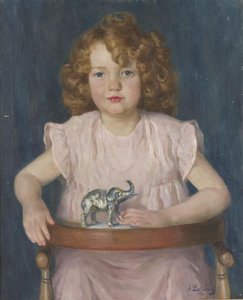
Several of Lakhovsky's paintings stand out for their evocative power and technical mastery. “Fontanka,” a vibrant depiction of St. Petersburg’s canals, exemplifies his ability to capture the shimmering reflections and atmospheric qualities of urban landscapes. The painting’s luminous colors and dynamic composition transport the viewer to the heart of the city. “Girl with a Toy” offers a tender glimpse into childhood innocence, showcasing his skill in portraying human emotion through subtle gestures and expressions. These works, alongside numerous other pieces, reveal a consistent dedication to capturing both the beauty of the world around him and the complexities of the human experience.
A Legacy Forged in Displacement
Arnold Lakhovsky’s life and art are inextricably linked to the historical context of his time – the upheavals of the 20th century, the displacement caused by revolution and war, and the enduring search for identity and belonging. Despite facing numerous challenges, including exile and financial hardship, he persevered in his artistic pursuits, leaving behind a body of work that continues to resonate with viewers today. His paintings serve as poignant reminders of resilience, beauty, and the transformative power of art – echoes of Chernobyl’s landscape imprinted on canvases across continents.
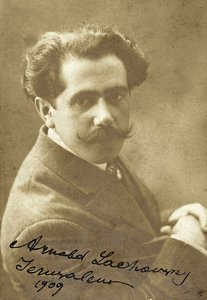
arnold borisovich lakhovsky
1880 - 1937 , Russia
Quick Facts
- Artistic Movement Or Style: Impressionism, Realism
- Artists Or Movements Influenced By This Artist: ['Bezalel Academy']
- Artists Who Influenced This Artist:
- Ilya Repin
- Maro
- P. Tchistyakov
- Date Of Birth: 1880-01-27
- Date Of Death: 1937-01-07
- Full Name: Arnold Borisovich Lakhovsky
- Nationality: Ukrainian-Jewish
- Notable Artworks:
- Fontanka
- Self-portrait
- Girl with a Toy
- Place Of Birth: Chernobyl, Russia
Related Articles
Evocations of Rural Life: A Historical Journey Through Landscape Painting
Explore the rich history of rural life in painting! Discover Impressionist masterpieces, Italian Macchiaioli scenes & the enduring appeal of pastoral landscapes. Find your perfect artwork at ArtsDot.
Evoking Arcadia: A Historical & Aesthetic Exploration of Rural Landscape Art
Explore the rich history of pastoral landscape art, from classical Arcadia to Impressionism & beyond. Discover key artists, movements, and how to collect serene rural scenes for your home. Expert insights at ArtsDot.
Brian Hatton: A Study in Early 20th-Century British Landscape Painting & Rural Identity
Explore the captivating landscapes & portraits of Brian Hatton (1887-1916), a promising British artist lost too soon. Discover his unique style, Herefordshire roots, and lasting legacy in early 20th-century art.
Snowy Masterpieces: 10 Famous Paintings & Art for a Winter Aesthetic
Explore 10 famous snow paintings by Monet, Degas & more! Discover the stories behind these serene winter landscapes and iconic artworks. Find museum-quality art reproductions for your home at ArtsDot.com.
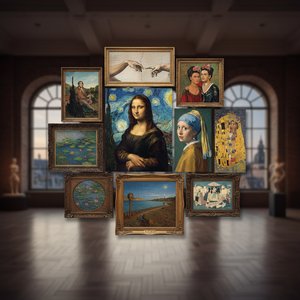
Oil on Canvas Masters: 10 Paintings That Redefined Art History |
Journey through art history with our guide to 10 legendary oil on canvas masterpieces! Explore iconic works by Van Gogh, Monet & Rembrandt. Find museum-quality reproductions and elevate your home decor at . Discover all masterpieces online.