 Preview
 Send
Send Share
Share
 Details

 Download
 Similars
 X-Ray
X-Ray Diaporama
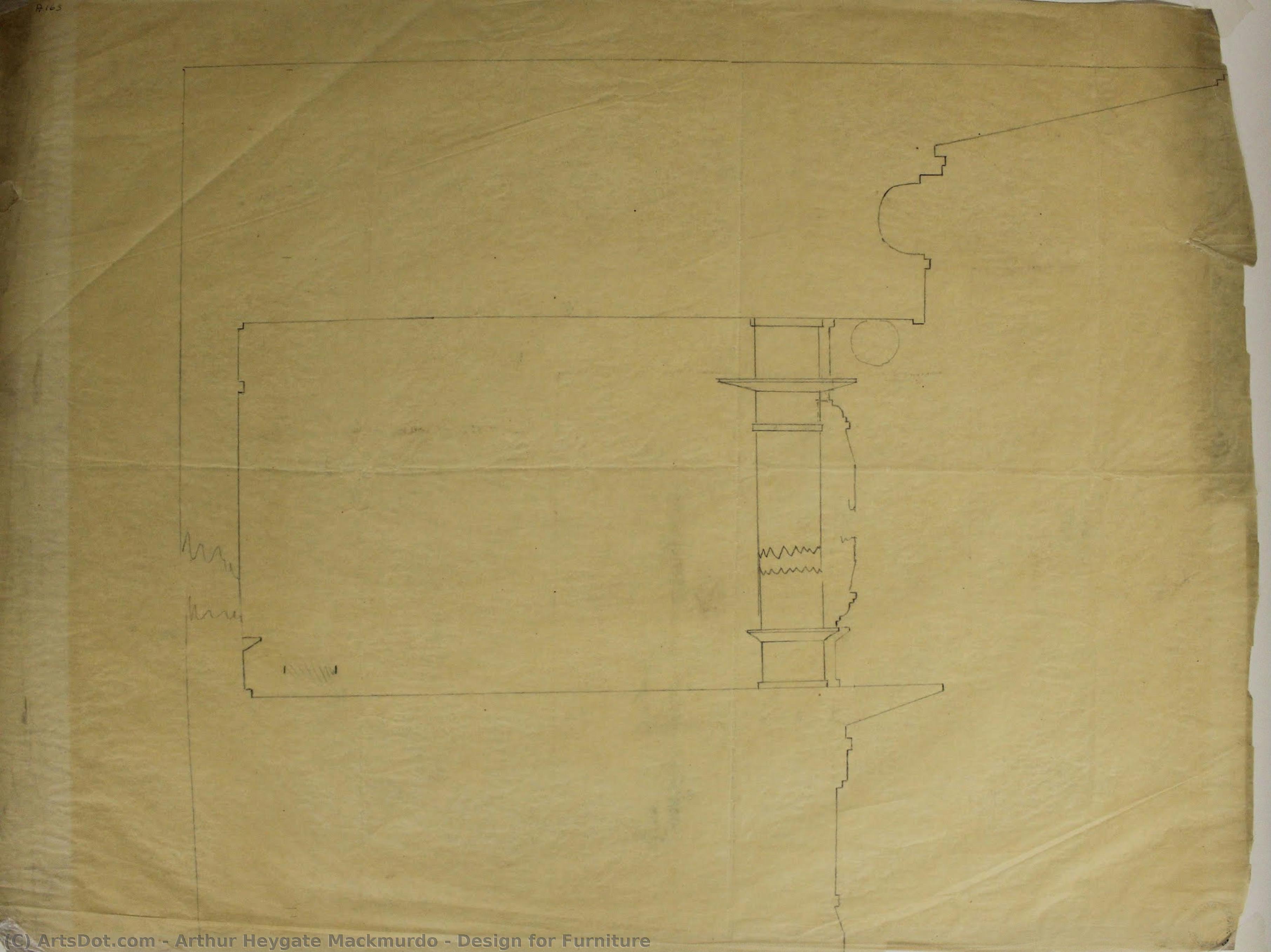
Design for Furniture
 Drawing
- WallArt
- Arts and Crafts
 1887
1887- 19th Century
 50.0 x 66.0 cm
 William Morris Gallery
 Read More
Hand Made Oil Reproduction
Hand-painted oil on canvas in your size and frame, made to order by our artists. ( Buy Print Buy Image)




P118B $10

P118H $10

P118W $10

P438Z $10

P508JH $12

P508YH $12

P805H $10

P805Z $10

P919BZ $10

P919G $10

P919XJ $10

P959ZH $10

P968JZ $12

W106C $8

W218G $10

W218JH $8

W218Y $10

W307PJ $10

W316G $10

W316PJ $8

W316Y $10

W398PJ $8

W4111J $10

W500HY $15

W500JH $15

W692G $12

W849H $8

W940BG $15

W953PJ $8




Pick from our preset sizes that match the artwork's original proportions.

You may enter your own dimensions to fit a specific frame or space. If your selected size does not match the original image's proportions, we will either crop the artwork or extend the painting with additional hand-painted elements. A digital mockup will be sent for your approval before production begins.
Please note that the on-screen preview does not reflect the actual cropping or extension. Only the mockup will accurately show the final composition.
While custom sizes are available, we recommend selecting a dimension from the predefined list to preserve the original proportions.
After order, ArtsDot.com team will email client for instructions and provide a mockup preview
Worldwide Delivery () in 3/4 weeks instead of standard 5 weeks. (17 August). No compromise on quality.

Free Worldwide Express Shipping

High-Quality Linen Canvas

Full Shipping Insurance

Customs Tax Refund Guarantee

True Color Matching Guarantee

60-Day Return Policy (Defects Only)

100% Money-Back Guarantee

Bulk Discount Offer
 Glass option is only available in size under 110 CM

Design for Furniture
Reproduction Medium
Reproduction Size
-


Total Price
$ 263
Artwork Description
A Visionary Blueprint: The Genesis of Form
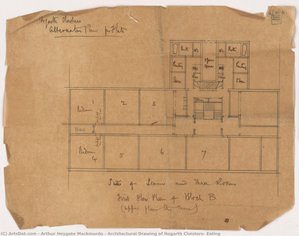
In the delicate, searching lines of "Design for Furniture," we are invited into the private, intellectual sanctuary of Arthur Heygate Mackmurdo’s creative mind. Created in 1887, this work is far more than a mere technical draft; it is a profound window into the moment where Victorian structure begins to dissolve into the fluid grace of Art Nouveau. As a working drawing, it captures the very heartbeat of invention, presenting not a finished object of wood and polish, but the raw, rhythmic possibilities of form. The piece focuses on the upper architecture of a potential pedestal table or writing desk, revealing a fascinating duality in Mackmurdo’s thought process. By illustrating the central pillar in two distinct iterations—one with straight, disciplined sides and another with a soft, bulbous swell—the artist allows us to witness the tension between classical stability and the organic, undulating vitality that would soon define a new era of European design.
To behold this drawing is to experience the quiet intensity of a master at work. There is an undeniable intimacy in seeing the "straight" versus the "curved," a visual dialogue that speaks to the artist's search for a modern language. For the collector or the interior designer, this piece serves as a foundational study of balance and silhouette. It evokes a sense of nostalgia for the era of true craftsmanship, where every curve was a deliberate choice and every line carried the weight of aesthetic intent. The drawing does not merely depict furniture; it depicts the birth of an idea, making it an essential piece for those who find beauty in the skeletal elegance of design and the intellectual rigor of the Arts and Crafts movement.
The Bridge Between Eras: Craftsmanship and Innovation
Arthur Heygate Mackmurdo occupied a unique position in the late 19th-century art world, acting as a vital conduit between the sturdy, moralistic traditions of the Arts and Crafts movement and the more sensual, flowing aesthetics of Art Nouveau. This specific design embodies that transition with remarkable clarity. While the subject matter—a piece of functional furniture—remains rooted in the necessity of domestic utility, the execution hints at a departure from the heavy, ornate clutter of the mid-Victorian period. The precision of the lines reflects his training under the Gothic Revival architect James Brooks, imbuing the work with a "methodical thoroughness" that ensures even the most experimental curves feel structurally sound and purposeful.
For those looking to adorn a contemporary space with a sense of historical depth, a reproduction of this work offers a sophisticated touch of intellectualism. It brings into a room the spirit of 1880s London—a time of profound transformation. The piece resonates with an emotional quietude, offering a meditative focal point that celebrates the beauty of the process over the finality of the product. Whether placed in a study, a library, or a modern gallery setting, "Design for Furniture" acts as a testament to the enduring power of the line and the eternal allure of the unfinished thought, reminding us that all great beauty begins with a single, visionary stroke.
Related Artworks
Artist Biography
A Pioneer of Modern Style: The Life and Legacy of Arthur Heygate Mackmurdo
Arthur Heygate Mackmurdo, born December 12th, 1851, in Edmonton, Middlesex, stands as a pivotal figure bridging the ideals of the Arts and Crafts movement with the nascent aesthetic of Art Nouveau. Often described as a progressive architect and designer, his influence resonated far beyond the confines of Victorian England, shaping artistic sensibilities across Europe. Mackmurdo wasn’t merely an artist; he was a visionary who sought to unify art forms, elevate craftsmanship, and imbue everyday objects with beauty and meaning. His early education at Felsted School provided a foundation, but it was his apprenticeships – first under T. Chatfield Clarke, then more significantly with the Gothic Revival architect James Brooks – that began to mold his meticulous approach. Brooks instilled in him “methodical thoroughness,” a quality that would become a hallmark of Mackmurdo’s work and a driving force behind his organizational skills. A formative experience came in 1873 when he attended lectures by John Ruskin, followed by a journey to Italy with the influential critic in 1874. While initially guided by Ruskin's principles, it was the Renaissance art of Florence that truly captivated Mackmurdo, igniting a lifelong passion for intricate detail and harmonious form.The Century Guild: A Hub of Artistic Innovation
In 1874, Mackmurdo established his architectural practice in London, but it was the founding of the Century Guild of Artists in 1882 that cemented his place in art history. Partnering with Herbert Percy Horne, he created a collective unlike any other. The Guild wasn’t simply an association of artists; it was a holistic enterprise dedicated to elevating all branches of artistic production – from architecture and furniture design to glass painting, pottery, woodcarving, and metalwork. The core philosophy centered on restoring “the dignity of building decoration” and fostering collaboration between designers and craftspeople. Mackmurdo actively participated in every aspect of the Guild’s output, mastering various techniques himself to ensure quality and artistic integrity. The Century Guild offered complete furnishing schemes for homes and buildings, encouraging artists to be involved in both conception and execution. This commitment to integrated design was revolutionary for its time, challenging the prevailing separation between fine art and applied arts. Exhibitions at venues like the Health Exhibition in London (1884) showcased their work, gradually attracting attention and establishing a distinctive style that would soon become synonymous with the Modern Style – the British precursor to Art Nouveau.The Birth of Art Nouveau: Floral Motifs and Whiplash Curves
Mackmurdo’s contribution to the development of Art Nouveau is undeniable. While the term itself wouldn't be coined for some time, his designs from the early 1880s exhibited key characteristics that would define the movement. His chair design of 1882, with its conventional framing and twisting foliage, is widely considered a seminal work – a precursor to the flowing lines and organic forms that became Art Nouveau’s signature aesthetic. Even more impactful was his engraved title page for *Wren's City Churches* (1883). Nikolaus Pevsner famously identified this piece as “the first work of art nouveau which can be traced,” recognizing its debt to Rossetti, Burne-Jones, and ultimately, William Blake. The sinuous curves and stylized floral motifs that adorned the page foreshadowed the whiplash lines that would become ubiquitous in Art Nouveau design across Europe. These elements weren’t merely decorative; they represented a rejection of rigid Victorian formalism in favor of naturalistic forms and dynamic compositions. Mackmurdo's influence extended beyond England, reaching Belgian avant-garde groups like Les XX and inspiring artists such as Hector Guimard, Victor Horta, and Charles Rennie Mackintosh.Beyond the Guild: Architectural Projects and Social Concerns
Although the Century Guild disbanded in 1888, Mackmurdo continued to pursue architectural projects, albeit on a smaller scale. He undertook commissions for interiors – notably at the Savoy Hotel (1889) – and designed houses for private clients, including one for artist Mortimer Menpes in Chelsea. His own homes in Essex, particularly 8 Private Road, Enfield (1887), and Great Ruffins, Great Totham (1904), served as laboratories for his design ideas. However, Mackmurdo’s interests extended beyond aesthetics. He harbored deep social concerns, advocating for affordable housing and electoral reform. In fact, he retired from active artistic practice at the age of 55 to dedicate himself fully to these causes, becoming a prominent socialist campaigner and authoring pamphlets on related subjects. This shift reflects a broader commitment to using art as a force for positive change – a principle deeply rooted in the Arts and Crafts ethos.A Lasting Impression: Mackmurdo’s Enduring Legacy
Arthur Heygate Mackmurdo died March 15th, 1942, leaving behind a legacy that continues to inspire designers today. His pioneering work with the Century Guild helped disseminate William Morris' ideas and paved the way for the Art Nouveau movement. His emphasis on integrated design, craftsmanship, and organic forms remains relevant in contemporary art and architecture. The Gallery William Morris, dedicated to the life and work of his mentor, houses a collection that includes pieces related to Mackmurdo’s contributions, serving as a testament to his enduring influence. He wasn't simply an architect or designer; he was a catalyst for change, a visionary who believed in the power of art to transform society – a true pioneer of Modern Style and a key figure in British design history.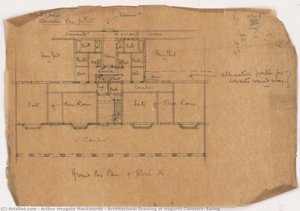
arthur heygate mackmurdo
1851 - 1942
Quick Facts
- Artistic Movement Or Style: Arts & Crafts, Art Nouveau
- Artists Or Movements Influenced By This Artist:
- Hector Guimard
- Victor Horta
- Charles Rennie Mackintosh
- Artists Who Influenced This Artist:
- William Morris
- John Ruskin
- Date Of Birth: December 12, 1851
- Date Of Death: March 15, 1942
- Full Name: Arthur Heygate Mackmurdo
- Nationality: English
- Notable Artworks:
- 8 Private Road
- 25 Cadogan Gardens
- Wren's City Churches cover
- Place Of Birth: Edmonton, England
Related Articles
The Flowing Line & Flourishing Form: Exploring Art Nouveau's Aesthetic Legacy
Explore the captivating world of Art Nouveau! Discover its origins, key artists like Horta & Mucha, regional styles, innovative techniques, and lasting influence on architecture & design. A comprehensive guide for art enthusiasts.
Art Nouveau's Golden Age: 10 Masterpieces for Your Home |
Journey into Art Nouveau's golden age! Explore 10 masterpieces by Klimt, Mucha & more. Discover captivating stories behind iconic paintings, floral motifs & flowing lines. Find museum-quality art reproductions for your home at .
Alphonse Mucha: A Comprehensive Exploration of Art Nouveau's Master of Decorative Symbolism
Explore the life & art of Alphonse Mucha, master of Art Nouveau! Discover his iconic posters, stunning illustrations, and the monumental Slav Epic. A comprehensive guide for collectors & enthusiasts.
Abstract Harmony: Achieving Interior Cohesion Through Textural Resonance Between Art, Furniture, and Material Palettes
Discover how to create harmonious interiors with expert art curation tips! Learn to balance abstract art, furniture & textures for a cohesive, emotionally resonant space. Elevate your home's aesthetic today.
Raphael Kirchner: A Poetic Vision of Belle Époque Society Through Art Nouveau Lithography
Explore the captivating world of Raphael Kirchner, a master of Art Nouveau illustration during the Belle Époque. Discover his iconic 'Kirchner Girls,' pioneering pin-up art & lasting influence.