 Preview
 Send
Send Share
Share
 Details

 Download
 Similars
 X-Ray
X-Ray Diaporama
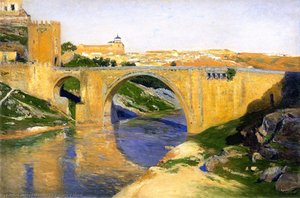
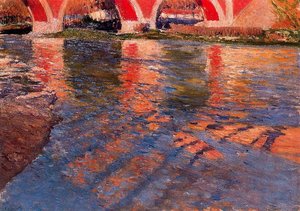
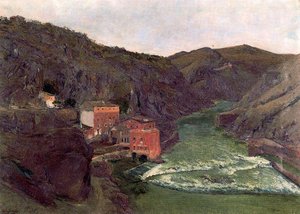
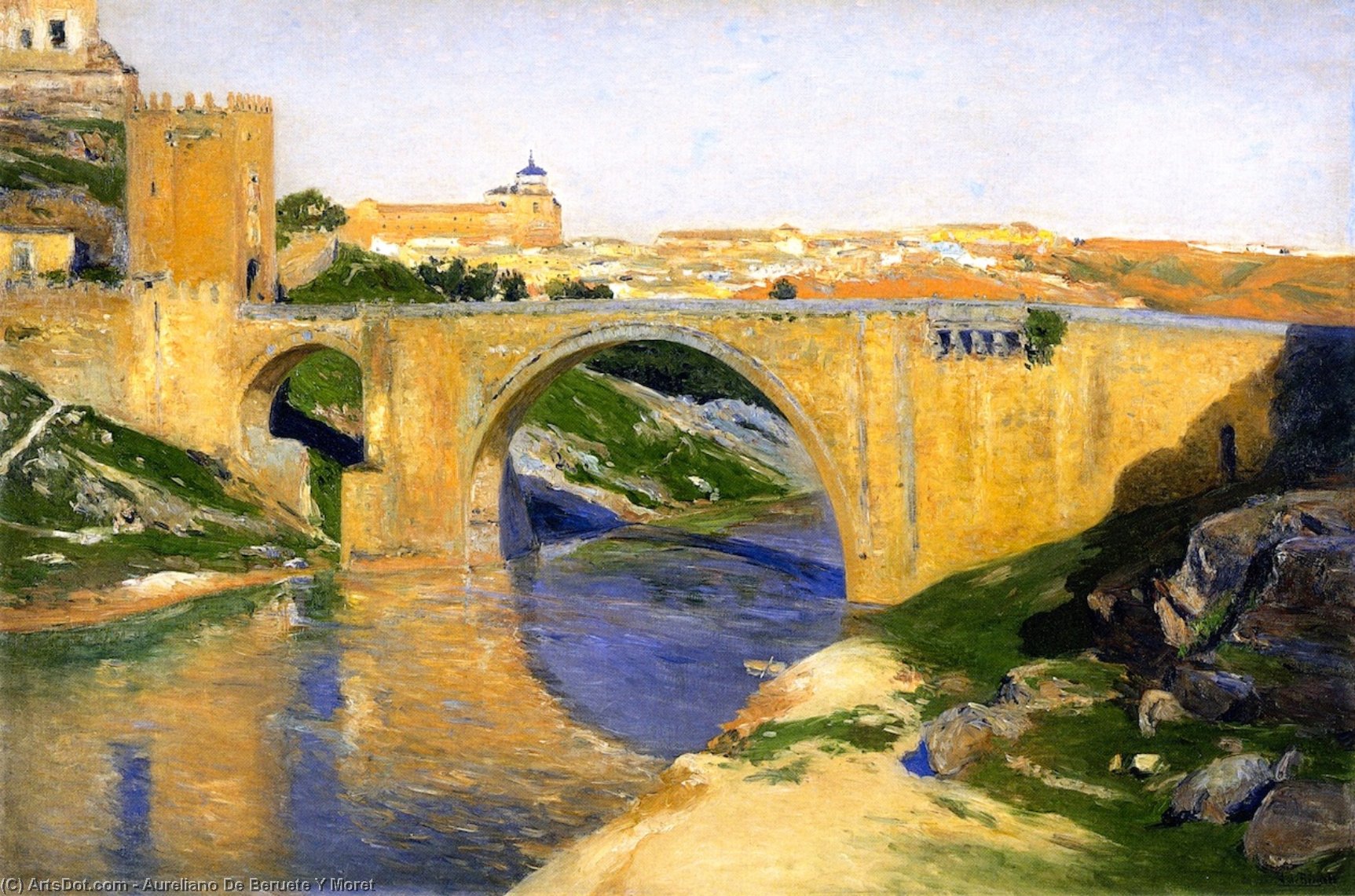
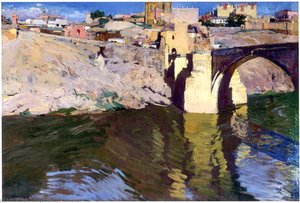
El puente de Alcantara, Toledo


 Read More
Hand Made Oil Reproduction
Hand-painted oil on canvas in your size and frame, made to order by our artists. ( Buy Print Buy Image)




P118B $10

P118H $10

P118W $10

P438Z $10

P508JH $12

P508YH $12

P805H $10

P805Z $10

P919BZ $10

P919G $10

P919XJ $10

P959ZH $10

P968JZ $12

W106C $8

W218G $10

W218JH $8

W218Y $10

W307PJ $10

W316G $10

W316PJ $8

W316Y $10

W398PJ $8

W4111J $10

W500HY $15

W500JH $15

W692G $12

W849H $8

W940BG $15

W953PJ $8




Pick from our preset sizes that match the artwork's original proportions.

You may enter your own dimensions to fit a specific frame or space. If your selected size does not match the original image's proportions, we will either crop the artwork or extend the painting with additional hand-painted elements. A digital mockup will be sent for your approval before production begins.
Please note that the on-screen preview does not reflect the actual cropping or extension. Only the mockup will accurately show the final composition.
While custom sizes are available, we recommend selecting a dimension from the predefined list to preserve the original proportions.
After order, ArtsDot.com team will email client for instructions and provide a mockup preview
Worldwide Delivery () in 3/4 weeks instead of standard 5 weeks. (26 August). No compromise on quality.

Free Worldwide Express Shipping

High-Quality Linen Canvas

Full Shipping Insurance

Customs Tax Refund Guarantee

True Color Matching Guarantee

60-Day Return Policy (Defects Only)

100% Money-Back Guarantee

Bulk Discount Offer
 Glass option is only available in size under 110 CM

El puente de Alcantara, Toledo
Reproduction Medium
Reproduction Size
-


Total Price
$ 263
Artwork Description
A Timeless Encounter with Toledo's Majesty
In the heart of Spain, where history breathes through ancient stone and the Tagus River winds its eternal path, lies the soul of Aureliano De Beruete Y Moret’s 1906 masterpiece, El puente de Alcantara, Toledo. This breathtaking oil on canvas is far more than a mere depiction of a landmark; it is a profound meditation on the intersection of human engineering and the raw, untamed beauty of the Spanish landscape. As the viewer's eye meets the sturdy, weathered arches of the Alcántara Bridge, there is an immediate sense of entering a world where time slows down. The bridge serves as a monumental gateway, anchoring the composition and inviting us to traverse from the tangible foreground into the misty, atmospheric heights of the Toledo skyline.
The artist’s technique reveals a masterful command over light and texture, characteristic of his celebrated plein-air approach. De Beruete employs a palette rich in deep blues, verdant greens, and earthy ochres, creating a chromatic harmony that captures the specific, fleeting mood of a peaceful afternoon. His brushstrokes are notably bold and expressive, lending a rhythmic energy to the water below and the rugged hills beyond. This tactile quality does not merely represent the scene; it breathes life into it, allowing the play of sunlight on the stone arches to shimmer with a palpable vitality. For the discerning collector or interior designer, such a piece offers a dynamic focal point that brings both movement and a sense of historical weight to any sophisticated space.
The Spirit of Regenerationism and Landscape
To understand the emotional depth of this work, one must look toward the cultural currents of early twentieth-century Spain. Aureliano De Beruete Y Moret was not merely a painter of scenery but an intellectual voice of the Regenerationism movement—a period dedicated to the spiritual and cultural renewal of the nation. Through his lens, the landscape of Toledo becomes a symbol of enduring strength and national identity. The way the city emerges from the background, partially veiled by the soft atmosphere, suggests a civilization deeply rooted in its geography, inseparable from the very earth and water that sustain it.
There is a quiet, pastoral narrative woven into the details of the painting. The presence of small, distant figures and even a wandering dog near the riverbank adds a layer of human intimacy to the grand scale of the architecture. These subtle elements transform the monumental bridge from a cold stone structure into a living part of the community's daily rhythm. This balance between the epic and the intimate creates an emotional resonance that is both soothing and awe-inspiring. Whether displayed in a private gallery or as a centerpiece in a luxurious living room, El puente de Alcantara, Toledo serves as a window into a serene era, offering a sense of peace and a profound connection to the enduring beauty of the Spanish heritage.
Related Artworks

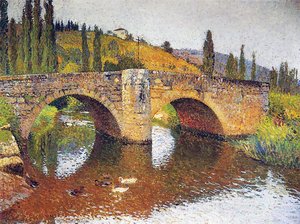
![Spanish Landscape, Toledo [paisaije Español, Toledo] — Diego Rivera, Cubism](/media/artworks/images-thumb/67/22/67223cfb67a3e879b8599832c8849094.jpg)
Artist Biography
Aureliano de Beruete y Moret: Landscape Painter and Intellectual Voice of Regenerationism
Aureliano de Beruete y Moret (1876-1922) stands as a pivotal figure in late nineteenth-century Spanish art, recognized not only for his stunning landscapes but also for his profound engagement with intellectual currents shaping the era. Born into a wealthy Navarre family descended from nobility—a lineage that instilled values of scholarship and artistic patronage—his life unfolded against the backdrop of Spain’s burgeoning cultural revival, known as Regenerationism. This movement sought to reinvigorate national identity through art, literature, and philosophy, mirroring a broader European fascination with Impressionism and its expressive potential.- Early Life and Education: Aureliano’s upbringing fostered an appreciation for learning from a young age. He pursued his doctorate in Law at the University of Madrid—a conventional path for aristocratic sons—but quickly gravitated towards art, enrolling at the Real Academia de Bellas Artes de San Fernando under the tutelage of Carlos de Haes. This formative experience cemented his commitment to plein-air painting and exposed him to the revolutionary ideas circulating amongst European artists.
- The Birth of Landscape Painting: Beruete’s artistic breakthrough arrived with “Orbajosa,” an imaginative village conceived by Benito Pérez Galdós for his novel *Doña Perfecta*. Presented as a gift to the author—a gesture indicative of the intellectual generosity characteristic of his era—this painting established him as a master of capturing atmospheric effects and conveying emotion through color. It foreshadowed his later explorations of Spanish landscapes, particularly the Manzanares valley.
- Parisian Influences and Artistic Style: A trip to Paris in 1898 proved transformative, introducing Beruete to Martín Rico’s embrace of Impressionism. Rico championed a bold approach—characterized by large brushstrokes and vibrant hues—that liberated painters from academic constraints. This influence profoundly shaped Beruete's style, resulting in canvases imbued with luminosity and immediacy that captured the essence of Spanish countryside vistas.
Aureliano de Beruete’s Contribution to Art Criticism and Scholarship
Beyond his artistic output, Beruete distinguished himself as a prolific art critic and historian. His meticulous research into Diego Velázquez—documented in *Velázquez en el Museo del Prado* (1906)—represented one of the earliest scholarly monographs dedicated to the Spanish master, establishing him as a pioneer in biographical studies and stylistic analysis. He championed a humanist perspective that prioritized observation and emotional resonance—values deeply rooted in the Regenerationist ethos.- The Museo del Prado: Beruete’s appointment as Director of the Museo Nacional del Prado in 1918 marked a watershed moment for Spanish art history. Recognizing the importance of cataloguing and interpreting artworks, he spearheaded ambitious initiatives aimed at elevating the museum's prestige and fostering public engagement. His leadership ensured that the Prado remained a bastion of artistic excellence during his tenure.
- A Patron of Scientific Exploration: Beruete’s intellectual curiosity extended beyond art; he actively supported scientific conferences and expeditions, including a daring crossing of the Sierra de Guadarrama—a feat documented in paintings that captured both the grandeur of the landscape and the spirit of adventure.
Notable Works and Artistic Legacy
Beruete’s oeuvre comprises numerous landscapes depicting iconic Spanish locations, such as Granada, Segovia, and Vichy—each rendered with remarkable sensitivity to light and color. His paintings exemplify the Impressionist ideal of capturing fleeting moments of beauty and conveying profound emotional depth. Furthermore, his meticulous scholarship on Velázquez cemented his place among Spain's foremost art historians.- Recognition and Honors: Beruete’s artistic achievements garnered widespread acclaim—including a Grand Cross of Isabella the Catholic—and solidified his reputation as a respected figure within Spanish intellectual circles.
Aureliano de Beruete's Influence on Subsequent Generations
Joaquín Sorolla, a fellow artist and lifelong friend, organized the first retrospective of Beruete’s work in 1912—a testament to his enduring influence. Aureliano de Beruete Moret (his son), served as Director of Museo del Prado from 1918–1922 furthering his father's legacy. His meticulous cataloguing efforts and unwavering dedication to preserving artistic heritage continue to inspire scholars today.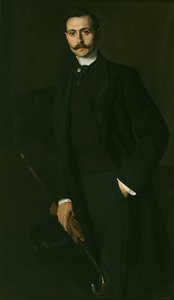
aureliano de beruete y moret
1876 - 1922 , Spain
Quick Facts
- Artistic Movement Or Style: Plein air painting
- Artists Or Movements Influenced By This Artist: ['Diego Velázquez']
- Artists Who Influenced This Artist:
- Carlos de Haes
- Martín Rico
- Date Of Birth: Madrid, Spain (1876)
- Date Of Death: 1922
- Full Name: Aureliano de Beruete y Moret
- Nationality: Spanish
- Notable Artworks:
- Orbajosa
- Paisaje en la provincia de Segovia
- Río en Vichy
- Place Of Birth: Madrid
Related Articles
Stone & Canvas: 10 Masterpieces of Timeless Art |
Explore 10 iconic paintings dominated by 'stone' tones – from Caravaggio’s drama to Rembrandt’s depth. Discover art history, techniques & find museum-quality reproductions for your home at .
Rafael de Penagos: A Study in Spanish Portraiture & Artistic Identity
Explore the life & art of Rafael de Penagos, a leading Spanish Art Deco illustrator. Discover his iconic 'Penagos Woman', commercial work, and lasting legacy. Learn about this pivotal figure in 20th-century Spanish art history.

The Golden Age Reforged: Dramatic Realism & Religious Zeal in Spanish Baroque Art
Explore the dramatic world of Spanish Baroque art! Discover masters like Zurbarán & the powerful influence of religious zeal on painting techniques – a guide for collectors and enthusiasts.
Ignacio Díaz Olano: Bridging Realism & Costumbrismo in Spanish Portraiture
Explore the captivating works of Ignacio Díaz Olano, a pivotal Spanish Realist painter. Discover his intimate portraits, evocative scenes of Andalusia, and unique 'Costumbrista' style. Learn about his legacy & find museum-quality reproductions.
José Gutiérrez Solana: A Chronicle of Spanish Society Through Expressionist Vision
Explore the captivating world of José Gutiérrez Solana, a pivotal Spanish Expressionist painter. Discover his haunting depictions of early 20th-century Spain, influenced by Goya & El Greco. Learn about his key works and lasting legacy.