

 Preview
 Send
Send Share
Share
 Details

 Download
 Similars
 X-Ray
X-Ray Diaporama
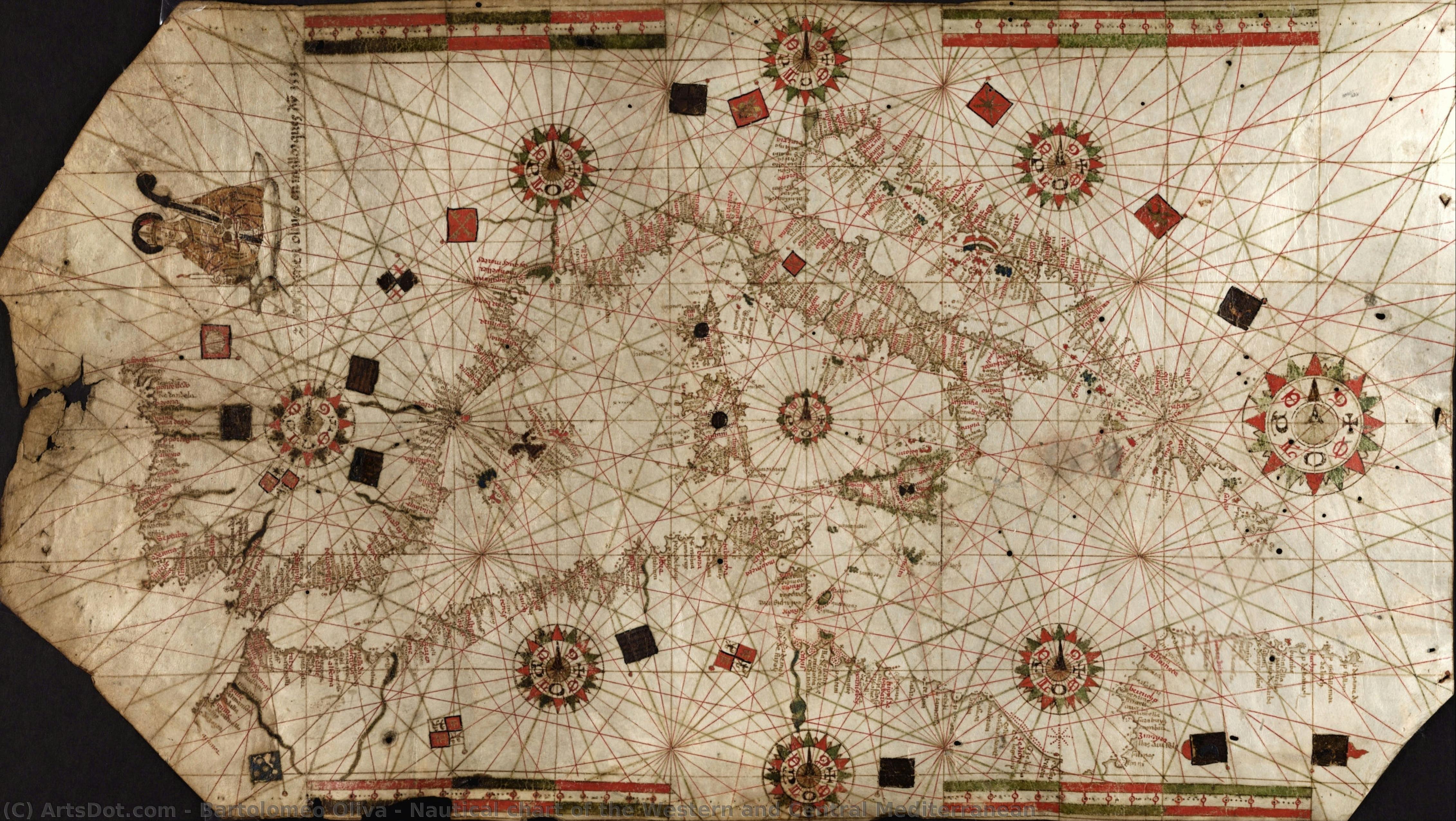
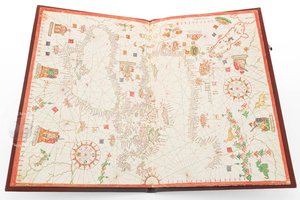
Nautical chart of the Western and Central Mediterranean
 Parchment
 Early Modern
 34.0 x 58.0 cm
 Maritime Museum of Barcelona
 Read More
Purchase a high-resolution, enhanced digital image, far superior to the online preview.
Each file is meticulously prepared by our in-house specialists using advanced tools and expert manual retouching. We ensure every image has exceptional clarity, precise color accuracy, and fine detail.
The final file is delivered via email within 72 hours, optimized for immediate use in professional, editorial, and print environments. This is the same quality trusted by top-tier design studios, publishers, and galleries.
Digital Image
Download a high-resolution file for personal display, printing, and creative projects. ( Buy Print Buy Hand Made Painting)
Included in Every Digital Image Order
Expert Digital Delivery, Guaranteed
When you choose ArtsDot.com, you're not just getting an image - you're receiving a professionally enhanced digital artwork, crafted with precision and backed by a satisfaction guarantee. Here's everything that comes with your order, automatically:

Fast Email Delivery
Your high-resolution digital image file will be emailed to you within 72 hours of ordering - ready for immediate use.

AI-Enhanced Digital File
Your artwork is professionally optimized using advanced AI tools and manual editing, ensuring maximum detail, clarity, and color accuracy.

Free Lifetime Re-Delivery
Accidentally deleted or lost your file? No worries - we'll resend it to you anytime, free of charge.

No Import Fees - Ever
Enjoy your artwork instantly with zero customs, duties, or delivery fees - digital downloads are always tax-free.

Color Accuracy Guarantee
We ensure your digital image reflects the original colors as closely as possible using professional tools and color management.

60-Day Satisfaction Guarantee
If you're not satisfied with your digital image, we'll revise it or refund 100% within 60 days - no questions asked.

100% Money-Back Guarantee
Not satisfied? Get a full refund within 60 days of receiving your digital file - no questions asked.

Bulk Order Discounts
Buy 3 images, save 10% - Buy 5, save 15% - Buy 10+, save 20%. Great for creative projects, galleries, and agencies.
Collectible Description
A Voyage Through Time: The Cartographic Mastery of Bartolomeo Oliva
To gaze upon the Nautical chart of the Western and Central Mediterranean is to embark on a voyage through the golden age of maritime exploration. Created in 1538 by the skilled hand of Bartolomeo Oliva, this exquisite parchment serves as more than just a navigational tool; it is a breathtaking window into a world where the sea was the ultimate frontier. The map meticulously traces the contours of the Western and Central Mediterranean, stretching from the rugged Atlantic coast of the Iberian Peninsula to the distant shores of Crete, and southward along the sun-drenched North African coastline. Every line drawn by Oliva carries the weight of history, capturing a moment when the maps of the world were being rewritten by the courage of sailors and the precision of master cartographers.
The artistry of this piece lies in its intricate fusion of scientific accuracy and decorative splendor. Beyond the geographical boundaries, the chart is alive with movement and narrative. Tiny, meticulously rendered vessels—ranging from agile galleys to sturdy caravels—dot the azure expanses of the sea, suggesting the bustling commerce and perilous adventures of the 16th century. These small figures are not merely decorations; they represent the pulse of Mediterranean life, embodying the spirit of an era defined by discovery. The delicate interplay of symbols and fine linework creates a texture that invites the eye to wander, discovering hidden details in every corner of the parchment, much like a navigator searching for safe harbor.
The Legacy of the Oliva Dynasty
The historical significance of this work is deeply rooted in the prestigious lineage of the Oliva family. Based in Mallorca, Bartolomeo and his brother Jaume were foundational figures in a dynasty of cartographers whose influence spanned decades and crossed borders, from Venice to Palermo. This specific chart, signed by Bartolome of Mallorca in 1538, bears the unmistakable mark of a craftsman operating at the height of the Renaissance's intellectual and artistic expansion. The presence of religious iconography, such as the figure of St. Nicholas on the western neck of the parchment, reminds us that during this period, science, faith, and art were inextricably linked, providing both spiritual protection and physical direction to those braving the unknown.
For the discerning collector or interior designer, a reproduction of this nautical masterpiece offers an unparalleled opportunity to introduce a sense of timeless elegance and intellectual depth into a space. The warm, aged tones of the parchment and the complex, detailed composition make it a commanding focal point for a study, a library, or a sophisticated maritime-themed salon. It is a piece that does not merely decorate a wall but tells a story of human ambition, technical brilliance, and the eternal allure of the horizon. Owning such a work is an invitation to contemplate the vastness of our history and the enduring beauty of the maps that once guided the world.
Related Artworks
Artist Biography
Titian: The Master of Light and Color
Titian, born Tiziano Vecellio around 1488/90 in Pieve di Cadore, a small town in the Venetian Alps, stands as arguably the most significant figure in the history of Venetian painting. His impact on subsequent generations of artists is immeasurable, and his legacy continues to captivate viewers centuries after his death in 1576. More than simply a painter, Titian was a revolutionary who fundamentally altered the course of Western art, particularly in his masterful manipulation of color, light, and texture – elements that would become hallmarks of the High Renaissance and beyond.
Titian’s early life remains somewhat shrouded in mystery. He apprenticed under the relatively obscure painter Francesco Fontebasso in Venice, before receiving further instruction from the more established artists Gaudenzio Ferrari and Giovan Battista della Cerva. These formative experiences instilled in him a deep understanding of Venetian painting traditions, including the meticulous detail and religious fervor prevalent at the time. However, Titian quickly distinguished himself through his bold experimentation and innovative approach to subject matter and technique.
The Rise of a Master: Early Works and Patronage
Titian’s career gained momentum in the 1520s, fueled by a series of prestigious commissions from wealthy Venetian patrons. He secured lucrative contracts from the powerful Doge Andrea Gritti, who commissioned a monumental portrait celebrating his maritime achievements – a work that established Titian's reputation as a leading artist. His early works demonstrate a growing confidence and technical skill, characterized by a vibrant palette and a burgeoning interest in capturing the nuances of human emotion. He was particularly adept at portraying opulent fabrics and luxurious settings, reflecting the wealth and power of his Venetian clientele.
Crucially, Titian cultivated relationships with influential figures like Cardinal Alessandro Farnese and Pope Paul III, securing consistent patronage that allowed him to develop his artistic vision without the constraints of immediate financial pressures. These commissions provided him with the freedom to explore new subjects – mythological scenes, portraits of nobility, and religious compositions – each imbued with a distinctive Venetian sensibility.
Technique and Innovation: Color, Light, and Texture
Titian’s genius lay not just in his subject matter but also in his revolutionary technique. He was a pioneer in the use of oil paint, mastering its ability to create luminous colors, subtle gradations of tone, and incredibly rich textures. Unlike many of his contemporaries who favored tempera or fresco, Titian embraced the fluidity and versatility of oil, allowing him to build up layers of color with astonishing delicacy. This layering technique, known as glazing, created a sense of depth and atmosphere that was unprecedented in Venetian painting.
His use of *chiaroscuro* – the dramatic contrast between light and shadow – further enhanced the three-dimensionality of his figures and settings. Titian’s ability to capture the fleeting effects of light on surfaces, particularly fabrics and skin, is breathtakingly realistic. He didn't simply paint what he saw; he painted *how it felt*—the warmth of sunlight, the coolness of shade, the shimmer of silk.
Major Works and Lasting Influence
Titian’s oeuvre encompasses a vast range of subjects and styles, but several works stand out as particularly significant. “Venus of Urbino” (1538), arguably his most famous painting, redefined the genre of the nude portrait, imbuing it with sensuality and psychological depth. “Assumption of the Virgin” (c. 1516-1518) showcases his mastery of composition and color orchestration, while “Bacchus and Ariadne” (1523-1524) exemplifies his dramatic flair and theatrical sensibility.
Titian’s influence on subsequent generations of artists is profound. He inspired painters such as Tintoretto, Veronese, and Rubens, who adopted his techniques and embraced his bold use of color. His legacy extends far beyond the Venetian school, shaping the course of Western art for centuries to come. His emphasis on sensual beauty, dynamic composition, and masterful manipulation of light and color continues to resonate with viewers today, solidifying Titian’s place as one of the greatest painters in history.
bartolomeo oliva
1538 - 1588 , Spain
Quick Facts
- Artistic Movement Or Style: Venetian Renaissance
- Artists Or Movements Influenced By This Artist:
- Manet
- Cranach
- Artists Who Influenced This Artist:
- Bellini
- Dürer
- Date Of Birth: 1488/90
- Date Of Death: 1576
- Full Name: Tiziano Vecellio
- Nationality: Italian
- Notable Artworks:
- Venus of Urbino
- Assumption
- Bacchus and Ariadne
- Place Of Birth: Pieve di Cadore, Italy

