 Preview
 Send
Send Share
Share
 Details

 Download
 Similars
 X-Ray
X-Ray Diaporama
Death of Mary


 Read More
Hand Made Oil Reproduction
Hand-painted oil on canvas in your size and frame, made to order by our artists. ( Buy Print Buy Image)




P118B $10

P118H $10

P118W $10

P438Z $10

P508JH $12

P508YH $12

P805H $10

P805Z $10

P919BZ $10

P919G $10

P919XJ $10

P959ZH $10

P968JZ $12

W106C $8

W218G $10

W218JH $8

W218Y $10

W307PJ $10

W316G $10

W316PJ $8

W316Y $10

W398PJ $8

W4111J $10

W500HY $15

W500JH $15

W692G $12

W849H $8

W940BG $15

W953PJ $8




Pick from our preset sizes that match the artwork's original proportions.

You may enter your own dimensions to fit a specific frame or space. If your selected size does not match the original image's proportions, we will either crop the artwork or extend the painting with additional hand-painted elements. A digital mockup will be sent for your approval before production begins.
Please note that the on-screen preview does not reflect the actual cropping or extension. Only the mockup will accurately show the final composition.
While custom sizes are available, we recommend selecting a dimension from the predefined list to preserve the original proportions.
After order, ArtsDot.com team will email client for instructions and provide a mockup preview
Worldwide Delivery () in 3/4 weeks instead of standard 5 weeks. (17 August). No compromise on quality.

Free Worldwide Express Shipping

High-Quality Linen Canvas

Full Shipping Insurance

Customs Tax Refund Guarantee

True Color Matching Guarantee

60-Day Return Policy (Defects Only)

100% Money-Back Guarantee

Bulk Discount Offer
 Glass option is only available in size under 110 CM

Death of Mary
Reproduction Medium
Reproduction Size
-


Total Price
$ 263
Artwork Description
The Lamentation of Mary: A Renaissance Echo in Castelfiorentino
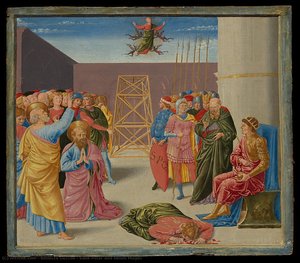
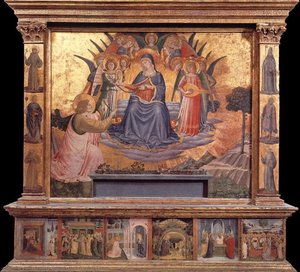
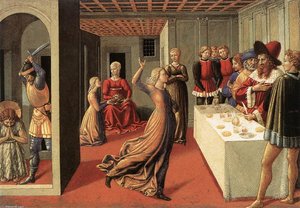
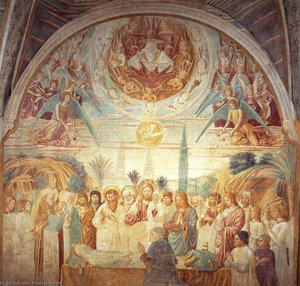
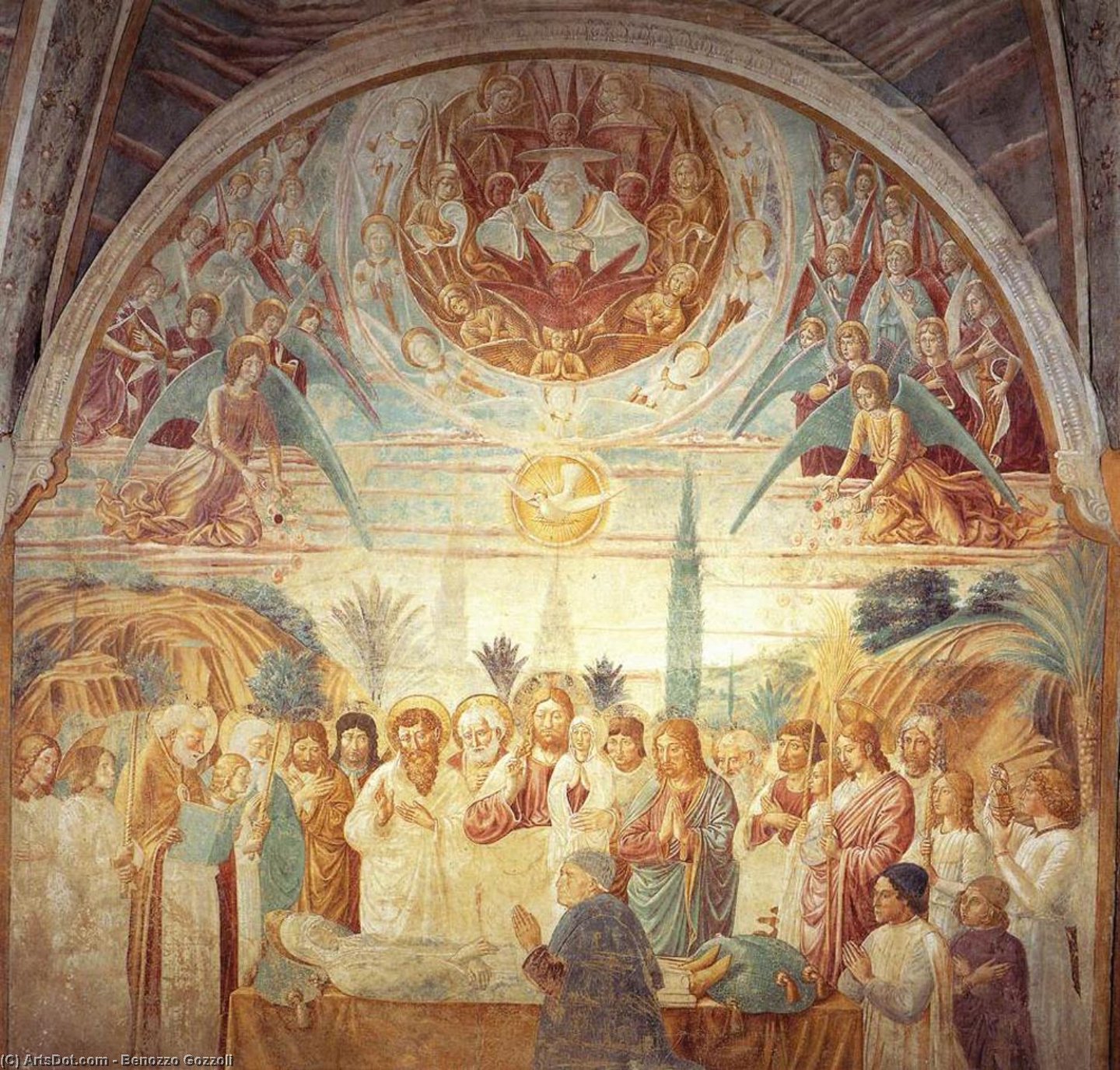
Benozzo Gozzoli’s “Death of Mary,” painted in 1484 for the Tabernacle of the Madonna della Tosse in Castelfiorentino, Italy, is more than just a depiction of sorrow; it's a meticulously crafted tableau of faith, grief, and divine grace. This fresco, now housed within the Biblioteca Comunale, offers a profound glimpse into the artistic and spiritual landscape of early Renaissance Florence – a period defined by both burgeoning humanism and unwavering religious devotion. Gozzoli’s genius lies not merely in his technical skill but in his ability to imbue a complex scene with layers of meaning, inviting viewers to contemplate the intersection of earthly suffering and eternal salvation.
The composition immediately establishes a clear division between the earthly realm and the celestial sphere. Below, within a shallow, receding space, we witness Mary’s death – a poignant image of vulnerability and repose. She lies upon a simple catafalque, her pale complexion symbolizing purity and sacrifice. Around her gather figures representing both earthly mourning and divine intervention. Apostles, identified by their distinctive gestures and attire, express profound grief, while angels, rendered with an ethereal quality, offer solace and prepare the soul for its journey to heaven. The inclusion of two young men, likely relatives of the patron who commissioned the work, adds a layer of personal connection to the universal theme of loss.
A Symphony of Color and Technique
Gozzoli’s mastery is evident in his masterful use of color and technique – hallmarks of the Florentine Renaissance. The fresco employs a muted palette dominated by cool blues, greens, and browns, creating an atmosphere of solemnity and introspection. The artist skillfully utilizes *sfumato*, a technique perfected by Leonardo da Vinci, to soften outlines and create a sense of atmospheric depth. This blurring effect is particularly noticeable in the depiction of the figures emerging from the lower register, seamlessly transitioning into the luminous realm above. The layering of pigments – a characteristic of fresco painting – contributes to the work’s rich texture and enduring quality.
The architectural elements within the scene are equally significant. The archway framing the composition serves as a visual metaphor for the transition between life and death, echoing the architecture of the tabernacle itself. This deliberate integration of art and space underscores the fresco's role not just as a decorative element but as a sacred space designed to inspire contemplation and reverence.
Symbolism and Spiritual Resonance
Beyond its formal beauty, “Death of Mary” is replete with symbolic meaning. The presence of birds – one soaring upwards towards heaven, the other resting near the deceased – represents hope and resurrection. The golden light emanating from above symbolizes divine grace and the promise of eternal life. The careful arrangement of figures also reflects a hierarchical structure mirroring biblical narratives and theological doctrines. Gozzoli’s work is not simply a representation of an event; it's a carefully constructed allegory designed to convey profound spiritual truths.
A Legacy in Reproduction
Today, reproductions of “Death of Mary” offer art enthusiasts and collectors the opportunity to experience the beauty and depth of Gozzoli’s masterpiece. Handcrafted oil paintings meticulously recreate the fresco's intricate details and evocative atmosphere, capturing the essence of this timeless work of art. These reproductions are created using traditional techniques and high-quality materials, ensuring that they faithfully represent the original while providing a stunning addition to any home or collection. To explore more about Benozzo Gozzoli and his works, visit Discovering the Biblioteca Comunale Castelfiorentino, Italy.
Related Artworks
Artist Biography
early life and training
benozzo gozzoli, an italian renaissance painter from florence, was born in 1420. he is best known for his series of murals in the palazzo medici-riccardi, depicting festive, vibrant processions with fine attention to detail and a pronounced international gothic influence. as a young artist, gozzoli was a pupil and assistant of the renowned painter fra angelico. some of his early works, such as those in the convent of san marco in florence, were executed after fra angelico's designs. this training laid the foundation for gozzoli's future success.notable works and collaborations
* the journey of the magi to bethlehem (1459-1461): a fresco in the magi chapel of the palazzo medici-riccardi, showcasing gozzoli's mastery of international gothic style. * collaboration with lorenzo ghiberti on the paradise doors of the battistero di san giovanni (1444-1447). * work in rome, including a fresco of st. anthony and two angels in santa maria in aracoeli, under the patronage of pope eugene iv.artistic style and legacy
gozzoli's style, characterized by its attention to detail and international gothic influence, has been praised for its unique blend of elegance and sophistication. his prolific output, including numerous frescoes in tuscany and umbria, has earned him a place among the most important figures in italian renaissance art.- view gozzoli's artworks on ArtsDot: https://ArtsDot.com/@/benozzo-gozzoli
- explore the italian renaissance art movement on ArtsDot: /en/art/list/
- discover more about gozzoli's life and works on wikipedia: https://en.wikipedia.org/wiki/benozzo_gozzoli
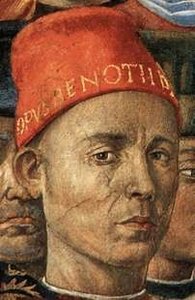
Benozzo Gozzoli
1420 - 1497 , Italy
Quick Facts
- Artistic Movement Or Style: International Gothic
- Artists Or Movements Influenced By This Artist: ['Early Renaissance']
- Artists Who Influenced This Artist:
- Fra Angelico
- Lorenzo Ghiberti
- Date Of Birth: 1420
- Date Of Death: 1497
- Full Name: Benozzo di Lese
- Nationality: Florentine
- Notable Artworks:
- Journey of the Magi
- Scenes from St Francis
- Place Of Birth: Florence, Italy
Related Articles

The Fresco as Family Legacy: Preserving Heritage Through Wall Art
Explore the rich history & enduring legacy of fresco painting. Discover how to preserve family heritage through stunning wall art. Expert insights & restoration guidance.
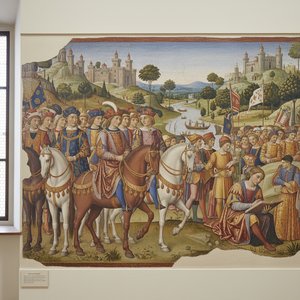
Benozzo Gozzoli: Narrative Innovation & Secular Humanism in Early Renaissance Frescoes
Explore the innovative frescoes of Benozzo Gozzoli, a key Florentine Renaissance painter. Discover his unique blend of religious narrative, secular humanism & detailed portraiture in masterpieces like the Magi Chapel cycle.

The Enduring Legacy of Fresco: Technique, History & Artistic Expression Across Cultures
Explore the rich history & enduring legacy of fresco painting! Discover ancient techniques, Giotto's masterpieces, and modern applications. Expert insights for art lovers & professionals.

The Enduring Legacy of Fresco Painting: Techniques, History & Contemporary Relevance
Explore the rich history & enduring artistry of fresco painting – from Giotto to Michelangelo! Discover techniques, conservation efforts, & modern applications. Learn how ArtsDot brings this timeless art form to your home.
Art That Lives With You: The Emotional Power of a Custom Interior Fresco
Discover the emotional power & timeless beauty of custom interior frescoes. Explore history, design tips & expert guidance from – creating lasting legacies.