 Preview
 Send
Send Share
Share
 Details

 Download
 Similars
 X-Ray
X-Ray Diaporama
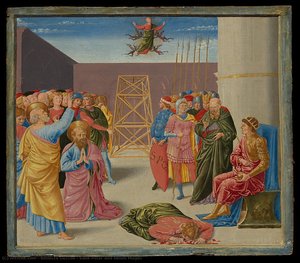
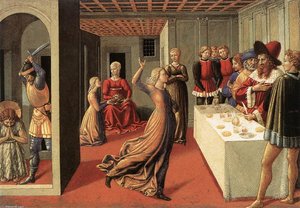
The Dance of Salome
 Oil
Oil- WallArt
- Early Renaissance
 1461
1461 23.0 x 34.0 cm
 National Gallery of Art
 Read More
Hand Made Oil Reproduction
Hand-painted oil on canvas in your size and frame, made to order by our artists. ( Buy Print Buy Image)




P118B $10

P118H $10

P118W $10

P438Z $10

P508JH $12

P508YH $12

P805H $10

P805Z $10

P919BZ $10

P919G $10

P919XJ $10

P959ZH $10

P968JZ $12

W106C $8

W218G $10

W218JH $8

W218Y $10

W307PJ $10

W316G $10

W316PJ $8

W316Y $10

W398PJ $8

W4111J $10

W500HY $15

W500JH $15

W692G $12

W849H $8

W940BG $15

W953PJ $8




Pick from our preset sizes that match the artwork's original proportions.

You may enter your own dimensions to fit a specific frame or space. If your selected size does not match the original image's proportions, we will either crop the artwork or extend the painting with additional hand-painted elements. A digital mockup will be sent for your approval before production begins.
Please note that the on-screen preview does not reflect the actual cropping or extension. Only the mockup will accurately show the final composition.
While custom sizes are available, we recommend selecting a dimension from the predefined list to preserve the original proportions.
After order, ArtsDot.com team will email client for instructions and provide a mockup preview
Worldwide Delivery () in 3/4 weeks instead of standard 5 weeks. (17 August). No compromise on quality.

Free Worldwide Express Shipping

High-Quality Linen Canvas

Full Shipping Insurance

Customs Tax Refund Guarantee

True Color Matching Guarantee

60-Day Return Policy (Defects Only)

100% Money-Back Guarantee

Bulk Discount Offer
 Glass option is only available in size under 110 CM

The Dance of Salome
Reproduction Medium
Reproduction Size
-


Total Price
$ 463
Artwork Description
The Dance of Salome: A Renaissance Enigma
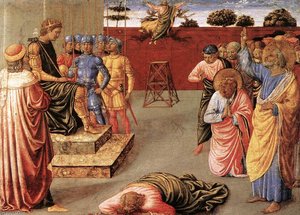
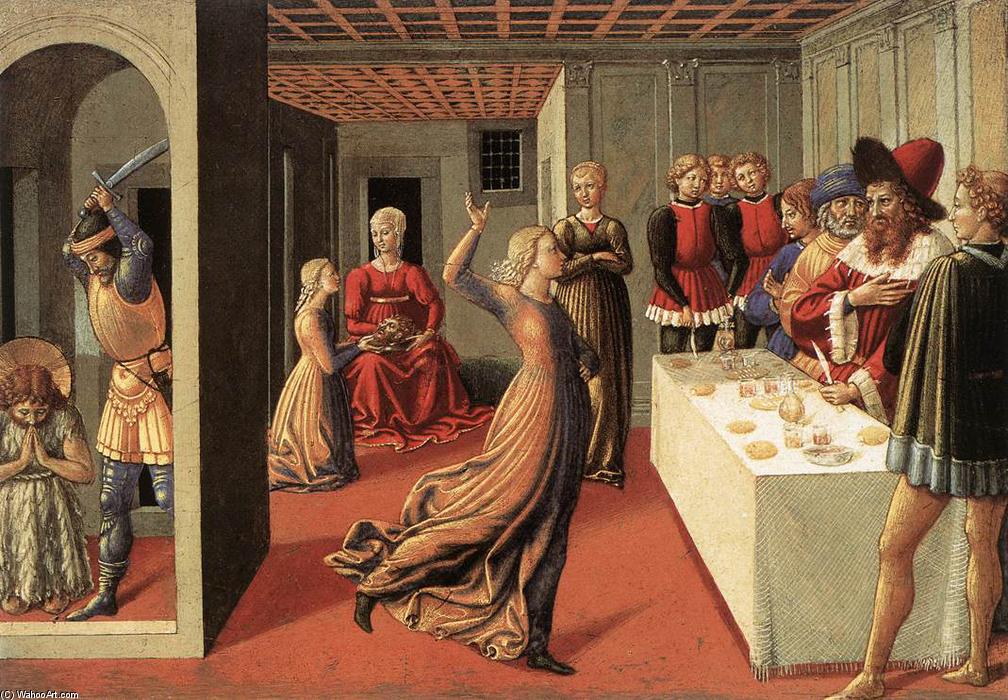
Benozzo Gozzoli’s “The Dance of Salome,” painted in 1461, is not merely a depiction of a biblical tale; it's a meticulously crafted tableau brimming with symbolic weight and arresting theatricality. This tempera panel, currently residing within the National Gallery of Art in Washington D.C., offers a rare glimpse into the artistic sensibilities of the Early Renaissance, revealing a masterful blend of religious narrative, humanism, and an almost unsettlingly intimate portrayal of a pivotal moment. The painting immediately commands attention with its vibrant palette – deep reds, rich browns, and shimmering golds—a testament to Gozzoli’s skill in layering color and creating a sense of opulent depth.
At the heart of the composition stands Salome, poised mid-dance before King Herod. She is not presented as a seductive temptress, but rather as a figure caught in a complex web of desire, revenge, and tragic fate. Her movement is fluid yet contained, her expression a mixture of calculated allure and underlying sorrow. The surrounding figures – the grieving onlookers, the watchful servants, and the imposing presence of Herod himself—are rendered with remarkable detail, each contributing to the painting’s dramatic atmosphere. Gozzoli's technique is particularly noteworthy; he employs *tempera* on panel, allowing for a level of textural richness and nuanced shading that elevates the work beyond simple illustration.
A Story Woven in Detail
The narrative depicted is drawn from the Gospel accounts of Matthew and Mark, recounting Herod’s fascination with Salome's dance following the execution of John the Baptist. The story itself is steeped in intrigue and betrayal – a young woman driven by vengeance, a king consumed by lust, and a martyr unjustly slain. Gozzoli doesn’t shy away from the darker aspects of this tale; he captures the palpable tension and emotional turmoil with a sensitivity that belies the painting's formal beauty. The inclusion of the severed head of John the Baptist, presented to Salome by a servant, is a stark reminder of the tragic consequences of her actions – a detail rendered with unsettling realism.
Beyond the immediate story, “The Dance of Salome” resonates with broader Renaissance themes. Gozzoli’s work reflects the era's fascination with classical mythology and its emphasis on humanism—the celebration of human potential and achievement. The composition itself mirrors the principles of linear perspective, creating a convincing illusion of depth and space. Furthermore, the painting’s placement within an altarpiece suggests a didactic purpose – intended to educate viewers about biblical narratives and moral lessons. The predella panel, in particular, allowed Gozzoli considerable artistic freedom to expand upon the story, as evidenced by his detailed depiction of the saints associated with the event.
Symbolism and Artistic Influence
The painting’s symbolism is layered and complex. The dance itself can be interpreted as a metaphor for the pursuit of power and the dangers of unchecked desire. Salome's veiled attire, often referred to as “the seven veils,” has been subject to much speculation. While Wilde popularized the image in his play, it likely draws upon earlier artistic representations of female figures unveiling themselves—a motif rooted in ancient mythology and medieval symbolism. The arches framing the scene evoke a sense of theatricality, mirroring the performance unfolding before the viewer’s eyes.
Gozzoli's work demonstrates a clear influence from his mentor, Fra Angelico, particularly in his use of vibrant color and meticulous detail. However, Gozzoli departs from Fra Angelico’s more overtly spiritual style, embracing a greater degree of realism and dramatic intensity. His collaboration with Lorenzo Ghiberti on the “Gates of Paradise” for the Florence Baptistery further solidified his reputation as one of the leading artists of his time. The painting's legacy extends beyond its immediate historical context, inspiring countless interpretations and influencing subsequent generations of artists.
A Timeless Masterpiece
“The Dance of Salome” remains a powerful testament to Gozzoli’s artistic genius—a captivating blend of religious narrative, human drama, and technical mastery. Its enduring appeal lies not only in its exquisite beauty but also in its ability to provoke contemplation about themes of love, betrayal, revenge, and the complexities of human nature. Reproductions of this remarkable work offer a chance to experience Gozzoli’s vision firsthand, bringing this enigmatic Renaissance masterpiece into any space.
Related Artworks
Artist Biography
early life and training
benozzo gozzoli, an italian renaissance painter from florence, was born in 1420. he is best known for his series of murals in the palazzo medici-riccardi, depicting festive, vibrant processions with fine attention to detail and a pronounced international gothic influence. as a young artist, gozzoli was a pupil and assistant of the renowned painter fra angelico. some of his early works, such as those in the convent of san marco in florence, were executed after fra angelico's designs. this training laid the foundation for gozzoli's future success.notable works and collaborations
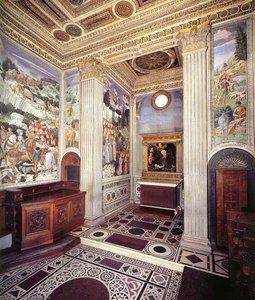
* the journey of the magi to bethlehem (1459-1461): a fresco in the magi chapel of the palazzo medici-riccardi, showcasing gozzoli's mastery of international gothic style. * collaboration with lorenzo ghiberti on the paradise doors of the battistero di san giovanni (1444-1447). * work in rome, including a fresco of st. anthony and two angels in santa maria in aracoeli, under the patronage of pope eugene iv.artistic style and legacy
gozzoli's style, characterized by its attention to detail and international gothic influence, has been praised for its unique blend of elegance and sophistication. his prolific output, including numerous frescoes in tuscany and umbria, has earned him a place among the most important figures in italian renaissance art.- view gozzoli's artworks on ArtsDot: https://ArtsDot.com/@/benozzo-gozzoli
- explore the italian renaissance art movement on ArtsDot: /en/art/list/
- discover more about gozzoli's life and works on wikipedia: https://en.wikipedia.org/wiki/benozzo_gozzoli
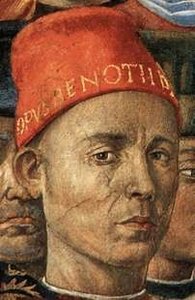
Benozzo Gozzoli
1420 - 1497 , Italy
Quick Facts
- Artistic Movement Or Style: International Gothic
- Artists Or Movements Influenced By This Artist: ['Early Renaissance']
- Artists Who Influenced This Artist:
- Fra Angelico
- Lorenzo Ghiberti
- Date Of Birth: 1420
- Date Of Death: 1497
- Full Name: Benozzo di Lese
- Nationality: Florentine
- Notable Artworks:
- Journey of the Magi
- Scenes from St Francis
- Place Of Birth: Florence, Italy
Related Articles

The Fresco as Family Legacy: Preserving Heritage Through Wall Art
Explore the rich history & enduring legacy of fresco painting. Discover how to preserve family heritage through stunning wall art. Expert insights & restoration guidance.
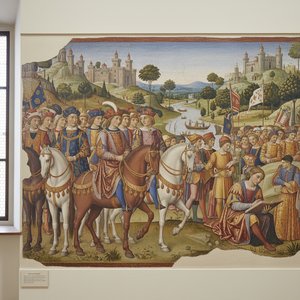
Benozzo Gozzoli: Narrative Innovation & Secular Humanism in Early Renaissance Frescoes
Explore the innovative frescoes of Benozzo Gozzoli, a key Florentine Renaissance painter. Discover his unique blend of religious narrative, secular humanism & detailed portraiture in masterpieces like the Magi Chapel cycle.

The Enduring Legacy of Fresco: Technique, History & Artistic Expression Across Cultures
Explore the rich history & enduring legacy of fresco painting! Discover ancient techniques, Giotto's masterpieces, and modern applications. Expert insights for art lovers & professionals.

The Enduring Legacy of Fresco Painting: Techniques, History & Contemporary Relevance
Explore the rich history & enduring artistry of fresco painting – from Giotto to Michelangelo! Discover techniques, conservation efforts, & modern applications. Learn how ArtsDot brings this timeless art form to your home.
The Enduring Legacy of Fresco: Technique, History & Artistic Expression
Explore the rich history & enduring artistry of fresco painting. Discover techniques from Giotto to Michelangelo, conservation efforts, & modern applications. Learn how ArtsDot brings this timeless art form to your home.