 Preview
 Send
Send Share
Share
 Details

 Download
 Similars
 X-Ray
X-Ray Diaporama
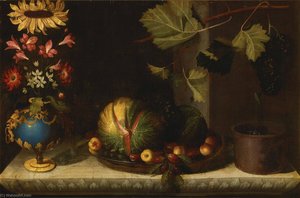
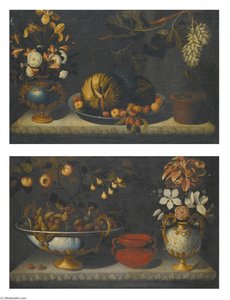
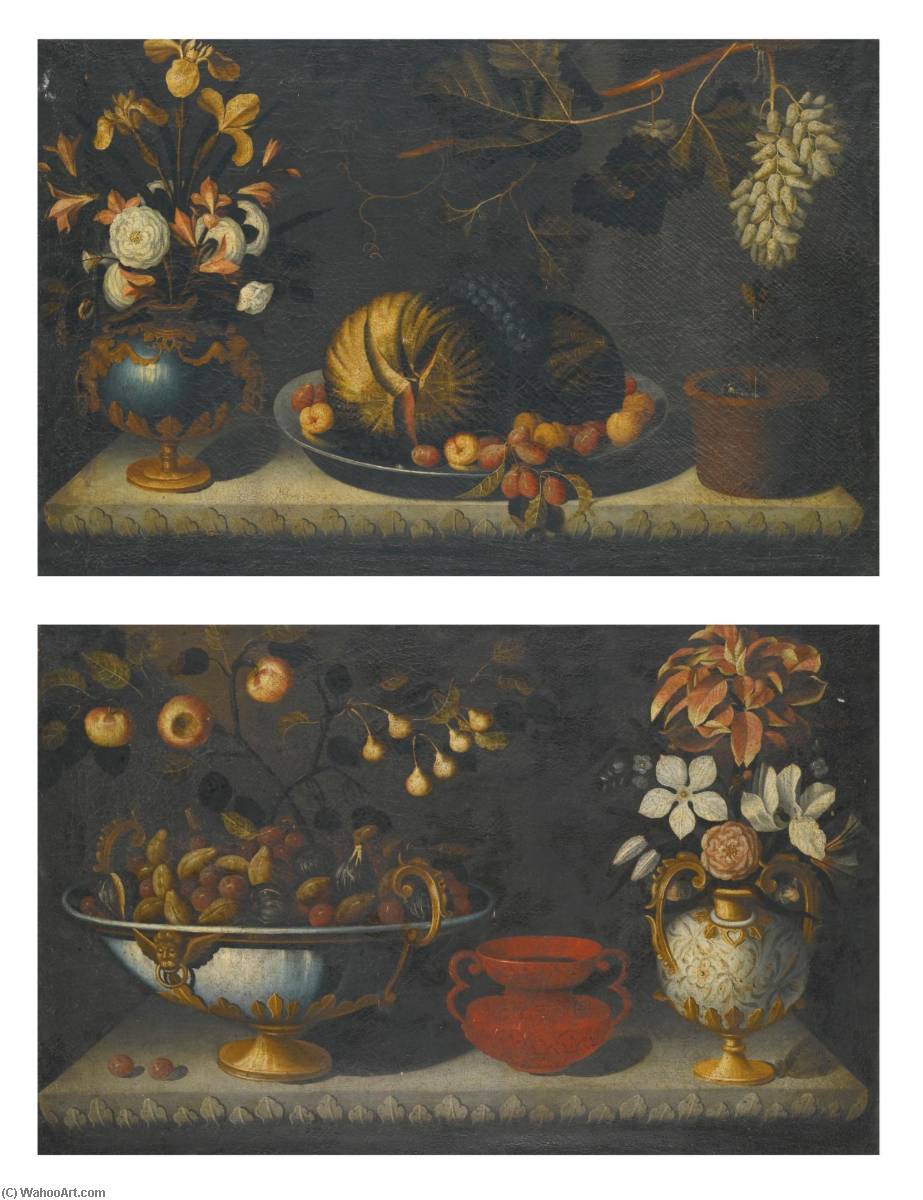
Still life with a watermelon on a pewter dish, next to gilt mounted bluestone urn of flowers Still life with plums and figs in a gilt mounted bowl, with a gilt mounted urn of flowers to the right
 Baroque
 73.0 x 112.0 cm
 Read More
Hand Made Oil Reproduction
Hand-painted oil on canvas in your size and frame, made to order by our artists. ( Buy Print Buy Image)




































Pick from our preset sizes that match the artwork's original proportions.

You may enter your own dimensions to fit a specific frame or space. If your selected size does not match the original image's proportions, we will either crop the artwork or extend the painting with additional hand-painted elements. A digital mockup will be sent for your approval before production begins.
Please note that the on-screen preview does not reflect the actual cropping or extension. Only the mockup will accurately show the final composition.
While custom sizes are available, we recommend selecting a dimension from the predefined list to preserve the original proportions.
After order, ArtsDot.com team will email client for instructions and provide a mockup preview
Worldwide Delivery () in 3/4 weeks instead of standard 5 weeks. (27 August). No compromise on quality.

Free Worldwide Express Shipping

High-Quality Linen Canvas

Full Shipping Insurance

Customs Tax Refund Guarantee

True Color Matching Guarantee

60-Day Return Policy (Defects Only)

100% Money-Back Guarantee

Bulk Discount Offer
 Glass option is only available in size under 110 CM

Still life with a watermelon on a pewter dish, next to gilt mounted bluestone urn of flowers Still life with plums and figs in a gilt mounted bowl, with a gilt mounted urn of flowers to the right
Reproduction Medium
Reproduction Size
-


Total Price
$ 263
Related Artworks
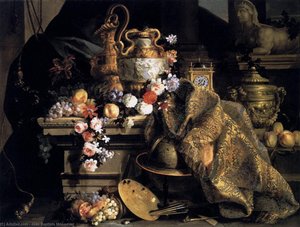
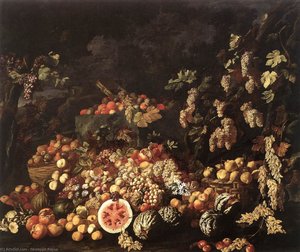
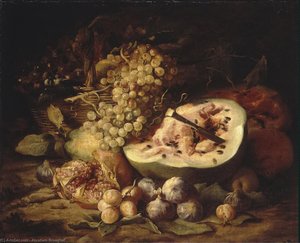
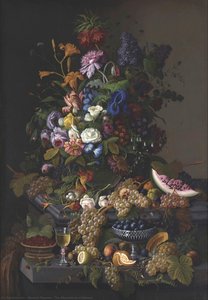
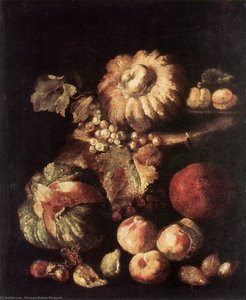
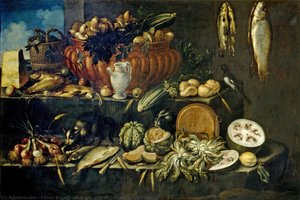
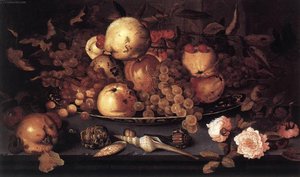
Artist Biography
The Fleeting Brilliance of Bernardo Polo
In the grand, dramatic tapestry of the Baroque era, few figures evoke as much poignant mystery as Bernardo Polo. Born in 1686, Polo’s life was a brief, luminous spark that extinguished far too soon in 1700. Though his time on this earth was tragically short, the echoes of his brushwork remain etched in the annals of Italian and Spanish art history. To study Polo is to engage with a phantom of the late seventeenth century, an artist whose legacy must be reconstructed from the vibrant, decaying beauty of the still lifes he left behind. His work serves as a window into a period defined by chiaroscuro, where light does not merely illuminate but actively sculpts form out of the encroaching shadows.
The foundations of Polo’s mastery were laid during his formative years, likely under the tutelage of the legendary Giovanni Battista Gaulli. This apprenticeship was no mere introduction to paint and canvas; it was an immersion into the monumental traditions of Roman Baroque art. From Gaulli, a master of theatricality and sculptural depth, Polo inherited a profound understanding of volume and the dramatic interplay of light. This training allowed him to transcend the simple depiction of objects, moving instead toward a sophisticated rendering of texture and weight. Even in his most delicate compositions, one can sense the influence of a sculptor’s hand, as if every peach, plum, and petal were being carved from the darkness itself.
A Symphony of Texture and Light
Polo’s artistic output is characterized by an unwavering devotion to the still life, a genre that allowed him to explore the profound tension between permanence and decay. His canvases are opulent celebrations of the sensory world, featuring meticulously rendered arrangements of fruit, flowers, and precious metalwork. He possessed a rare, almost supernatural ability to capture the tactile essence of his subjects—the velvety skin of a ripening peach, the cool, reflective surface of a pewter dish, or the translucent fragility of a rose petal. Through the painstaking application of glazes and the strategic use of impasto, Polo created surfaces that seem to shimmer with an inner life, inviting the viewer to reach out and touch the ephemeral.
The technical brilliance of his work lies in his command of the Baroque aesthetic. He utilized dramatic lighting to guide the eye through complex compositions, creating a sense of movement within seemingly static scenes. His palettes were rich and emotive, often juxtaposing the deep, somber tones of shadows with the radiant, sun-drenched hues of ripe fruit and gilded urns. This mastery of contrast does more than create visual interest; it imbues his work with a sense of drama and even a subtle memento mori—a reminder of the fleeting nature of life. In every meticulously painted bruise on a plum or wilting edge of a leaf, Polo captures the exquisite tragedy of time passing.
Legacy of a Short-Lived Master
Though his career was cut short by his death at the age of fourteen, the impact of Bernardo Polo’s brief existence remains significant. He stands as a testament to the intensity of talent that can emerge even in the most fleeting of lives. His works, such as “Still Life with a Watermelon on a Pewter Dish” and “Still Life with Plums and Figs in a Gilt Mounted Bowl,” continue to captivate collectors and historians alike, offering a rare glimpse into the sophisticated aesthetic sensibilities of the late Baroque period.
The historical significance of Polo lies not only in his technical skill but in his role as a bridge between the monumental traditions of the high Baroque and the more intimate, detailed explorations of nature that would follow. His ability to infuse inanimate objects with profound emotional resonance ensures that his name remains whispered in the halls of art history. To look upon a Polo painting is to witness a master at work, capturing the eternal beauty found within the most perishable of things.
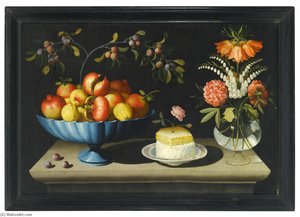
bernardo polo
1686 - 1700
Quick Facts
- Artistic Movement Or Style: Baroque
- Date Of Birth: 1686
- Full Name: Bernardo Polo
- Nationality: Italian
- Notable Artworks: ['Still life with a watermelon on a pewter dish']
- Place Of Birth: Rome, Italy
Related Articles
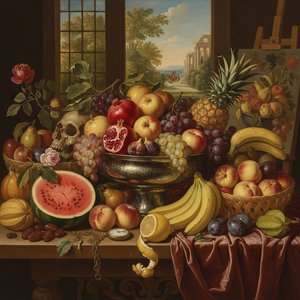
The Bountiful Still Life: Symbolism & Artistic Representation of Fruit Across Art History
Explore the rich history of still life painting & the symbolism of fruit across art movements. Discover masterpieces from Caravaggio to Cézanne with ArtsDot – expert guidance & museum-quality reproductions.
Decoding Baroque Grandeur: A Guide to the Drama and Emotion of 17th-Century Art
Explore the breathtaking drama of 17th-century Baroque art. Our expert guide decodes the use of chiaroscuro, emotional intensity, and historical grandeur to help you appreciate and curate timeless masterpieces for your collection.
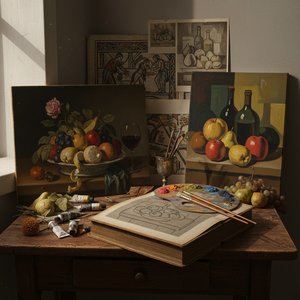
Silent Narratives: Exploring the Enduring Appeal of Still Life Painting Across Centuries
Explore the rich history of still life painting with ArtsDot. Discover Dutch Masters, decode vanitas symbolism & learn about collecting timeless art. Expert insights and museum-quality reproductions.
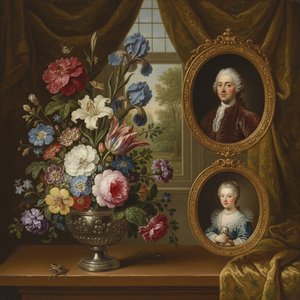
Jan van Kessel the Elder: A Baroque Master of Floral Still Life & Miniature Portraiture
Discover the exquisite detail of Jan van Kessel the Elder's Baroque floral still lifes & captivating miniatures. Explore his artistic legacy, scientific precision, and lasting influence on 17th-century Flemish painting.
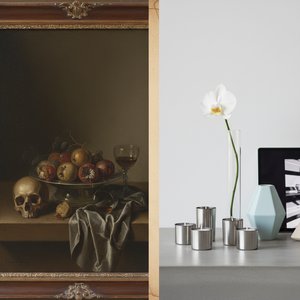
The Enduring Appeal of Still Life: A Historical & Contemporary Exploration
Explore the rich history & symbolism of still life painting with ArtsDot. Discover masterpieces from the Dutch Golden Age, learn about vanitas art, and find expert guidance for collecting timeless artworks.