 Preview
 Send
Send Share
Share
 Details

 Download
 Similars
 X-Ray
X-Ray Diaporama
Untitled


 Read More
Hand Made Oil Reproduction
Hand-painted oil on canvas in your size and frame, made to order by our artists. ( Buy Print Buy Image)




P118B $10

P118H $10

P118W $10

P438Z $10

P508JH $12

P508YH $12

P805H $10

P805Z $10

P919BZ $10

P919G $10

P919XJ $10

P959ZH $10

P968JZ $12

W106C $8

W218G $10

W218JH $8

W218Y $10

W307PJ $10

W316G $10

W316PJ $8

W316Y $10

W398PJ $8

W4111J $10

W500HY $15

W500JH $15

W692G $12

W849H $8

W940BG $15

W953PJ $8




Pick from our preset sizes that match the artwork's original proportions.

You may enter your own dimensions to fit a specific frame or space. If your selected size does not match the original image's proportions, we will either crop the artwork or extend the painting with additional hand-painted elements. A digital mockup will be sent for your approval before production begins.
Please note that the on-screen preview does not reflect the actual cropping or extension. Only the mockup will accurately show the final composition.
While custom sizes are available, we recommend selecting a dimension from the predefined list to preserve the original proportions.
After order, ArtsDot.com team will email client for instructions and provide a mockup preview
Worldwide Delivery () in 3/4 weeks instead of standard 5 weeks. (18 August). No compromise on quality.

Free Worldwide Express Shipping

High-Quality Linen Canvas

Full Shipping Insurance

Customs Tax Refund Guarantee

True Color Matching Guarantee

60-Day Return Policy (Defects Only)

100% Money-Back Guarantee

Bulk Discount Offer
 Glass option is only available in size under 110 CM

Untitled
Reproduction Medium
Reproduction Size
-


Total Price
$ 263
Artwork Description
Related Artworks
Artist Biography
Bhagwati Prasad Paliwal: Echoes of Labor and the Spirit of Rajasthan
Born in Udaipur, India, in 1944, Bhagwati Prasad Paliwal (also known as B.P. Paliwal) is a quietly significant figure in contemporary Indian oil painting. His work, largely centered on evocative depictions of rural life and the rhythms of labor, possesses a unique blend of traditional aesthetics and a subtle, almost understated, commentary on social dynamics. While biographical details remain sparse – a deliberate choice perhaps reflecting his focus on subject matter rather than self-promotion – Paliwal’s art speaks volumes about the spirit of Rajasthan and the enduring importance of manual work within its landscape.
Paliwal's artistic journey began with an immersion in the world of mechanical workshops, a formative experience that profoundly shaped his visual language. Growing up in a working-class family, he spent his youth alongside tools – not merely as instruments of production but as integral components of daily life and social interaction. This intimate connection to the tangible, the functional, and the often-overlooked objects of labor is immediately apparent in his paintings. He doesn’t simply depict scenes; he captures a feeling, an atmosphere imbued with the physicality of work.
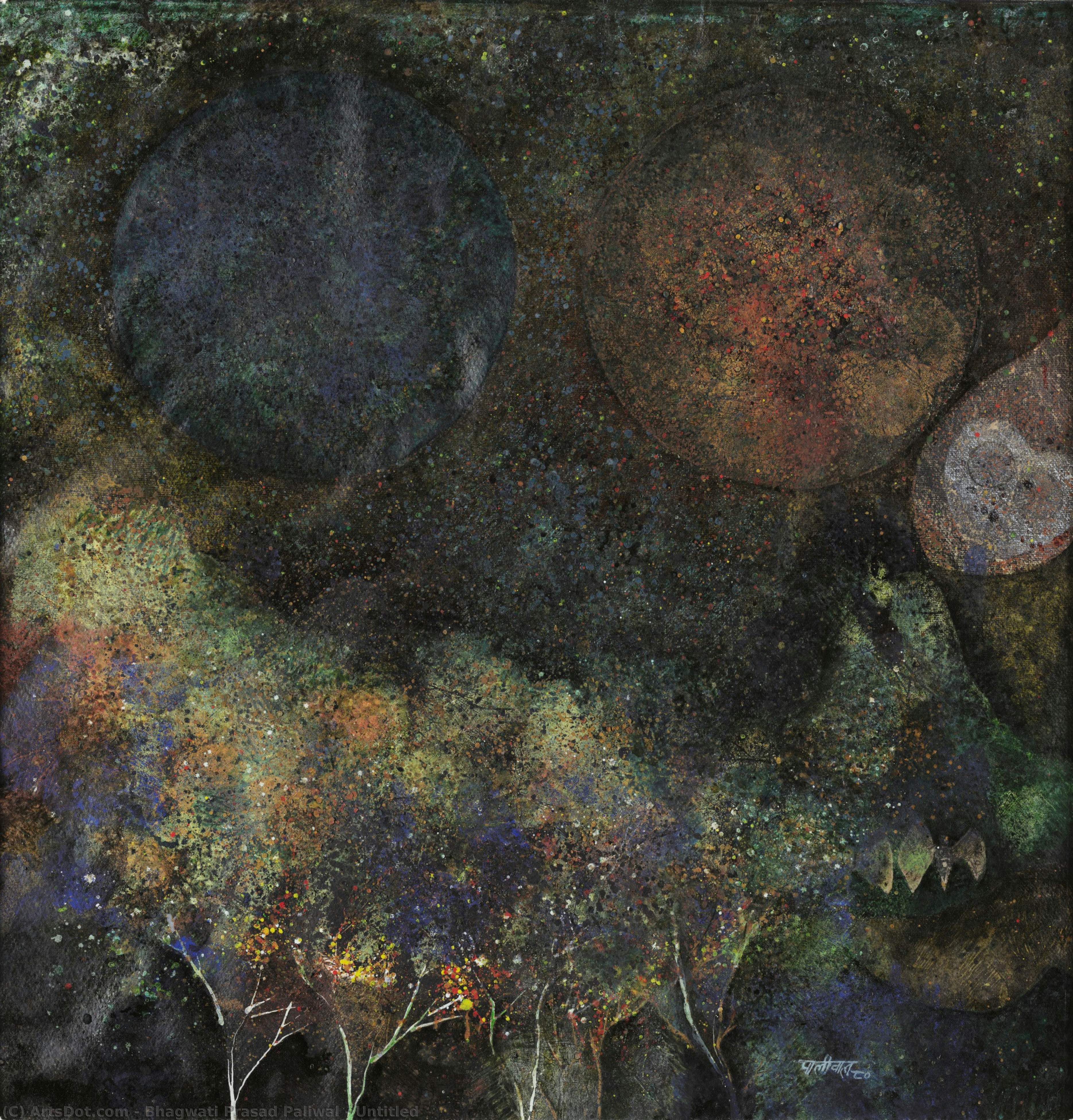
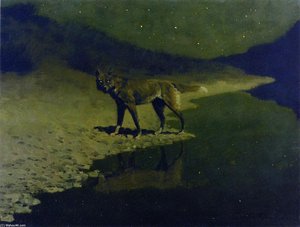
His most recognized piece, “Untitled” (1992), exemplifies this approach. The painting, currently held within ArtsDot's collection, presents a striking composition featuring a wolf set against a backdrop of celestial bodies. While seemingly fantastical, the image is grounded in a deep understanding of naturalism and a keen observation of animal behavior – qualities honed through years spent observing the world around him. The wolf itself can be interpreted as a symbol of resilience, instinct, and perhaps even the solitary nature of labor, while the stars suggest an enduring connection to something larger than oneself.
Exploring Themes of Labor and Tradition
Paliwal’s work is deeply rooted in the traditions of Rajasthan. The region's rich history as a center for textile production, agriculture, and craftsmanship profoundly influences his artistic vision. He frequently depicts scenes of farmers tending their fields, artisans meticulously crafting goods, and laborers engaged in various manual tasks. These aren’t romanticized portrayals; they are honest depictions of the realities of rural life – the sweat, the toil, and the quiet dignity of those who sustain a community.
Interestingly, Paliwal's artistic practice extends beyond mere representation. He is particularly interested in the often-silent presence of tools within the cultural consciousness. As highlighted in his work with the India Foundation for the Arts (IFA), he argues that there’s a pervasive “silence” surrounding these essential elements of human existence, a neglect that he seeks to rectify through his art. This perspective draws parallels to class discrimination, suggesting that the tools and their makers are marginalized within intellectual discourse – a theme echoed in his exploration of Delhi's migrant labor population.
A Journey Through Delhi’s Urban Landscape
More recently, Paliwal has focused on documenting the transformation of Delhi through the lens of its working class. His current project, tentatively titled *Auzaron ki Chuppi aur Kolahal* (Silence and Clamour of Tools), investigates the city's growth driven by a massive influx of migrant laborers. He meticulously researches the tools these workers employ – not just as instruments of production but as symbols of adaptation, ingenuity, and survival in a rapidly changing urban environment.
This project reflects a broader interest in *Jugaad*—the resourceful improvisation and “make-do” solutions that characterize Indian culture. Paliwal’s work captures the spirit of this approach, showcasing how laborers have continuously adapted and repurposed tools to meet their needs, creating a unique visual vocabulary rooted in practicality and resilience.
Technique and Style
Paliwal's paintings are characterized by a distinctive oil-on-paper technique. He employs a layered approach, building up rich textures and subtle gradations of color through multiple applications of paint. His brushwork is often loose and expressive, conveying a sense of immediacy and spontaneity. The use of muted earth tones—ochres, browns, and grays—evokes the colors of the Rajasthan landscape and reinforces the connection between his art and its regional context.
His work isn’t defined by dramatic compositions or bold gestures; rather, it's a quiet testament to the beauty and dignity of everyday life. Bhagwati Prasad Paliwal’s paintings offer a rare glimpse into a world often overlooked—a world where labor is not merely an economic activity but a fundamental aspect of human experience.

bhagwati prasad paliwal
1944 - , India
Quick Facts
- Artistic Movement Or Style: Oil on paper
- Date Of Birth: 1944
- Full Name: Bhagwati Prasad Paliwal
- Nationality: Indian
- Notable Artworks: ['Untitled']
- Place Of Birth: Udaipur, India
Related Articles

Watercolor Wonders: 10 Masterpieces That Redefined Art History | ArtsDot
Journey through 10 legendary watercolor masterpieces by Sargent, Turner & Homer! Explore iconic landscapes, portraits & floral art that redefined history. Find museum-quality reproductions and curated decor ideas at ArtsDot.com.

Ephemeral Visions: Exploring the Artistic Legacy & Contemporary Practice of Watercolor Painting
Explore the captivating world of watercolor painting! Discover its rich history, essential techniques, influential artists & collecting tips. A comprehensive guide for art enthusiasts from ArtsDot.

Ephemeral Visions: Exploring the History & Emotional Resonance of Watercolor Painting
Explore the captivating history of watercolor painting, from ancient techniques to modern masters like Kandinsky & Blake. Discover essential artists, collecting tips & the emotional power of this luminous medium. Expert insights for art enthusiasts.

Ephemeral Visions: Exploring the Artistic Legacy & Nuances of Watercolor Painting
Explore the captivating world of watercolor painting! Discover its rich history, essential techniques, influential artists & collecting tips from art experts. A comprehensive guide for enthusiasts.
The Enduring Appeal of Watercolor: History, Techniques & Contemporary Practice
Explore the captivating world of watercolor painting! Discover its rich history, essential techniques, influential artists, and collecting tips. A comprehensive guide for art enthusiasts.