 Preview
 Send
Send Share
Share
 Details

 Download
 Similars
 X-Ray
X-Ray Diaporama
Ludwig van Beethoven
 Acrylic On Canvas
- WallArt
- Romantic Realism
 1818
1818 40.0 x 27.0 cm
 Beethoven-Haus Bonn
 Read More
Hand Made Oil Reproduction
Hand-painted oil on canvas in your size and frame, made to order by our artists. ( Buy Print Buy Image)




P118B $10

P118H $10

P118W $10

P438Z $10

P508JH $12

P508YH $12

P805H $10

P805Z $10

P919BZ $10

P919G $10

P919XJ $10

P959ZH $10

P968JZ $12

W106C $8

W218G $10

W218JH $8

W218Y $10

W307PJ $10

W316G $10

W316PJ $8

W316Y $10

W398PJ $8

W4111J $10

W500HY $15

W500JH $15

W692G $12

W849H $8

W940BG $15

W953PJ $8




Pick from our preset sizes that match the artwork's original proportions.

You may enter your own dimensions to fit a specific frame or space. If your selected size does not match the original image's proportions, we will either crop the artwork or extend the painting with additional hand-painted elements. A digital mockup will be sent for your approval before production begins.
Please note that the on-screen preview does not reflect the actual cropping or extension. Only the mockup will accurately show the final composition.
While custom sizes are available, we recommend selecting a dimension from the predefined list to preserve the original proportions.
After order, ArtsDot.com team will email client for instructions and provide a mockup preview
Worldwide Delivery () in 3/4 weeks instead of standard 5 weeks. (17 August). No compromise on quality.

Free Worldwide Express Shipping

High-Quality Linen Canvas

Full Shipping Insurance

Customs Tax Refund Guarantee

True Color Matching Guarantee

60-Day Return Policy (Defects Only)

100% Money-Back Guarantee

Bulk Discount Offer
 Glass option is only available in size under 110 CM

Ludwig van Beethoven
Reproduction Medium
Reproduction Size
-


Total Price
$ 263
Artwork Description
A Portrait of Genius: Carl Friedrich August von Klöber’s Reverent Depiction of Ludwig van Beethoven
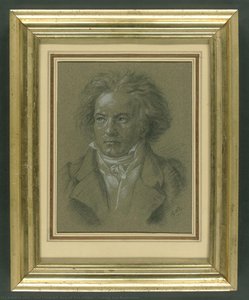
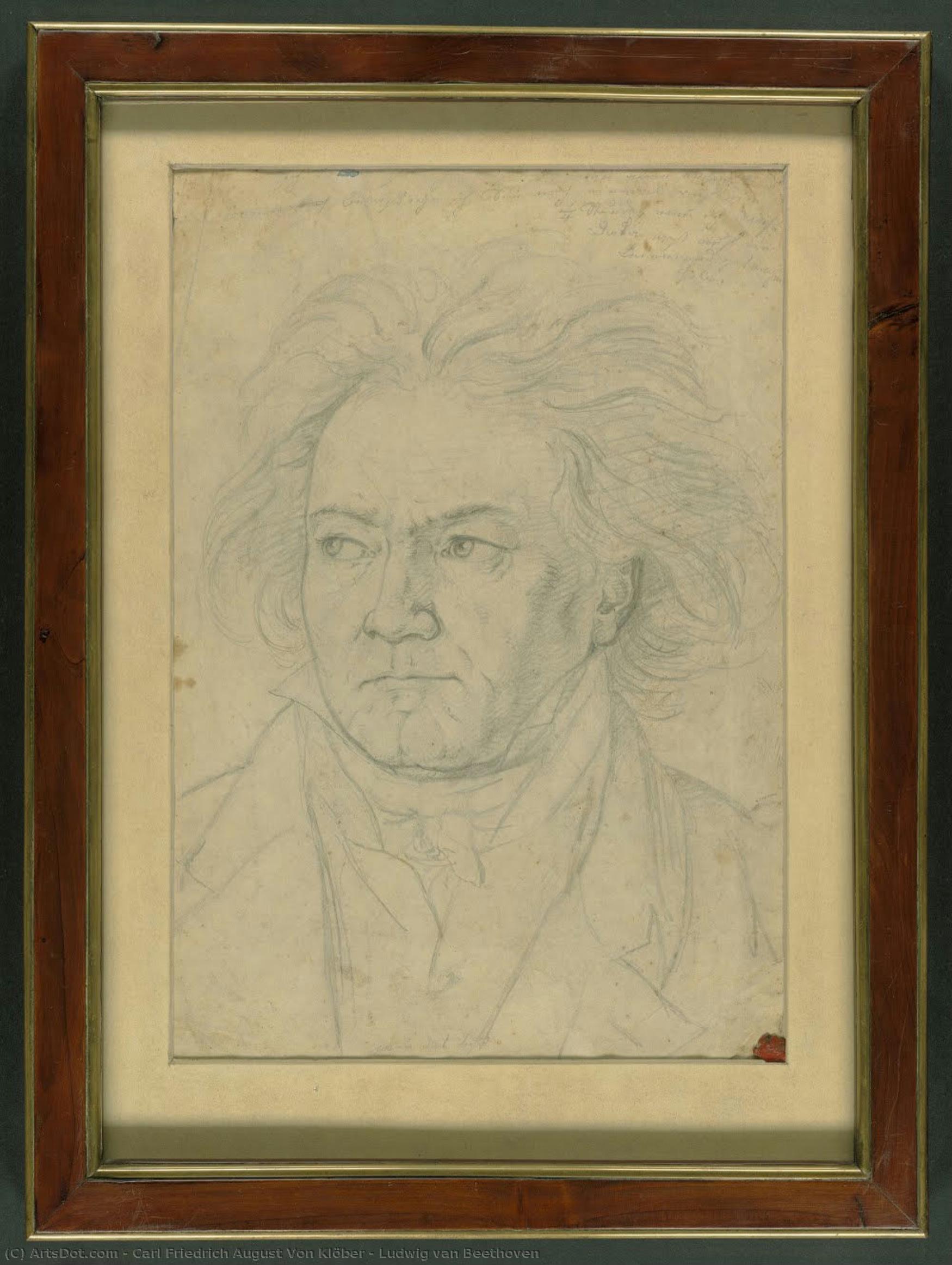
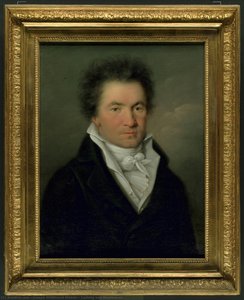
Carl Friedrich August von Klöber's 1818 portrait of Ludwig van Beethoven stands as a testament to the Romantic fascination with intellect and artistic vision. Executed during Beethoven’s formative years, this drawing captures not merely his physical likeness but also an intangible aura of profound contemplation—a characteristic that resonated deeply within the artistic circles of Berlin and beyond.
- Subject Matter: The portrait focuses squarely on Beethoven himself, presenting him in a three-quarter pose against a muted background. His gaze directs outwards, suggesting introspection and an engagement with ideas rather than immediate surroundings.
- Style & Technique: Klöber’s masterful draughtsmanship employs meticulous detail to render Beethoven's facial features—the prominent forehead, furrowed brow, and expressive eyes—with remarkable accuracy. The artist skillfully utilizes hatching and shading techniques to convey texture and depth, creating a sense of realism that transcends mere representation.
- Historical Context: Painted in the wake of Beethoven’s groundbreaking symphonies and piano sonatas, this portrait reflects the broader cultural preoccupation with musical genius during the Romantic era. It embodies the belief that art could illuminate the human spirit and capture moments of profound emotional experience—a conviction central to Klöber's artistic philosophy.
Beyond its technical prowess, the image possesses a significant symbolic dimension. Beethoven’s posture conveys seriousness and dedication – qualities admired by artists and intellectuals alike. The artist deliberately avoids opulent ornamentation, prioritizing clarity of form and conveying an impression of quiet dignity. This understated elegance aligns perfectly with the prevailing aesthetic sensibilities of the time.
- Symbolism: Beethoven’s gaze symbolizes intellectual curiosity and artistic ambition. The muted background serves to emphasize the subject's presence and directs attention towards his inner world.
The emotional impact of Klöber’s portrait is palpable. It invites viewers to contemplate Beethoven’s character—his unwavering commitment to musical innovation and his profound sensitivity to human emotion. More than just a likeness, it's an embodiment of the Romantic ideal: capturing not only what is seen but also what is felt.
- Emotional Resonance: The drawing evokes feelings of admiration for Beethoven’s artistic achievements and conveys a sense of quiet contemplation—a reflection of Klöber’s own artistic sensibilities.
Related Artworks
Artist Biography
Carl Friedrich August von Klöber: A Portraitist Bridging Parisian Elegance and Prussian Tradition
Carl Friedrich August von Klöber, born in Breslau (modern-day Wrocław), Germany, in 1793, was a pivotal figure in 19th-century German art. His life’s journey—a tapestry woven with military service, artistic study across Europe, and ultimately, the creation of compelling portraits – reflects the dynamic social and cultural shifts of his era. Klöber's career unfolded against the backdrop of Napoleonic wars, burgeoning Romanticism, and the rise of urban centers as hubs for artistic innovation. He died in Berlin in 1864, leaving behind a legacy marked by both technical skill and an ability to capture the essence of his subjects, particularly through his celebrated portraiture.Early Life and Artistic Foundations
Klöber’s early years were shaped by military service; he enlisted as a volunteer in the wars of liberation against Napoleon in 1813-14, participating in battles at Groß-Görschen, Bautzen, and even briefly stationed near Paris. This experience instilled discipline and broadened his perspective beyond the confines of Breslau. Following his military service, he pursued formal artistic training, initially at the Berlin Cadet School and later at the *Bauschule* (School of Design) in Breslau. Crucially, he then enrolled at the *Königlich Preussischen Akademie der Künste* (Royal Prussian Academy of Arts) in Berlin, where he honed his skills under the tutelage of established masters. His studies there were further enriched by a period of intensive study in Paris and Vienna – cities renowned for their artistic ferment during this time. These experiences exposed him to diverse movements, including Neoclassicism and nascent Romanticism, profoundly influencing his stylistic development.Parisian Influence and Viennese Refinement
Klöber’s sojourn in Paris proved particularly formative. He immersed himself in the vibrant artistic scene, absorbing the techniques of established portraitists and engaging with the prevailing trends of the era. The influence of Parisian art is readily apparent in his later works – a refined elegance, an attention to detail, and a sophisticated understanding of light and shadow all contribute to this effect. Subsequently, he spent four years in Vienna, where he continued his artistic education and developed a distinct style characterized by a balance between German realism and the more expressive tendencies of Austrian painting. This period solidified his ability to capture not just physical likeness but also the character and personality of his subjects.Notable Portraits and Artistic Style
Klöber’s most enduring contribution lies in his portraiture. He was particularly celebrated for his depictions of prominent figures, including Ludwig van Beethoven – a painting that is now considered a significant work in German art history. He also produced numerous portraits of members of the Grillparzer family, capturing their individual personalities with remarkable sensitivity. His artistic style can be described as characterized by meticulous observation, skillful rendering of fabrics and textures, and an ability to convey a sense of inner life within his subjects. He wasn’t merely replicating appearances; he was striving to reveal something deeper about the individuals he portrayed. His use of light and shadow created depth and drama, while his compositions were often balanced and harmonious.Legacy and Continued Recognition
Carl Friedrich August von Klöber's legacy continues to be celebrated today. His works are showcased in various museums and galleries across Germany, testament to their enduring artistic value. The *Akademie der bildenden Künste Wien* (Academy of Fine Arts Vienna), where he once studied, actively promotes fine arts education and research, ensuring that his contributions are remembered and appreciated by future generations. Resources like ArtsDot.com provide valuable insights into his oeuvre, while the Kunstsammlungen der Akademie der bildenden Künste W Wien offer a comprehensive collection of artworks from various periods and styles, including those of other notable artists such as Wilhelm Trübner and Jörg the elder Breu. Furthermore, research conducted by sites like Artprice.com reveals valuable information about the market value and historical significance of his paintings, particularly his portraits. His work stands as a bridge between the formal training of the Prussian Academy and the artistic innovations emerging from Paris and Vienna – a testament to the interconnectedness of European art in the 19th century.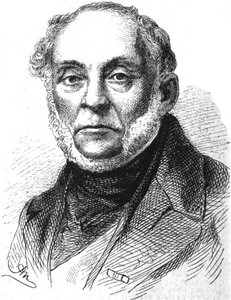
carl friedrich august von klöber
1793 - 1864 , Germany
Quick Facts
- Artistic Movement Or Style: Parisian & Viennese influences
- Artists Or Movements Influenced By This Artist:
- Hans Memling
- Franz Heinrich Louis
- Artists Who Influenced This Artist:
- Karl Friedrich Schinkel
- Bonaventure Genelli
- Date Of Birth: 1793 Breslau
- Date Of Death: 1864 Berlin
- Full Name: Carl Friedrich August von Klöber
- Nationality: German
- Notable Artworks:
- Ludwig van Beethoven
- Grillparzer family
- Place Of Birth: Breslau, Germany
Related Articles

White on Canvas: 10 Masterpieces & Timeless Elegance for Your Home Decor
Explore 10 iconic white paintings by Monet, Whistler & Rothko! Discover the stories behind these serene masterpieces and their impact on art history. Find museum-quality reproductions for your home decor at .

Dark Masterpieces: 10 Iconic Paintings Dominated by Black Tones |
Explore 10 iconic paintings dominated by black tones, from Rembrandt’s chiaroscuro to Goya's dark expressions. Discover the stories behind these masterpieces & find museum-quality art reproductions for your home at .

Monochrome Visions: Exploring the Aesthetic & Historical Significance of Black & White Photography
Explore the rich history & artistic power of black and white photography. From early techniques to iconic masters like Ansel Adams, discover why monochrome continues to captivate art lovers today. Expert insights for collectors.

Mars Black Masterpieces: 10 Iconic Paintings & Timeless Art Decor Ideas
Delve into the power of 'Mars Black' with 10 iconic paintings by masters like Rembrandt & Caravaggio. Explore dramatic chiaroscuro, gothic art, and timeless beauty. Find museum-quality reproductions & elevate your home decor on .

The Subtleties of White: Exploring Absence, Light & Symbolism in Art History
Explore the profound symbolism & history of white in art! From ancient purity to modern abstraction, discover how artists have used absence & light. Expert insights from ArtsDot.