 Preview
 Send
Send Share
Share
 Details

 Download
 Similars
 X-Ray
X-Ray Diaporama
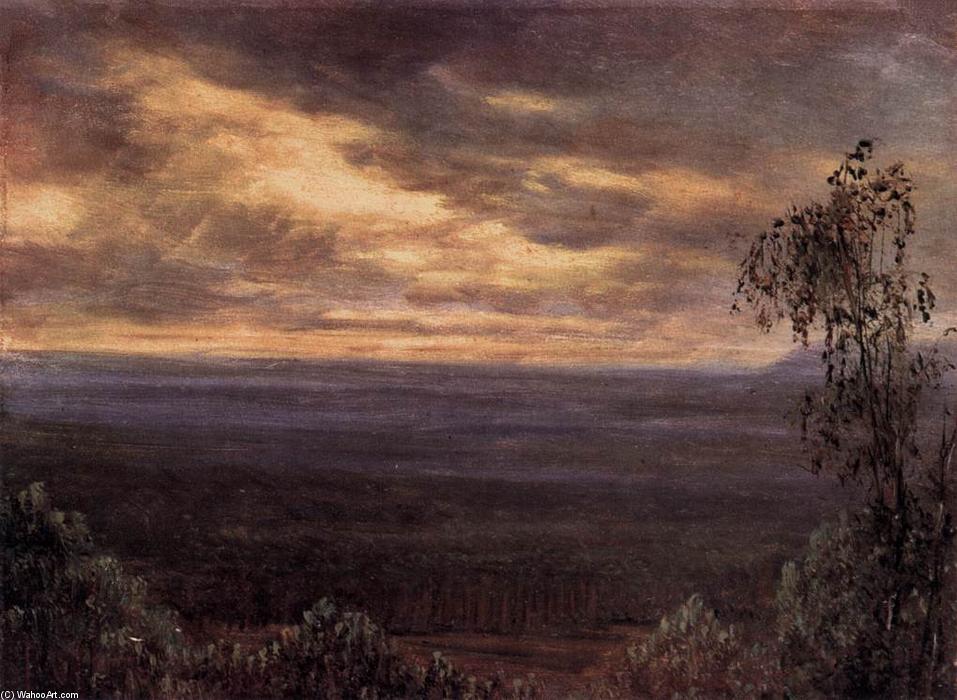
Morning Fog
 Watercolor
- WallArt
- Romanticism
 1825
1825- 19th Century
 20.0 x 26.0 cm
 Nationalgalerie
 Read More
Hand Made Oil Reproduction
Hand-painted oil on canvas in your size and frame, made to order by our artists. ( Buy Print Buy Image)




P118B $10

P118H $10

P118W $10

P438Z $10

P508JH $12

P508YH $12

P805H $10

P805Z $10

P919BZ $10

P919G $10

P919XJ $10

P959ZH $10

P968JZ $12

W106C $8

W218G $10

W218JH $8

W218Y $10

W307PJ $10

W316G $10

W316PJ $8

W316Y $10

W398PJ $8

W4111J $10

W500HY $15

W500JH $15

W692G $12

W849H $8

W940BG $15

W953PJ $8




Pick from our preset sizes that match the artwork's original proportions.

You may enter your own dimensions to fit a specific frame or space. If your selected size does not match the original image's proportions, we will either crop the artwork or extend the painting with additional hand-painted elements. A digital mockup will be sent for your approval before production begins.
Please note that the on-screen preview does not reflect the actual cropping or extension. Only the mockup will accurately show the final composition.
While custom sizes are available, we recommend selecting a dimension from the predefined list to preserve the original proportions.
After order, ArtsDot.com team will email client for instructions and provide a mockup preview
Worldwide Delivery () in 3/4 weeks instead of standard 5 weeks. (16 August). No compromise on quality.

Free Worldwide Express Shipping

High-Quality Linen Canvas

Full Shipping Insurance

Customs Tax Refund Guarantee

True Color Matching Guarantee

60-Day Return Policy (Defects Only)

100% Money-Back Guarantee

Bulk Discount Offer
 Glass option is only available in size under 110 CM

Morning Fog
Reproduction Medium
Reproduction Size
-


Total Price
$ 263
Artwork Description
A Vision of Tranquil Harmony: Exploring Carl Gustav Carus’s “Morning Fog”
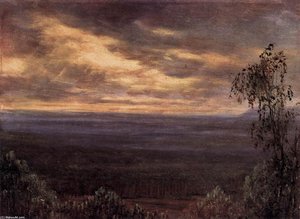
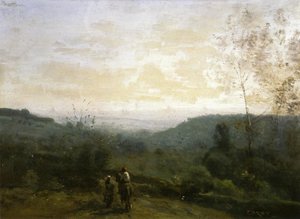
Carl Gustav Carus's "Morning Fog," painted in 1825, isn’t merely a landscape; it’s an invitation to contemplate the profound connection between humanity and the natural world. This watercolor masterpiece, housed within the Nationalgalerie in Berlin, exemplifies the Romantic movement’s fascination with sublime beauty and the evocative power of light and atmosphere. Carus, a close associate of Caspar David Friedrich, skillfully blends Dutch Baroque influences – particularly the clarity of color and meticulous detail – with the emotional depth characteristic of his Romantic peers. The painting transcends a simple depiction of scenery; it's an exploration of mood, memory, and the quiet contemplation that arises from observing nature’s subtle shifts.
The scene unfolds in a gently rolling landscape dominated by hazy hills receding into a soft, atmospheric sky. A solitary tree, rendered with delicate precision, anchors the composition on the right side, drawing the eye deeper into the vista. The color palette is restrained yet remarkably effective – muted greens and browns form the base of the hills, while washes of gray and blue create an ethereal sky filled with drifting clouds. Carus’s masterful use of skying—allowing the colors of the sky to bleed downwards into the landscape—blurs the boundaries between earth and heavens, fostering a sense of unity and timelessness. The painting's scale – 20 x 26 cm – contributes to its intimate quality, inviting viewers to lose themselves in its serene details.
The Influence of Dutch Masters and Romantic Ideals
Carus’s artistic journey reveals a fascinating dialogue between tradition and innovation. He deeply admired the meticulous detail and atmospheric perspective of 17th-century Dutch landscape painters like Jacob van Ruisdael and Jan Vermeer, recognizing their ability to capture light and shadow with remarkable accuracy. However, unlike his Dutch predecessors, Carus infused these techniques with the emotional intensity and philosophical concerns that defined the Romantic movement. He sought not just to represent a scene but to evoke a feeling—a sense of awe, tranquility, and perhaps even melancholy – mirroring the core tenets of Romanticism’s emphasis on individual experience and the sublime.
This influence is particularly evident in the painting's composition and color palette. The careful rendering of each element, combined with the soft, diffused light, creates a sense of realism that belies the painting’s emotional depth. Furthermore, Carus’s work reflects the Romantic fascination with the power of nature to inspire contemplation and spiritual insight – a theme central to Friedrich's oeuvre as well. The painting can be seen as an attempt to capture not just the appearance of the landscape but also its underlying essence, its connection to something larger than oneself.
Symbolism and Emotional Resonance
“Morning Fog” is rich in symbolic meaning, inviting multiple interpretations. The fog itself represents obscurity, uncertainty, and perhaps even the passage of time. It obscures details, forcing the viewer to rely on intuition and imagination. The solitary tree, a recurring motif in Carus’s work, symbolizes resilience, strength, and connection to the earth. Its upward reach suggests aspiration and a longing for transcendence. The muted colors contribute to the painting's overall mood of quiet contemplation—a space for reflection and introspection.
Beyond its specific imagery, “Morning Fog” speaks to a universal human desire for harmony with nature. It’s a reminder of the beauty and tranquility that can be found in the simplest of landscapes, and an invitation to slow down, observe, and appreciate the wonders of the natural world. The painting's enduring appeal lies in its ability to evoke a sense of peace and connection—a feeling that resonates deeply with viewers across generations.
Reproductions and Legacy
High-quality reproductions of “Morning Fog” are available through platforms like ArtsDot.com, allowing art enthusiasts to experience the beauty and emotional depth of this iconic work firsthand. Whether displayed in a home or office, a faithful reproduction can bring a touch of Romantic serenity to any space. For those seeking to delve deeper into Carus’s life and work, resources such as Wikipedia and the Web Gallery of Art offer valuable insights into his artistic journey and lasting legacy.
Related Artworks
Artist Biography
The Polymath of the Romantic Soul
Carl Gustav Carus stands as a singular, luminous figure in the tapestry of German history, a man whose intellect refused to be confined by the boundaries of a single discipline. Born in Leipzig in 1789, Carus was far more than a mere painter; he was a true polymath, navigating the intricate intersections of medicine, botany, geology, and psychology with equal mastery. His life unfolded during an era of profound intellectual ferment, a time when the scientific rigor of the Enlightenment began to dance with the emotional depth of Romanticism. To look upon a Carus landscape is to witness more than just scenery; it is to see the world through the eyes of a scientist who found the divine in the anatomical precision of a leaf and the spiritual sublime in the shifting mists of a riverbank.
His early education in Leipzig provided him with a formidable foundation in mathematics and the natural sciences, disciplines that would forever inform his artistic eye. This scientific grounding allowed him to approach the canvas with a unique clarity, observing the physical world not just as a subject for beauty, but as a complex, living organism. As he moved toward Jena University, he found himself immersed in the philosophical currents of his time, studying alongside the legendary Goethe. This connection was pivotal, as it placed Carus at the very heart of the German Romantic movement, where the contemplation of nature served as a gateway to understanding the human psyche and the infinite mysteries of the universe.
A Symbiosis of Science and Artistry
While his brush captured the ethereal, his hands practiced the healing arts. Carus established a distinguished medical career in Dresden, serving as a Professor of Obstetrics and the Director of the Maternity Clinic. This dual identity—physician and artist—created a fascinating tension in his work. His deep understanding of human anatomy and physiology lent an unparalleled realism to his depictions of the natural world; he understood the structural integrity of a tree trunk and the delicate translucency of light through fog as intimately as he understood the pulse of a living patient. This meticulous observation allowed him to bridge the gap between the tangible, physical reality of nature and its intangible, emotional resonance.
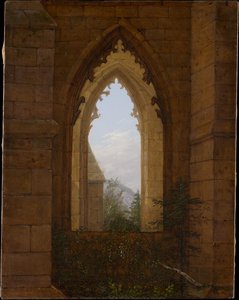
The trajectory of his artistic development was profoundly shaped by his close friendship and collaboration with Caspar David Friedrich. Together, these two masters of German Romanticism explored the concept of the sublime—that overwhelming sense of awe and terror inspired by the vastness of nature. While Friedrich often focused on the spiritual isolation of the individual, Carus brought a unique atmospheric precision to the movement. His works, such as the hauntingly beautiful Gothic Windows in the Ruins of the Monastery at Oybin, utilize light and shadow to evoke a sense of historical weight and melancholic beauty, capturing the way ruins become part of the organic landscape over time.
Legacy of Light and Thought
The enduring significance of Carl Gustav Carus lies in his ability to synthesize seemingly disparate worlds. His paintings are not merely static images but are imbued with a psychological depth that foreshadowed much of modern thought. His explorations into the relationship between the external environment and internal perception have drawn comparisons to the later psychological insights of figures like Carl Jung, and his scientific observations contributed to the broader intellectual climate that influenced Charles Darwin. He saw no conflict between the empirical study of the earth and the poetic interpretation of its beauty.
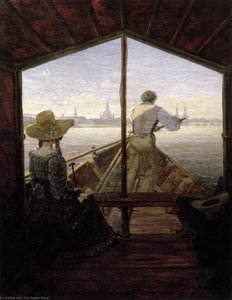
Even in his more tranquil compositions, such as Morning Fog or A Gondola on the Elbe near Dresden, one can sense this profound harmony. In these works, the subtle gradations of color and the soft, ethereal light evoke a sense of peace and cosmic connection. Carus leaves behind a legacy that challenges us to view the world with both a keen, analytical eye and an open, feeling heart. He remains a testament to the idea that true understanding comes from the marriage of observation and imagination, making him one of the most intellectually complete artists to ever grace the Romantic era.
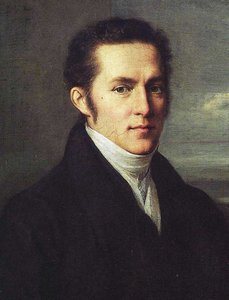
Carl Gustav Carus
1789 - 1869 , Germany
Quick Facts
- Artistic Movement Or Style: Romanticism
- Artists Or Movements Influenced By This Artist: ['Jung']
- Artists Who Influenced This Artist: ['Caspar David Friedrich']
- Date Of Birth: January 3, 1789
- Date Of Death: July 28, 1869
- Full Name: Carl Gustav Carus
- Nationality: German
- Notable Artworks:
- Morning Fog
- Gothic Windows in the Ruins of the Monastery at Oybin
- Oaks at the Sea Shore
- Place Of Birth: Leipzig, Germany
Related Articles

Watercolor Wonders: 10 Masterpieces That Redefined Art History | ArtsDot
Journey through 10 legendary watercolor masterpieces by Sargent, Turner & Homer! Explore iconic landscapes, portraits & floral art that redefined history. Find museum-quality reproductions and curated decor ideas at ArtsDot.com.

Ephemeral Visions: Exploring the Artistic Legacy & Contemporary Practice of Watercolor Painting
Explore the captivating world of watercolor painting! Discover its rich history, essential techniques, influential artists & collecting tips. A comprehensive guide for art enthusiasts from ArtsDot.

Ephemeral Visions: Exploring the History & Emotional Resonance of Watercolor Painting
Explore the captivating history of watercolor painting, from ancient techniques to modern masters like Kandinsky & Blake. Discover essential artists, collecting tips & the emotional power of this luminous medium. Expert insights for art enthusiasts.
25 Klimt Masterpieces: A Journey Through Iconic Art & Decor
Delve into the world of Gustav Klimt with our top 25 masterpieces! Explore his iconic paintings – 'The Kiss,' 'Portrait of Adele,' and more. Discover museum-quality reproductions & curated decor ideas. Explore the full collection online at ArtsDot.com.

Ephemeral Visions: Exploring the Artistic Legacy & Nuances of Watercolor Painting
Explore the captivating world of watercolor painting! Discover its rich history, essential techniques, influential artists & collecting tips from art experts. A comprehensive guide for enthusiasts.