 Preview
 Send
Send Share
Share
 Details

 Download
 Similars
 X-Ray
X-Ray Diaporama
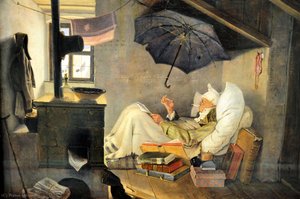
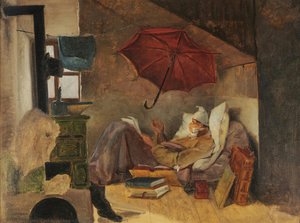
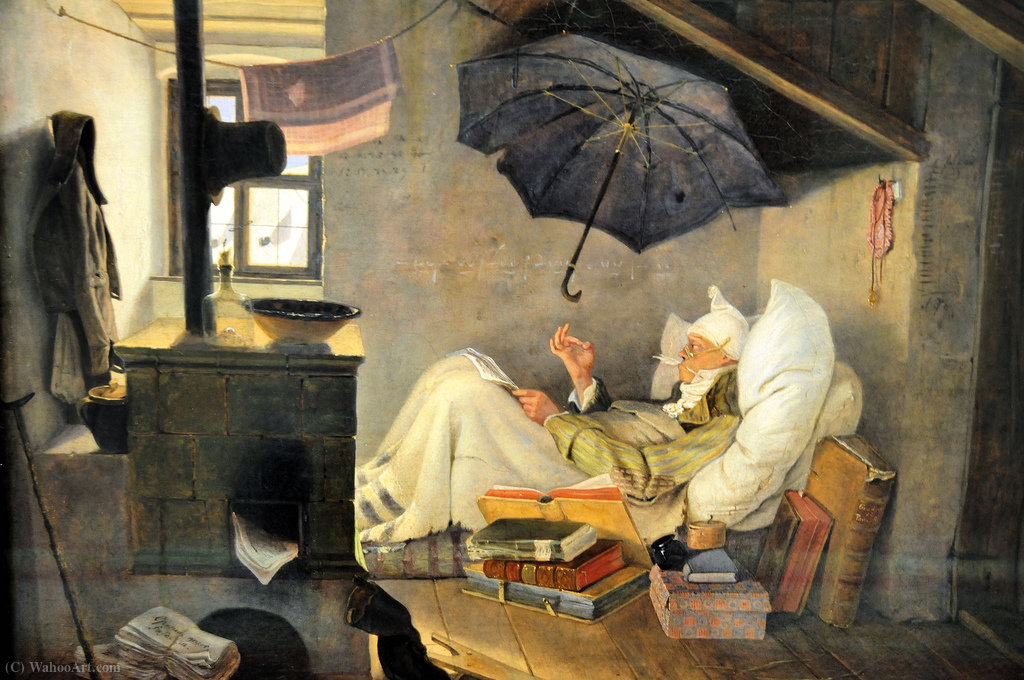
The Poor Poet
 Oil On Canvas
- WallArt
- Romanticism
 1839
1839 36.0 x 45.0 cm
 Neue Pinakothek
 Read More
Giclée / Art Print
Museum-quality giclée or canvas print with fast production and flexible finish options. ( Buy Hand Made Painting Buy Image)




P118B $10

P118H $10

P118W $10

P438Z $10

P508JH $12

P508YH $12

P805H $10

P805Z $10

P919BZ $10

P919G $10

P919XJ $10

P959ZH $10

P968JZ $12

W106C $8

W218G $10

W218JH $8

W218Y $10

W307PJ $10

W316G $10

W316PJ $8

W316Y $10

W398PJ $8

W4111J $10

W500HY $15

W500JH $15

W692G $12

W849H $8

W940BG $15

W953PJ $8




Pick from our preset sizes that match the artwork's original proportions.

You may enter your own dimensions to fit a specific frame or space. If your selected size does not match the original image's proportions, we will either crop the artwork or extend the image with a mirrored or solid-fill edge. A digital mockup will be sent for your approval before production begins.
Please note that the on-screen preview does not reflect the actual cropping or extension. Only the mockup will accurately show the final composition.
While custom sizes are available, we recommend selecting a dimension from the predefined list to preserve the original proportions.
Worldwide Delivery () in 2 weeks instead of standard 4/5 weeks. (17 August)

Free Worldwide Express Shipping

High-Quality Linen Canvas

Full Shipping Insurance

Customs Tax Refund Guarantee

True Color Matching Guarantee

60-Day Return Policy (Defects Only)

100% Money-Back Guarantee

Bulk Discount Offer
 Glass option is only available in size under 110 CM

The Poor Poet
Giclée / Art Print
Reproduction Size
-


Total Price
$ 63
Collectible Description
The Poor Poet - A Portrait of Melancholy Genius
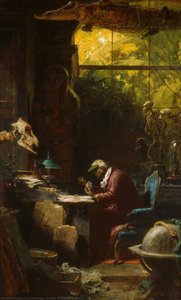
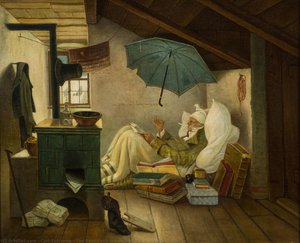
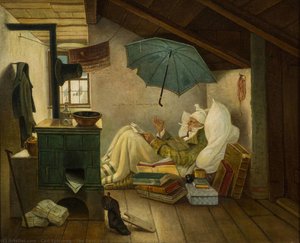
Carl Spitzweg’s “Der arme Poet” – translated as “The Poor Poet” – stands as arguably the most recognizable and beloved painting from German Romanticism, cementing its place in art history. Executed in 1839, this oil on canvas masterpiece captures a moment of profound contemplation within a deceptively simple domestic setting, offering a glimpse into the soul of an artist grappling with existential questions.
- Subject Matter: The painting depicts a solitary elderly man seated amidst a cluttered attic room. He’s absorbed in reading a book, illuminated by a single window casting a warm glow upon his face – a deliberate contrast to the pervasive gloom of the space around him.
- Style & Technique: Spitzweg employed a realistic style characteristic of the Biedermeier era, prioritizing meticulous detail and capturing subtle nuances of emotion. Thick brushstrokes dominate the composition, conveying textural richness—the rough surface of weathered wood, the folds of worn clothing, and the dusty parchment of aged books—creating an immersive experience for the viewer.
- Historical Context: Painted in the wake of the Napoleonic Wars and preceding the turbulent revolutions of 1848, “The Poor Poet” embodies the prevailing mood of quiet introspection and conservative values within German society at the time. It reflects a yearning for stability amidst uncertainty, mirroring the anxieties felt by intellectuals and artists alike.
- Symbolism: The room itself is laden with symbolic significance. The dilapidated roof symbolizes decay and vulnerability, while the umbrella hanging precariously represents protection from external pressures—a visual metaphor for shielding oneself from societal upheaval. The book serves as a focal point, embodying knowledge, contemplation, and perhaps a wistful longing for bygone eras.
- Emotional Impact: Spitzweg’s masterful use of chiaroscuro – dramatic contrasts between light and shadow – amplifies the painting's emotional resonance. The spotlight on the poet’s face conveys vulnerability and inner turmoil, inviting viewers to empathize with his solitary quest for understanding. Ultimately, “The Poor Poet” speaks to universal themes of aging, intellectuality, and the bittersweet beauty of quiet contemplation.
Spitzweg's artistic vision aligns closely with the Romantic movement’s emphasis on capturing human emotion and portraying the inner life alongside external appearances. He skillfully blended observation with imagination, resulting in a work that transcends mere representation—it aspires to evoke feeling and provoke thought.
The painting resides prominently within the Neue Pinakothek in Munich, attracting admirers from across the globe who appreciate its understated elegance and profound psychological depth. Its enduring appeal lies not only in its technical brilliance but also in its ability to resonate with viewers on a deeply personal level—a testament to Spitzweg’s genius as an artist and his masterful portrayal of the human condition.
Related Artworks
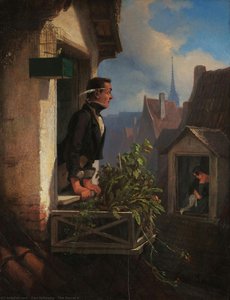
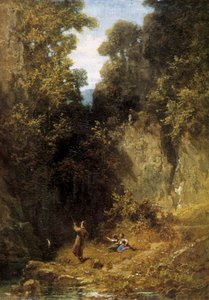

Artist Biography
A Life Dedicated to Gentle Observation: The World of Carl Spitzweg
Born in the Bavarian village of Unterpfaffenhofen near Munich on February 5, 1808, Carl Spitzweg’s path to artistic renown was anything but conventional. Initially destined for a practical life – first as an apprentice pharmacist following his father's wishes – fate intervened in the form of illness and recovery, during which a latent passion for painting blossomed. This wasn’t a sudden conversion, however; it was a gradual unfolding nurtured by copying the works of Flemish masters, absorbing their meticulous detail and atmospheric depth. The early years were marked by a dutiful adherence to his father's plans, yet even within the confines of pharmaceutical study, Spitzweg’s artistic inclinations persisted, hinting at a spirit that yearned for creative expression. His family background was one of comfortable prosperity; his father, Simon Spitzweg, a successful merchant, and his mother, Franziska Schmutzer, from an affluent family, provided a stable foundation, though perhaps not initially understanding of their son’s artistic leanings. The inheritance he eventually received would prove pivotal, granting him the financial freedom to fully dedicate himself to painting in 1833.From Pharmacy to Palette: Developing a Unique Artistic Voice
Spitzweg's self-taught approach was crucial in shaping his distinctive style. He wasn’t bound by academic constraints or the prevailing trends of grand historical painting; instead, he forged his own path, focusing on the everyday lives of ordinary people with a gentle humor and keen observational skill. His travels throughout Europe – to Prague, Venice, Paris, London, and Belgium – were not merely sightseeing tours but immersive studies of light, color, and human character. These journeys broadened his artistic horizons, yet he remained firmly rooted in the Biedermeier aesthetic, a style characterized by its intimacy, domesticity, and focus on middle-class life. He absorbed influences from Dutch Golden Age painters like Nicolaes Berchem and Gonzales Coques, evident in his meticulous attention to detail and warm, earthy palettes. However, Spitzweg wasn’t simply imitating; he was synthesizing these influences into something uniquely his own – a blend of realism, fancy, and subtle satire that captured the spirit of his time. His early contributions to satirical magazines honed his ability to distill complex observations into concise, visually engaging narratives.The Charm of Biedermeier: Themes and Techniques
Spitzweg’s paintings are windows into a bygone era, offering glimpses of 19th-century German life with an endearing charm. He excelled at depicting eccentric characters – the bookworm lost in his studies, the hypochondriac consumed by anxieties, the butterfly hunter absorbed in his pursuit – individuals who embody both the quirks and vulnerabilities of human nature. These weren’t caricatures meant to ridicule but rather affectionate portraits that celebrated individuality. The Poor Poet, perhaps his most iconic work, exemplifies this approach; it's a poignant depiction of solitude and intellectual passion, rendered with remarkable sensitivity. His technique is characterized by meticulous detail, delicate brushwork, and a masterful use of light and shadow to create atmosphere and mood. He wasn’t interested in dramatic narratives or grand gestures; instead, he found beauty and meaning in the mundane, elevating everyday scenes to the level of art. His paintings are not merely representations of reality but interpretations imbued with his own gentle wit and empathetic understanding.Legacy and Enduring Appeal
Carl Spitzweg’s influence extends beyond the realm of 19th-century German painting. While often overlooked in mainstream art historical narratives, his work has resonated with generations of artists and viewers alike. His ability to capture the essence of everyday life with humor and compassion continues to captivate audiences today. The enduring popularity of paintings like The Butterfly Hunter and The Convent-School Outing testifies to their timeless appeal. Spitzweg’s legacy is also evident in the work of later artists, including Norman Rockwell, who paid homage to The Poor Poet with his own rendition of the subject. His paintings can be found in prominent museums and collections worldwide, including the Schackgalerie in Munich and the Wolfgang-gurlitt-museum in Linz, Austria, ensuring that his artistic vision continues to inspire and delight for years to come. He passed away on September 23, 1885, leaving behind a rich body of work – over 1,500 paintings and drawings – that stands as a testament to his unique talent and enduring contribution to the world of art.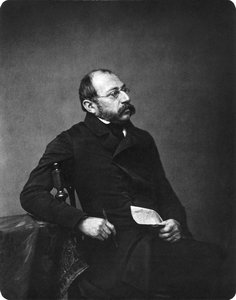
Carl Spitzweg
1808 - 1885 , Germany
Quick Facts
- Artistic Movement Or Style: Biedermeier, Romanticism
- Artists Or Movements Influenced By This Artist: ['Norman Rockwell']
- Artists Who Influenced This Artist: ['Flemish masters']
- Date Of Birth: February 5, 1808
- Date Of Death: September 23, 1885
- Full Name: Carl Spitzweg
- Nationality: German
- Notable Artworks:
- The Poor Poet
- The Butterfly Hunter
- The Hypochondriac
- Place Of Birth: Unterpfaffenhofen, Germany
Related Articles
19th Century Masterpieces: 10 Paintings That Defined an Era | ArtsDot
Journey through 19th century art with ArtsDot! Explore 10 iconic paintings – from Monet & Renoir to Courbet – and discover the stories behind Romanticism, Realism & Impressionism. Find museum-quality reproductions for your home decor. Explore the full collection online!
German Expressionism's 10 Defining Masterpieces | Art for Your Home
Explore 10 defining German Expressionism masterpieces – from Munch's 'The Scream' to Kandinsky’s abstracts. Discover the artists, stories & bold colors behind this powerful art movement. Find museum-quality reproductions at ArtsDot.com.
Fritz von Uhde: Bridging Realism & Symbolism in Late 19th-Century German Painting
Explore the captivating world of Fritz von Uhde, a pivotal German painter bridging Realism & Symbolism. Discover his plein-air techniques, religious themes, and influence on modern art. Learn about this fascinating artist at ArtsDot.
Anton von Werner: Imperial Painter, Historical Witness & Shifting German Identity
Explore the life & work of Anton von Werner, Imperial Germany's leading painter. Discover his dramatic depictions of war, unification, and court life – a fascinating insight into 19th-century German history & art.
Carl Eduard Schuch: Bridging Realism & Symbolism in Late 19th-Century Austrian Painting
Explore the captivating landscapes & still lifes of Carl Eduard Schuch (1846-1903), a pivotal Austrian painter bridging realism and modernism. Discover his influences, unique style, and lasting legacy with ArtsDot.