 Preview
 Send
Send Share
Share
 Details

 Download
 Similars
 X-Ray
X-Ray Diaporama
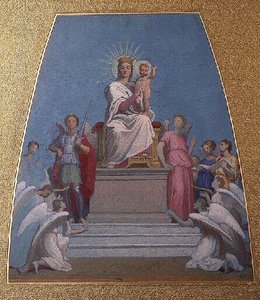
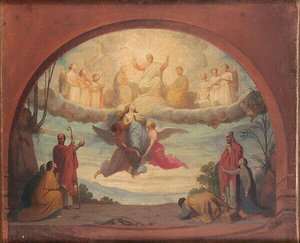
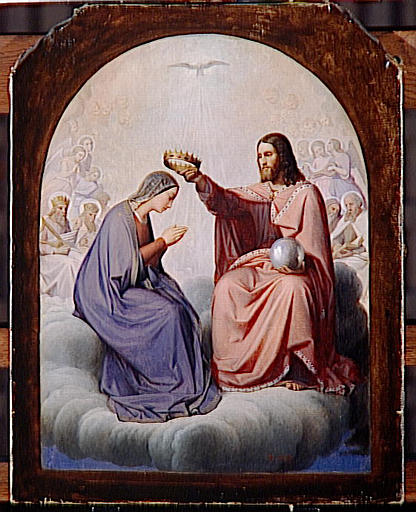
LE COURONNEMENT DE LA VIERGE, REINE DES CIEUX


 Read More
Hand Made Oil Reproduction
Hand-painted oil on canvas in your size and frame, made to order by our artists. ( Buy Print Buy Image)




P118B $10

P118H $10

P118W $10

P438Z $10

P508JH $12

P508YH $12

P805H $10

P805Z $10

P919BZ $10

P919G $10

P919XJ $10

P959ZH $10

P968JZ $12

W106C $8

W218G $10

W218JH $8

W218Y $10

W307PJ $10

W316G $10

W316PJ $8

W316Y $10

W398PJ $8

W4111J $10

W500HY $15

W500JH $15

W692G $12

W849H $8

W940BG $15

W953PJ $8




Pick from our preset sizes that match the artwork's original proportions.

You may enter your own dimensions to fit a specific frame or space. If your selected size does not match the original image's proportions, we will either crop the artwork or extend the painting with additional hand-painted elements. A digital mockup will be sent for your approval before production begins.
Please note that the on-screen preview does not reflect the actual cropping or extension. Only the mockup will accurately show the final composition.
While custom sizes are available, we recommend selecting a dimension from the predefined list to preserve the original proportions.
After order, ArtsDot.com team will email client for instructions and provide a mockup preview
Worldwide Delivery () in 3/4 weeks instead of standard 5 weeks. (28 August). No compromise on quality.

Free Worldwide Express Shipping

High-Quality Linen Canvas

Full Shipping Insurance

Customs Tax Refund Guarantee

True Color Matching Guarantee

60-Day Return Policy (Defects Only)

100% Money-Back Guarantee

Bulk Discount Offer
 Glass option is only available in size under 110 CM

LE COURONNEMENT DE LA VIERGE, REINE DES CIEUX
Reproduction Medium
Reproduction Size
-


Total Price
$ 388
A Testament to Ideal Beauty: Romain Cazes’s “Le Couronnement de la Vierge”
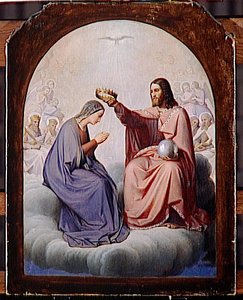
Romain Cazes's "Le Couronnement de la Vierge, Reine des Cieux" stands as a remarkable exemplar of French Romanticism tempered by the unwavering discipline of academic art. Painted circa 1825-1850, this oil on wood panel masterpiece embodies the spirit of its time while firmly anchoring itself within established artistic conventions—a duality that elevates it beyond mere decorative appeal and imbues it with profound symbolic resonance. Its presence in the Louvre Collections (https://collections.louvre.fr/en/ark:/53355/cl010066571) underscores its enduring significance as a cornerstone of 19th-century French art history.The Scene: Divine Coronation and Northern Renaissance Influence
At first glance, the painting depicts a solemn procession honoring Mary’s divine coronation—a pivotal moment in Christian theology representing her exaltation to Queen of Heaven. The composition centers around Christ elevating Mary with a golden crown, meticulously rendered against a backdrop of billowing clouds illuminated by diffused light. This stylistic choice immediately recalls the grandeur and clarity characteristic of Northern Renaissance art, particularly the works of Jan van Eyck and Rogier van der Weyden. Cazes’s careful attention to detail—the drapery folds, facial expressions, and anatomical precision—demonstrates his commitment to observing nature accurately and portraying it with idealized beauty—a hallmark of the academic tradition he embraced.Technique and Material Considerations
The artist skillfully employs oil paint on wood panel, utilizing a technique that prioritizes layering and luminosity. Visible brushstrokes contribute to textural richness, particularly in the depiction of Mary’s robes and the ethereal clouds. The meticulous blending of colors—dominantly blues, reds, golds, and whites—creates an atmosphere of solemn reverence and reinforces the painting's spiritual character. Furthermore, the flatness of perspective—a deliberate stylistic decision—emphasizes depth through careful arrangement and shading, mirroring the conventions prevalent in Northern Renaissance art. This technique reflects a dedication to mastering craft alongside conveying emotion.Symbolism: Dove, Crown, and Heavenly Realm
Beyond its visual splendor lies a wealth of symbolic significance. The dove, positioned prominently above Mary’s head, represents the Holy Spirit—a symbol of divine grace and inspiration—underscoring the sacred nature of the coronation ceremony. The golden crown itself signifies Christ's authority as King of Kings and Mary’s supreme dignity as Mother of God. Finally, the overarching setting—a stylized depiction of heaven—reinforces the painting’s theological message and transports viewers to a realm beyond earthly concerns. Each element contributes to an emotional impact rooted in piety and contemplation.A Legacy of Academic Idealism
Romain Cazes's “Le Couronnement de la Vierge” exemplifies the enduring appeal of academic idealism—a stylistic approach that sought to elevate art above mere imitation of nature, prioritizing beauty, harmony, and moral virtue. Its meticulous craftsmanship, combined with its profound symbolic content, secures its place as a testament to the artistic achievements of the Romantic era while upholding the values of classical tradition. Reproductions offer an opportunity to appreciate this masterpiece’s enduring power and elegance within any interior space.Related Artworks
Artist Biography
Romain Cazes: A Parisian Painter Rooted in Academic Tradition
Romain Cazes (1808–1881) was a French historical painter whose career unfolded against the backdrop of the Romantic era, yet he remained steadfastly committed to the principles of academic art—a distinction that defines his artistic legacy. Born at Saint-Béat, Haute-Garonne, Cazes’s formative years coincided with Ingres's ascendancy as the dominant figure in Parisian painting academies, shaping his artistic sensibilities and establishing a stylistic trajectory that would endure throughout his life. While contemporaries embraced expressive liberties and emotional intensity, Cazes prioritized meticulous observation and idealized representation—a conscious rejection of prevailing trends that nonetheless secured him a prominent place within the artistic canon of his time.- Early Life & Training: Cazes’s formal education began at Saint-Étienne School in Toulouse, where he honed his drawing skills under the tutelage of Jean-Baptiste Camille Bouchardy, a respected teacher known for his adherence to classical ideals. This early exposure instilled in him a profound appreciation for anatomical accuracy and compositional balance—elements that would become hallmarks of his artistic style.
- Influence of Ingres: Cazes’s relationship with Ingres proved pivotal. Recognizing Cazes's talent, Ingres took him on as a pupil, fostering a collaborative environment where stylistic refinement was paramount. The elder artist championed the pursuit of “art for art’s sake,” emphasizing beauty and intellectual rigor above narrative or moral didacticism—a philosophy that profoundly impacted Cazes’s artistic vision.
Notable Artistic Achievements & Style
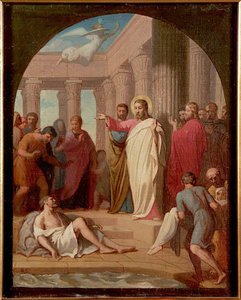
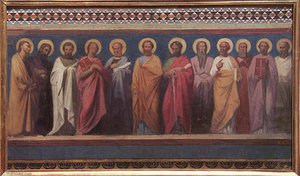
Cazes achieved considerable renown during his lifetime, primarily through monumental murals adorning churches in Paris and provincial towns. His most celebrated works include “Les Douze Apôtres” at Saint-François Xavier Church and “Le Paralytique” at Notre-Dame de Clignancourt—impressive undertakings that showcased his mastery of fresco technique and his ability to convey spiritual grandeur with remarkable precision. These murals exemplify Cazes’s stylistic hallmark: a meticulous rendering of figures and draperies executed in tempera paint, utilizing subtle gradations of color and masterful shading to achieve an illusionistic depth rarely seen in Romantic art. His compositions are characterized by balanced symmetry and idealized poses—reflecting Ingres's influence and upholding the standards of academic painting.- Frescoes at Saint-François Xavier & Notre-Dame de Clignancourt: These monumental murals stand as testaments to Cazes’s artistic skill and dedication, capturing biblical narratives with breathtaking detail and conveying profound spiritual emotion through carefully crafted visual elements.
- Portraiture: Beyond his mural commissions, Cazes produced numerous portraits—often commissioned by prominent patrons—demonstrating his ability to capture the likeness of his subjects while simultaneously embodying classical ideals of beauty and dignity.
Symbolism & Artistic Context
Cazes’s artistic output is firmly rooted in the Romantic movement, yet he distinguishes himself from many of his contemporaries by prioritizing formal elegance over emotional fervor. Like Ingres, Cazes adhered to the tenets of “art for art’s sake,” rejecting sentimentalism and melodrama in favor of intellectual contemplation—a stance that aligns him with a broader artistic tradition concerned with aesthetic perfection rather than moral instruction. His meticulous attention to detail—particularly in depicting draperies and anatomical forms—reflects the influence of classical sculpture, where idealized beauty was considered paramount. Furthermore, Cazes’s stylistic choices underscore the enduring legacy of Renaissance art—a testament to his unwavering commitment to artistic principles that transcended temporal boundaries.Legacy & Historical Significance
Romain Cazes remains a significant figure in French art history—primarily recognized for his contribution to monumental fresco painting and his embodiment of academic artistic ideals. His murals at Saint-François Xavier and Notre-Dame de Clignancourt continue to inspire admiration for their technical virtuosity and expressive power, serving as enduring symbols of Parisian Baroque grandeur. Cazes’s unwavering devotion to classical aesthetics—coupled with his masterful execution—established him as a pivotal voice within the Romantic era, securing his place among the most respected artists of his time and ensuring that his work would be studied and appreciated for generations to come. His influence can be seen in subsequent generations of painters who sought to emulate Ingres’s stylistic rigor and uphold the standards of academic art—a testament to Cazes's enduring artistic legacy.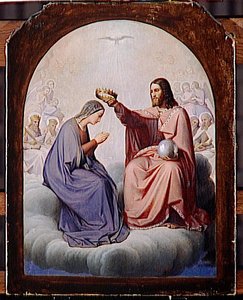
cazes romain
1808 - 1881
Quick Facts
- Artistic Movement Or Style: Romanticism
- Artists Or Movements Influenced By This Artist: ['Romantic Art']
- Artists Who Influenced This Artist: ['Ingres']
- Date Of Birth: 1808
- Date Of Death: 1881
- Full Name: Romain Cazes
- Nationality: French
- Notable Artworks:
- Les Douze Apôtres
- Quatre figures allégoriques
- Place Of Birth: Saint-Béat (Haute-Garonne)
Related Articles
Romantic Realism's Finest: 10 Masterpieces for Your Home | ArtsDot
Explore 10 defining masterpieces of Romantic Realism! Discover Courbet, Millet & Daumier's powerful paintings—capturing emotion and social realities. Find museum-quality reproductions for your home at ArtsDot.com.
The Northern Renaissance: A Flourishing of Realism, Religious Reform & Artistic Innovation
Explore the Northern Renaissance! Discover Jan van Eyck's innovations, religious shifts, & key artists of this influential period. Expert analysis and insights into Early Netherlandish painting at ArtsDot.
Sacred Narratives Embodied: A Comprehensive Exploration of Religious Iconography in Art History
Explore the rich history of religious iconography in art! Discover symbolism, movements & masterpieces from Byzantine to Renaissance periods. Expert insights for collectors and enthusiasts at ArtsDot.

The Enduring Legacy of Oil on Canvas: Technique, History & Aesthetic Impact
Explore the rich history & techniques of oil painting – from Renaissance masters to Impressionism. Discover pigments, layering methods, and why this timeless medium endures. Expert insights for artists & art enthusiasts.

The Enduring Power of Painting: A Historical & Contemporary Exploration of Form and Emotion
Explore the rich history & enduring techniques of oil painting with ArtsDot. Discover masterpieces, learn about art collecting, and find authentic handmade reproductions crafted by skilled artists.