 Preview
 Send
Send Share
Share
 Details

 Download
 Similars
 X-Ray
X-Ray Diaporama
Cecil Kent Drinker


 Read More
Hand Made Oil Reproduction
Hand-painted oil on canvas in your size and frame, made to order by our artists. ( Buy Print Buy Image)




P118B $10

P118H $10

P118W $10

P438Z $10

P508JH $12

P508YH $12

P805H $10

P805Z $10

P919BZ $10

P919G $10

P919XJ $10

P959ZH $10

P968JZ $12

W106C $8

W218G $10

W218JH $8

W218Y $10

W307PJ $10

W316G $10

W316PJ $8

W316Y $10

W398PJ $8

W4111J $10

W500HY $15

W500JH $15

W692G $12

W849H $8

W940BG $15

W953PJ $8




Pick from our preset sizes that match the artwork's original proportions.

You may enter your own dimensions to fit a specific frame or space. If your selected size does not match the original image's proportions, we will either crop the artwork or extend the painting with additional hand-painted elements. A digital mockup will be sent for your approval before production begins.
Please note that the on-screen preview does not reflect the actual cropping or extension. Only the mockup will accurately show the final composition.
While custom sizes are available, we recommend selecting a dimension from the predefined list to preserve the original proportions.
After order, ArtsDot.com team will email client for instructions and provide a mockup preview
Worldwide Delivery () in 3/4 weeks instead of standard 5 weeks. (17 August). No compromise on quality.

Free Worldwide Express Shipping

High-Quality Linen Canvas

Full Shipping Insurance

Customs Tax Refund Guarantee

True Color Matching Guarantee

60-Day Return Policy (Defects Only)

100% Money-Back Guarantee

Bulk Discount Offer
 Glass option is only available in size under 110 CM

Cecil Kent Drinker
Reproduction Medium
Reproduction Size
-


Total Price
$ 263
Artwork Description
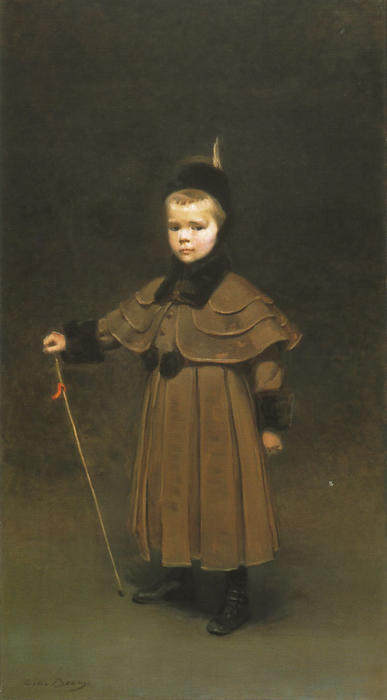
A Portrait of Quiet Strength: Cecilia Beaux’s Cecil Kent Drinker
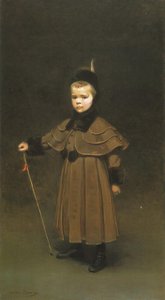
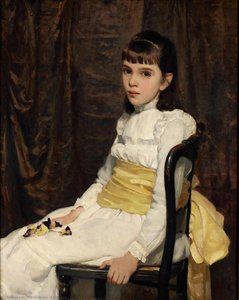
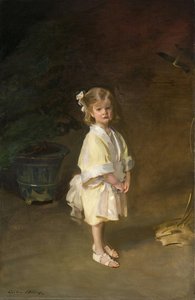
Cecilia Beaux's "Cecil Kent Drinker," painted in 1891, isn’t merely a portrait; it’s a carefully constructed study in observation and subtle emotion. The painting depicts a young boy, likely around eight or nine years old, dressed in the elaborate attire of a medieval knight – a helmet perched jauntily on his head, a simple tunic revealing a hint of youthful form beneath. He holds a wooden stick, not with aggressive intent, but with a gentle curiosity, and gazes out at the viewer with an expression that balances innocence and quiet contemplation. Beaux’s masterful handling of light and shadow immediately draws the eye, creating a sense of depth and realism within this fantastical scene. The boy isn't posed stiffly; instead, he appears caught in a moment of private reflection, suggesting a personality both spirited and thoughtful. This wasn’t simply a likeness; Beaux sought to capture the essence of her young subject, revealing something deeper than just his appearance.The Gilded Age and the Portraiture of Character
To fully appreciate "Cecil Kent Drinker," it's essential to understand the context in which it was created – the late 19th century American Gilded Age. This era witnessed unprecedented wealth and social change, marked by lavish displays of opulence and a burgeoning interest in capturing the lives of the elite through portraiture. Beaux, a prominent figure in this artistic milieu, specialized in depicting wealthy patrons and their families with remarkable sensitivity. Unlike many of her contemporaries who favored overtly formal and idealized representations, Beaux was known for her ability to imbue her subjects with genuine character. She wasn’t interested in creating mere images of wealth; she aimed to reveal the inner lives and personalities of those she painted. The choice of a medieval knight as the subject's costume is particularly significant – it speaks to a desire for adventure, chivalry, and perhaps even a touch of romantic idealism, all qualities Beaux skillfully conveyed through her brushstrokes.Technique and Impressionistic Nuances
Beaux’s technique in "Cecil Kent Drinker" exemplifies her distinctive style—a blend of realism and impressionism. She employed loose, visible brushstrokes to capture the play of light on the boy's clothing and skin, creating a sense of immediacy and movement. The background is deliberately muted, allowing the figure to dominate the composition and drawing attention to his expressive face. Beaux’s use of color is restrained yet effective, relying on subtle gradations of tone to create depth and volume. Notice how she uses highlights to accentuate the boy's features – the curve of his cheekbone, the sparkle in his eyes—and shadows to define his form. The painting demonstrates a remarkable ability to capture not just the outward appearance but also the fleeting emotions that flicker across a young face. Beaux’s approach was revolutionary for her time, prioritizing capturing the *impression* of a moment over strict adherence to academic rules.Symbolism and the Child's Inner World
Beyond its technical brilliance, "Cecil Kent Drinker" is rich in symbolic meaning. The medieval costume itself represents a yearning for adventure, a desire to transcend the limitations of everyday life. The boy’s contemplative gaze suggests an awareness of his own potential, hinting at a future filled with possibilities. Beaux was known for her ability to capture the inner lives of her subjects, and this painting is no exception. It's not simply a portrait of a child in costume; it’s a window into his imagination, a glimpse of the boy’s hopes and dreams. The stick he holds could be interpreted as a symbol of leadership or protection—perhaps representing his role as a knight in his own private world. The overall effect is one of quiet dignity and youthful promise.A Legacy of Elegance
Today, "Cecil Kent Drinker" resides at the Philadelphia Museum of Art, a testament to Beaux’s enduring legacy. It stands as a prime example of her ability to capture both the outward appearance and inner character of her subjects—a rare feat in portraiture. The painting continues to resonate with viewers today, offering a poignant reminder of childhood innocence, quiet strength, and the power of art to reveal the beauty within us all. Reproductions of this captivating work offer an accessible way to experience Beaux’s artistry and appreciate the subtle nuances of her masterful technique.Related Artworks
Artist Biography
A Life Illuminated: The World of Cecilia Beaux
Cecilia Beaux, born Eliza Cecilia Beaux on May 1st, 1855, in Philadelphia, emerged as a pivotal figure in American portraiture during the Gilded Age. Her story is one woven with threads of personal tragedy, determined self-reliance, and an unwavering commitment to artistic excellence. The shadow of early loss fell upon her life when her mother succumbed to puerperal fever just twelve days after Beaux’s birth, leaving a void that would subtly shape her perspective. Raised by her maternal grandmother and aunts in Philadelphia, she experienced a childhood marked by both stability and the quiet absence of parental guidance. Her father, unable to cope with his grief, returned to France for extended periods, creating a somewhat detached familial dynamic. Yet, within this framework, Beaux’s artistic inclinations were nurtured, initially through lessons with her relative Catherine Ann Drinker, an accomplished artist who served as an early role model and mentor. These formative years instilled in her not only technical skills but also a profound understanding of the dedication required to pursue a life devoted to art.Forging a Path: Education and Early Influences
Beaux’s artistic education continued under Francis Adolf van der Wielen, where she honed her skills in perspective and drawing from casts. However, the societal constraints of the Victorian era presented significant obstacles for aspiring female artists; direct study of anatomy was largely denied to women until much later in her career. Undeterred, Beaux persevered, securing a place at the prestigious Pennsylvania Academy of the Fine Arts in 1876. While she maintained a degree of independence from the fervent followers of Thomas Eakins, his progressive teaching philosophy undeniably influenced her approach to art. It was during this period that Beaux began to establish herself as a skilled portraitist, winning several Mary Smith Prizes at the Pennsylvania Academy exhibitions between 1885 and 1892 – accolades that signaled her rising talent and recognition within the artistic community. A crucial turning point came with her decision to study in Paris in 1888, immersing herself in the European art scene and absorbing influences from academic masters like Tony Robert-Fleury and William-Adolphe Bouguereau, as well as the burgeoning Impressionist movement exemplified by artists such as Édouard Manet and Edgar Degas. This exposure broadened her artistic horizons and refined her technique, laying the foundation for her distinctive style.A Master of Society Portraiture
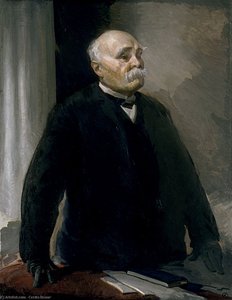
Upon returning to Philadelphia, Cecilia Beaux quickly ascended to prominence as a sought-after portraitist, capturing the essence of America’s social and intellectual elite with remarkable sensitivity and skill. Her portraits weren't merely likenesses; they were insightful studies of character, imbued with psychological depth and an elegant aesthetic sensibility. She possessed an extraordinary ability to convey not only the physical appearance but also the inner lives of her subjects. Her masterpiece, *Portrait of Harriet Sears Amory* (1892), exemplifies this mastery. Executed with bravura brushstrokes and a heavy impasto reminiscent of Impressionism, it showcases Beaux’s technical prowess and her ability to capture both the grandeur and vulnerability of her sitter. Along with John Singer Sargent and William Merritt Chase, Beaux became one of the leading portraitists in the United States at the turn of the twentieth century. Chase himself famously declared her “not only the greatest living woman painter, but the best that has ever lived,” a testament to the high regard she held within artistic circles. Her clientele included prominent figures such as First Lady Edith Roosevelt, Admiral Sir David Beatty, and Georges Clemenceau, solidifying her reputation as a chronicler of the Gilded Age.Legacy and Enduring Influence
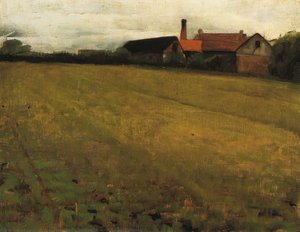
Cecilia Beaux’s contributions extended beyond her captivating portraits; she also broke barriers for women in the art world. She was the first woman to teach at the Pennsylvania Academy of the Fine Arts, paving the way for future generations of female artists. Her dedication to her craft earned her numerous accolades, including a gold medal from the National Institute of Arts and Letters and recognition from Eleanor Roosevelt as “the American woman who had made the greatest contribution to the culture of the world.” Her works are now held in esteemed collections such as The Westmoreland Museum of American Art and the Pennsylvania Academy of the Fine Arts, ensuring her legacy endures for generations to come. Beaux’s art continues to resonate with viewers today, offering a glimpse into a bygone era while simultaneously celebrating the enduring power of human connection and artistic expression. Landscape with Farm Building, painted in 1888, demonstrates her skill beyond portraiture, showcasing an evocative Impressionistic style applied to rural American life. Her ability to seamlessly blend technical mastery with emotional depth cemented her place as a significant figure in the history of American art, and continues to inspire artists and art lovers alike.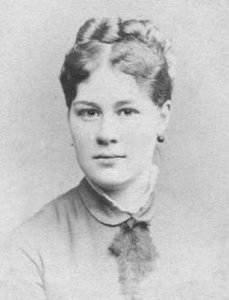
Cecilia Beaux
1855 - 1942 , United States of America
Quick Facts
- Artistic Movement Or Style: Impressionism, Portraiture
- Artists Who Influenced This Artist:
- Thomas Eakins
- John Singer Sargent
- Date Of Birth: May 1, 1855
- Date Of Death: 1942
- Full Name: Cecilia Beaux
- Nationality: American
- Notable Artworks:
- Harriet Sears Amory
- Georges Clemenceau
- Man with the Cat
- Place Of Birth: Philadelphia, USA
Related Articles
Grant Wood & American Regionalism: Identity, Myth & the Rural Landscape
Explore the world of Grant Wood & American Regionalism with ArtsDot. Discover the symbolism behind 'American Gothic', recurring themes, and the movement's lasting impact on art history. High-quality reproductions available.
American Realism's Defining Works: 10 Masterpieces for Your Home
Explore 10 defining American Realism masterpieces – Hopper, Homer & more. Discover the stories behind these iconic paintings and bring timeless art to your home with ArtsDot's museum-quality reproductions. Explore the full collection online.

The Enduring Legacy of Oil on Canvas: Technique, History & Aesthetic Impact
Explore the rich history & techniques of oil painting – from Renaissance masters to Impressionism. Discover pigments, layering methods, and why this timeless medium endures. Expert insights for artists & art enthusiasts.

Oil on Canvas: A Historical & Technical Exploration of a Timeless Artistic Medium
Explore the rich history & enduring techniques of oil painting on canvas. Discover the science behind its longevity, conservation practices, and contemporary relevance. Expert insights for art enthusiasts.

The Enduring Power of Painting: A Historical & Contemporary Exploration of Form and Emotion
Explore the rich history & enduring techniques of oil painting with ArtsDot. Discover masterpieces, learn about art collecting, and find authentic handmade reproductions crafted by skilled artists.