 Preview
 Send
Send Share
Share
 Details

 Download
 Similars
 X-Ray
X-Ray Diaporama
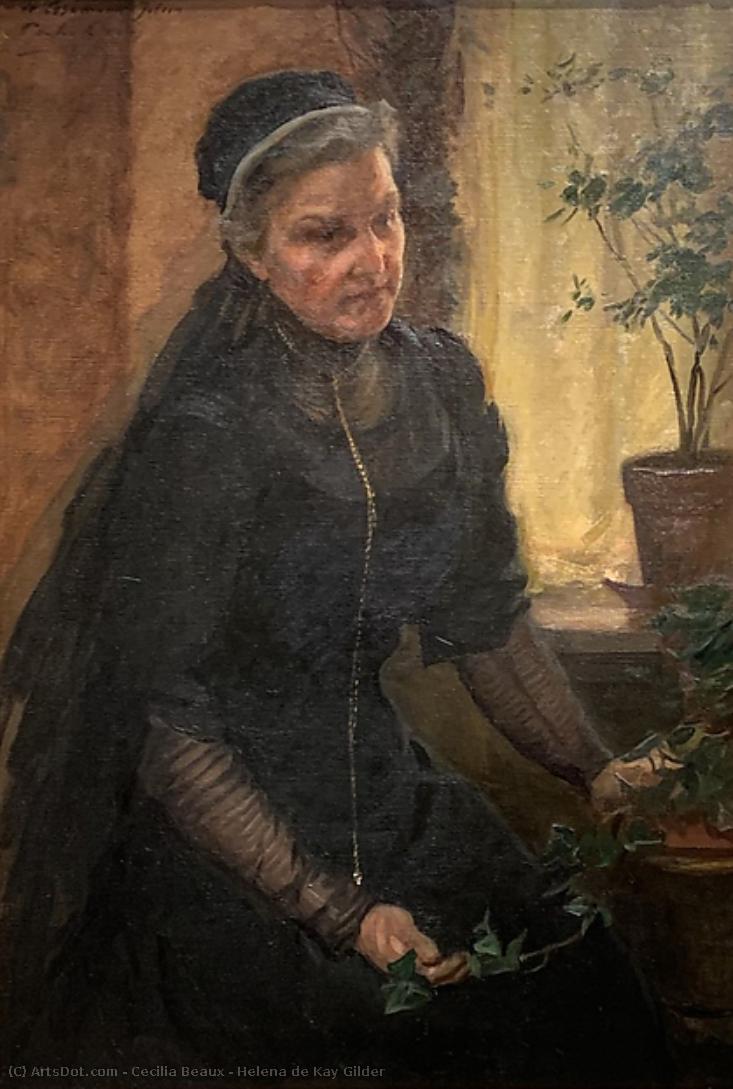
Helena de Kay Gilder


 Read More
Hand Made Oil Reproduction
Hand-painted oil on canvas in your size and frame, made to order by our artists. ( Buy Print Buy Image)




































Pick from our preset sizes that match the artwork's original proportions.

You may enter your own dimensions to fit a specific frame or space. If your selected size does not match the original image's proportions, we will either crop the artwork or extend the painting with additional hand-painted elements. A digital mockup will be sent for your approval before production begins.
Please note that the on-screen preview does not reflect the actual cropping or extension. Only the mockup will accurately show the final composition.
While custom sizes are available, we recommend selecting a dimension from the predefined list to preserve the original proportions.
After order, ArtsDot.com team will email client for instructions and provide a mockup preview
Worldwide Delivery () in 3/4 weeks instead of standard 5 weeks. (17 August). No compromise on quality.

Free Worldwide Express Shipping

High-Quality Linen Canvas

Full Shipping Insurance

Customs Tax Refund Guarantee

True Color Matching Guarantee

60-Day Return Policy (Defects Only)

100% Money-Back Guarantee

Bulk Discount Offer
 Glass option is only available in size under 110 CM

Helena de Kay Gilder
Reproduction Medium
Reproduction Size
-


Total Price
$ 263
Artwork Description
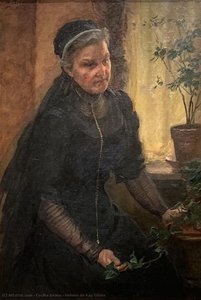
A Portrait Steeped in Sorrow and Symbolism: Cecilia Beaux’s Helena de Kay Gilder
Cecilia Beaux's portrait of Helena de Kay Gilder stands as a poignant testament to the complexities of grief and artistic introspection—a masterpiece born from personal tragedy yet imbued with enduring beauty. Painted in 1911, this intimate depiction captures Beaux’s lifelong friend and mentor at a moment of profound sorrow following the untimely death of her husband, Richard Watson Gilder, a celebrated poet and cultural innovator. Beaux herself faced considerable hardship during her lifetime; her mother perished shortly after her birth, leaving Eliza Cecilia Beaux to be raised by her maternal grandmother and aunts in Philadelphia—a formative experience that instilled within her a resilience and dedication to artistic pursuits.- Style & Technique: Beaux’s signature style is characterized by its masterful blend of realism and Impressionistic influences. She meticulously rendered Gilder's likeness with remarkable accuracy, capturing the subtle nuances of expression—a gaze directed outwards, conveying both solemn contemplation and a hint of melancholy. Simultaneously, Beaux employed diffused light and delicate tonal gradations to create an atmosphere of quiet dignity and emotional depth. The backdrop is deliberately abstract, eschewing detailed representation in favor of suggestive brushstrokes that echo the contours of the figure and contribute to the painting’s ethereal quality.
- Historical Context: Beaux's work emerged during the Gilded Age—a period marked by extravagant wealth alongside pervasive social anxieties. The Victorian language of flowers served as a powerful tool for conveying emotion, and Beaux skillfully utilized the geranium ivy—a symbol of bridal favor and fidelity—to underscore Gilder’s enduring love for his deceased wife, Rosamond. This gesture speaks volumes about the Victorian preoccupation with marriage and remembrance.
- Material & Dimensions: The painting utilizes oil paints on canvas, measuring 79 x 53 cm (approximately 31 x 21 inches). Beaux's meticulous attention to detail—evident in the rendering of Gilder’s skin tones and hair texture—demonstrates her unwavering commitment to artistic excellence.
Related Artworks
Artist Biography
A Life Illuminated: The World of Cecilia Beaux
Cecilia Beaux, born Eliza Cecilia Beaux on May 1st, 1855, in Philadelphia, emerged as a pivotal figure in American portraiture during the Gilded Age. Her story is one woven with threads of personal tragedy, determined self-reliance, and an unwavering commitment to artistic excellence. The shadow of early loss fell upon her life when her mother succumbed to puerperal fever just twelve days after Beaux’s birth, leaving a void that would subtly shape her perspective. Raised by her maternal grandmother and aunts in Philadelphia, she experienced a childhood marked by both stability and the quiet absence of parental guidance. Her father, unable to cope with his grief, returned to France for extended periods, creating a somewhat detached familial dynamic. Yet, within this framework, Beaux’s artistic inclinations were nurtured, initially through lessons with her relative Catherine Ann Drinker, an accomplished artist who served as an early role model and mentor. These formative years instilled in her not only technical skills but also a profound understanding of the dedication required to pursue a life devoted to art.Forging a Path: Education and Early Influences
Beaux’s artistic education continued under Francis Adolf van der Wielen, where she honed her skills in perspective and drawing from casts. However, the societal constraints of the Victorian era presented significant obstacles for aspiring female artists; direct study of anatomy was largely denied to women until much later in her career. Undeterred, Beaux persevered, securing a place at the prestigious Pennsylvania Academy of the Fine Arts in 1876. While she maintained a degree of independence from the fervent followers of Thomas Eakins, his progressive teaching philosophy undeniably influenced her approach to art. It was during this period that Beaux began to establish herself as a skilled portraitist, winning several Mary Smith Prizes at the Pennsylvania Academy exhibitions between 1885 and 1892 – accolades that signaled her rising talent and recognition within the artistic community. A crucial turning point came with her decision to study in Paris in 1888, immersing herself in the European art scene and absorbing influences from academic masters like Tony Robert-Fleury and William-Adolphe Bouguereau, as well as the burgeoning Impressionist movement exemplified by artists such as Édouard Manet and Edgar Degas. This exposure broadened her artistic horizons and refined her technique, laying the foundation for her distinctive style.A Master of Society Portraiture
Upon returning to Philadelphia, Cecilia Beaux quickly ascended to prominence as a sought-after portraitist, capturing the essence of America’s social and intellectual elite with remarkable sensitivity and skill. Her portraits weren't merely likenesses; they were insightful studies of character, imbued with psychological depth and an elegant aesthetic sensibility. She possessed an extraordinary ability to convey not only the physical appearance but also the inner lives of her subjects. Her masterpiece, *Portrait of Harriet Sears Amory* (1892), exemplifies this mastery. Executed with bravura brushstrokes and a heavy impasto reminiscent of Impressionism, it showcases Beaux’s technical prowess and her ability to capture both the grandeur and vulnerability of her sitter. Along with John Singer Sargent and William Merritt Chase, Beaux became one of the leading portraitists in the United States at the turn of the twentieth century. Chase himself famously declared her “not only the greatest living woman painter, but the best that has ever lived,” a testament to the high regard she held within artistic circles. Her clientele included prominent figures such as First Lady Edith Roosevelt, Admiral Sir David Beatty, and Georges Clemenceau, solidifying her reputation as a chronicler of the Gilded Age.Legacy and Enduring Influence
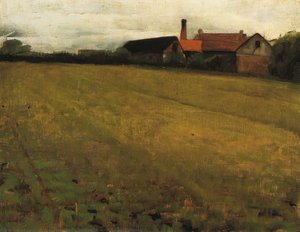
Cecilia Beaux’s contributions extended beyond her captivating portraits; she also broke barriers for women in the art world. She was the first woman to teach at the Pennsylvania Academy of the Fine Arts, paving the way for future generations of female artists. Her dedication to her craft earned her numerous accolades, including a gold medal from the National Institute of Arts and Letters and recognition from Eleanor Roosevelt as “the American woman who had made the greatest contribution to the culture of the world.” Her works are now held in esteemed collections such as The Westmoreland Museum of American Art and the Pennsylvania Academy of the Fine Arts, ensuring her legacy endures for generations to come. Beaux’s art continues to resonate with viewers today, offering a glimpse into a bygone era while simultaneously celebrating the enduring power of human connection and artistic expression. Landscape with Farm Building, painted in 1888, demonstrates her skill beyond portraiture, showcasing an evocative Impressionistic style applied to rural American life. Her ability to seamlessly blend technical mastery with emotional depth cemented her place as a significant figure in the history of American art, and continues to inspire artists and art lovers alike.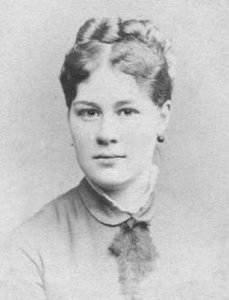
Cecilia Beaux
1855 - 1942 , United States of America
Quick Facts
- Artistic Movement Or Style: Impressionism, Portraiture
- Artists Who Influenced This Artist:
- Thomas Eakins
- John Singer Sargent
- Date Of Birth: May 1, 1855
- Date Of Death: 1942
- Full Name: Cecilia Beaux
- Nationality: American
- Notable Artworks:
- Harriet Sears Amory
- Georges Clemenceau
- Man with the Cat
- Place Of Birth: Philadelphia, USA
Related Articles
The Visceral Language of Loss: Exploring Grief's Depiction in Art History
Explore the profound history of grief in art with ArtsDot. Discover Renaissance & Baroque masterpieces depicting loss, mourning, and faith. Expert insights & handmade reproductions available.
The Refined Aesthetic of Victorian Illustration: A Study in Narrative & Technique
Explore the captivating world of Victorian illustration! Discover Pre-Raphaelite influences, key artists like Rossetti & Stephens, and the era's rich narrative detail. A deep dive for art enthusiasts.
William Powell Frith: Narratives of Victorian Society & the Rise of Realist Painting
Explore the life & works of William Powell Frith, the 'greatest British painter of social scenes.' Discover his iconic Victorian genre paintings and learn about his lasting impact on realist art. Hand-painted reproductions available.
Dante Gabriel Rossetti's 25 Masterpieces: A Journey Through Victorian Art & Symbolism | ArtsDot
Explore 25 iconic artworks by Dante Gabriel Rossetti, a leading Pre-Raphaelite artist. Discover the stories behind masterpieces like 'Proserpine' & 'Beata Beatrix'. Find museum-quality art reproductions and elevate your home decor with ArtsDot.com.
Victorian Botanical Painting: Science, Art & Aesthetic Sensibility
Explore the exquisite world of Victorian botanical art! Discover the science & artistry behind stunning floral illustrations by Gould, Muckley & more. Learn about collecting, value & investment at ArtsDot.