

 Preview
 Send
Send Share
Share
 Details

 Download
 Similars
 X-Ray
X-Ray Diaporama
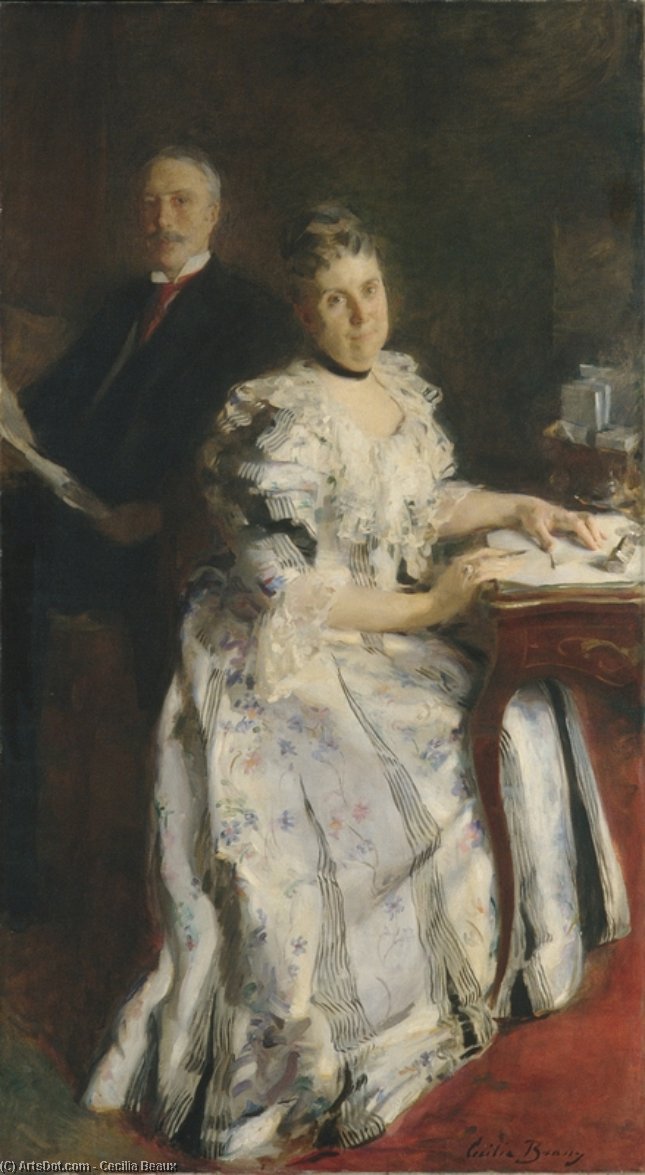
Mr. and Mrs. Anson Phelps Stokes


 Read More
Purchase a high-resolution, enhanced digital image, far superior to the online preview.
Each file is meticulously prepared by our in-house specialists using advanced tools and expert manual retouching. We ensure every image has exceptional clarity, precise color accuracy, and fine detail.
The final file is delivered via email within 72 hours, optimized for immediate use in professional, editorial, and print environments. This is the same quality trusted by top-tier design studios, publishers, and galleries.
Digital Image
Download a high-resolution file for personal display, printing, and creative projects. ( Buy Print Buy Hand Made Painting)
Included in Every Digital Image Order
Expert Digital Delivery, Guaranteed
When you choose ArtsDot.com, you're not just getting an image - you're receiving a professionally enhanced digital artwork, crafted with precision and backed by a satisfaction guarantee. Here's everything that comes with your order, automatically:

Fast Email Delivery
Your high-resolution digital image file will be emailed to you within 72 hours of ordering - ready for immediate use.

AI-Enhanced Digital File
Your artwork is professionally optimized using advanced AI tools and manual editing, ensuring maximum detail, clarity, and color accuracy.

Free Lifetime Re-Delivery
Accidentally deleted or lost your file? No worries - we'll resend it to you anytime, free of charge.

No Import Fees - Ever
Enjoy your artwork instantly with zero customs, duties, or delivery fees - digital downloads are always tax-free.

Color Accuracy Guarantee
We ensure your digital image reflects the original colors as closely as possible using professional tools and color management.

60-Day Satisfaction Guarantee
If you're not satisfied with your digital image, we'll revise it or refund 100% within 60 days - no questions asked.

100% Money-Back Guarantee
Not satisfied? Get a full refund within 60 days of receiving your digital file - no questions asked.

Bulk Order Discounts
Buy 3 images, save 10% - Buy 5, save 15% - Buy 10+, save 20%. Great for creative projects, galleries, and agencies.
Collectible Description
Mr. and Mrs. Anson Phelps Stokes: Elegance Defined by Cecilia Beaux
Cecilia Beaux’s “Mr. and Mrs. Anson Phelps Stokes,” completed in 1898, stands as a quintessential example of American Impressionism during the opulent Gilded Age—a period characterized by extravagant wealth and social ambition. More than just a portrait, it's a carefully constructed tableau capturing a moment of refined intimacy within the confines of a Madison Avenue townhouse, reflecting Beaux’s masterful ability to distill complex psychological states into visual form. The painting immediately draws the eye with its understated elegance, prioritizing subtle tonal gradations and luminous brushstrokes over dramatic poses or flamboyant ornamentation—a stylistic choice that aligns perfectly with Beaux's artistic philosophy.A Composition Rooted in Sargent Influence
Beaux’s decision to depict Anson Phelps Stokes and his wife, Helen Louisa Stokes, seated at a table is notable not only for its subject matter but also for its deliberate echo of John Singer Sargent’s celebrated portrait of Edith Roosevelt and her husband George Vanderbilt. Sargent pioneered the technique of placing the sitter in the foreground, emphasizing their presence and creating a sense of immediacy—a stylistic innovation that Beaux skillfully adopted. This compositional strategy elevates the Stokes’s image beyond mere likeness, suggesting a dynamic interplay between individuals within a domestic setting. The positioning of Helen Louisa Stokes slightly to the left of Anson Phelps Stokes subtly reinforces this visual narrative, hinting at a connection forged through conversation and shared experience.Technique and Texture: Beaux's Impressionistic Vision
Executed in oil on canvas, Beaux employed a technique rooted in Impressionism—specifically, layering thin glazes of color over an underpainting to achieve remarkable tonal depth and luminosity. The artist’s meticulous brushwork contributes significantly to the painting’s textural richness, capturing the subtle nuances of fabric folds and the sheen of polished surfaces. Beaux skillfully blended warm hues—primarily ochre and Sienna—to illuminate the Stokes's faces and clothing, creating a harmonious interplay of light and shadow that imbues the scene with warmth and tranquility. Careful attention to detail is evident in the rendering of objects surrounding the couple: a book resting on Helen Louisa’s lap, a wine glass reflecting candlelight, and two additional glasses positioned near Anson Phelps Stokes—each element contributing to the overall atmosphere of sophistication and comfort.Symbolism Within Domestic Tranquility
Beyond its formal considerations, “Mr. and Mrs. Anson Phelps Stokes” resonates with symbolic significance. The intimate setting represents not merely a physical space but also embodies ideals of domestic harmony and marital contentment—values highly prized during Beaux’s era. The inclusion of objects like the book symbolizes intellectual engagement and cultural refinement, while the wine glasses evoke conviviality and social connection. Beaux's masterful portrayal captures the essence of upper-class life in America at the turn of the century, presenting a portrait not just of individuals but also of an aspirational vision of happiness and success—a timeless masterpiece that continues to captivate viewers today.A Legacy of Refined Portraiture
Cecilia Beaux’s “Mr. and Mrs. Anson Phelps Stokes” exemplifies her unwavering commitment to artistic excellence and her profound understanding of human psychology. Her ability to convey emotion through subtle visual cues solidified her reputation as one of America's foremost portraitists, securing her place in art history as a champion of Impressionistic ideals and a chronicler of the Gilded Age’s social landscape. Its enduring appeal lies in its quiet beauty—a testament to Beaux’s genius and a celebration of the elegance inherent in capturing fleeting moments of human connection.Related Artworks
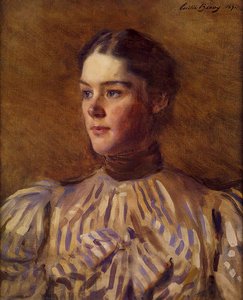
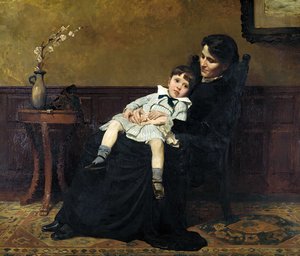
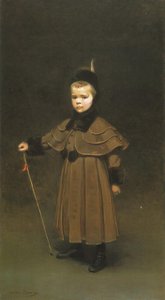
Artist Biography
A Life Illuminated: The World of Cecilia Beaux
Cecilia Beaux, born Eliza Cecilia Beaux on May 1st, 1855, in Philadelphia, emerged as a pivotal figure in American portraiture during the Gilded Age. Her story is one woven with threads of personal tragedy, determined self-reliance, and an unwavering commitment to artistic excellence. The shadow of early loss fell upon her life when her mother succumbed to puerperal fever just twelve days after Beaux’s birth, leaving a void that would subtly shape her perspective. Raised by her maternal grandmother and aunts in Philadelphia, she experienced a childhood marked by both stability and the quiet absence of parental guidance. Her father, unable to cope with his grief, returned to France for extended periods, creating a somewhat detached familial dynamic. Yet, within this framework, Beaux’s artistic inclinations were nurtured, initially through lessons with her relative Catherine Ann Drinker, an accomplished artist who served as an early role model and mentor. These formative years instilled in her not only technical skills but also a profound understanding of the dedication required to pursue a life devoted to art.Forging a Path: Education and Early Influences
Beaux’s artistic education continued under Francis Adolf van der Wielen, where she honed her skills in perspective and drawing from casts. However, the societal constraints of the Victorian era presented significant obstacles for aspiring female artists; direct study of anatomy was largely denied to women until much later in her career. Undeterred, Beaux persevered, securing a place at the prestigious Pennsylvania Academy of the Fine Arts in 1876. While she maintained a degree of independence from the fervent followers of Thomas Eakins, his progressive teaching philosophy undeniably influenced her approach to art. It was during this period that Beaux began to establish herself as a skilled portraitist, winning several Mary Smith Prizes at the Pennsylvania Academy exhibitions between 1885 and 1892 – accolades that signaled her rising talent and recognition within the artistic community. A crucial turning point came with her decision to study in Paris in 1888, immersing herself in the European art scene and absorbing influences from academic masters like Tony Robert-Fleury and William-Adolphe Bouguereau, as well as the burgeoning Impressionist movement exemplified by artists such as Édouard Manet and Edgar Degas. This exposure broadened her artistic horizons and refined her technique, laying the foundation for her distinctive style.A Master of Society Portraiture
Upon returning to Philadelphia, Cecilia Beaux quickly ascended to prominence as a sought-after portraitist, capturing the essence of America’s social and intellectual elite with remarkable sensitivity and skill. Her portraits weren't merely likenesses; they were insightful studies of character, imbued with psychological depth and an elegant aesthetic sensibility. She possessed an extraordinary ability to convey not only the physical appearance but also the inner lives of her subjects. Her masterpiece, *Portrait of Harriet Sears Amory* (1892), exemplifies this mastery. Executed with bravura brushstrokes and a heavy impasto reminiscent of Impressionism, it showcases Beaux’s technical prowess and her ability to capture both the grandeur and vulnerability of her sitter. Along with John Singer Sargent and William Merritt Chase, Beaux became one of the leading portraitists in the United States at the turn of the twentieth century. Chase himself famously declared her “not only the greatest living woman painter, but the best that has ever lived,” a testament to the high regard she held within artistic circles. Her clientele included prominent figures such as First Lady Edith Roosevelt, Admiral Sir David Beatty, and Georges Clemenceau, solidifying her reputation as a chronicler of the Gilded Age.Legacy and Enduring Influence
Cecilia Beaux’s contributions extended beyond her captivating portraits; she also broke barriers for women in the art world. She was the first woman to teach at the Pennsylvania Academy of the Fine Arts, paving the way for future generations of female artists. Her dedication to her craft earned her numerous accolades, including a gold medal from the National Institute of Arts and Letters and recognition from Eleanor Roosevelt as “the American woman who had made the greatest contribution to the culture of the world.” Her works are now held in esteemed collections such as The Westmoreland Museum of American Art and the Pennsylvania Academy of the Fine Arts, ensuring her legacy endures for generations to come. Beaux’s art continues to resonate with viewers today, offering a glimpse into a bygone era while simultaneously celebrating the enduring power of human connection and artistic expression. Landscape with Farm Building, painted in 1888, demonstrates her skill beyond portraiture, showcasing an evocative Impressionistic style applied to rural American life. Her ability to seamlessly blend technical mastery with emotional depth cemented her place as a significant figure in the history of American art, and continues to inspire artists and art lovers alike.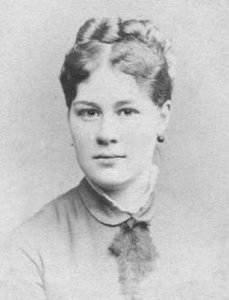
Cecilia Beaux
1855 - 1942 , United States of America
Quick Facts
- Artistic Movement Or Style: Impressionism, Portraiture
- Artists Who Influenced This Artist:
- Thomas Eakins
- John Singer Sargent
- Date Of Birth: May 1, 1855
- Date Of Death: 1942
- Full Name: Cecilia Beaux
- Nationality: American
- Notable Artworks:
- Harriet Sears Amory
- Georges Clemenceau
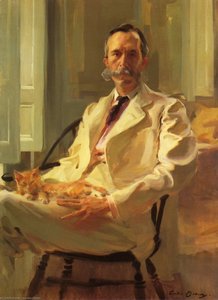
- Man with the Cat
- Place Of Birth: Philadelphia, USA

